

Transborder crisis among key issues of discussion at ASEAN gathering
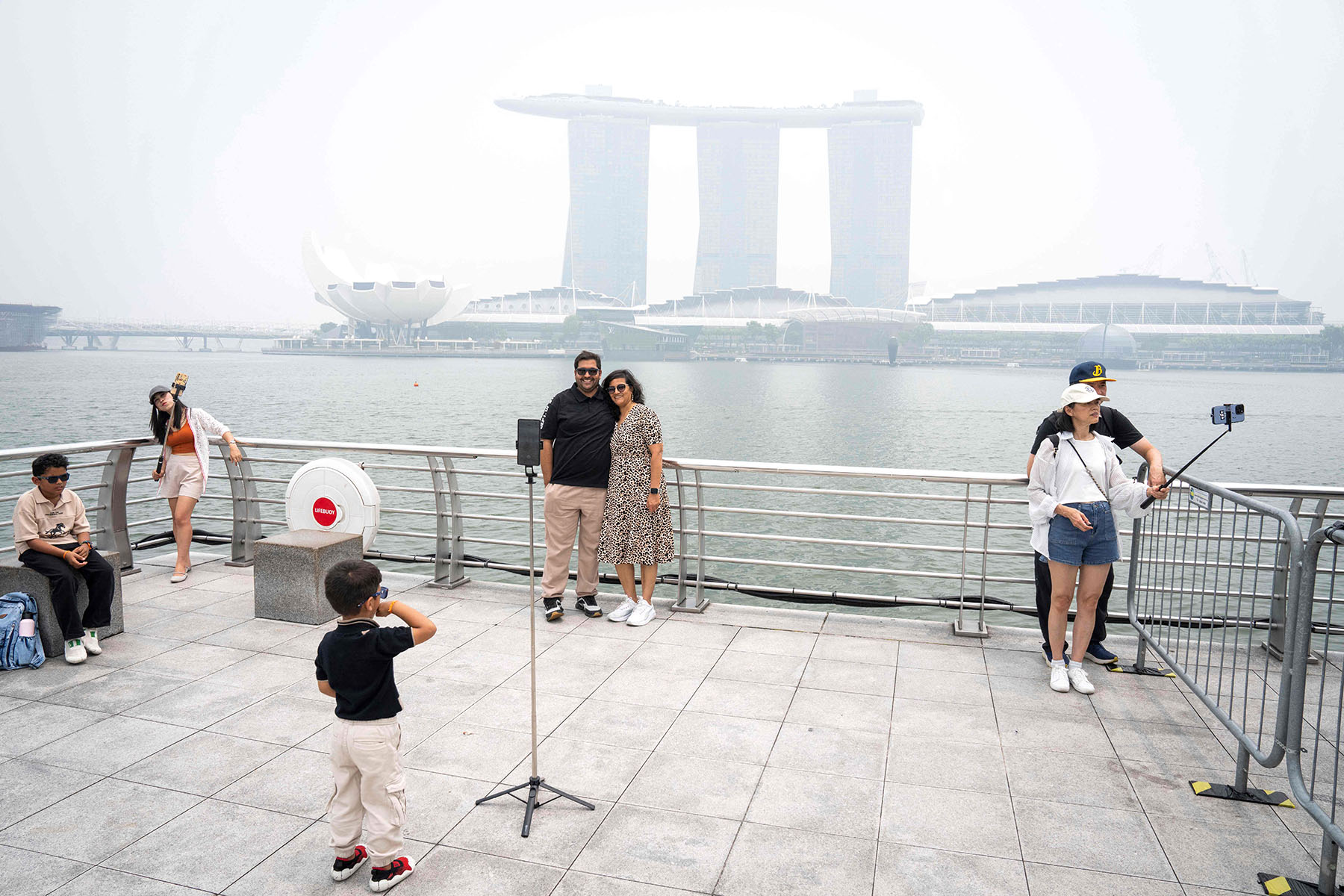
The haze crisis has inflicted heavy economic costs on Southeast Asia, as the seasonal irritant weighs on some of the region's key industries, including agriculture, manufacturing, tourism and aviation.
Analysts said this year's transboundary haze — which originated from forest and peatland fires in Indonesia — has shown how an environmental problem can also lead to economic damage.
The toxic smog, which is having a huge impact on the region, is one of the key issues for discussion at the 49th Summit of the Association of Southeast Asian Nations, which is underway in Manila from Sunday to Tuesday.
READ MORE: Haze from Indonesia fires hinders efforts to battle the blazes
Lavanya Venkateswaran, senior economist for ASEAN and India at the Oversea-Chinese Banking Corporation in Singapore, noted that the impact of the haze will likely be felt through lower agricultural production, reduced tourist arrivals, slower construction and outdoor economic activity.
"ASEAN cannot afford to pay this cost again," said Heng Kiah Chun, a regional campaign strategist for Greenpeace Southeast Asia.
Heng noted how the haze is compounding ASEAN's current economic challenges, as it is occurring at a time when a global energy shock is pressuring inflation levels across the region.
He said that people in the region "should not be left paying the price for preventable environmental destruction".
For Helena Varkkey, an associate professor of political ecology at the University of Malaya in Kuala Lumpur, the economic cost of haze has several aspects.
The most immediate is the health cost — which includes additional spending on protective face masks and medicines. And then there are also the productivity losses owing to missed work days.
The haze is also straining fiscal positions, as governments need to spend more on emergency services and cloud seeding.
"During haze, the population is encouraged to remain indoors. If they have air conditioning or air purifiers, they are encouraged to use them. This adds a burden on both private users and on the energy grid as usual," Varkkey said.
She said the haze amplifies social inequality — showing the difference between those who are able to afford to use energy sources to protect themselves against haze, and those who do not have the resources to do so.
In Singapore, the region's business and finance center, Nanyang Technological University professor Euston Quah and Singapore University of Social Sciences' lecturer Eugene Or have estimated that this year's haze has cost the citystate's economy S$2.32 billion ($1.8 billion) as of Oct 31, Singapore's The Business Times newspaper reported.
The estimates are based on health costs and tourism losses as the haze disrupts flights and discourages traveling, and lost time due to illness.
A report commissioned by the Federation of Malaysian Manufacturing noted that the haze disrupted manufacturers indirectly through staff absences and school closures, according to a report filed by online news site Malay Mail.
A webinar organized on Thursday by environmental group Greenpeace, Yayasan Pusaka Bentala Rakyat Foundation and Nusantara Atlas revealed that about 20 provinces in Indonesia had experienced forest fires of varying intensity.
At present, 2.8 million hectares of land have been affected by forest fires, and the figure could reach 3.5 million hectares by the end of the year. Sources of haze include peatland areas and oil palm plantations.
Existing mechanisms
ASEAN members have long battled with seasonal haze and there are existing mechanisms that are meant to address this. The ASEAN Agreement on Transboundary Haze Pollution, which was signed in 2002, requires member countries to monitor fires, share information and take action to control them.
Farhan Julianto, a researcher at the Department of International Relations at the Centre for Strategic and International Studies, Indonesia, said that despite the existence of the agreement, the funding for it is voluntary.
ALSO READ: Ties under cloud
Under Article 20 of the agreement, member states make voluntary contributions to the ASEAN Transboundary Haze Pollution Control Fund.
"Does the current haze make ASEAN countries more open to contribute more funds to the AATHP?" Julianto said.
Grace Fu, Singapore's minister for sustainability and the environment, said the city-state would strengthen the implementation of the pact as it prepares to assume the ASEAN chairmanship in 2027.
Fu told parliament in early November that Singapore will work toward establishing the ASEAN Coordinating Centre for Transboundary Haze Pollution Control in Indonesia to strengthen cooperation and coordination in managing the fires and transboundary haze.
The center will come into force only after at least six member states ratify the agreement to establish it.
Leonardus Jegho in Jakarta contributed to this story.
Contact the writers at prime@chinadailyapac.com
