

MNCs across sectors see region as key hub for innovation, global expansion

For Americhem Inc, a United States-based manufacturer of specialty plastic compounds and additives, a new production facility in Suzhou, Jiangsu province, is more than an investment in China. It is part of a broader strategy to serve customers across the Asia-Pacific region through closer integration of manufacturing, innovation and supply chains.
The company's new clean compounding facility — which began operations in late September — will support growing demand for advanced materials in healthcare and other high-value industries, connecting China's manufacturing capabilities with Americhem's global technical and production network.
Rose Tu, Americhem's vice-president for the Asia-Pacific region, said the company's strategy is to invest where its customers operate, bringing manufacturing, engineering and technical expertise closer to customers in China and other regional markets, particularly in Asia-Pacific Economic Cooperation (APEC) economies where demand for advanced materials continues to grow.
Tu said the Suzhou facility complements Americhem's operations in the US and Denmark, enabling the company to provide consistent quality and technical support across different locations.
Americhem's investment reflects a broader trend among multinational companies from APEC economies and beyond, including the US, Japan, New Zealand and Germany, as they increasingly use China as a manufacturing, innovation and supply chain hub to serve regional and international markets.
Lyu Daliang, director of the General Administration of Customs' department of statistics and analysis, said innovation has become a key driver of trade growth between China and other APEC economies.
"Closer cooperation in electronics, automobiles and machinery has strengthened industrial and innovation ties, boosting trade in high-tech products," Lyu said.
China's trade in high-tech products with other APEC economies surged 50.3 percent year-on-year to 6.66 trillion yuan ($1 trillion) in the first three quarters, exceeding the full-year 2025 total.
The country's imports of electronic components from other APEC economies increased 56 percent during the same period, the GAC said.
Hu Jiangyun, a researcher at the Development Research Center of the State Council — the nation's Cabinet — said China's role in Asia-Pacific supply chains is evolving beyond that of a manufacturing and export base, as multinational companies increasingly use their operations in the country to provide technology, engineering and specialized services to customers across APEC economies.
Zhao Ping, head of the China Council for the Promotion of International Trade's academy, said China's extensive industrial network, skilled workforce and growing innovation capabilities allow foreign companies to integrate local production with regional distribution and after-sales services.
"Such arrangements can help reduce operating costs, improve supply chain efficiency and create new opportunities for cross-border investment and industrial cooperation," said Zhao.
Speaking at a news conference in Shenzhen, Guangdong province, on Monday, Li Chenggang, China's international trade representative and vice-minister of commerce, said a more dynamic and resilient Asia-Pacific economic and trade cooperation, especially in areas such as artificial intelligence and green development, will make a greater contribution to the world economy amid rising global uncertainties.
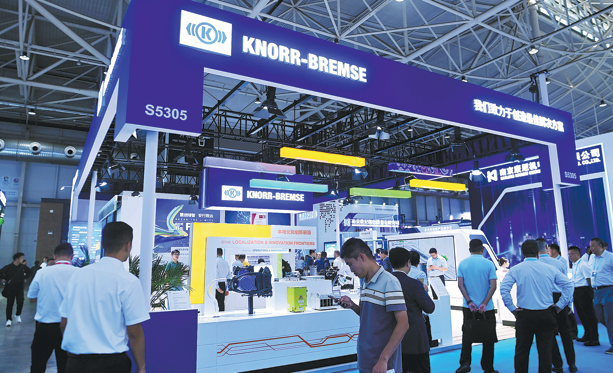
This trend is evident in the rail transport sector, where Knorr-Bremse Group — a German manufacturer of braking systems for trains and commercial vehicles — uses its manufacturing and service operations in Jiangsu province to support transport networks across APEC economies and other international markets, said Nanjing Customs.
At its Suzhou facility, technicians repair and test hydraulic brake calipers and other components of subway systems in other APEC economies, including South Korea and several Southeast Asian countries.
Once refurbished, the parts are shipped back overseas for reuse, extending their service life and supporting more resource-efficient rail operations, said Cao Guoji, vice-president for Knorr-Bremse's rail vehicle systems in China.
In the consumer goods sector, Leo Liu, general manager for China at Grin, a New Zealand-based oral care company, said a more integrated Asia-Pacific economy would help businesses across APEC and beyond tap into China's vast consumer market, expand local operations and forge closer ties with regional supply chains.
"China has become Grin's most important market globally," Liu said, adding that the company is expanding its Shanghai office, recruiting local management talent and bringing more functions related to branding, research and development, and supply chain management to the city.
"Grin will deepen localization, expand into lower-tier Chinese cities and develop more tailored products to meet evolving consumer demand in China and other APEC economies," he added.
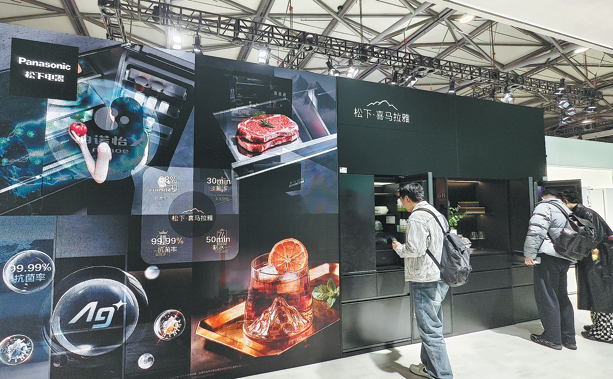
On the importance of regional cooperation, Masaharu Nakayama, executive vice-president of Japanese industrial conglomerate Panasonic Corp, said the Asia-Pacific region's economic vitality stems from openness and cooperation, emphasizing that trade protectionism disrupts industrial and supply chains, and undermines long-term development.
The business community should promote deeper integration of supply chains and value chains to advance the development of the Free Trade Area of the Asia-Pacific, enhance connectivity and explore new growth opportunities in artificial intelligence, the digital economy and sustainable development, he added.
