

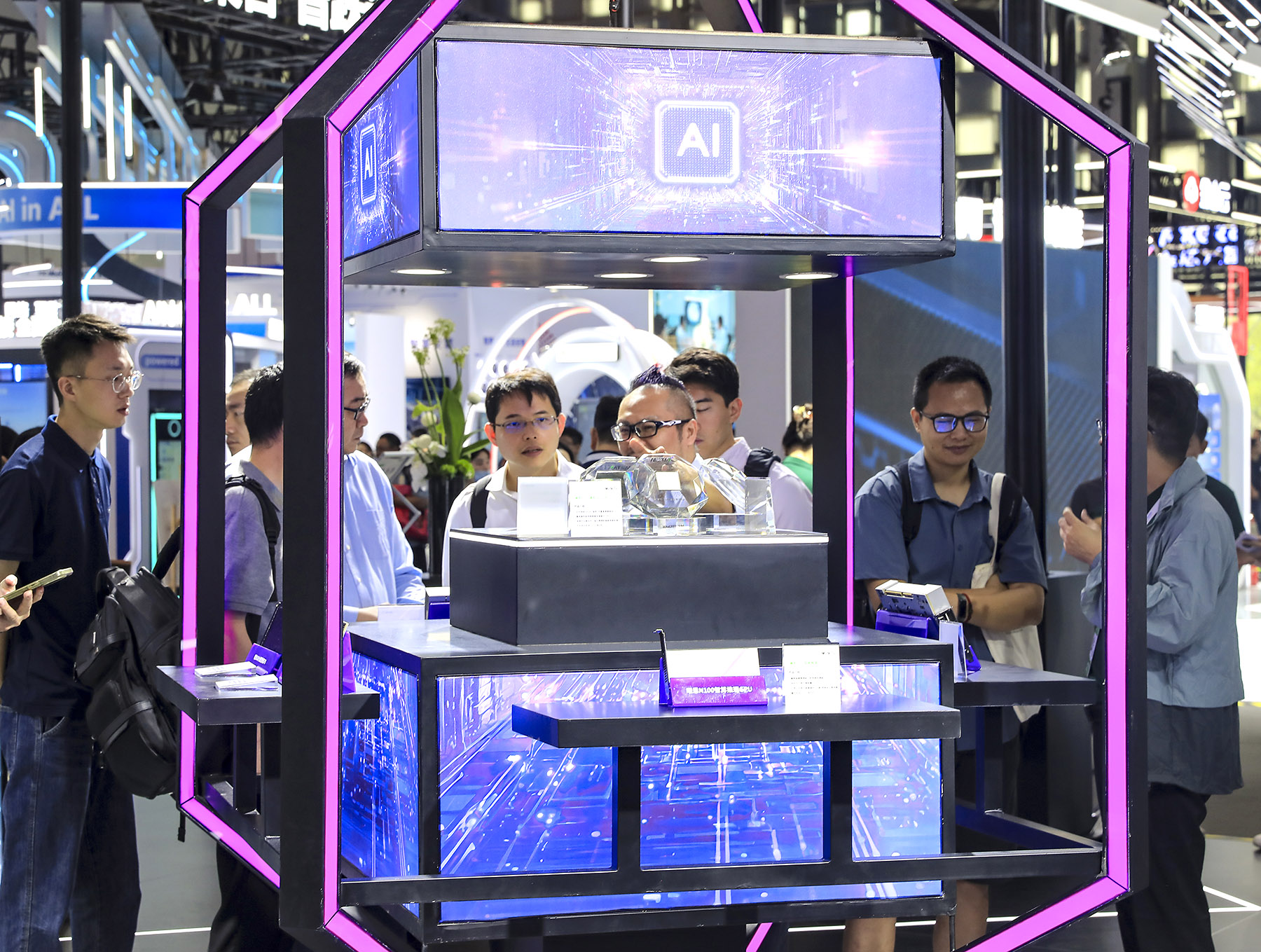
While the abrupt resignation of Nvidia founder Jensen Huang is sending shock waves through global AI supply chains, the uncertainties not only pose a near-term risk to Chinese suppliers tied to Nvidia’s global orders, but will also accelerate the commercial adoption of China’s indigenous AI computing industry, experts said.
The comments came after the Financial Times reported that Huang is considering a comeback after his resignation on Nov 12. The report, citing people familiar with the matter, said Huang had discussed the possibility of returning with confidants as calls for his reinstatement intensified.
Nvidia’s board is not currently considering restoring his role, however, according to CNBC. Nvidia did not immediately respond to requests for comment.
ALSO READ: China dismisses espionage claim in Nvidia CEO case
Roger Sheng, vice-president at US research firm Gartner, said Huang was the pivotal figure in Nvidia’s supply chains, linking demand-side financing to supplyside execution.
“The leadership vacuum at the world’s most valuable chip company has immediate ramifications for Chinese companies embedded in Nvidia’s supply chain. Without him, Asian suppliers, including Chinese companies, will inevitably be affected,” Sheng said.
According to him, Huang’s departure has created a chain effect, which emboldened hardline voices in Washington to push for tighter AI curbs.
The US government said on Monday that it was tightening what it alleged was a “loophole” that has allowed Chinese tech firms to bypass US restrictions on accessing the most advanced AI chips through third countries.
The new rule, released by the US Commerce Department, will require buyers of advanced semiconductors from certain countries to secure a license before selling or transferring those chips.
A spokesperson for China’s Ministry of Commerce said on Tuesday that China is strongly dissatisfied with and firmly opposed to the new rule.
“The US side has been overstretching the concept of national security, abusing export controls and meddling in normal trade cooperation between Chinese companies and companies from other countries. If the US insists on going its own way, China will take countermeasures and resolutely safeguard its national sovereignty, security and development interests,” the spokesperson said.
“The latest restriction and Huang’s departure further underscore the necessity for China’s domestic AI chip supply chain to catch up,” Sheng added.
READ MORE: Marching into an AI-ready evolution
Liu Dian, associate researcher at Fudan University’s China Institute, said Huang’s role encompassed technology road mapping, ecosystem organization and supply chain coordination in ways difficult to replicate quickly.
Chen Haijin, analyst at Soochow Securities, said Huang’s departure reinforces a core concern among Chinese cloud operators, supercomputing centers and AI enterprises: reliance on a single foreign hardware vendor carries unacceptable geopolitical and operational risks.
As a result, domestic buyers are accelerating the diversification of their procurement portfolios, opening more testing and largescale deployment opportunities for homegrown AI accelerators, including Huawei’s Ascend, Cambricon and Moore Threads, Chen added.
According to data from US market research firm International Data Corp, Nvidia’s share of China’s data center AI chip market fell to 34 percent in the first half of 2026, a significant drop from its near-monopoly levels. Meanwhile, Huawei’s share rose to 28 percent, and the domestic camp as a whole now commands a clear majority, with nine of 11 domestic chip makers posting year-on-year growth in shipments.
CITIC Securities said in a research note that looking ahead, Chinese cloud service companies are expected to further increase procurement of domestic AI chips, which will grab bigger market shares.
But experts also warned that the software ecosystem remains the biggest bottleneck for domestic substitution. Nvidia’s CUDA platform has built a dominant moat among AI developers. While hardware performance of domestic chips is catching up rapidly, migration costs for large model developers remain high, experts said.
The disruption to Nvidia’s leadership offers a rare window for the domestic software ecosystem to mature, as more users are willing to invest resources in adapting to non-CUDA architectures, they added.
Contact the writer at masi@chinadaily.com.cn
