

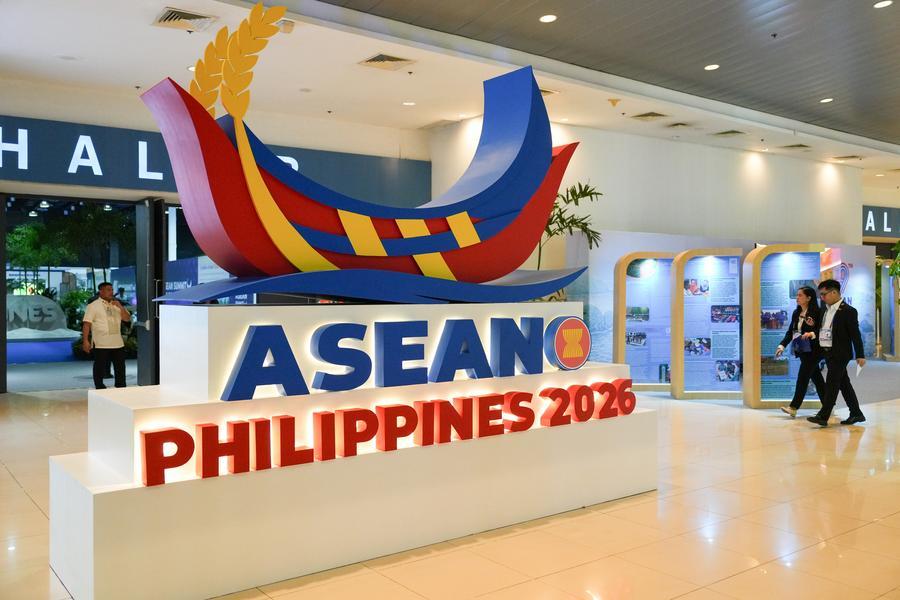
MANILA – As a landmark outcome of the 49th ASEAN Summit and Related Summits, the ASEAN Digital Economy Framework Agreement was signed on Saturday in Manila, aiming to bolster a regional digital economy that is expected to reach $2 trillion by 2030.
Described as "the world's first most comprehensive regional agreement on the digital economy," it marks a major milestone in the 11-member bloc's journey toward an open, secure, interoperable, competitive and inclusive digital economy.
Over the past few years, the digital economy, represented by artificial intelligence (AI), cross-border e-commerce and mobile payments, has played an increasingly important role in China-ASEAN economic and trade relations.
Experts said the signing of the agreement, along with Monday's announcement of the China-ASEAN Free Trade Area 3.0 Upgrade Protocol to take effect on Dec 1, will further strengthen practical cooperation among member states and lay a more solid foundation for shared regional growth.
Building a shared digital ecosystem
Based in South China's Guangxi Zhuang autonomous region, the RunDo platform run by Runjian Co, Ltd is translating China-ASEAN cooperation in the digital economy into tangible applications.
Using drones and AI to oversee the operation of nearly 3,000 solar power sites in Malaysia, with a combined capacity of nearly 300 megawatts, the platform has significantly reduced the need for manual inspections. "The platform has boosted maintenance efficiency by over 30 percent and cut labor costs by more than 20 percent," said Yang Yexi, marketing manager of the company's Guangxi branch.
By drawing on computing infrastructure in Nanning, capital of China's Guangxi, ASEAN firms can access models and computing power remotely without building large centers of their own, Yang said, noting that Runjian has already launched more than 80 such computing projects across the region.
In infrastructure development, China has established cross-border terrestrial fiber-optic cable networks connecting with Vietnam, Laos, and Myanmar. Chinese companies have also helped advance 5G in Thailand and build data centers in Malaysia, expanding digital access across the region.
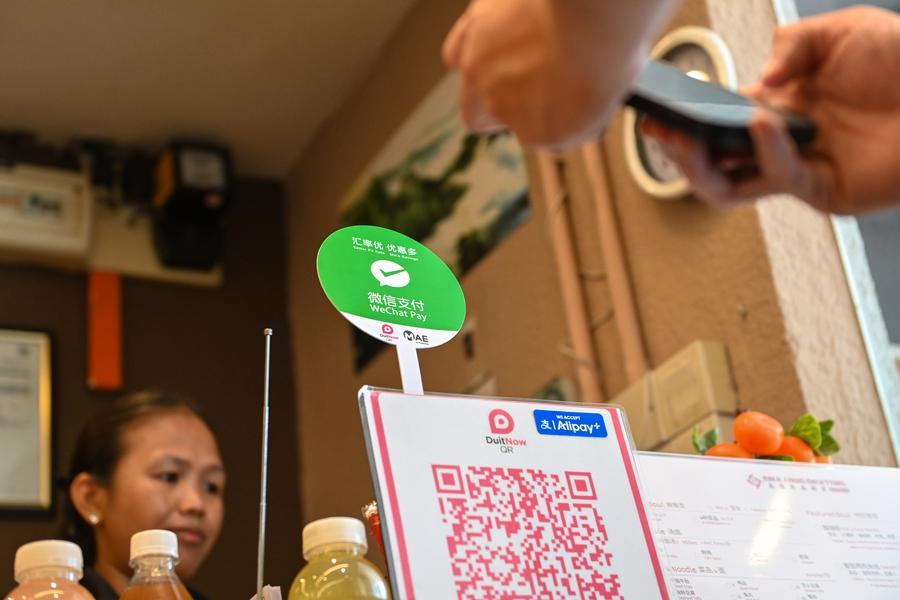
Mobile payment services are another area of the growing China-ASEAN cooperation. In April, Chinese digital payment platform WeChat Pay announced that users could make payments in countries including Thailand, Malaysia and Singapore by scanning local QR codes.
READ MORE: Chinese premier urges China, ASEAN to stand united, overcome distractions
With the signing of the ASEAN Digital Economy Framework Agreement and the inclusion of a dedicated digital economy chapter in the China-ASEAN Free Trade Area 3.0 Upgrade Protocol, regional cooperation in this field is poised to deepen further.
The prospects for digital economy cooperation between China and ASEAN are promising, said Lye Liang Fook, associate senior fellow at ISEAS-Yusof Ishak Institute.
He noted that both sides should step up efforts to develop secure digital infrastructure, including 5G networks and undersea cables, supported by reliable supplies of renewable energy.
They should also accelerate cross-border digitalization through the use of e-certificates and electronic documents to reduce transaction costs for micro, small and medium-sized enterprises, which account for more than 90 percent of all enterprises in Southeast Asia, Lye said.
Solid foundation for cooperation
In recent years, many ASEAN countries have ramped up investment and rolled out initiatives to accelerate the development of their digital economies.
Indonesia, for instance, has released a white paper outlining its digital economy development plans through 2030, with a focus on expanding digital finance and e-commerce. Thailand, meanwhile, has approved 34 data center and data hosting projects worth a combined $21.34 billion since 2025, as it seeks to position itself as a regional hub for digital infrastructure.
Against this backdrop, ASEAN countries are increasingly looking to deepen digital cooperation with China, as they believe bilateral digital cooperation rests on a solid foundation.
ALSO READ: China working with ASEAN for shared future
China and ASEAN have a strong foundation for digital economy cooperation because the two sides complement each other, said Tinn Wong, a research fellow with Malaysia's Center for Advanced Studies and Research.
China has a relatively advanced digital economy, while ASEAN, home to around 680 million people, offers a growing consumer market with a young population and rising demand for digital services and infrastructure, he said, adding that these complementary strengths create significant opportunities for cooperation between the two sides.
Lucio Pitlo, a member of the board of directors of the Philippine Association for Chinese Studies, noted that China has a well-developed digital commerce sector, robust digital connectivity, and strong capabilities in fintech and logistics. He added that China could also help ASEAN strengthen the security and integrity of online transactions through capacity building in cybersecurity.
Similarly, Lye said that ASEAN countries vary in their capacity to tap into opportunities in the digital and green economies. While some urgently need to upgrade their digital infrastructure, others lack the necessary know-how, technical expertise and skilled workforce. "These are areas where China can assist and be of great help," he said.

From digital synergy to shared future
Digital economy cooperation can add a new dimension to China-ASEAN relations, Wong said. He noted that beyond trade and investment, it is about forging closer economic ties and ensuring that both sides remain competitive in an increasingly digital global economy.
As the China-ASEAN Free Trade Area has progressed from tariff cuts on most goods in Version 1.0 to greater market access to services and investment in Version 2.0, and now to Version 3.0 covering areas such as the digital economy and green development, the digital economy has become an important driver of bilateral economic and trade growth, bringing the two sides closer.
READ MORE: ASEAN, China to deepen ties for disaster governance
Amid a complex and volatile international landscape, China and ASEAN have further consolidated their status as each other's most active investment partners.
In 2025, two-way trade exceeded 1 trillion dollars for the first time. China has remained ASEAN's largest trading partner for 17 consecutive years, while ASEAN has been China's largest trading partner for six years in a row.
From traditional trade and investment to emerging areas such as the digital economy, green and low-carbon development, and industrial and supply chain cooperation, the map of China-ASEAN collaboration continues to expand.
The China-Laos Railway and the Jakarta-Bandung High-Speed Railway are operating smoothly, while Malaysia's East Coast Rail Link is scheduled to begin commercial passenger services in mid-December. These flagship connectivity projects are not only supporting regional development but also helping lay a solid foundation for a closer China-ASEAN community with a shared future.
