

Peru's Chancay Port, first smart and green harbor in South America, shining example of what collaborative development can achieve
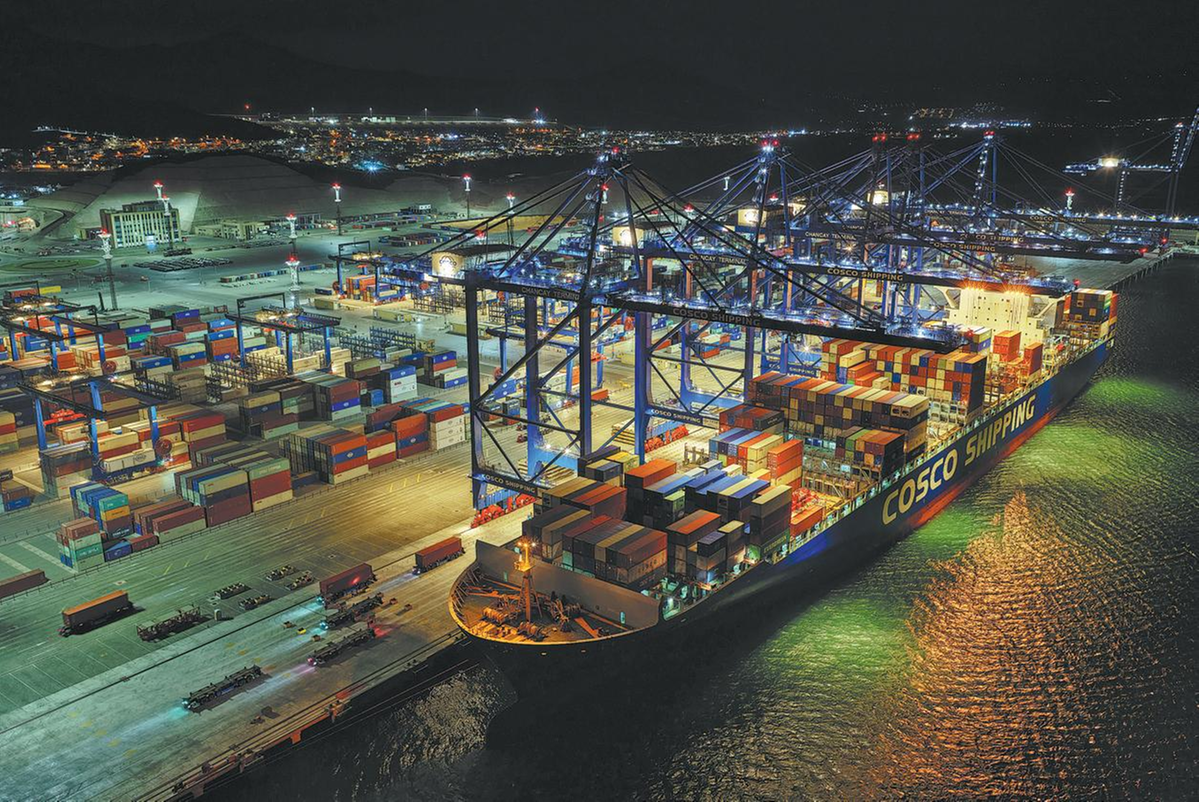
As leaders and delegates focus on advancing regional economic integration under the framework of Asia-Pacific Economic Cooperation, a transformative megaproject on the eastern Pacific coast stands as a powerful testament to these shared goals.
Chancay Port in Peru, a vital APEC economy, has rapidly evolved into a pivotal logistics hub connecting Latin America with Asia, breathing life into the vision of a seamlessly interconnected Asia-Pacific.
Inaugurated in November 2024, the port was hailed by Chinese President Xi Jinping as the starting point of an Inca Trail of the New Era. Nearly two years into its operation, this flagship Belt and Road Initiative project — majority-owned by China's COSCO Shipping — has turned that grand vision into a tangible reality. By slashing the one-way maritime transit time between Peru and China from roughly 35 days to just 23 days, the deep-water port has reduced logistics costs by more than 20 percent, fundamentally reshaping trans-Pacific trade dynamics.
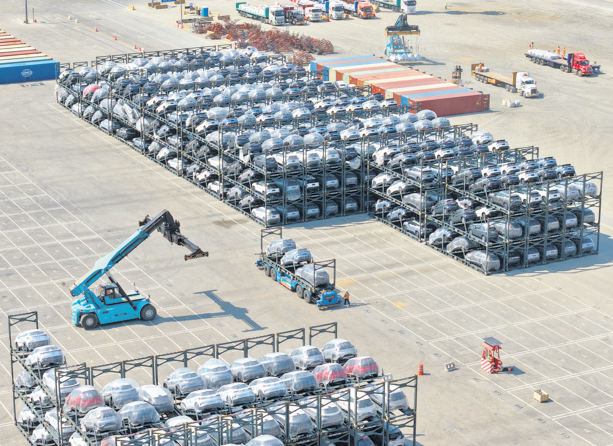
The $3.5 billion smart port has not only revolutionized Peru's foreign trade, but also catalyzed economic integration across the broader Latin American region. With the launch of new feeder services like the Chancay Express Service 3 — known as CHX3 — which links Peru with Costa Rica, Chancay's reach now extends to neighboring countries such as Brazil, Ecuador, Colombia and Chile. Carlos Aquino, director of the Center for Asian Studies at Peru's National University of San Marcos, said that if Brazil routes its cargo through Chancay to China, it could save upwards of 15 days in transport time, highlighting the port's immense geopolitical and economic magnitude.
Over the past two years, the port has generated $3.65 billion in import and export trade, handling half a million twenty-foot equivalent units of containers. It is projected to bring $4.5 billion in annual economic benefits to Peru and create over 8,000 direct jobs. Furthermore, new direct shipping routes linking Chancay with major Chinese logistics hubs — including Shanghai, Guangzhou in Guangdong province and Nanjing in Jiangsu province — have established a comprehensive maritime network. A dedicated postal route for cross-border e-commerce has also been launched, cutting delivery lead times by over 20 days and offering a cost-effective solution for mass consumer products.
Beyond macroeconomics, the "From Chancay to Shanghai" shipping link has profoundly transformed the lives of local entrepreneurs. At the just-concluded China International Import Expo in Shanghai, Peruvian artisans showcased handmade alpaca figurines and exclusive blueberry jams.
Santusa Ansia Mamani Vilca, an indigenous weaver, said that the port has empowered local women by providing them with a direct channel to the vast Chinese market, thereby raising household incomes and preserving traditional culture. "Even tiny consignments now stand a chance to be showcased to Chinese buyers," said Wang Bin, general manager of COSCO Shipping Ports Chancay Peru.
Setting a benchmark for modern infrastructure, Chancay operates as South America's first smart and green port. Powered entirely by green electricity, the facility boasts zero carbon emissions during operations. It utilizes artificial intelligence, digital twin technology and the internet of things to achieve 24/7 automated cargo processing. This commitment to sustainable development perfectly aligns with APEC's agenda for green growth and digital innovation.
The physical infrastructure is complemented by deepening institutional and cultural ties. The recently upgraded China-Peru Free Trade Agreement has further streamlined customs procedures, while cultural exchanges have fostered profound mutual understanding, making the port a true bridge of civilizations.
As the Asia-Pacific community continues to champion open trade and mutual prosperity, Chancay Port stands as a shining example of what collaborative development can achieve. By bridging the geographical divide, this modern maritime artery is forging a resilient, inclusive and prosperous future for the entire Asia-Pacific region.
