

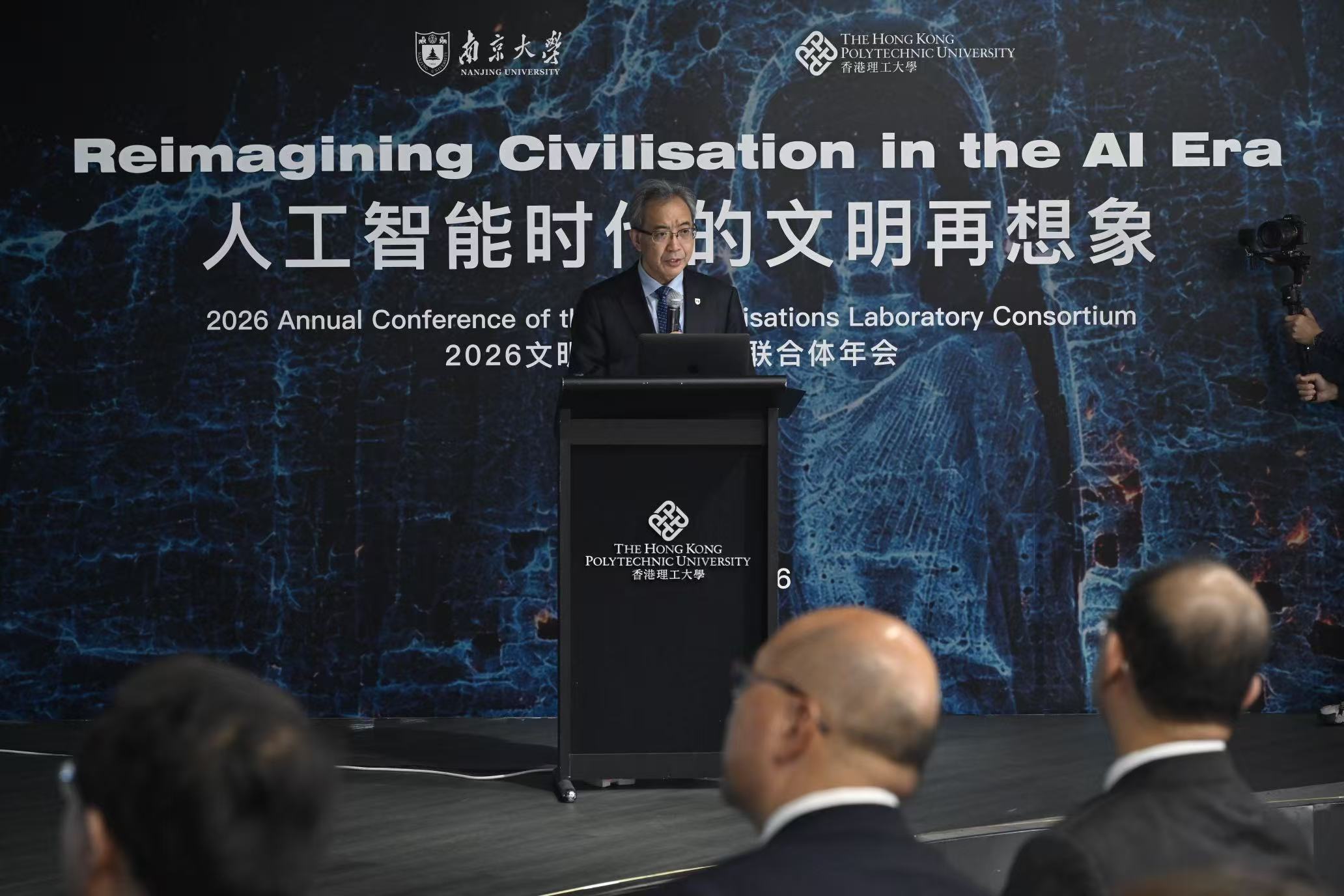
The 2026 annual conference of the World Civilisation Laboratory Consortium (WCLC) held its opening ceremony on Thursday at the Hong Kong Polytechnic University, themed "Reimagining Civilisation in the Hong Kong Polytechnic University AI Era: Digital Futures, Cultural Heritage and Global South Perspectives".
Jointly hosted by Nanjing University and PolyU, with the Hong Kong Jockey Club serving as a supporting organization, the conference brings together experts and scholars from multiple countries and regions worldwide, to explore the deep integration of cutting-edge digital technologies, such as artificial intelligence, with the study of human civilization.
In his opening address, Tan Zhemin, president of Nanjing University, said, "The current development of AI technology has expanded humanity's capacity for self-awareness, while presenting new questions on how civilization is recorded, understood, and communicated."
ALSO READ: Diversified investment necessary amid potential AI bubble
To navigate the AI era, Tan said we must serve as guardians of civilization's memory, pioneers of academic innovation, and practitioners of mutual learning among civilizations.
"We must leverage digital and intelligent capabilities to sustain our historical context, expand our cognitive boundaries through interdisciplinary integration, and pool global wisdom via open collaboration, allowing diverse civilizations to enlighten each other through equal dialogue," he said.
Wong Wing-tak, deputy president and provost of PolyU, pointed out that AI is advancing at an unprecedented pace, reshaping cultural communication and societal operations, while altering how we perceive the world and generate knowledge across numerous fields.
"How technology impacts civilization and how technological development can better serve human society and cultural heritage are, in my view, precisely the crucial mission of civilization studies in the AI era," Wong said.
Speaking in an interview, Wong said that complex challenges can rarely be solved by a single discipline alone.
READ MORE: HK urged to establish regulatory framework for agentic AI, tokenization
"Humanities and hard sciences ought to be integrated. In this era, an interdisciplinary approach is essential. When scholars with different training and specializations exchange ideas on the same topic from distinct perspectives, new insights emerge. This conference serves as an excellent demonstration," he said.
Raymond Tam Chi-yuen, executive director of Corporate Affairs at the Hong Kong Jockey Club, said in his speech that while embracing innovation, key efforts must be made to safeguard humanity's shared cultural values.
"Through today's platform for international exchange, we look forward to bringing together more voices from the Global South and diverse cultural backgrounds to jointly offer new insights and inspiration for the future development of human civilization," he said.
Running from Wednesday to Friday, the three-day event includes several interdisciplinary academic forum discussions on future cooperation plans, and a conference on academic synthesis.
READ MORE: AI crossroads: The philosophical rift in model development
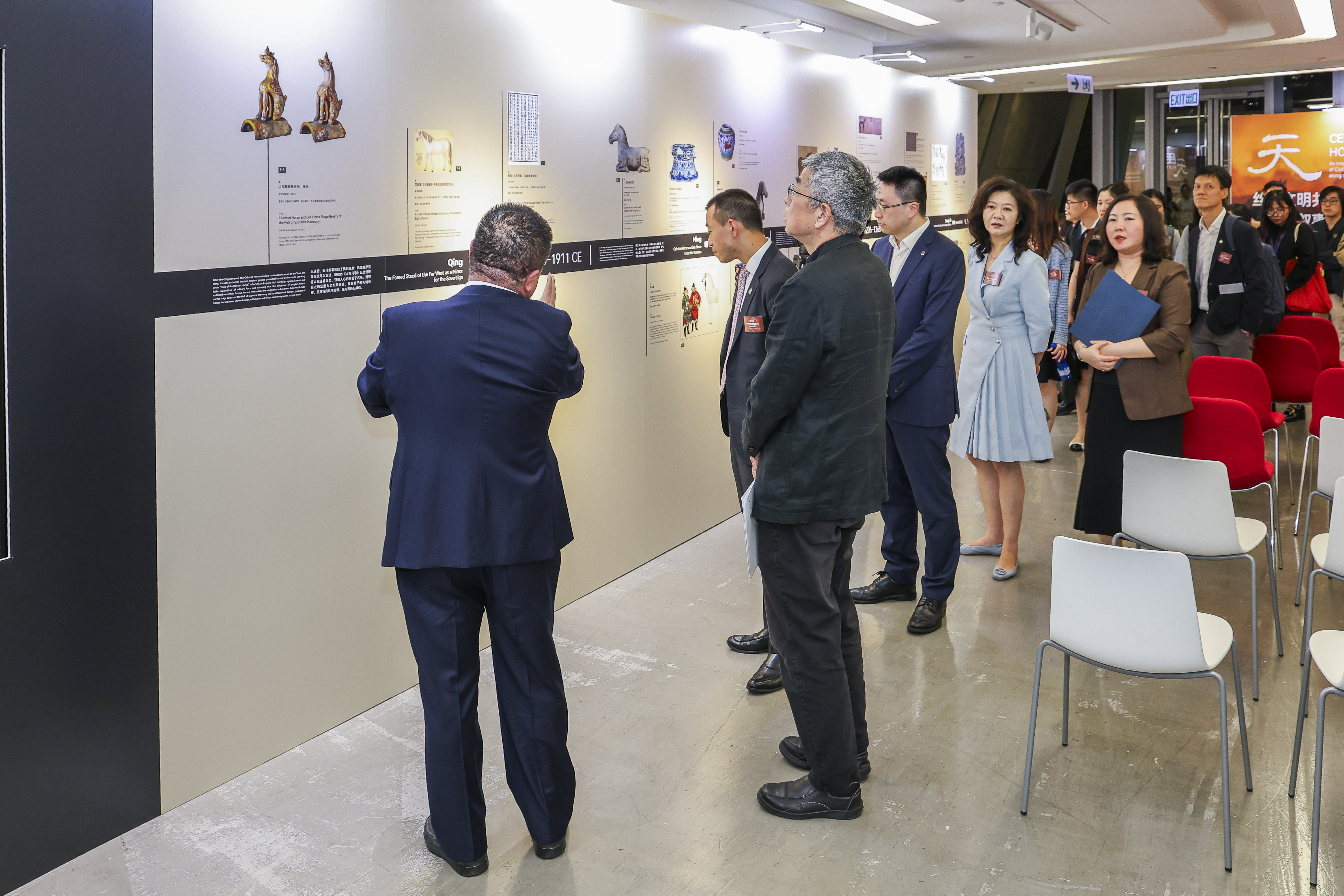
The event also features a special exhibition titled Celestial Horse: An Interdisciplinary Narrative of Civilizational Coexistence along the Silk Road, which brings together imagery of horses from over 3,000 years of Chinese history and culture, adding a rich cultural foundation to this academic gathering of technology and humanities.
The WCLC was established at Nanjing University in September 2025. Led by the Key Laboratory of Digital and AI Innovation for Chinese Civilization Studies, the consortium was jointly founded with leading institutions including the University of Oxford, the University of Cambridge, Peking University, and Tsinghua University, and currently gathers over 30 institutions from more than 10 countries and regions.
