

From ancient ceramics to hybrid rice, encounters in Changsha help young Chinese and Africans exchange ideas and build lasting friendships.
At the Changsha Tongguan Kiln Museum in Hunan province, Rachid El Housseini Hilal, a Moroccan student at Hangzhou Dianzi University, was fascinated by centuries-old ceramics bearing Arabic inscriptions.
Recovered from the Tang Dynasty (618-907) Belitung shipwreck, the artifacts reminded him of the historical connections between China and the Arab world, as well as the pottery traditions of Safi, a Moroccan city known for its ceramics.
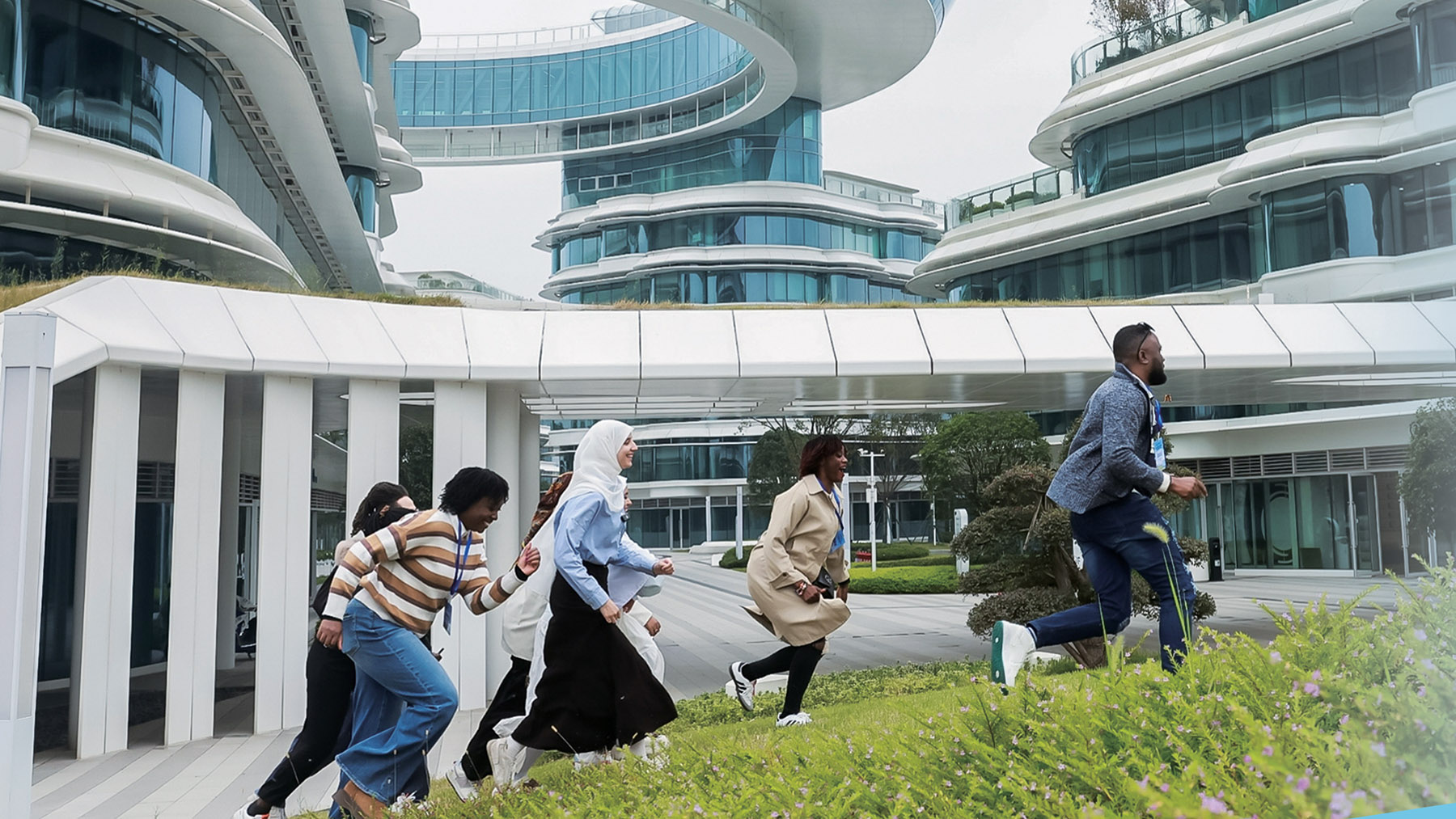
El Housseini Hilal was among young representatives from China and African countries, including Namibia, Nigeria, Morocco, Sierra Leone and Burkina Faso, who participated in the 2026 "Discover Youthful Changsha, a City of Opportunity "China-Africa Youth Exchange Event, held from Oct 21 to 23 in Changsha, capital of Hunan province.
READ MORE: Next-gen leaders foster China-Africa ties
The event took place during the China-Africa Year of People-to-People Exchanges, marking the 70th anniversary of the start of diplomatic relations between China and African countries. It aimed to deepen mutual understanding and friendship while exploring opportunities for cooperation.
Under the theme "Dreaming Big in Changsha, Together with Africa", the three-day program was jointly organized by the publicity department of the CPC Changsha Municipal Committee and China Daily. Participants visited research institutions, cultural landmarks and industrial sites, gaining firsthand insights into the city's cultural heritage, scientific innovation and economic vitality.
The program culminated in the 2026 China-Africa Young Voices Dialogue in Changsha, which brought together more than 150 youth representatives, scholars and guests and saw the release of the Changsha Initiative for Chinese and African Youth.
Addressing the event, Zhao Xuefeng, deputy director of the publicity department of the CPC Changsha Municipal Committee, encouraged young people to carry forward China-Africa friendship, promote people-to-people exchanges and contribute to practical cooperation.
Sparking cooperation
For El Housseini Hilal, the visit to the Changsha Tongguan Kiln Museum revealed not only historical connections but also opportunities for future cultural collaboration.
He was struck by the similarities between some Chinese ceramics and pottery produced in his home country.
"Some of the pottery shares traditional Chinese elements, such as blue-and-white glazing and intricate geometric and floral patterns," he said. "Yet Moroccan pottery has its own distinctive colors and Islamic-inspired designs. But I believe these similarities and differences could inspire artistic collaboration and help introduce Moroccan heritage to Chinese audiences."
Inspired by the visit, El Housseini Hilal proposed establishing a creative market during the youth dialogue, where Chinese and African students could showcase their artwork and jointly develop cultural products.
He also hopes to introduce more Moroccan products to the Chinese market, creating opportunities for cultural exchange and business cooperation.
Jeronimo Kateya, a Namibian student pursuing a master's degree in digital communication at the Communication University of China (CUC), also noticed similarities between Chinese ceramics and traditional pottery-making in his country.
The visit prompted him to reflect on the importance of preserving indigenous knowledge and passing traditional skills on to future generations.
"We have similar knowledge and skills, but ours may be more traditional," he said. "Chinese museums inspire me that we need to revive these traditional practices and bring them into the modern world."
For Bintu Sudan Sesay, a student from Sierra Leone pursuing a master's degree in journalism and digital communication at CUC, her first visit to Changsha offered an opportunity to explore the city's cultural heritage.
From watching traditional performances at the Fire Palace, a historic cultural landmark in Changsha, to learning about the history of Chinese ceramics at the Changsha Tongguan Kiln Museum, each experience deepened her interest in the city.
The visit also reinforced her belief that cultural exchange should be a two-way process.
"In Sierra Leone, we value our cultural identity, just as China values its cultural identity and traditions," she said. "I was excited to see Chinese people embracing African culture."
For the participants, these experiences highlighted how cultural exchange involves not only discovering similarities between civilizations but also appreciating their distinctive traditions and learning from one another.
Beyond exploring cultural connections, the young participants also discovered opportunities for scientific cooperation that could help address challenges in their home countries.
After visiting the Hunan Hybrid Rice Research Center and Yuelushan Laboratory Cluster Area, El Housseini Hilal was impressed by China's efforts to share agricultural innovations with other countries.
"What surprised me most was that China had this agricultural breakthrough and didn't decide to keep it to itself, but decided to share it with the world," he said.
He was especially encouraged to learn about research centers in African countries where Chinese experts help train local researchers and share agricultural knowledge and technology.
For Carole Sanogo, a 23-year-old environmental science and engineering student from Burkina Faso studying at Tiangong University in Tianjin, the visits highlighted the potential of scientific innovation to address environmental challenges.
She was particularly impressed by newly developed rice varieties that accumulate less cadmium from contaminated soil.
"As an environmental researcher, I found this innovation remarkable because these low-cadmium crops offer a groundbreaking solution for agricultural safety on heavy-metal-polluted soils," she said.
Kateya also saw the potential of agricultural research to address a pressing concern in his home country: food security.
The visit to the hybrid rice research center left him amazed by how tiny rice seeds could help feed millions of people.
"I hope academic exchanges will enable more African students to study at Chinese universities, acquire practical skills and return home to contribute to agricultural development," he said.
For the participants, scientific cooperation offered more than an opportunity to learn about China's achievements. It also provided a chance to acquire knowledge and skills they could apply back home.
Forging friendships
While cultural and scientific cooperation offered opportunities for mutual learning, participants also emphasized that lasting partnerships depend on genuine personal connections.
For Chinasa Lovlyn Nwachukwu, a 28-year-old Nigerian student pursuing a master's degree in vehicle engineering at Tianjin University of Technology and Education, face-to-face exchanges provide an opportunity to challenge assumptions and gain a deeper understanding of cultural differences.
"Sometimes people rely mainly on what they see on social media, which may only show one part of the picture, and sometimes the information may not even be accurate," she said.
"When young people from China and Africa have the opportunity to interact directly, they can share their experiences and understand each other in a more authentic way," she continued.
Having studied in China since 2019, Nwachukwu believes youth exchanges should go beyond business and other formal activities, giving young people opportunities to experience everyday life in one another's countries.
ALSO READ: Youth forge stronger ties
The Changsha trip also brought together young people from different countries who might otherwise never have met.
Sanogo recalled exchanging stories about languages, traditions and student life with fellow participants during meals and cultural visits.
Listening to their experiences broadened her perspective and encouraged her to reflect on her future in environmental science.
"These interactions teach us active listening, empathy and open-mindedness," she said.
Sanogo believes friendships formed through such encounters can become a source of mutual encouragement and growth.
For Sesay, the three-day visit left her eager to discover more about Changsha and its people.
She hopes to return someday, perhaps on her own, to explore the city more deeply.
Contact the writers at guojiatong@i21st.cnx
