

A new generation of Chinese artists explores overlooked histories, grassroots creativity and personal experiences in an increasingly digital world, Yang Yang reports.
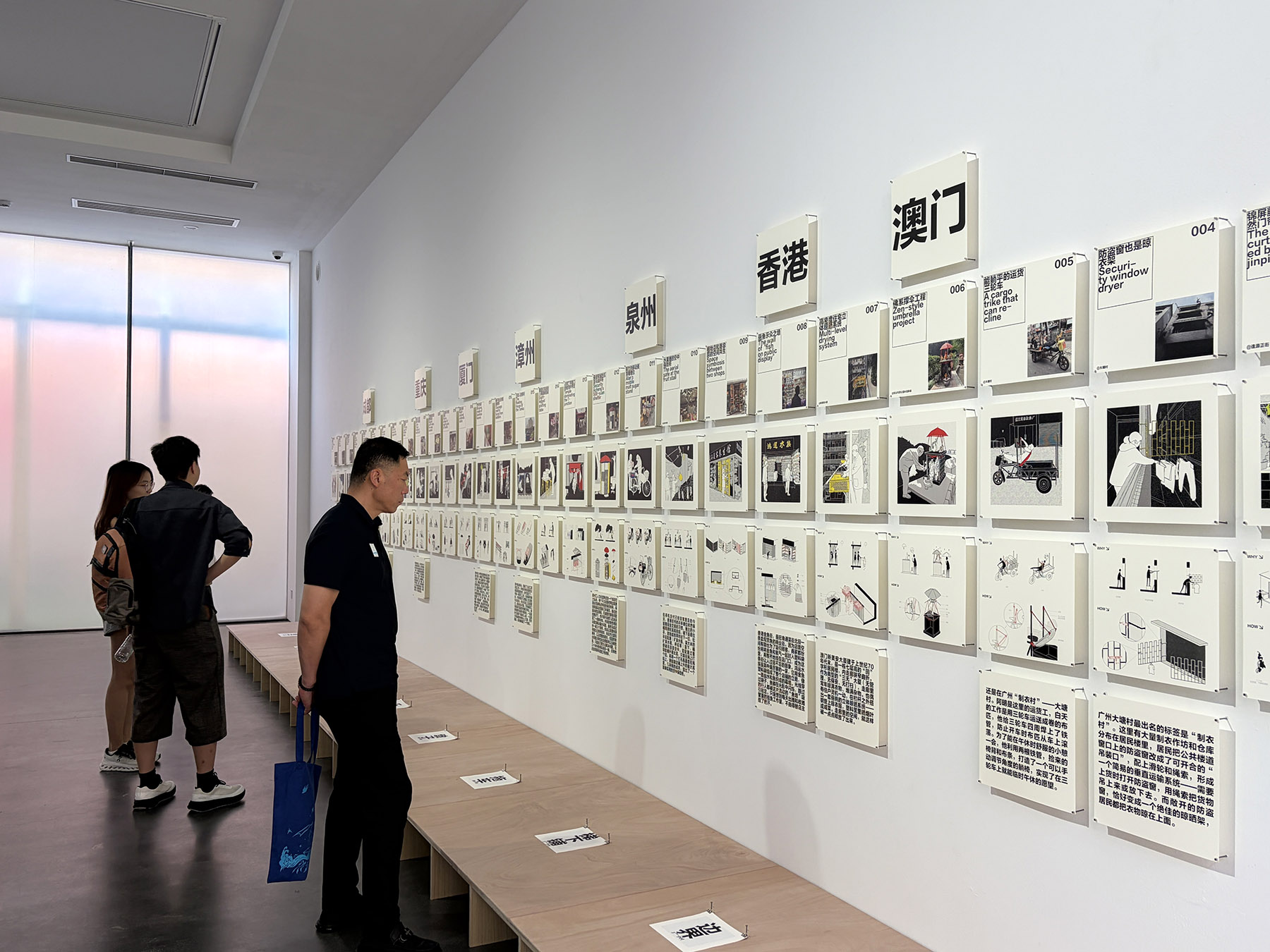
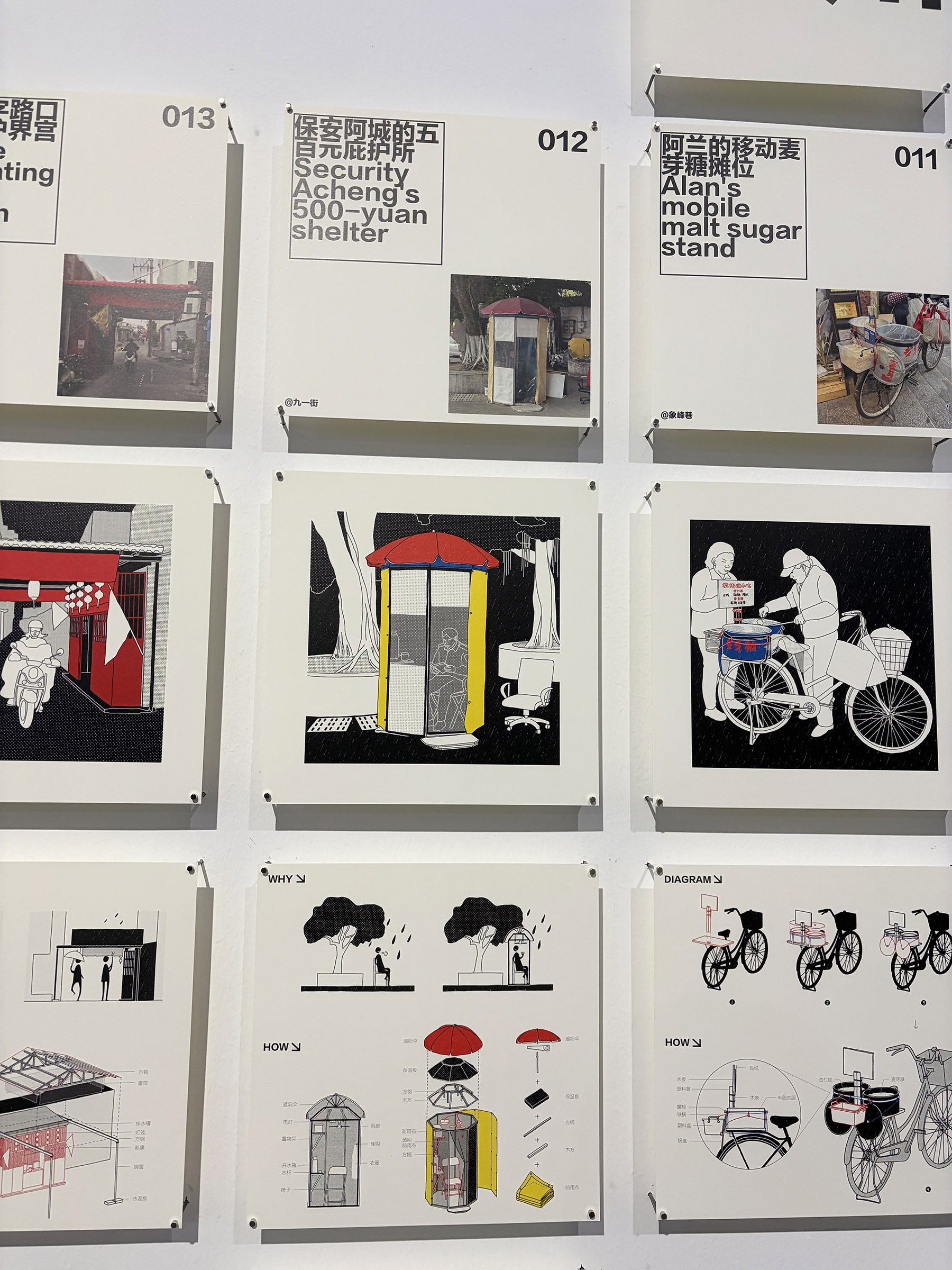
During architect Lu Wenhui's 2026 visit to Quanzhou, Fujian province, she noticed a security booth at a tourist bus stop near the Quanzhou Workers' Cultural Palace. At first, it seemed unremarkable. But a closer look revealed something special.
She, in her 30s, learned from security guard Ah Cheng that he crafted the booth himself. Initially, it was a basic security post, but after city management officials raised concerns about its appearance, he invested 500 yuan ($75) in materials to upgrade it. He also used creativity: a parasol to keep water from leaking through the roof.
The security guard had previously asked his superiors for a booth to protect him from extreme weather conditions — hot summers, cold winters and frequent rain — but his request was denied because the labor contract didn't cover these expenses. As a result, he took matters into his own hands. He also built a similar booth for his colleagues.
In Chengdu, Sichuan province, Lu came across a handmade bamboo baby basket woven by a grandmother. The woman brought her ancestral craft from Changshou district in Chongqing and transformed it into her grandchild's personal ride. The basket was a bit deep, so when the child stood, his head didn't show. The grandmother found a wooden stick, carved a notch on each end, and fit it perfectly across the middle of the basket, creating a simple bench. With his seat elevated, the boy holds onto the basket's edges and peers out at the street scenes with wide-eyed curiosity.
In the work she submitted for the 5th Sailors Program titled Collection of Southern Grassroots Design, Lu uses an archival visual language to record and represent these "wild design" samples of daily creations she collected from the nooks and crannies of eight cities in southern China, inviting "a renewed examination of the improvisational wisdom that persists at the margins of survival".
These makeshift structures, assembled from inexpensive materials, create a rough yet lively tapestry of life in urbanization. However, Lu explains in the work's introduction that, under the dual pressures of standardized plans and rapid city growth, these structures are quickly vanishing because they sit outside design history's mainstream narrative.
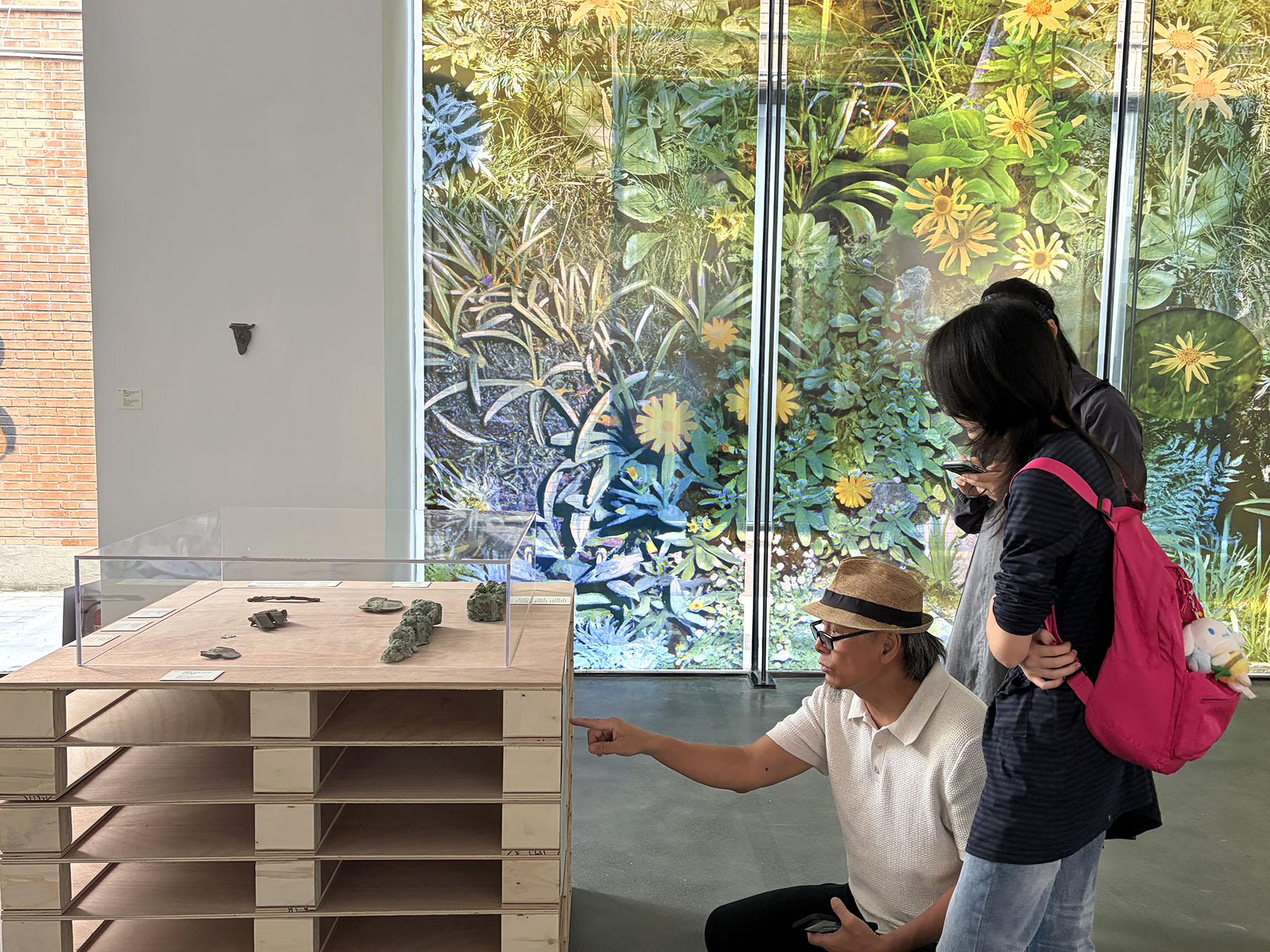
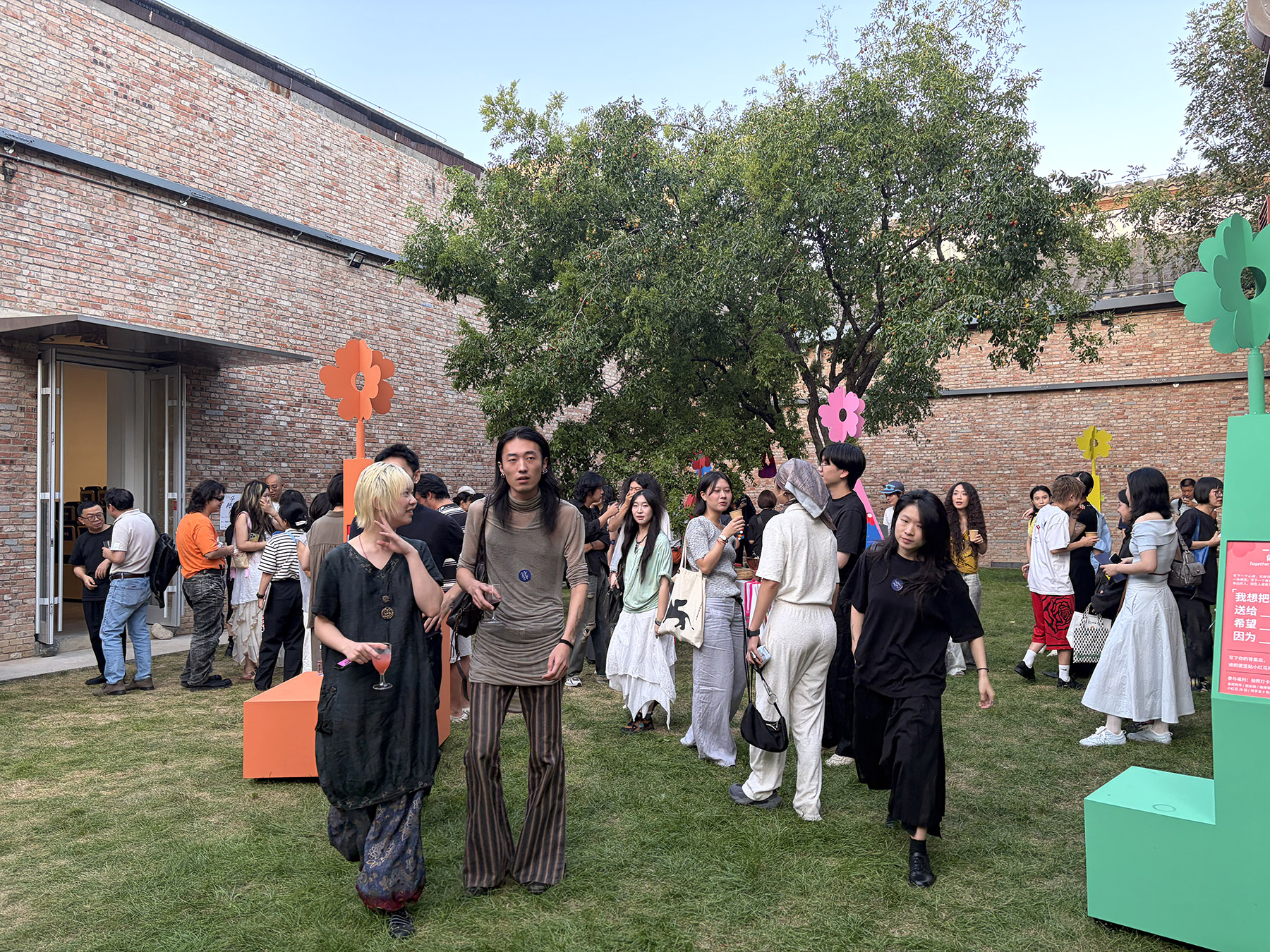
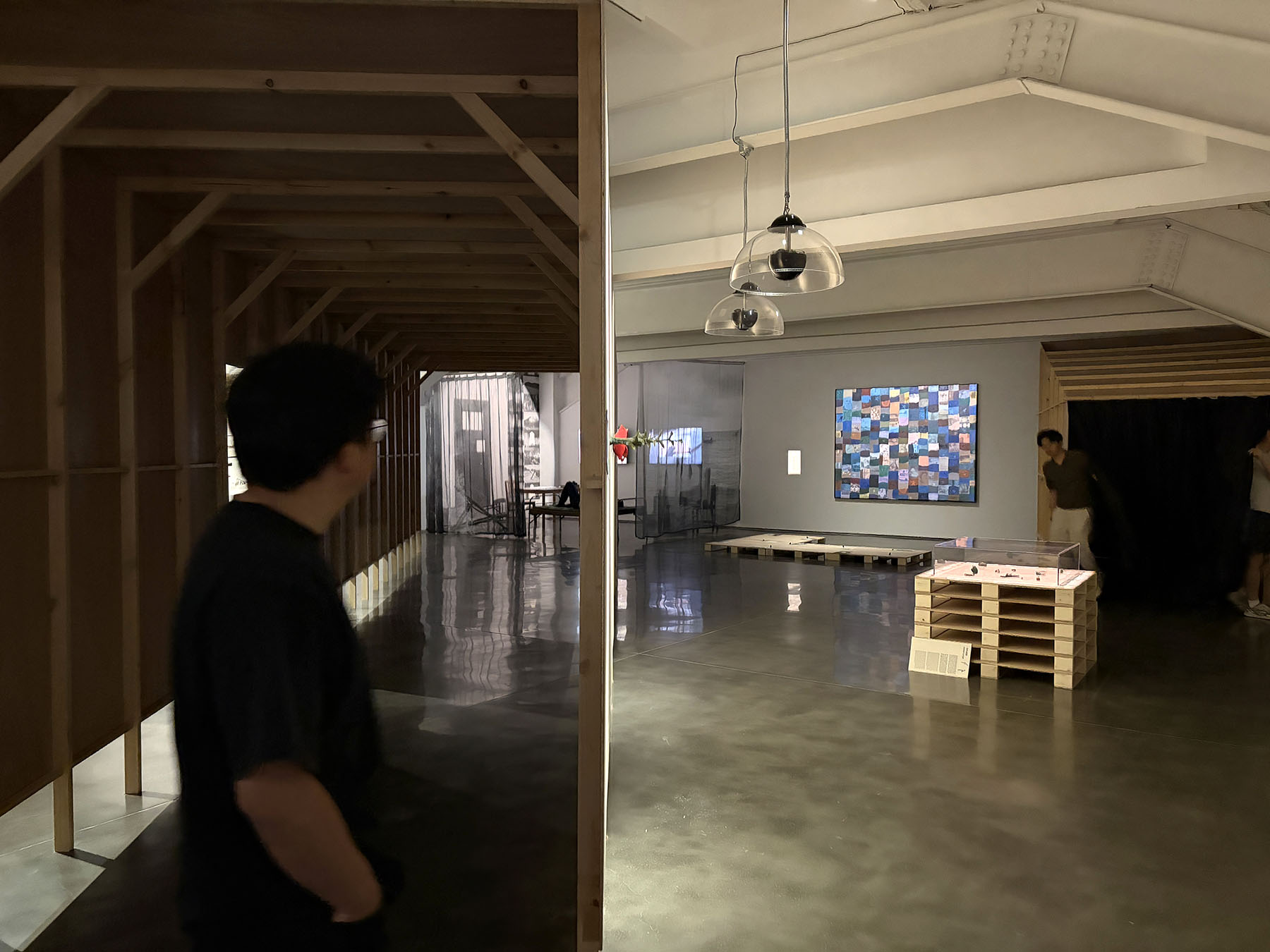
Lu's work is on display at MACA Art Center in Beijing's 798 Art District, alongside 10 other projects from the 5th Sailors Program, the program's 5th edition since its 2018 launch, funded by the One-Way Street Foundation.
With the One-Way Street Foundation's financial support, the program encourages young creators to travel and make something personal based on their experiences.
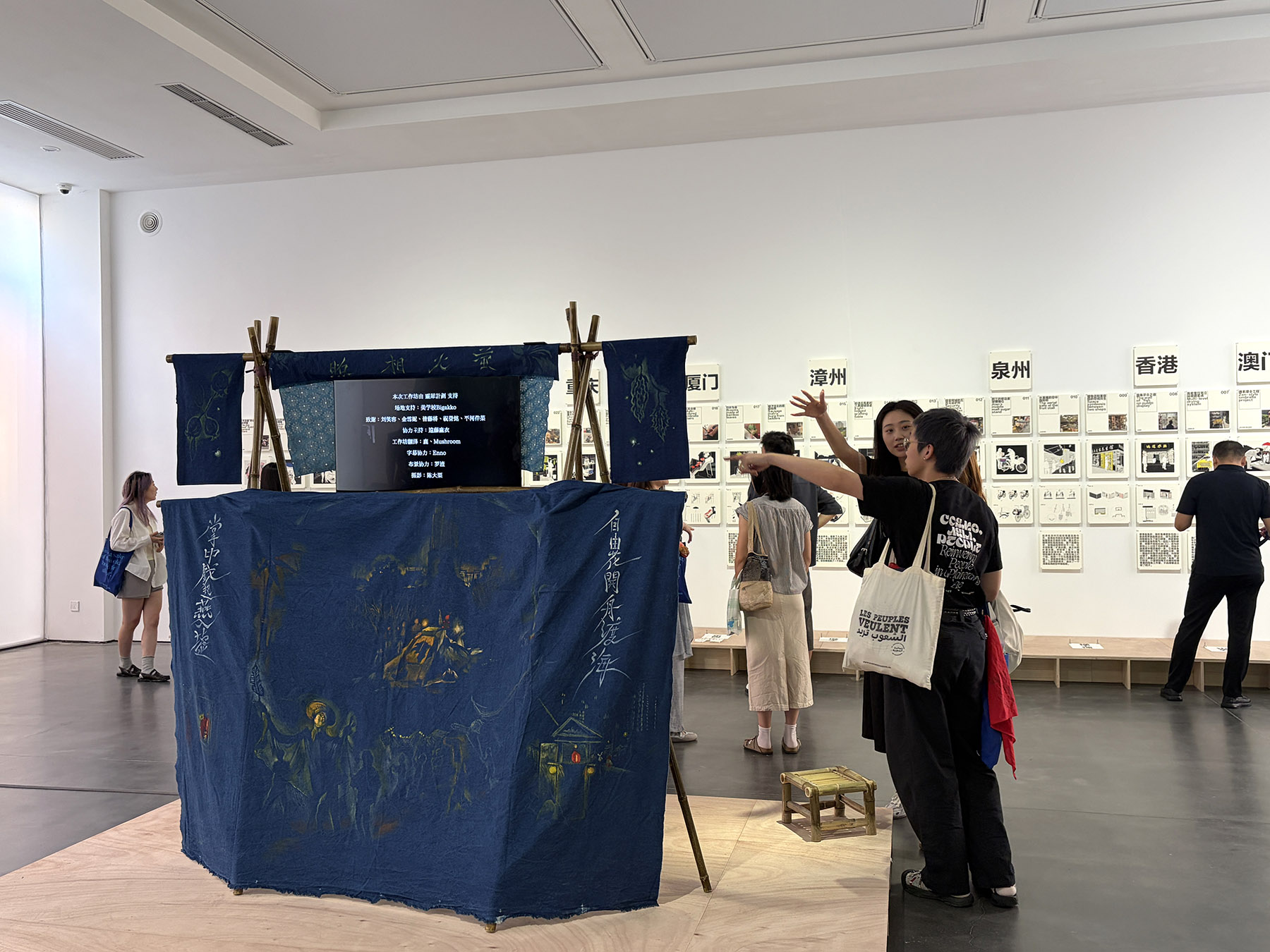
For this year's program, the foundation received a record 610 applications. The creators use diverse media such as film, installations, writing, performance, and field research to chart their own courses. Eleven plans finally won financial support ranging from 30,000 yuan to 50,000 yuan each.
In rounds of readings and discussions, the judges focus not only on the maturity of the works but also on the clarity and determination shown in the face of real-world challenges.
Young Chinese creators, starting from small personal experiences, are enriching people's understanding of the world, says Xu Zhiyuan, one of the foundation's initiators.
Lu's work, for example, records how ordinary people reinvent their lives, Xu says, and it contains many warm, simple things he particularly loves.
"I hope the foundation will continue to support such creators not only for their imaginations but also their passion and curiosity for people," he adds.
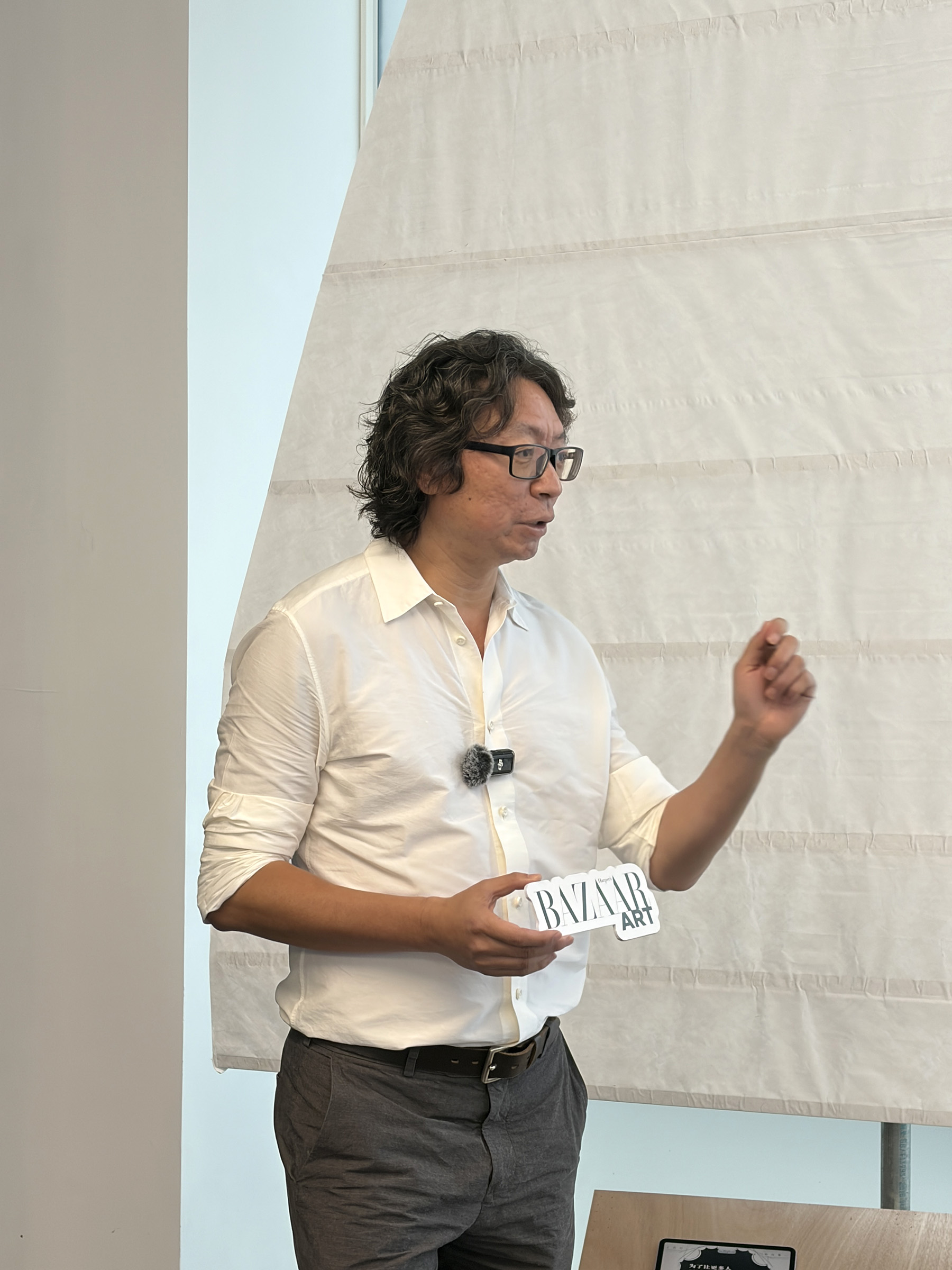
Eight years ago, when the Sailors Program launched, they wanted to support writers willing to travel and see the world from a Chinese perspective.
At a time when China was rapidly globalizing, Xu found few Chinese authors traveling and writing about countries such as India and Egypt. As a result, China's understanding of the world lacked sufficient depth and complexity.
As a person obsessed with travel writing, Xu says he wanted to support young, curious Chinese people. Gradually, the projects the foundation has supported have diversified in genres, expanding from writing to visual art, installations, and more.
"If we can continue supporting two or three generations, this program will provide an interesting platform that shows how China sees the world," he says.
Speaking of the support, Lu says, "Being selected for the Sailors Program made me re-evaluate my creations. I gradually realized that it might not just be a personal interest but could also be taken seriously as a form of creation, entering a broader public arena to be seen and discussed."
Another "sailor", Cui Yuxuan, devotes her ongoing art project Drawn in Captivity (Chapter One) to tracing the wartime experience of Dutch Major General H. J. D. de Fremery, who was transported as a Japanese prisoner of war from Southeast Asia to Northeast China during World War II.
The project originates from a secretly drawn sketchbook he created in the POW camp, documenting the forced labor and relocations of prisoners between 1942 and 1945, spanning Java, Sumatra, Singapore, Northeast China, and the Philippines. The artist encountered these images in a WWII database called Image Bank WW2 from a Dutch institute of war documentation , discovering that Cheng Chia Tun (Zhengjiatun), a railway town near Cui's hometown, was an overlooked node in a global wartime network.
The work unfolds as an open research site, combining two-channel video, archival materials and photography that trace the artist's investigation along De Fremery's transfer route.
Rather than reconstructing a linear historical narrative, the work follows the traces, gaps and contradictions that persist across archives, landscapes and memory, revealing how war, colonialism and forced displacement continue to shape contemporary space and practices of remembrance.
"Sailor" Song Qingyu's mixed-media work, The Investiture of the Bee Gods, explores how "divinity" has been manifested throughout civilization. Fundamentally, the manifestations have always been interwoven with two fundamental forms: the products of mysterious nature and the products of human civilization. Centered on bees, Song's work examines how these two basic forms emerge, interact, and transform across different cultures.
Ancient Greek priestesses of Artemis were known as Melissai, meaning honeybees. Song first revisited the Temple of Artemis ruins in the ancient city of Ephesus, Turkiye, through 3D scanning and ecological fieldwork, documenting how nature reclaimed the ruins of civilization.
She then visited a "sacred bee tree" in Yunnan province, venerated for generations by a local ethnic community. There, the tree and bees form a symbiotic ecological sanctuary, displaying a natural divinity that arises directly from life itself.
Using scanned data collected along the journey, the artist re-created temple fragments in beeswax, which served as frameworks for bee colonies to build their hives. The bees then covered and reshaped the human designs with their wax, transforming static symbols into dynamic, living entities. In this work, the remnants of civilization coexist with nature, together illustrating the fluidity of the divine.
The Unnamed Warp and Weft, co-created by Yang Xin and Yang Yingmei, grew out of long-term field research of women's drawn-work labor history in Chaoshan, Guangdong province.
Developed through intergenerational collaboration, the project invites women skilled in drawn-work embroidery to translate their oral histories into hollowed-out Chinese text. Using the traditional technique of "white thread on white fabric", they re-inscribe women's labor experiences that have long been hidden within the histories of global trade.
The six hanging white draperies were meticulously stitched, thread by thread, by illiterate drawn-work artisans, transforming a craft once dedicated to export production into a readable historical text. A video of the same title captures the women as they stitch, decipher, and narrate the stories embedded in the fabric.
In an era dominated by AI, projects that document local customs, traditional crafts, and individuals'or communities' historical truths are particularly significant in "helping us maintain a more genuine connection to the world", Xu says.
"The constant barrage of false or reassembled experiences can harm our perception, mind and feelings. Because we live in a time where our ability to feel is at risk of being lost, these very specific personal experiences can awaken our senses," he adds.
Technology offers a view of the vast world, like a kaleidoscope, with everything rushing at people as soon as they open their phones. But in reality, he notes, every experience is highly simplified.
He warns that when people are constantly immersed in these simplified experiences, their understanding of themselves, others, and the world becomes simplified as well, reducing the complexity and sensitivity of human beings.
"Excessive simplification leads to dehumanization. Our humanity is diminished, and we cease to exist as complex individuals. A simplified society makes us monotonous. It makes our perception and existence more abstract," he observes.
Xu uses internet violence as an example.
"Why is online language so violent? Because we simplify each other. If we were vibrant and whole individuals facing each other, many of these words would be unspeakable. Once people are simplified, anything can happen. Many conflicts in the human world arise from efforts to simplify and label others. Only by de-complexifying others can you easily treat them thoughtlessly. Simplification reduces human empathy and understanding," he says.
"Resisting this abstraction is very important. The simple, personal experiences in the exhibition can help preserve our innocence, which is very important for us as humans — innocence and warmth," he stresses.
When asked whether the program will accept works assisted by AI, Xu says, "We cannot reject new technologies.
"However, new technologies must be closely related to our real and specific personal experiences. They should extend our humanity, not replace it," he notes.
Contact the writer at yangyangs@chinadaily.com.cn
