

Recent interactions between the heads of state of China and the United States have put the topic of artificial intelligence high on the bilateral agenda. The two countries have acknowledged each other’s status as a major AI power, recognizing that competition can coexist with meaningful cooperation. The high‑level dialogue shed light on the fundamentally different mindsets guiding AI development across the two nations. While both are racing to advance AI technology, their strategic priorities, resource endowments and practical orientations diverge significantly. China’s pragmatic, deployment‑focused development approach, backed by robust national power infrastructure, including major transmission projects across the Qinghai‑Xizang Plateau, together with the Hong Kong Special Administrative Region’s distinctive bridging position, constitutes a vital component of China’s overall AI strategy.
 The US follows a “zero‑to‑one” innovation‑centered AI pathway. Supported by leading‑edge semiconductor chips, massive venture capital and world‑class research laboratories, it prioritizes pushing the theoretical performance ceiling of large‑scale AI models. Its comparative advantage lies in fundamental scientific breakthroughs and cutting‑edge model‑building. Nevertheless, the research‑led model carries notable practical limitations. Even though US‑developed models excel in benchmark tests, translating such advanced capabilities into real‑world productivity across factories, logistics, healthcare and manufacturing remains a considerable challenge. Moreover, the US’ AI sector is increasingly constrained by energy bottlenecks. An aging power grid and cumbersome regulatory approval procedures have created a projected power shortfall for data centers. These structural hurdles restrict the large‑scale, low‑cost roll‑out of AI infrastructure nationwide.
China, by contrast, adopts a more application‑oriented “one‑to‑100” development philosophy. Faced with constraints on access to advanced chips, Chinese tech firms have shifted toward efficiency‑driven innovation. Instead of relying purely on stacking computing resources, domestic developers achieve near‑top‑tier model performance via algorithmic optimization and architectural compression. Independent research reports indicate that the performance gap between China’s and the US’ best‑performing AI models has narrowed to a mere 3 percent. Equally important is the thriving open‑source ecosystem: Chinese AI models account for 41 percent of global open‑source downloads, exceeding the US share of 36 percent. This emphasis on open‑source dissemination helps to accelerate real‑world adoption across industries.
Underpinning China’s large‑scale AI deployment is its unmatched power‑supply capacity. The country’s total power generation output is more than double that of the US, with substantial surplus energy available to sustain power‑hungry AI data centers. A critical enabler of this energy security is the series of large‑scale ultra‑high‑voltage transmission projects constructed across the Qinghai‑Xizang Plateau. These landmark power‑transmission corridors, including key +/- 800 kilovolt direct‑current projects, transmit clean hydropower generated on the high‑altitude plateau to eastern and southern economic hubs. These engineering marvels overcome complex terrain and deliver stable, low‑carbon electricity to support nationwide digital and AI infrastructure. Without such reliable energy supply, mass‑scale AI deployment would be economically and technically unfeasible.
Against this technological backdrop and the rise of geopolitics, Hong Kong occupies a distinctive bridging role, embodying the principle of “meeting the country’s needs while leveraging the SAR’s strengths”. The Sandy Ridge Data Facility Cluster represents a tangible milestone for Hong Kong’s digital‑economy advancement. A leading Chinese mainland computing‑infrastructure investor made a one‑off cash payment of HK$581 million ($74 million) for the land lease, reflecting strong long‑term confidence in Hong Kong’s digital‑technology prospects. The cluster is scheduled for phased commissioning in mid‑2027, and by 2032 its total computing capacity is projected to reach 180,000 petaFLOPS, equivalent to 36 times Hong Kong’s current computing power. It will also work in synergy with the Hetao Shenzhen‑Hong Kong Science and Technology Innovation Cooperation Zone to facilitate cross‑border flow of innovation resources.
Hong Kong’s common‑law legal framework, international‑caliber universities and globally‑connected talent pool bring unique institutional advantages. While core foundational AI research and model development remain based on the mainland, Hong Kong can serve as an offshore hub for model‑weight hosting, inference services, compliance adaptation, security assessment and cultural alignment for overseas markets. Such high‑value work can support AI‑technology exports to Southeast Asia, the Middle East, and other markets around the world.
In summary, the US’ AI strategy centers on frontier model‑research, whereas China’s prioritizes real‑world deployment underpinned by powerful national energy infrastructure. Hong Kong does not compete in model‑development races; instead, it fulfills a complementary cross‑border gateway function. This pragmatic positioning, though not always high‑profile, is well‑suited to the city’s institutional strengths and delivers concrete strategic value for national technological development.
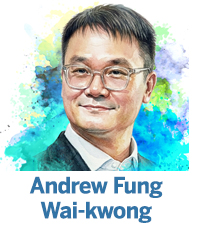
The author is a former information coordinator for the Hong Kong Special Administrative Region government and a member of the Chinese Association of Hong Kong and Macao Studies.
The views do not necessarily reflect those of China Daily.
