

Arriving in Beijing in 1979 with a curiosity sparked by literature, Inma Gonzalez Puy has spent a career weaving deep, enduring cultural ties between the two countries
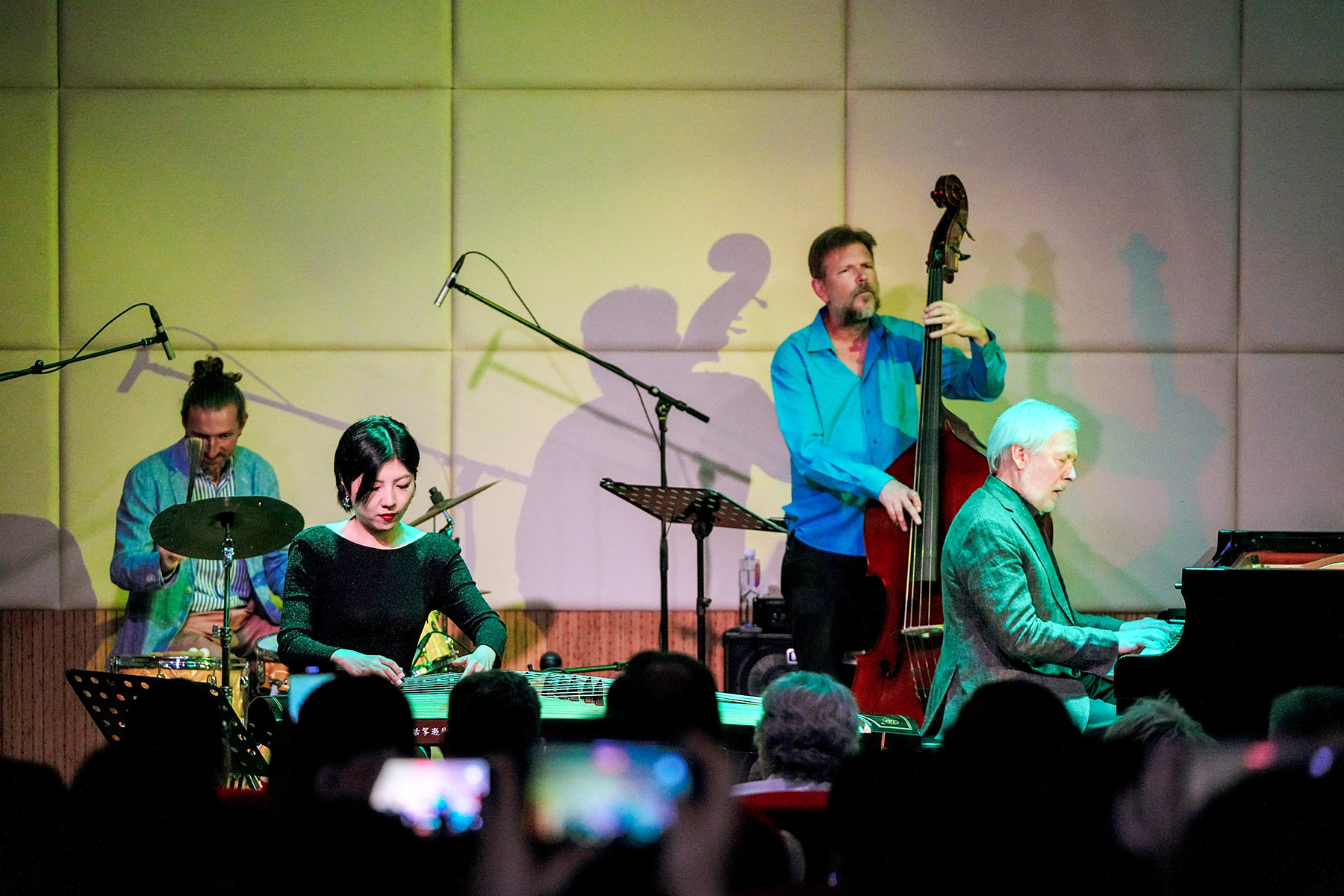
Inma Gonzalez Puy of Barcelona has for decades been living in China and fostering connections between Spain and China. Therefore, it is with some conviction that the director of the Cervantes Institute in Beijing says, "Cultures are one of the most powerful tools for connecting different societies."
The Barcelona native's connection with China began not with a plane ticket but with a book. In her teenage years, she stumbled upon Spanish translations of works by Pearl S. Buck and Lin Yutang — writers who painted vivid images of a country she had never seen.
"In 1970s Spain, books about China were scarce. Yet those few volumes sparked a deep curiosity about a distant and mysterious land. In a way, they were what set me on this journey to China," she recalls.
That journey became reality in 1979, when Beijing began recruiting international students from Spain for the first time. Gonzalez Puy, then a university student, seized the opportunity and applied to study at the Beijing Language Institute — now Beijing Language and Culture University.
"Those readings opened the first imaginary door to China for me," she says. "Later, when I arrived in 1979, I discovered a reality far more complex and captivating than any literary depiction."
Her studies cemented her resolve to live in China. In 1983, Gonzalez Puy returned to work at the Spanish embassy in Beijing, where she would spend 20 years — first as a translator, then as cultural attache. "Those were pivotal years for the consolidation of bilateral ties, and my professional career unfolded almost in lockstep with contemporary China's transformation," she says.
"Those years convinced me that culture is not merely a supplementary element of diplomacy, but one of its most profound instruments. An exhibition, a book or a film can open pathways of understanding that endure for generations."
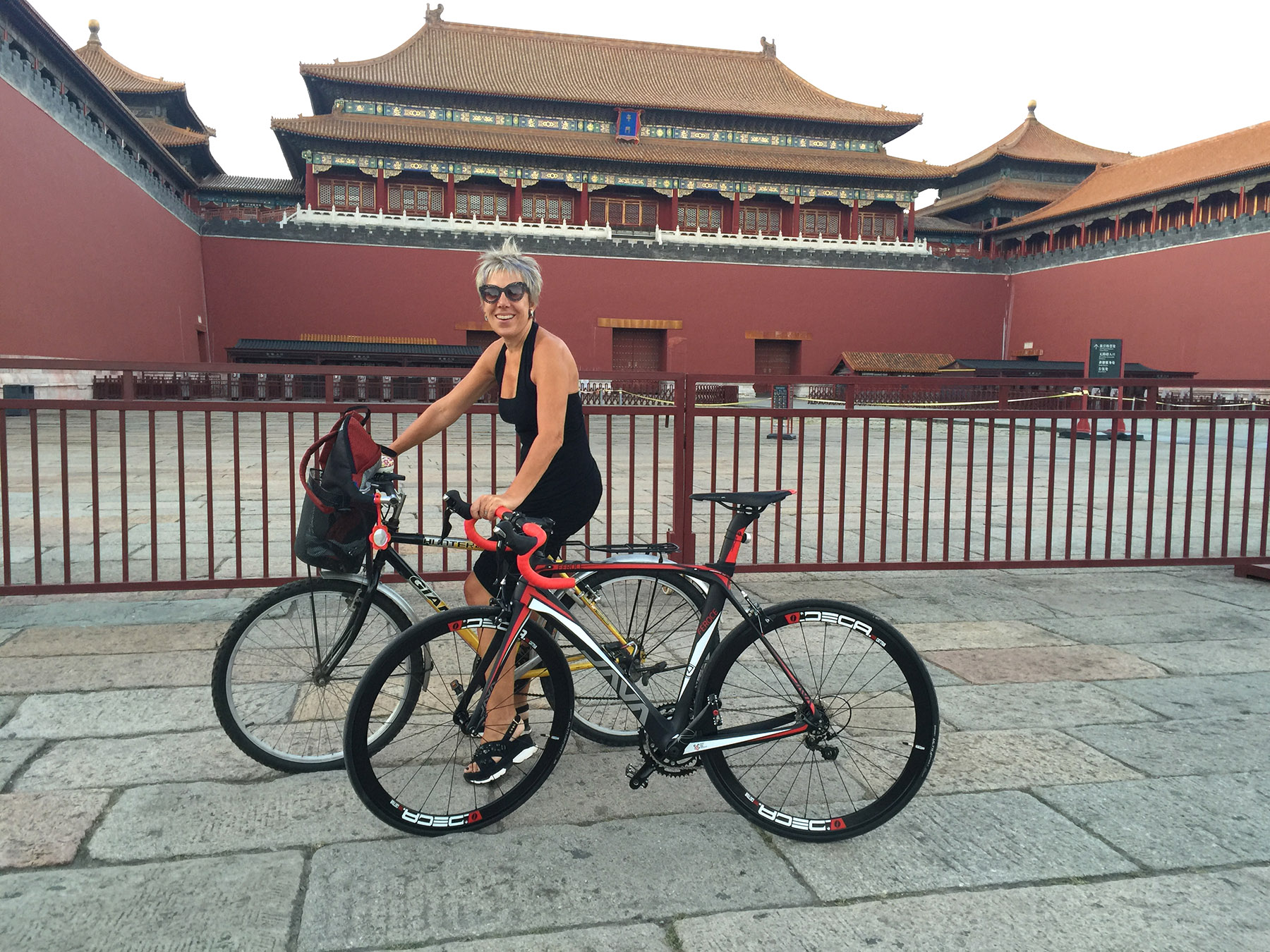
Throughout her career, Gonzalez Puy has championed this belief through tangible projects. In 1995, she curated a groundbreaking exhibition of Chinese avant-garde art in Barcelona, introducing more than 30 Chinese contemporary artists to a European audience.
A decade later, she helped organize a special exhibition of exquisite bronze artifacts from the Shanghai Museum in Barcelona — the first of its kind in Spain. "I hoped to create opportunities for more foreigners to experience the charm of Chinese culture firsthand," she says. "I felt honored to curate such a meaningful exhibition."
Beyond introducing Chinese culture to Spain, Gonzalez Puy is also adept at spotting Spanish cultural elements in Chinese society.
Perhaps her most unique endeavor began in 2013 when she unearthed a forgotten gem: the first Chinese translation of Don Quixote by Chinese scholar Lin Shu from a century ago.
What made Lin's translation unique was that he neither spoke nor read Spanish. He learned of Don Quixote's adventures through his assistant. Fascinated by the idealistic knight, Lin produced a wildly creative adaptation, reshaping the plot, transforming Spanish expressions into Chinese idioms, and infusing the text with local flavor.
Gonzalez Puy was determined to rescue this forgotten translation and take it to Spanish readers. She found Alicia Relinque, a renowned Sinologist and professor of classical Chinese literature at the University of Granada, to undertake the meticulous task of translating Lin's Chinese rendering back into Spanish.
The translation was published in 2021. "It's been a double homecoming," Gonzalez Puy said, noting not only the return of Don Quixote to his roots but also the first republication of Lin's text in China since 1934, by the same original publisher.
This project, embodying a dialogue between Chinese and Spanish cultures, captures precisely what Gonzalez Puy believes the Cervantes Institute exists to do.
"The true value of culture lies precisely in this dialogue," she says. "The Cervantes Institute is not a window through which one culture observes another — it is a table at which both sides sit down to talk."
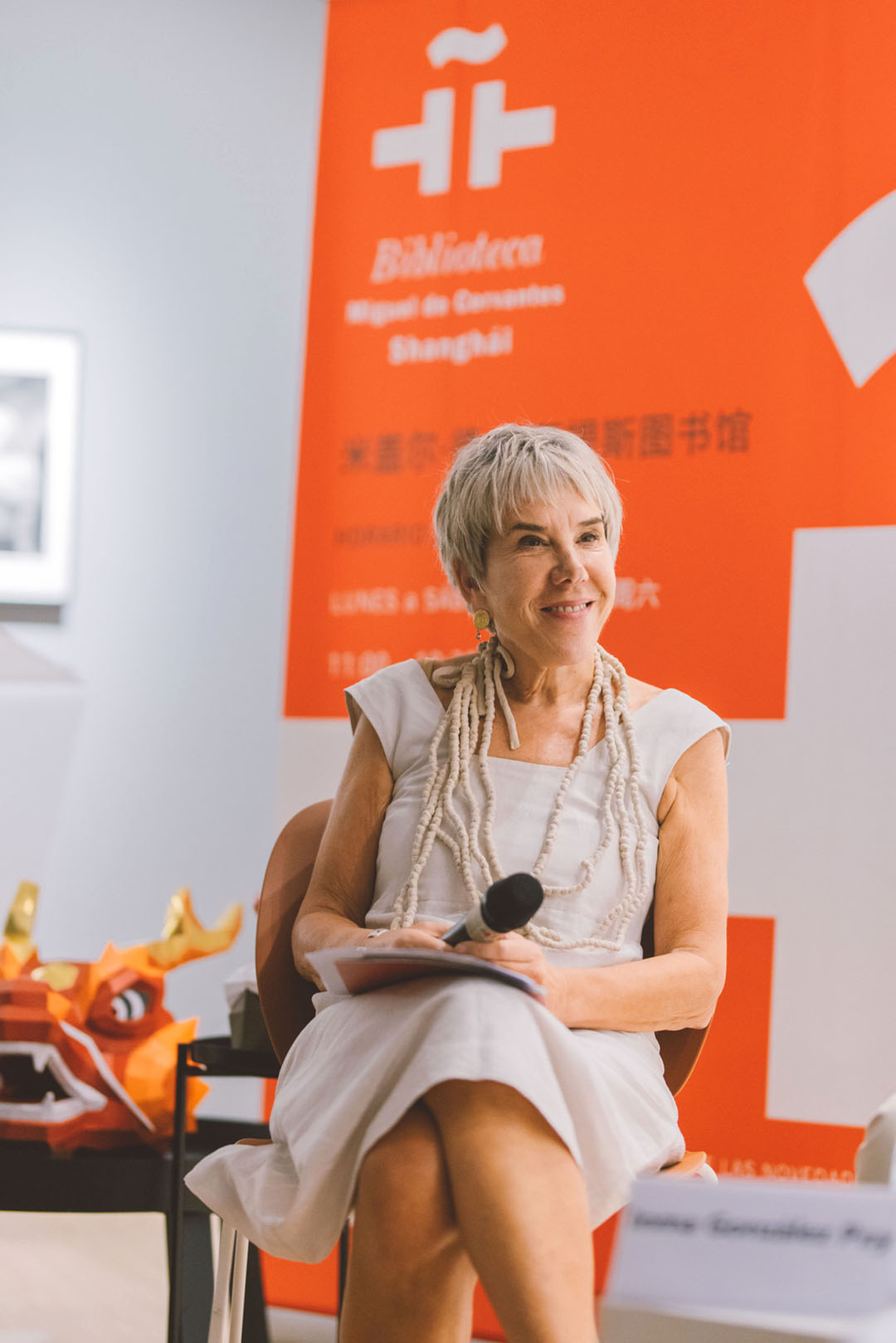
Gonzalez Puy was, in fact, responsible for preparing the establishment of the Cervantes Institute in China.
"I had the honor of directing the initial development of the Cervantes Institute in Beijing from the day it opened on July 14, 2006. Now, returning to the position of director on the occasion of the Beijing Cervantes Institute's 20th anniversary feels like reuniting with a project into which I poured a significant part of my career."
After decades of fostering China-Spain cultural exchanges, Gonzalez Puy sees many commonalities between the two cultures: both are ancient civilizations with an outstanding artistic heritage and rich historical legacies, a shared emphasis on interpersonal relationships, family, gastronomy as a social ritual, respect for tradition, and respect and tolerance in their attitudes toward others.
She describes the evolution of bilateral relations in recent decades as transformative.
"When I first arrived in China in 1979, Spain's knowledge of China was still very limited," she says. "For many Spaniards, China was a distant, little-known, and largely imaginary reality."
Today, the landscape is dramatically different. "China is part of daily international reality," she says, highlighting the surging interest in its language, history, culture and society.
Spain now hosts more than 10 Confucius Institutes and is seeing an increase in the publication of ancient and contemporary Chinese literature in translation, she says. "An increasing number of young Spaniards are learning Chinese, recognizing its professional value in a globalized world."
Through four decades of working in various capacities, from cultural specialist at the Spanish embassy to director roles at the Cervantes Institute in Shanghai and Beijing, Gonzalez Puy has been a direct witness to China's rapid development.
"I have had the privilege of witnessing China's reform and opening-up, the transformation of its cities, economy and society, and its extraordinary cultural evolution," she says, words that carry the weight of a life lived at the heart of that transformation.
More than 40 years later, China's allure for her remains undiminished and perhaps even deeper than when she had first arrived. "What keeps me connected to this country, I believe, is curiosity," she concludes. "It remains a place where there is always something new to discover and learn, a place that is constantly changing." It is, in her eyes, a country that never stops reinventing itself.
Contact the writers at yangran1@chinadaily.com.cn
