

This year marks the 77th anniversary of the founding of the People’s Republic of China. The most gratifying event for the Chinese people over the past year was the fruitful harvest in both diplomacy and soft power. This signifies a further rise in China’s international credibility and influence, as well as the appeal of Chinese culture; it also means that the nation is increasingly moving closer to the center of the world stage and playing a more important role in global peace and development.
 On the diplomatic front, leaders from numerous countries visited China to participate in various international activities, observe and learn from China’s development, and meet with President Xi Jinping and other national leaders. The visit by leaders from G7 countries to China was particularly impressive. Xi has also frequently traveled abroad to participate in international events such as the Asia-Pacific Economic Cooperation meeting, the Shanghai Cooperation Organization summit, and the BRICS summit, engaging in discussions and cooperation with numerous foreign leaders, and achieving fruitful results. China’s frequent diplomatic activities, particularly head-of-state diplomacy, demonstrate the country’s high international standing and the world’s increasing expectation that it will play a greater role in international affairs, injecting stability, justice, and certainty into the turbulent global landscape.
China has championed reform to ensure a just and equitable international order. Following the Global Development Initiative, the Global Security Initiative, and the Global Civilization Initiative, Xi also introduced the Global Governance Initiative at the Shanghai Cooperation Organization summit last September. The Global Governance Initiative completes the framework design of China’s four major global initiatives at the systemic and institutional levels.
In June, the central government published a white paper titled “More Just and Equitable Global Governance: China’s Principles, Proposals and Actions”, which states clearly that China’s global governance initiatives are based on upholding the purposes and principles of the United Nations Charter and practicing the global governance concept of consultation, joint contribution, and shared benefits. The four global initiatives have received positive responses and recognition in the Global South, seen as important concepts and principles for promoting world peace and development. Even in the West, many insightful individuals agree with these four global initiatives. In today’s challenging landscape, China’s proposed global initiatives have brought hope to the world, enhancing its reputation and importance on the world stage.
China’s soft power has increased significantly. Its foreign policy and socioeconomic achievements are undoubtedly important factors driving this rise. The Pew Research Center’s July report found that, based on a survey of over 42,000 respondents in 36 countries, people in most countries have higher favorability ratings toward China than the United States. Furthermore, in Gallup’s 2025 global survey, China’s median approval rating (36 percent) is higher than that of the US (31 percent). Furthermore, recent polls by Nira Data in Germany have found that Europeans have a more positive view of China than of the US. Surveys conducted by the Yusof Ishak Institute in Singapore in recent years have also found that people in Southeast Asia have a more positive attitude toward China than the US.
The main reason behind China’s rising soft power is the country’s international efforts and domestic development achievements.
First, China can increasingly use its own media and platforms to tell its stories, partially offsetting the negative effects of hostile Western media coverage. Second, people from other countries can communicate directly with the Chinese through social media, gaining a better understanding of China’s realities and the living standards, lifestyles, and interests of the Chinese. Some foreigners, especially young people, are beginning to admire certain Chinese lifestyle habits. Third, China’s remarkable economic and technological achievements have astonished foreigners, leading to a continuous improvement in their perception of China. Fourth, compared with the sluggish economic and social conditions in many Western countries, China’s achievements in economic development and improving people’s livelihoods are outstanding, and the “Chinese-style modernization” development model has gained recognition and respect worldwide. Fifth, during the 2009 global economic downturn, China’s economic development continued to inject momentum into global economic growth, bringing numerous benefits and opportunities to various countries. Sixth, Chinese cultural and entertainment products are becoming increasingly popular worldwide, sparking interest and goodwill toward China and significantly enhancing the influence and appeal of Chinese culture.
Finally, China’s granting visa-free access to visitors from an increasing number of countries has proved very popular. More and more foreigners are developing a positive impression of China through firsthand experience; they are particularly amazed by China’s rapid economic development, excellent public security, social stability, national unity, the widespread application of technology in daily life, the hospitality of the Chinese people, their happy lives, and their yearning for peace and order, as well as the various freedoms that they enjoy.
In recent years, China’s development in hard power (economic and military) has been globally outstanding, enhancing its international reputation. As China’s soft power rises and becomes more comprehensive, its status as a major power becomes more stable, and its role and influence in international affairs become more significant.
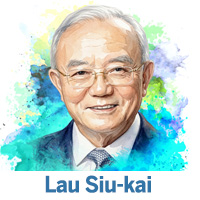
The author is a professor emeritus of sociology, the Chinese University of Hong Kong, and a consultant of the Chinese Association of Hong Kong and Macao Studies.
The views do not necessarily reflect those of China Daily.
