

From handmade paper to recycled cloth, young creators are helping traditional crafts find fresh relevance among a new generation.
Tucked inside a quiet courtyard in Beijing's Dongcheng district, Mr Chu Studio feels less like a shop than a small archive of handmade paper.
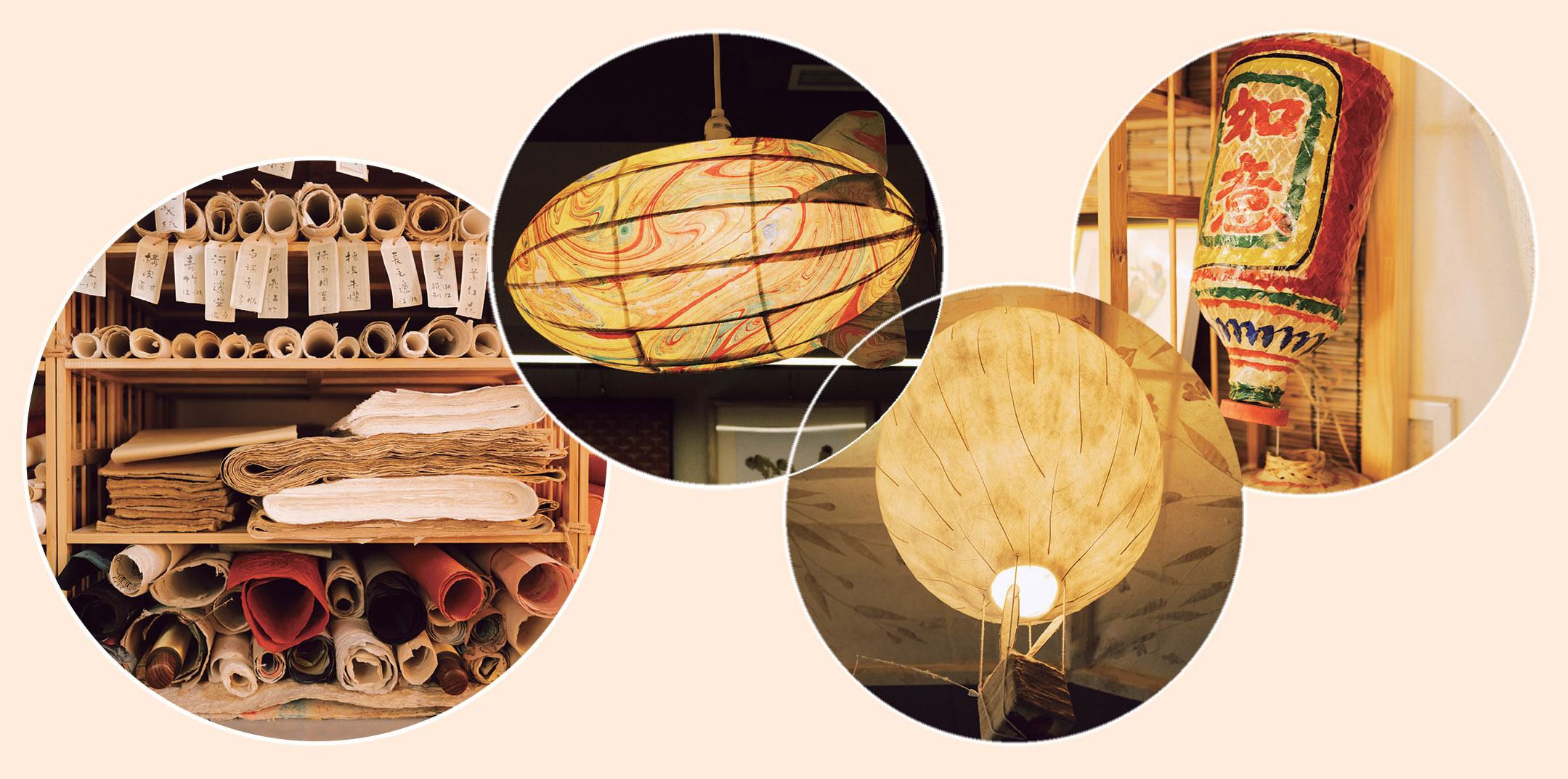
Its walls are lined with sheets from different parts of China, in shades of cream, pale yellow, earthy brown and deep blue. They are made from bamboo, cotton and other plant fibers, some sourced from remote mountain regions. Their textures vary widely: some feel coarse and fibrous, while others are almost silky to the touch.
Beside each carefully mounted sample is a small label identifying the paper and noting its origin. Among them are mulberry-bark paper, porcelain-blue paper and Dongba paper, traditionally used by the Naxi people.
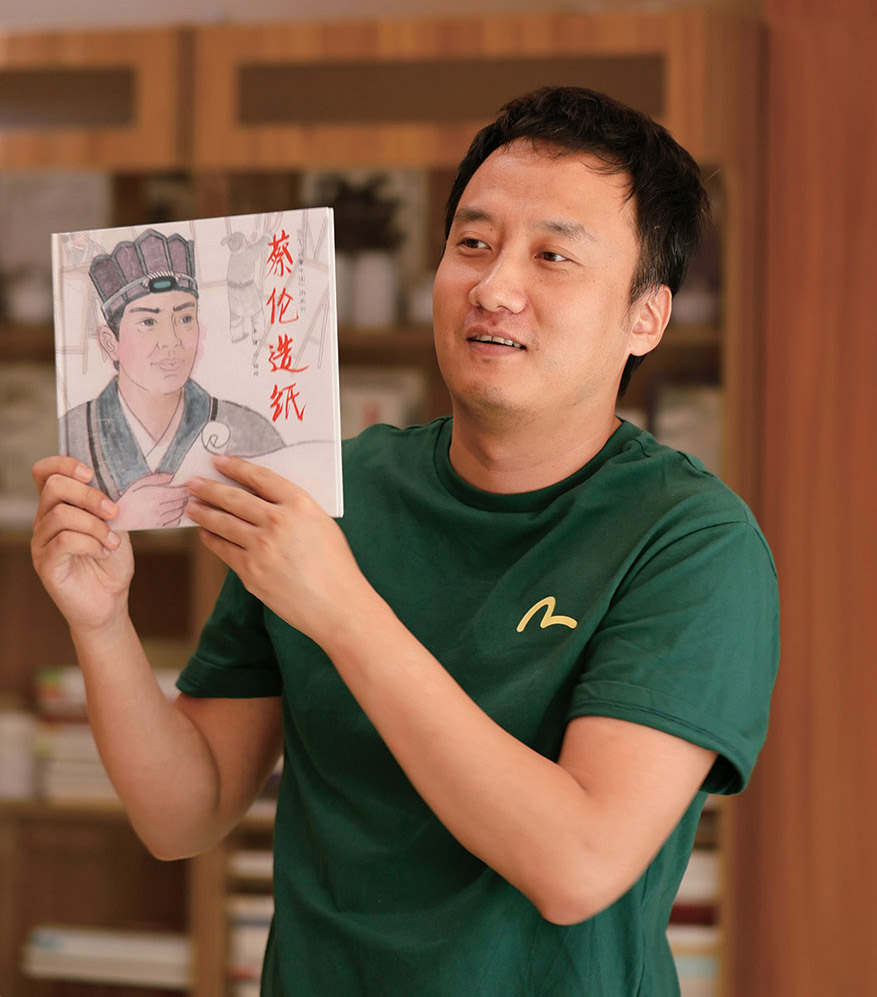
For Cui Zhenshuo, who co-founded the studio with Yang Bo in 2019, this variety reflects what first drew him to traditional handmade paper: no two kinds are quite the same.
Before opening the space, Cui and Yang, both born in the 1980s, worked together at a papermaking company. In 2018, as business conditions in the sector became more challenging, Cui began looking beyond it and came across traditional handmade paper.
He soon noticed that every artisan had a distinctive way of working, and even subtle differences in technique could leave a visible signature on the finished sheet — making it thicker or thinner, rougher or smoother, lighter or darker.
"They may soak the bark for different lengths of time, pound the fibers harder or softer, or dry the finished sheets in the sun or shade," he explained.
Wanting to understand the craft more deeply, Cui and Yang set out in search of handmade paper. Over the past few years, they have visited dozens of workshops across 20 regions, including the Xizang autonomous region and Fujian and Zhejiang provinces.
"China boasts a rich array of handmade papers, each with a texture shaped by its birthplace," Cui said. "For example, handmade paper traditionally made by the Dai ethnic group uses mulberry bark, while Zeya bamboo paper from Wenzhou, Zhejiang province, is made from bamboo that grows abundantly in the area."
The differences go beyond raw materials.
In Xizang, for instance, paper was traditionally made largely for printing Buddhist scriptures rather than for everyday writing or painting. As a result, it needed to be thick and durable and was often made from naturally insect-repellent plant fibers, helping it last for generations.
The visits also made the need for preservation more tangible to Cui. In many remote villages, he saw how fragile those traditions had become. Many workshops were small family operations deep in the mountains, bringing in meager incomes, while younger generations were often reluctant to stay and take up the craft.
One encounter in Xizang stood out. There, Cui met a retired cultural worker who had spent years trying to revive a type of paper that had disappeared.
Made from the high-altitude shrub Daphne longilobata, the paper was no longer produced after knowledge of the traditional process was lost. Working with university researchers, the man tracked down the wild plant and painstakingly reconstructed the technique.
For Cui, the visit reinforced a conviction that grew stronger with every trip: traditional handmade paper did not necessarily need to be radically redesigned to remain relevant.
"The paper itself is already good enough. We just need to let more people see it and understand it," he said, adding that this is what "cultural confidence" means to him.
That belief shaped Mr Chu Studio.
Rather than treating handmade paper only as a material for calligraphy, painting or preservation, Cui and Yang have turned it into lamps, earrings, refrigerator magnets and notebooks, giving designers and young urban consumers more opportunities to experience the material in everyday life.
Cui's approach reflects a broader trend among young Chinese creators. They are opening spaces centered on intangible cultural heritage, bringing traditional crafts out of museum cases and remote villages and into modern life.
Tradition reimagined
In Yunnan province, 26-year-old Yang Yue is pursuing a similar goal through a different set of materials.
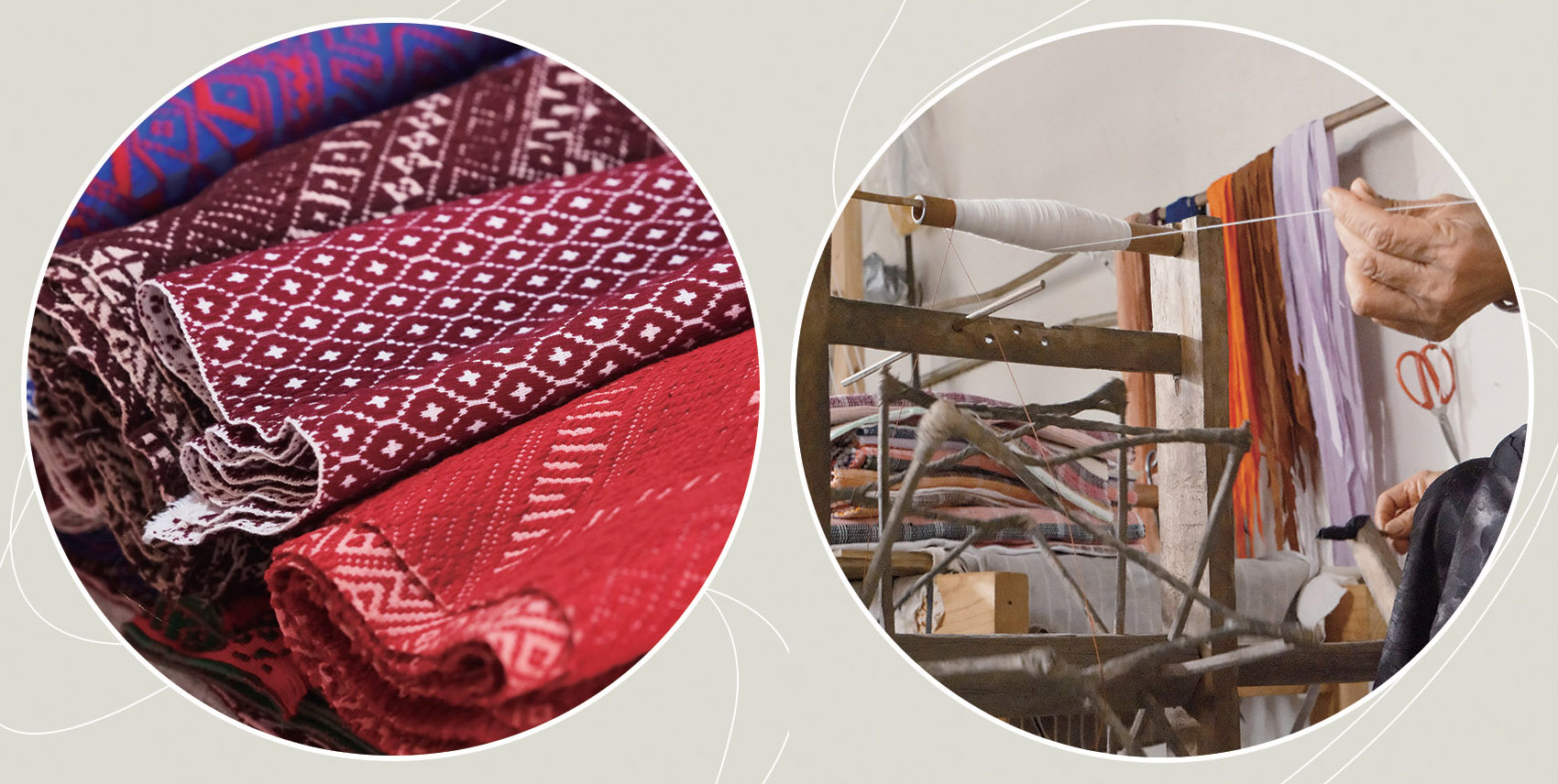
Growing up in Dehong Dai and Jingpo autonomous prefecture, where the cultures of the Dai, Jingpo, De'ang and Achang ethnic groups intersect, Yang Yue's memories of home are closely tied to local sights and smells: the sweet fragrance of white champaca and gardenia, the bright colors of handwoven fabrics and the delicate patterns of silver ornaments.
She later went to the UK to study architectural design. When she returned, however, she noticed that some of the traditional ethnic homes she remembered were disappearing, along with parts of the everyday life once contained within them.
That sense of loss prompted her to found Wubenliving, which she describes as an "urban living room" where visitors can experience different forms of Dehong heritage under one roof. Inside are Dai brocade, De'ang sour tea, and Achang silverwork.
"Visitors are encouraged to touch vintage textiles and taste local botanical brews. A sensory experience can build a much deeper connection than simply reading a label on the wall," Yang Yue said.
She regularly visits villages to learn how traditional objects were made, used, and understood in local life.
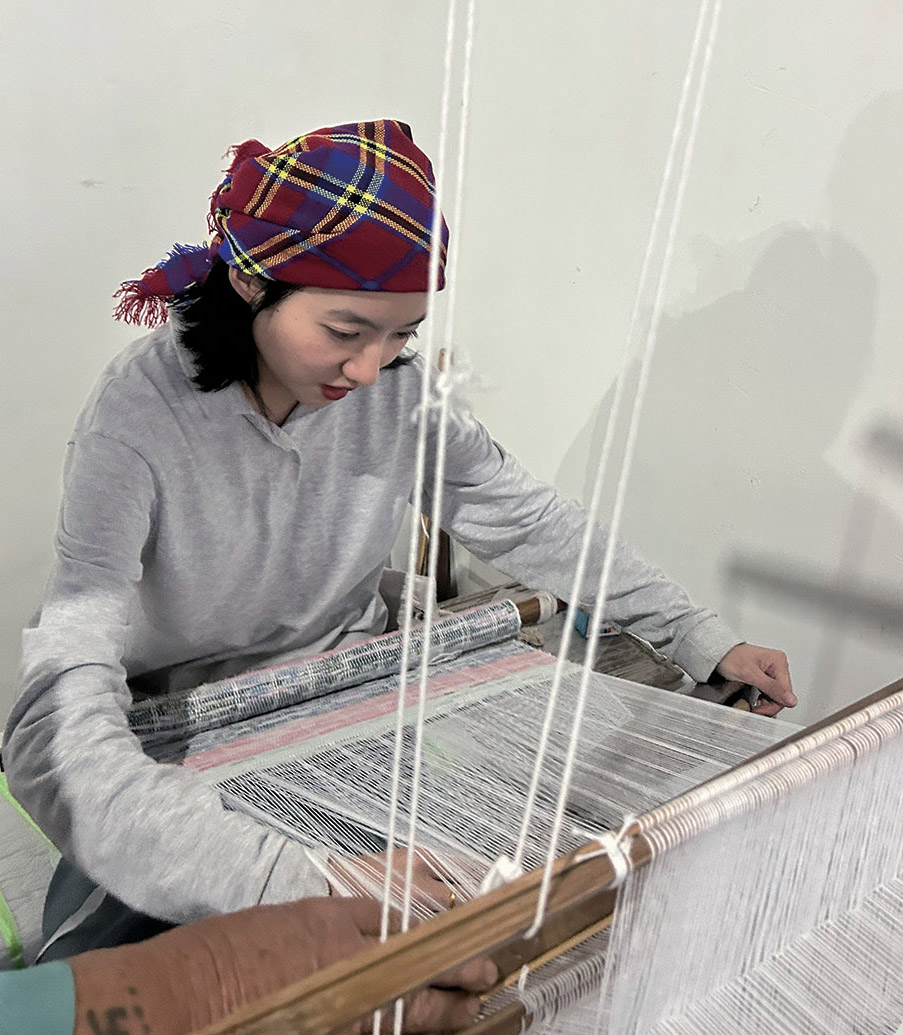
One craft she encountered was liezhibu, a traditional form of recycled-cloth weaving in Dehong. In the past, Dai women would cut worn family clothes and fabric scraps into strips and use them as weft, weaving them together with new warp threads to create cloth that was thick, warm, and durable.
Its value, however, went beyond practicality. When a daughter was preparing to marry, the fabric woven for her might contain pieces of clothing or bedding once used by her parents and siblings.
"It was like taking a piece of her family's memory and warmth with her into her new life," Yang Yue said, "so she would not feel entirely alone."
By the time she began researching the craft, recycled-cloth weaving had become relatively uncommon around Mangshi in Dehong. As her team began using the material, however, interest gradually returned, with some older women in local villages taking up the craft once more.
At Wubenliving, the fabric is not simply reproduced in its traditional form. Instead, it is turned into tote bags, laptop sleeves and sachets designed for contemporary use.
One sachet series uses another local textile — Dai handwoven cloth — and pairs it with two scents inspired by the region: white floral and botanical forest. Customers can stitch part of the sachet themselves. Because every piece of fabric has a different pattern, no two finished pieces are exactly alike.
"I want to use methods young people are familiar with, so these traditions can live again in today's world," Yang Yue said.
Meanwhile, she takes a more restrained approach to old objects themselves. Vintage textiles at Wubenliving are often left with faded colors, stains and frayed edges rather than being restored to look new.
"We don't repair every broken part or scrub away every stain," she said. "That is part of what the object has become over time. We shouldn't try to freeze something completely."
For Yang Yue, preservation is less about recreating the past exactly as it was and more about giving people a way into its stories.
"If someone buys a bag simply because they like the design, and only later becomes curious about the fabric and its history, that is enough for me," she said. "What matters is that more people come to know the craft — and that it is no longer forgotten."
Contact the writers at guojiatong@i21st.cn
