

Hong Kong’s inaugural five-year plan and the 2026 Policy Address, unveiled on Wednesday, not only showcase the current-term administration’s forward-looking vision but also underscore its steadfast resolve to drive continuous reform. The plan, aligning with the national 15th Five-Year Plan (2026-30), provides a clear medium- to long-term development strategy for the special administrative region to consolidate its status as four centers and one hub. Concurrently, the Policy Address serves as a pragmatic program of action: While aiming to comprehensively sharpen Hong Kong's overall competitiveness, it responds to the aspirations of society.
 Forge an international talent hub
A prominent highlight of this year’s Policy Address is its in-depth articulation of the Northern Metropolis development, with the university town taking center stage. The SAR government’s decision to upgrade the University Town Planning and Construction Team into a higher-tier University Town Construction and Development Committee establishes a cross-sectoral, top-level institutional framework, unequivocally reflecting the immense strategic importance attached to this megaproject. The three designated university towns, in San Tin, Hung Shui Kiu, and Ta Kwu Ling, will be developed using an integrated urban precinct concept, seamlessly incorporating the macro-layout of "one city, five elements" — namely, education, technology, industry, talent, and urban development. This initiative is poised to propel deep industry-academia-research synergy, ultimately transforming the Northern Metropolis into a world-class innovation and educational nexus. Given the government's announcement to substantially expand the footprint of the university town, I earnestly expect the authorities to roll out a more diversified portfolio of funding programs. Building upon the existing HK$10 billion ($1.27 billion) loan facility, providing further robust incentives will encourage major tertiary institutions to actively participate in the development of the Northern Metropolis.
Beyond hardware infrastructure, comprehensive "soft" supporting measures for talent are equally vital. The government has actively responded to constructive feedback by rolling out targeted measures to build an international hub for high-caliber talent. Strategic initiatives, such as increasing the number of University Grants Committee-funded research postgraduate places and expanding the quotas for the Hong Kong PhD Fellowship Scheme and the Belt and Road Scholarship will undoubtedly provide a solid talent foundation for Hong Kong’s development into an international innovation and technology (I&T) center. Looking ahead, it is hoped that the government will further expand the scholarship network to encompass more countries in the Association of Southeast Asian Nations and formulate comprehensive support packages for top-tier talent to pursue their careers in Hong Kong, ensuring they inject robust new momentum into the local economy.
Deepen AI application and promote digital education
Amid the global technological wave, the government is steering in the right direction by actively deepening the application of artificial intelligence across critical sectors such as finance, healthcare, transportation, and social welfare, while striving to drive the digital transformation of schools. The government adopted several of my previous advocacy proposals. These include strengthening aerospace innovation and popular science education, optimizing the articulation of the STEM (science, technology, engineering, and mathematics) curricula across primary and secondary schools, allocating targeted funding to support the digitalization of kindergarten administration, and expanding the deployment of AI teaching assistants to a broader range of subjects. These comprehensive measures will cultivate a new generation of I&T vanguards for Hong Kong while effectively alleviating the administrative burden on front-line educators.
Nevertheless, teachers remain the core driving force behind digital transformation in education. The government should draw reference from successful experiences on the Chinese mainland and overseas to establish a categorized and tiered "teacher digital competency framework". This framework would standardize and continuously assess teachers' proficiency across domains such as digital cognition, practical application, and social responsibility. Furthermore, while promoting the popularization of technology, we must not neglect the specific needs of grassroots students. The funding scope of the Community Care Fund should expand to cover various AI-assisted learning tools, ensuring that all students enjoy equal digital learning opportunities and effectively bridging the digital divide.
Cultivate patriotism and foster family-friendly society
In the vital realm of patriotic education, the 2026 Policy Address proposes establishing a museum in Kwu Tung North within the Northern Metropolis to showcase the nation's profound development and monumental achievements. The strategic selection of this site, situated in close proximity to the mainland, deeply symbolizes Hong Kong’s proactive integration into the overall national development blueprint and carries far-reaching significance. By fostering strategic collaborations with top-tier institutions, such as national-level museums, to introduce precious exhibits and cutting-edge immersive experiences, abstract knowledge of national affairs can be effectively transformed into tangible, personal experiences. These invaluable museum resources can be organically integrated with the regular school curriculum — such as the courses on citizenship and social development, and Chinese history— to effectively ignite a strong sense of national pride and belonging among Hong Kong’s young people.
Finally, in confronting the structural challenge of a declining birth rate, the Policy Address has commendably extended the HK$20,000 newborn baby bonus and introduced progressive child tax allowances, alongside targeted housing support measures to encourage childbearing. The regularization of the School-based After-school Care Service Scheme is a highly precise intervention that directly addresses the pain points of dual-income families. To further elevate the fertility rate, the government should take the lead in mobilizing the business sector to fully implement "family-friendly workplace" practices. This should encompass the widespread adoption of flexible working arrangements and the further extension of statutory maternity and paternity leave, fundamentally cultivating a more ideal and supportive child-rearing environment for young families.
Hong Kong’s first five-year plan and the 2026 Policy Address have masterfully charted a grand blueprint for the future development of Hong Kong. With the blueprint now drawn, the critical next step lies in its efficient and resolute implementation.
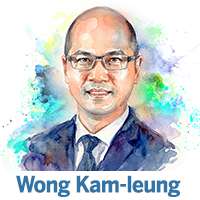
The author is a Hong Kong deputy to the National People's Congress and a member of the Legislative Council.
The views do not necessarily reflect those of China Daily.
