

Cross-border care, training and medical exchanges boost patients' treatment options
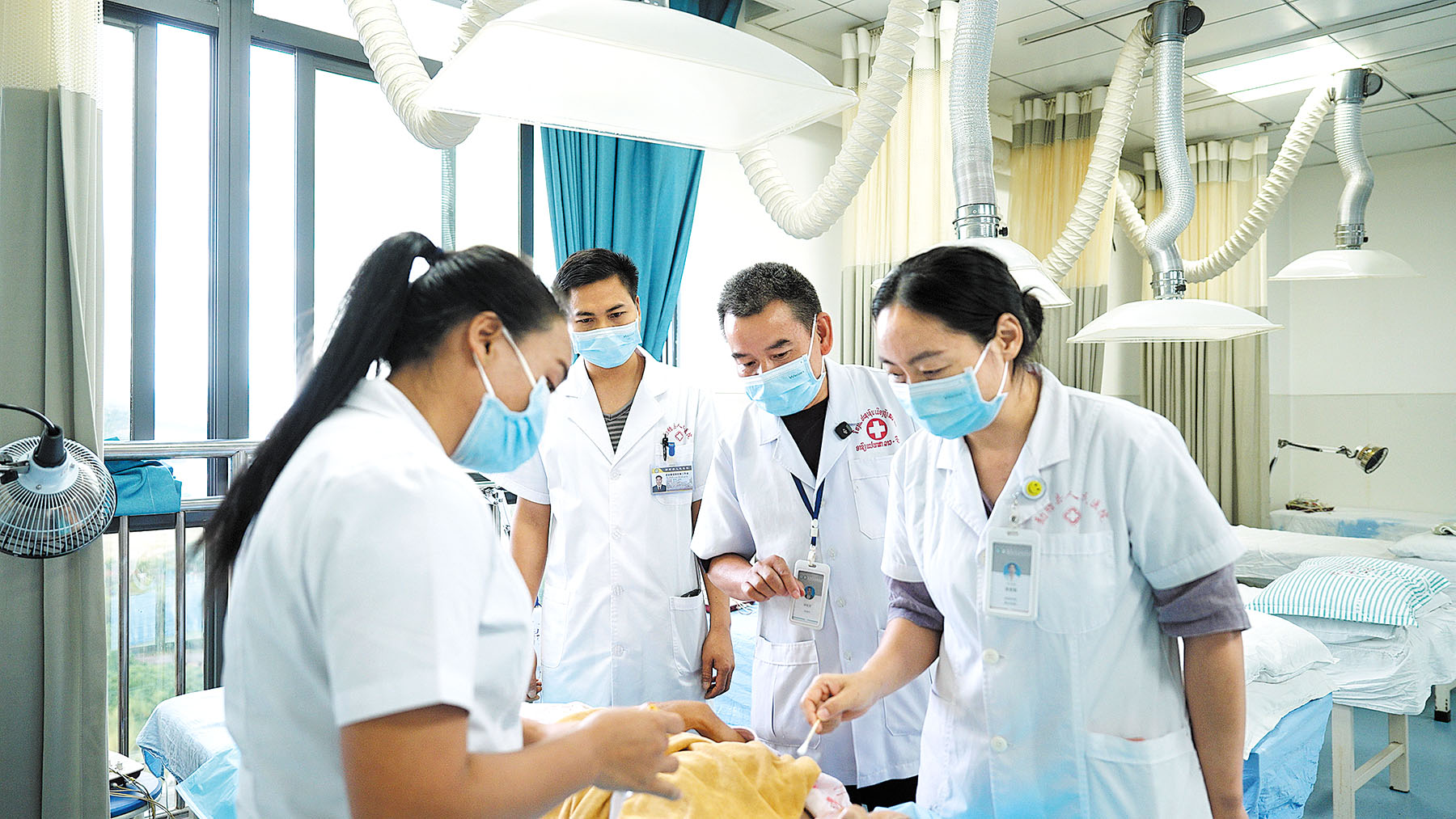
Laoportor, 42, recently crossed the border from Laos into southwestern China's Yunnan province for medical treatment after local doctors failed to resolve his health problems.
The resident of a northern province of Laos was treated at a local hospital for several days for bile duct stones and liver-related issues. But his condition showed little improvement. On the advice of a Lao doctor, he traveled to Mengla County People's Hospital in Xishuangbanna Dai autonomous prefecture for further treatment.
After spending a day and a night at the hospital, Laoportor said he felt much better. When interviewed by China Daily recently, he was still weak and remained in bed with his wife at his side. He said he was gradually recovering.
"I am very grateful to the medical team here," he said. "The service and facilities are good, and the medical team is highly skilled. When I go back, I will recommend the hospital to people I know."
Laoportor is far from alone. Xishuangbanna shares a 677-kilometer border with Laos. Six townships and 14 villages lie along the frontier.
Mengla County People's Hospital received more than 13,000 foreign patients in 2025, compared with about 500 in 2013, according to Miao Zhihai, Party secretary of the hospital. Lao nationals accounted for 97.5 percent of its foreign patients last year.
What began largely with emergency and critical cases has expanded to include chronic disease treatment, maternal and child healthcare, health checks and disease prevention, Miao said. Across Xishuangbanna, public medical institutions treated more than 30,000 foreign patients in 2025, according to the prefecture's health commission.
But the growing flow of patients into China tells only part of the story. Along the border, Chinese medical services and expertise are being extended into Laos so more patients can be treated closer to home.
However, this raises a practical question: can cross-border healthcare grow without putting pressure on Chinese medical resources? Hospital officials told China Daily the current number of foreign patients remains within the hospital system's capacity without affecting services for local residents.
Easing access
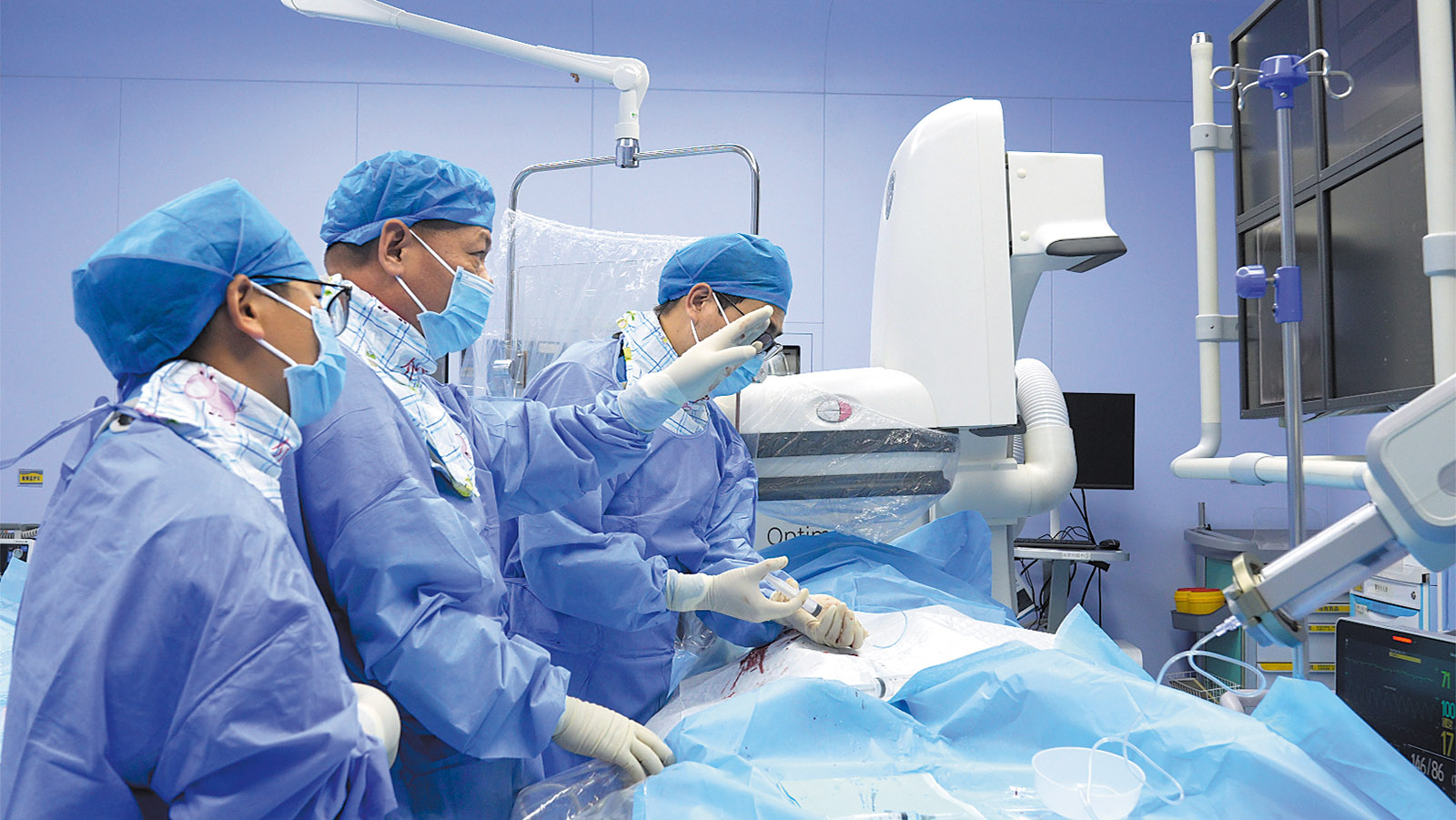
Crossing the border is only the beginning. Once patients arrive in Mengla, for instance, they have to navigate the healthcare system in another country.
At lunchtime, Liu Sha, 40, was still sitting behind the translation desk in the outpatient hall of Mengla County People's Hospital. The translation desk is clearly identified, with translators' names and phone numbers displayed for Lao patients who need help. For Liu, who has worked there for more than six months, translating words is only part of the job.
"We are not just translators. Sometimes we also have to take on the role of family members," she told China Daily during a recent visit. "We need to put ourselves in the patients' shoes, build trust with them and ease their anxiety."
Her work can follow almost the entire journey of a Lao patient — from coordinating pickup at the border post to helping with registration and payment, accompanying them to consultations and examinations, explaining treatment plans and translating consent documents. After a patient is discharged, translators often also explain medication dosages and help arrange follow-up visits.
Medical terminology sometimes requires repeated explanation, Liu said, while dialect differences and unfamiliarity with medical practices in China can leave some patients hesitant about examinations or surgery. Building trust, she said, is often as important as the translation work.
Song Zhangwen, 55, who lived in Laos from the age of 8, began working as a hospital translator in 2013 and has assisted more than 50,000 Lao patients.
His phone is never turned off, and he has occasionally paid medical bills upfront for patients short of money. "For me, it is about helping people as much as I can," he said.
As cross-border patient numbers have grown, so has the demand for translators.
The hospital has expanded from one translator to three, but Miao Zhihai, the hospital's Party secretary, said even that is not enough. Local Dai volunteers are also brought in to help bridge the language gap, as the Dai and Lao languages share similarities.
Meanwhile, cross-border transfers for emergency cases have also been streamlined. For critically ill Lao patients, coordination between the border port and the hospital has helped cut cross-border emergency clearance time from about 30 minutes to 10 minutes, according to the Xishuangbanna health commission.
For some patients, the coordination begins even before a journey to China is considered.
Remote diagnosis
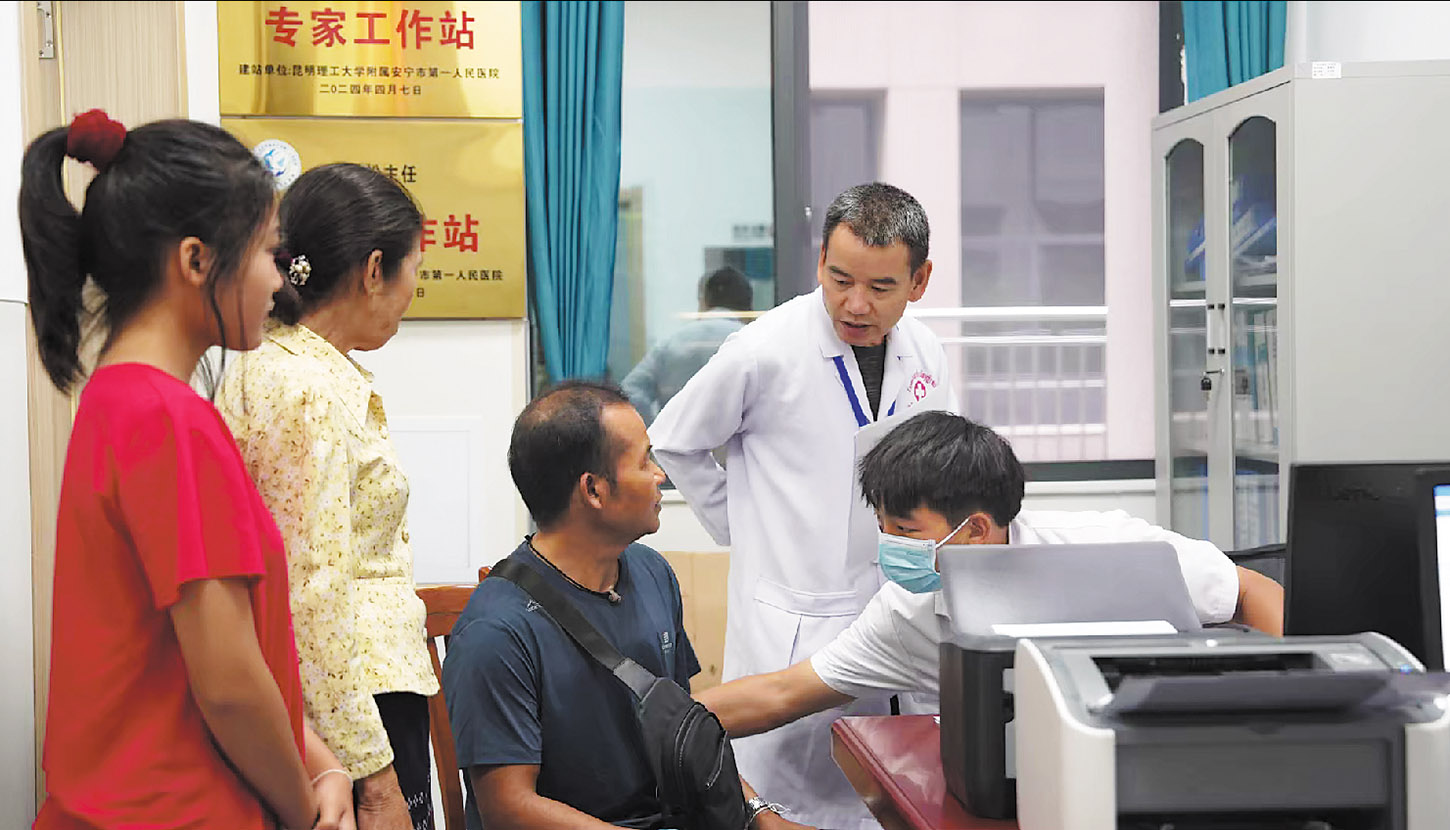
In April 2025, a 61-year-old man from Muang Sing district in Laos was rushed by his family to Mengla County People's Hospital after suffering chest pain for two hours.
An electrocardiogram in the emergency department showed an extensive anterior myocardial infarction, according to Li Guipeng, director of the hospital's cardiology department. Within 32 minutes of admission, the patient was in the catheter room, where cardiologists opened a completely blocked coronary artery and implanted a stent. Blood flow was restored 58 minutes after he arrived at the hospital, and he was discharged a week later.
"In the past, patients like this could only receive thrombolytic therapy or face a long-distance transfer," Li said. "Now we can provide coronary intervention here."
Expertise in cardiovascular treatment is also beginning to help patients before they cross the border.
Since December 2024, Mengla County People's Hospital has connected seven hospitals in northern Laos to its remote ECG network. Lao medical workers perform the examination locally and transmit the results in real time to the cardiac center in Mengla, where specialists interpret them and send diagnostic reports back.
If an ECG shows signs of an acute myocardial infarction, severe arrhythmia or another high-risk condition, the system can trigger an alert, helping doctors identify patients who may need urgent treatment or transfer.
By May 9, more than 60 Lao patients had received remote ECG diagnoses through the network. Li said it had helped identify and issue early warnings for several patients with serious cardiovascular conditions, allowing them to be transferred to Mengla earlier for further treatment.
The model extends beyond Mengla. Xishuangbanna People's Hospital has established a remote ECG network with hospitals in five northern Lao provinces, providing more than 8,000 remote diagnoses to date, according to the prefecture's health commission.
Building capacity
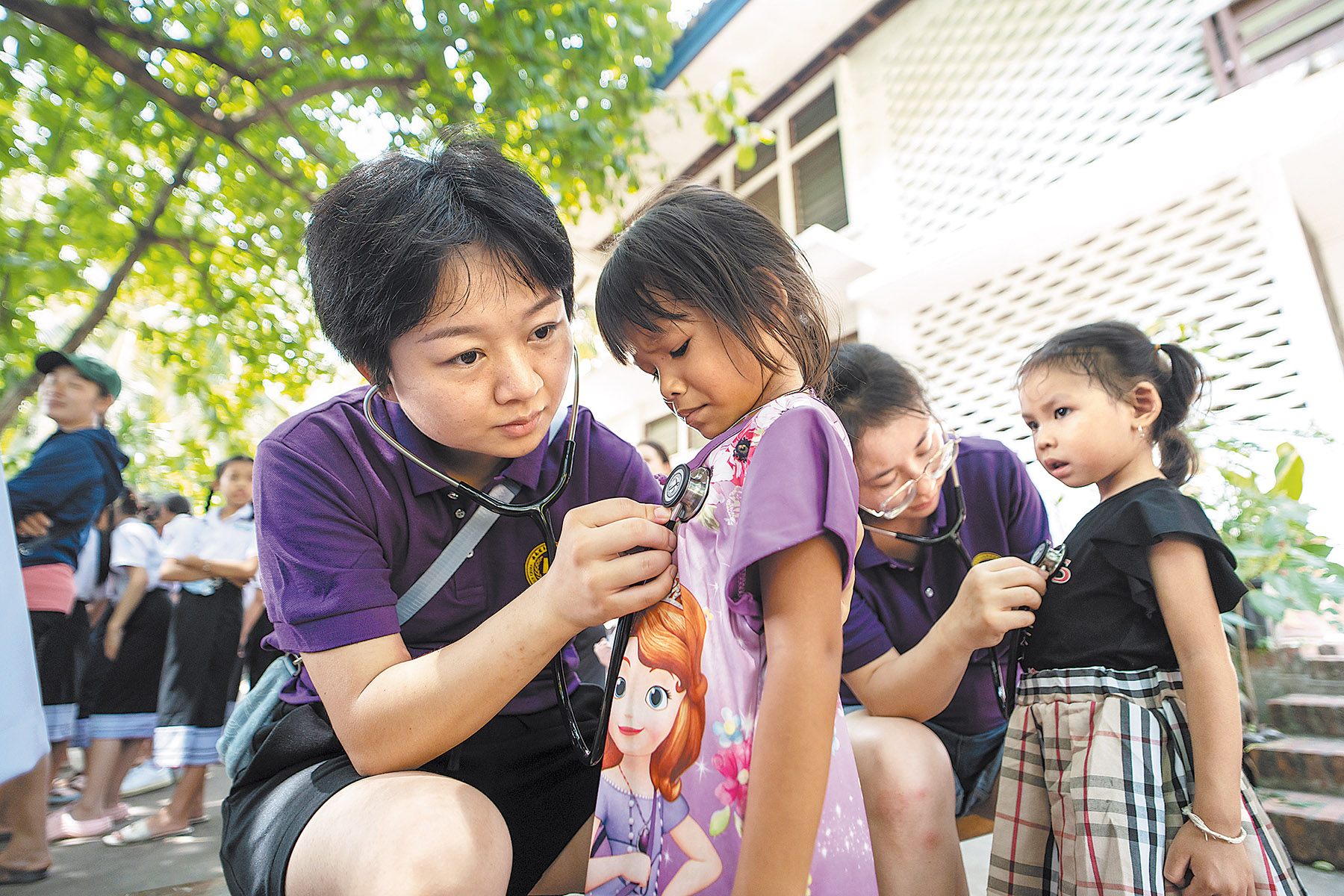
Souliphone Nanthilath crossed the border not as a patient, but as a doctor wanting to learn more.
A clinician at Luang Namtha City Hospital in Laos, Nanthilath arrived in China on June 8 for training in general surgery at Mengla County People's Hospital. Her training has included clinical practice, ward rounds and case discussions.
"My biggest gain has not only been medical knowledge and clinical skills," she said. "More importantly, I have learned more standardized approaches to medical care and clinical thinking, as well as the importance of teamwork and putting patients at the center of care."
Her training is part of the medical exchanges between Yunnan and Laos that stretch back more than six decades. From 1964 to 1975, Yunnan sent six medical teams comprising of 83 members to Laos. Over the years, cooperation has expanded from medical assistance to disease control, hospital partnerships and training of health workers.
More recently, Xishuangbanna People's Hospital worked with hospitals in five northern Lao provinces under a China-ASEAN healthcare cooperation program from 2014 to 2024.
During that period, the two sides had 42 personnel exchanges involving 497 participants. Four provincial hospitals in Laos were supported in establishing emergency medical rescue teams.
For Nanthilath, what matters most is what happens after she returns to Laos.
Primary healthcare still faces gaps in trained personnel, medical equipment, medicine supplies and opportunities for continuing education. After returning home, she plans to apply what she has learned in her own practice and share it with colleagues. "Good medical concepts and standardized procedures can continue to improve the quality of care, even when conditions are limited," she said.
Li Yuanyuan, deputy director of the Xishuangbanna Center for Disease Control and Prevention, said building local capacity is crucial to making cooperation sustainable.
"We need to combine 'blood transfusion' with 'blood production'," Li said, using a Chinese metaphor for pairing immediate support with efforts to build local capacity.
She said that means placing greater emphasis on training health workers and helping Laos develop its own disease-control teams and grassroots healthcare networks, rather than relying primarily on material assistance.
Balancing needs
Does treating more patients from across the border come at the expense of local residents?
At Mengla County People's Hospital, administrators said that has not happened so far.
The hospital has 598 beds, with slightly more than 400 occupied during peak periods by Chinese and foreign patients combined, putting its bed occupancy rate at about 70 to 80 percent. Daily outpatient visits average fewer than 1,000, according to Miao Zhihai, the hospital's Party secretary. Based on those figures, he said, the more than 13,000 foreign patients treated last year remained within the hospital's capacity.
But Miao also acknowledged that capacity has limits. "We are not seeking an unchecked expansion in patient numbers," he said.
Instead, he said, the hospital plans to keep the scale of cross-border treatment in line with its resources, with greater emphasis on serious and complex conditions that require its specialist services. If demand continues to grow, patients with common and chronic conditions could be directed to other medical institutions in the county, allowing the hospital to concentrate more resources on patients requiring higher-level care.
The question of capacity also helps explain why more diagnosis, treatment and disease prevention is taking place in Laos with the help of Chinese medical institutions.
Li Yuanyuan, deputy director of the Xishuangbanna CDC, said cross-border public health cooperation has moved from largely one-off emergency assistance toward more regular and institutionalized cooperation, with greater emphasis on joint development, shared resources and coordinated disease prevention.
The benefits, she said, run in both directions. Infectious diseases such as dengue fever and malaria do not stop at the border, making surveillance and prevention in Laos relevant to communities in China. "There are no real borders when it comes to infectious diseases," Li said.
Since 2005, Yunnan and northern Laos have developed cross-border mechanisms for infectious disease prevention and control, including epidemic information sharing and coordinated response.
Cooperation has also extended beyond Laos.
Wang Qingwei, deputy director of the Xishuangbanna health commission, said the prefecture has expanded medical exchanges with neighboring countries including Thailand, with cooperation ranging from medical services and training to infectious disease control and remote healthcare.
Health officials see the increasingly interconnected system as part of building a cross-border health community, within the broader China-Laos community with a shared future.
For other border regions facing similar gaps in medical resources and shared health risks, the experience may offer a reference for how cross-border access can develop alongside local healthcare capacity, Li said.
Souliphone, the clinician from Laos, said the future begins when she returns home. "I hope that through China-Laos medical cooperation, more Lao patients will be able to receive better medical care in our own country," she said.
