

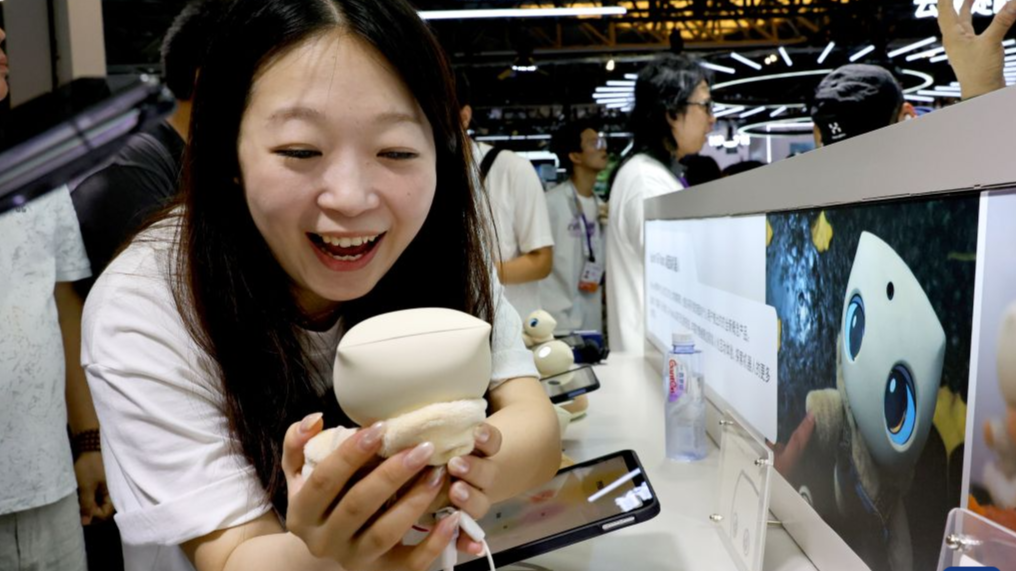
SHANGHAI – The Hong Kong Generative AI Research and Development Centre (HKGAI) announced the launch of its “HKGAI Large Model Global Expansion Strategy” at the 2026 World Artificial Intelligence Conference (WAIC 2026) in Shanghai, positioning itself as a key intermediary linking China’s AI capabilities with international markets.
The strategy draws on HKGAI’s full-scenario ecosystem product matrix, including its large language models and agent-based applications, to capitalize on Hong Kong’s role as a superconnector and “super value-adder” in the global AI landscape.
Key initiatives include accelerating deployment of the center’s HKGAI V3 model and scaling up implementation on domestic chips; offering tailored “AI City” solutions for international markets across sectors such as science, manufacturing, healthcare, education, agriculture, and governance; building an AI safety and governance mechanism while strengthening cybersecurity threat information sharing and emergency response cooperation; and promoting high-quality data supply and cross-border data flows.
ALSO READ: Leaders get glimpse of China’s future
Established in October 2023 under the Hong Kong Special Administrative Region government’s “AIR@InnoHK” innovation platform and led by The Hong Kong University of Science and Technology (HKUST), HKGAI has quickly evolved from a local research initiative into an organization with global ambitions.
Speaking at the conference, Guo Yike, HKUST provost and director of HKGAI, emphasized that the center aims to turn Hong Kong’s research achievements, computing power, and governance experience into exportable solutions.
“We are committed to working with global partners to explore a path for AI that balances safety, trust, and sustainability, serving as a bridge for international cooperation and helping cities worldwide develop smart urban systems,” Guo said.
