

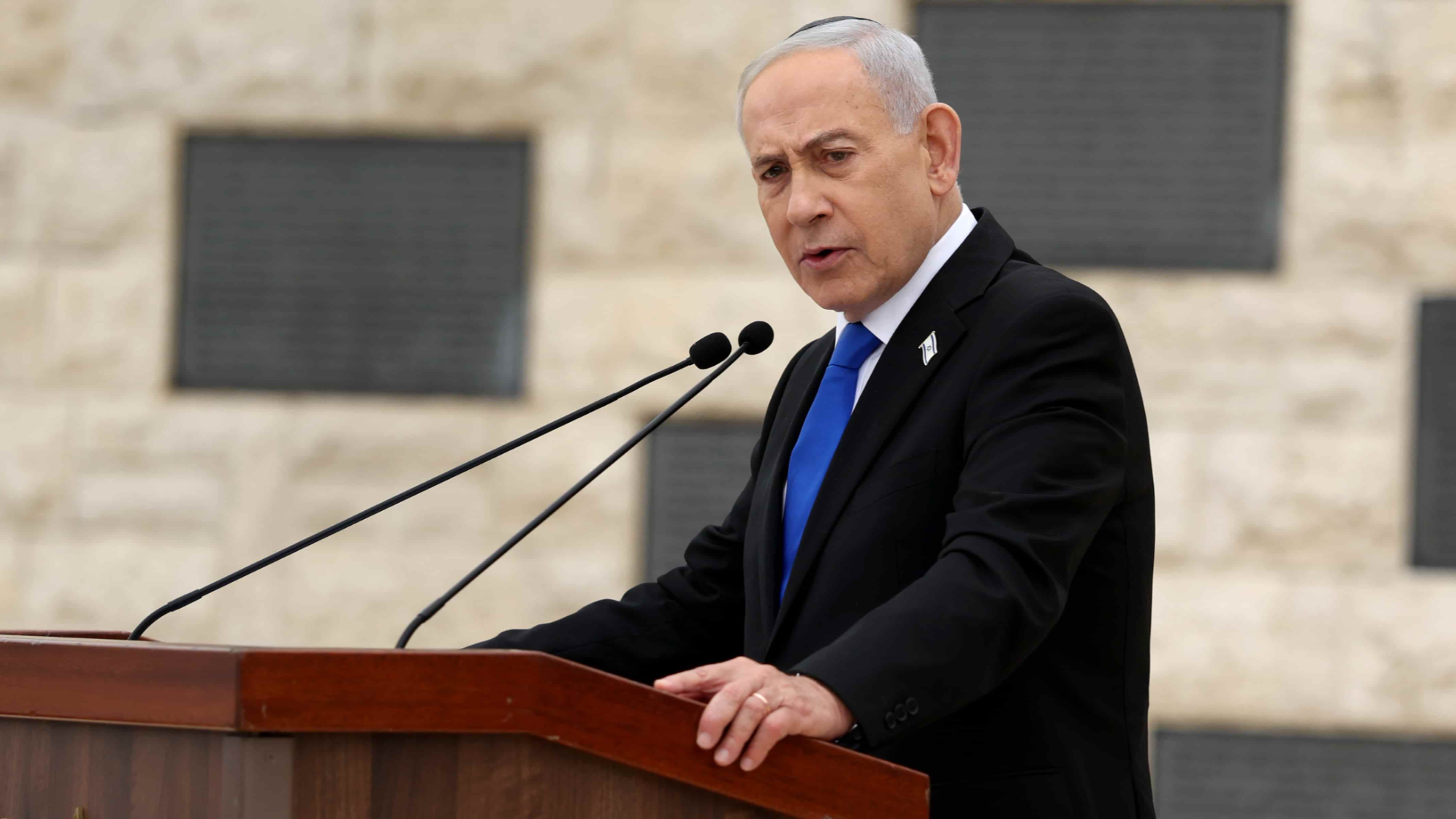
Israeli Prime Minister Benjamin Netanyahu’s government is passing laws aimed at strengthening his rightist-religious political bloc before tight elections in October.
At the center of the drive are measures to ensure military exemption for ultra-Orthodox men, along with curbing the attorney general’s powers and tightening government oversight of media.
The moves are proving highly controversial in Israel, with the head of the military among those voicing their criticism. But while they could alienate some voters, Netanyahu likely sees them as the best way to stay in office.
“Netanyahu calculates that going to the polls amid a total rupture with the ultra-Orthodox would be far more damaging, exposing him as unable to build a future coalition,” said Nadav Shtrauchler, a political strategist who has worked with the prime minister. “His logic is: first secure a viable government, then worry about everything else.”
ALSO READ: Report: Israel to hold general elections on Oct 27
Israel’s longest-serving premier, Netanyahu, 76, is being challenged by Gadi Eisenkot and others in the Oct 27 vote. The former head of the armed forces has emerged as Netanyahu’s main rival and has taken a lead in the polls.
No party is likely to win enough seats to form a government without a coalition, and Netanyahu is seeking to keep the ultra-Orthodox from defecting to Eisenkot or former PM Naftali Bennett, who’s also running but has seen his popularity dip in recent months.
Netanyahu’s strategy could cost him votes in other parts of society. The new laws are under attack from officials who say the exemptions will take a steep toll on national security, especially given troop shortages after almost three years of war.
Eisenkot called the laws – being passed before Israel’s legislative session ends this week as election campaigning formally starts – reckless and vowed to repeal them if he becomes prime minister.
“These laws weaken the military, weaken Israeli democracy and the judicial system, weaken the Israeli media, and actively undermine the State of Israel,” he said.
One key part declares Torah study to be constitutionally important. Approved on Monday, it seeks to negate a Supreme Court ruling striking down longstanding Haredi, or ultra-Orthodox, exemptions from military service, a hugely divisive issue in Israel.
“It could be used to justify future attempts to excuse ultra-Orthodox men from military service,” said Shlomit Ravitsky Tur-Paz of the Israel Democracy Institute.
A parallel law, passed on Tuesday, stipulates no arrests or enforcement proceedings can be taken against Haredi draft evaders for the coming months.
Opposition lawmakers shouted “shame!” and “go home!” at Netanyahu from the floor of the Knesset, Israel’s parliament.
By Wednesday, Israel’s High Court of Justice had issued an injunction freezing the law’s implementation, after several petitions said it was unconstitutional and discriminatory. The court said a hearing will be scheduled soon.
Threading the Needle
Although his government is behind the laws, Netanyahu refrained from raising his hand for either bill as he seeks to thread the political needle of keeping the Haredi parties onside while appealing later to a broader set of voters.
“Netanyahu realizes he is taking a blow but remains confident in his capacity to recover,” said Shtrauchler. “The roughly 100 days remaining until the election – an eternity in Israeli politics – leave him with plenty of room to maneuver.”
Early on Wednesday, the government repealed a reform that had broken the religious establishment’s monopoly on kosher food certification, a move aimed at lowering costs and streamlining the process. The repeal allows the ultra-Orthodox Shas party, one of Netanyahu’s political allies, to control the appointment of thousands of kosher inspectors.
READ MORE: Netanyahu says Israel to 'soon' control 70% of Gaza
Legislation weakening the attorney general’s authority was approved by the Knesset late Wednesday, less than 48 hours before lawmakers break for the election campaign, carrying forward a core piece of the pre-war judicial overhaul that sparked widespread protests in 2023.
“The revamp of the attorney general institution is not an isolated measure,” Deputy Attorney General Gil Limon wrote in a letter to government legal advisers ahead of the bill’s approval. “In practice, it’s a vehicle for achieving a deep-seated regime change. It serves as the gateway to dismantling fundamental democratic safeguards.”
Netanyahu’s cabinet fired the attorney general, Gali Baharav-Miara, a year ago, citing “lack of trust,” but she stayed in office after the Supreme Court overruled the decision.
Moody’s Corp said Tuesday in a review of Israel’s rating of Baa1 – three steps above junk – that “downward pressure” could build “as a result of a weakening of Israel’s institutions, in particular if the judiciary proved to be weaker than assessed, potentially as a result of institutional reforms.”
An upcoming broadcasting reform bill has been criticized for its de facto imposition of political oversight on Israeli media through a new regulatory board to be dominated by political appointees wielding licensing and sanctioning powers.
READ MORE: Israel: Current situation could pave way for peace deal with Lebanon
The military exemptions for the ultra-Orthodox are causing the most controversy.
“The legislation is moving forward amid a multi-arena military campaign, as the army grapples with an acute manpower deficit which threatens its ability to meet operational missions,” Israel’s military chief, Eyal Zamir, warned in a letter to Netanyahu on Monday.
Shai Tayeb, head of the military’s planning and personnel directorate, said in a parliamentary hearing on the same day that “both the conscript force and the reserves have reached the limit of their capacity.”
Israel has been involved in wars on multiple fronts since the attack by Hamas militants in October 2023, including this year’s conflict with Iran. That’s forced conscripts and reservists into hundreds of days of extended service. According to a Channel 12 poll from May, a quarter of Netanyahu’s past voters who are reconsidering their support cite his Haredi concessions as the primary reason.
