

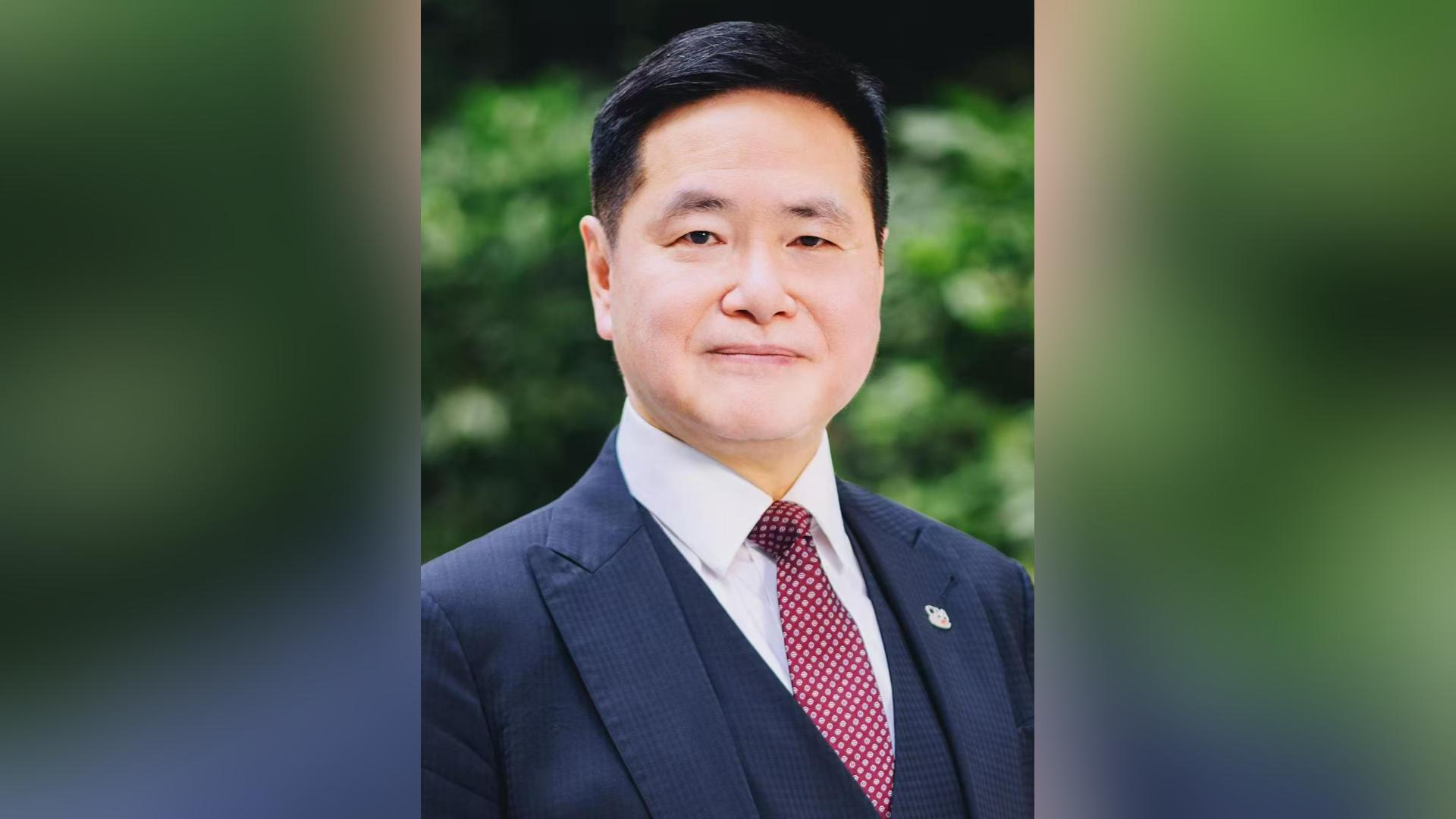
Hong Kong’s inaugural five-year development plan isn’t just an economic growth blueprint – it’s a strategic framework spanning finance, innovation, tax and professional services that’ll define how the city integrates with the nation’s broader development over the next half-decade, says prominent accountant Stephen Law Cheuk-kin.
“The key is translating the national positioning into practical execution,” says Law, who helms the Hong Kong Institute of Certified Public Accountants. The priorities include beefing up the special administrative region’s traditional role as a world financial center, he tells China Daily in an exclusive interview.
Professional services are among the city’s greatest strengths in helping enterprises from the Chinese mainland go global. Driven by accountants’ pursuit of green and sustainable finance, along with an ever-growing pool of high-end international talents, the profession serves as a growing client base – from the Guangdong-Hong Kong-Macao Greater Bay Area to markets along the Belt and Road.
The institute has built up a curated directory matching mainland enterprises with qualified Hong Kong accounting firms for overseas expansion. The list had grown from 81 firms at its launch in April last year to 92 by March this year, reflecting rising demand from mainland businesses seeking cross-border professional support.
“It’s building trust through high-quality reporting, assurance and governance, supporting sustainable finance through sustainability disclosures, and also assurance standards,” says Law. “Trust also helps enterprises go global and strengthens fiscal resilience through professional tax and public finance management.
“With all these things, we’ll actively work with the government to achieve our final goals.”
ALSO READ: Behold a journey of national transformation
Law, who also sits on the National Committee of the Chinese People’s Political Consultative Conference – the nation’s top political advisory body – sees Hong Kong’s professional accountants playing a standard-setting role in three respects – “standard translation”, “standard contribution” and “standard presentation”.
“We help mainland enterprises apply international rules. This is standard translation,” he says. By “standard contribution”, he refers to professionals feeding the SAR’s regulatory experience into policy discussions on the mainland. Hong Kong professionals also help present Chinese companies’ financial information in ways that earn the trust of global investors.
As a statutory body overseeing more than 47,000 members, the HKICPA sets financial reporting, auditing, ethics and sustainability disclosure standards, while training talent to keep pace with international developments.
A centerpiece of Law’s advocacy is the “Four-Ts” framework – tax reform, advance tax certainty, tax treaty expansion and targeted promotion designed to transform Hong Kong from a listing venue into a hub for enterprises to manage their cash flow, foreign exchange and capital allocation.
Law, who’s also an adviser to the nation’s Ministry of Finance and a former executive director of MTR Corporation, stresses that corporate treasury centers shouldn’t be seen merely as a tax initiative but as a “strategic pillar” of the five-year economic and social development plan.
READ MORE: HK lawmakers set off on ‘groundbreaking’ Beijing study tour
This echoes the HKSAR government’s action plans, which propose amendments to expand interest-deduction eligibility and introduce pre-approval mechanisms, enabling companies to secure tax certainty before setting up operations, addressing the pain points that limited traction under the 2016 regime.
Law has warned that Hong Kong has to “compete more aggressively” with rivals like Singapore and Dubai in the United Arab Emirates to attract high-value treasury functions that anchor balance sheets and deepen banking, foreign exchange and capital-market ecosystems.
“The definition of an international financial center must broaden beyond initial public offering fundraising to include a full spectrum of financial nerve centers,” urges Law, alluding to hubs where enterprises raise capital, manage regional treasury, issue green and sustainable finance products, and innovate in virtual assets with clear regulations.
He points to Hong Kong’s status as Asia’s leading wealth-management hub, having recently overtaken Switzerland in cross-border assets, and the city’s position as the world’s largest offshore renminbi pool, as distinct advantages that rival cities like Singapore and Shanghai can’t fully replicate.
On yuan internationalization, Law notes that the Hong Kong Monetary Authority’s roadmap shows “how Hong Kong can make renminbi usage more convenient, more diversified and more connected to global markets, while still managing risk”, reinforcing the city's role as an “offshore laboratory and distribution hub” for the Chinese currency.
Despite geopolitical tensions and questions over why Hong Kong has lagged behind regional artificial intelligence-driven market rallies, Law remains confident, citing the SAR’s proven resilience through repeated crises and its unique position as the only market linking the mainland with global capital under a common-law system.
READ MORE: What does five-year planning mean for HK?
The veteran accountant proposes an eventual “IPO Connect": that would extend the Stock Connect model to primary listings although he warns this would require careful study of risks, scale and investors’ eligibility.
He has also championed a broader mission for accountants – from advancing sustainable-finance and carbon-market standards on the mainland to leading HKICPA delegations to Beijing, the Yangtze River Delta and London to promote Hong Kong as a springboard for mainland enterprises going global.
Founded in 1973, the institute has sought to serve the public beyond its members’ professional scope, making volunteering a growing trend among accountants. Nearly 1,000 members and their families registered as volunteers following the deadly fire at Wang Fuk Court in Tai Po last year – a reflection of how accountants’ contributions to Hong Kong “will make our lives better”, extending well beyond financial reporting, says Law.
Zhao Ziwen contributed to the story.
Contact the writers at irismuk@chinadailyhk.com
