

Self-taught in English, Wang Cheng turns an ordinary market stall into an unexpected platform for learning, confidence and connection.
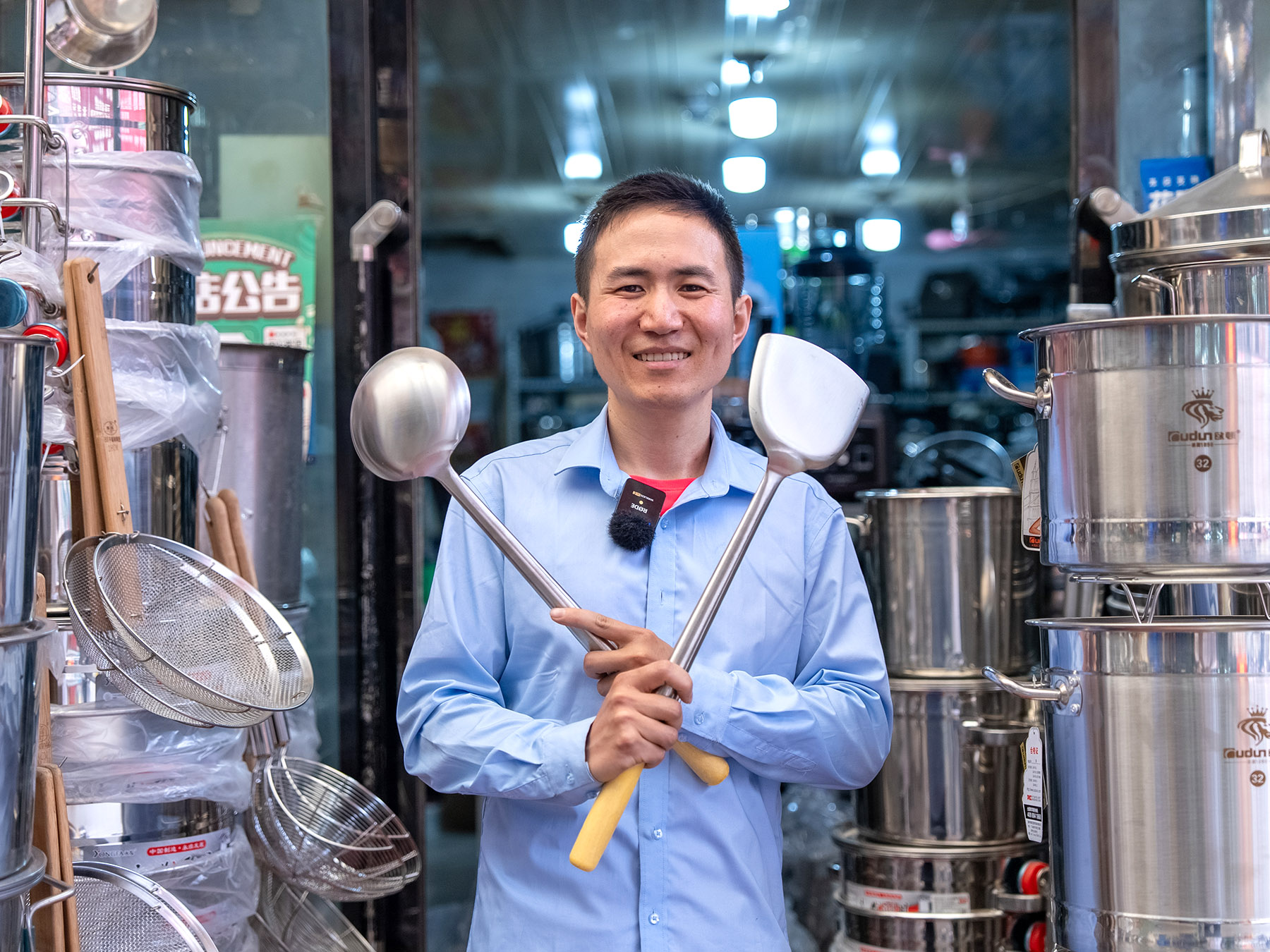
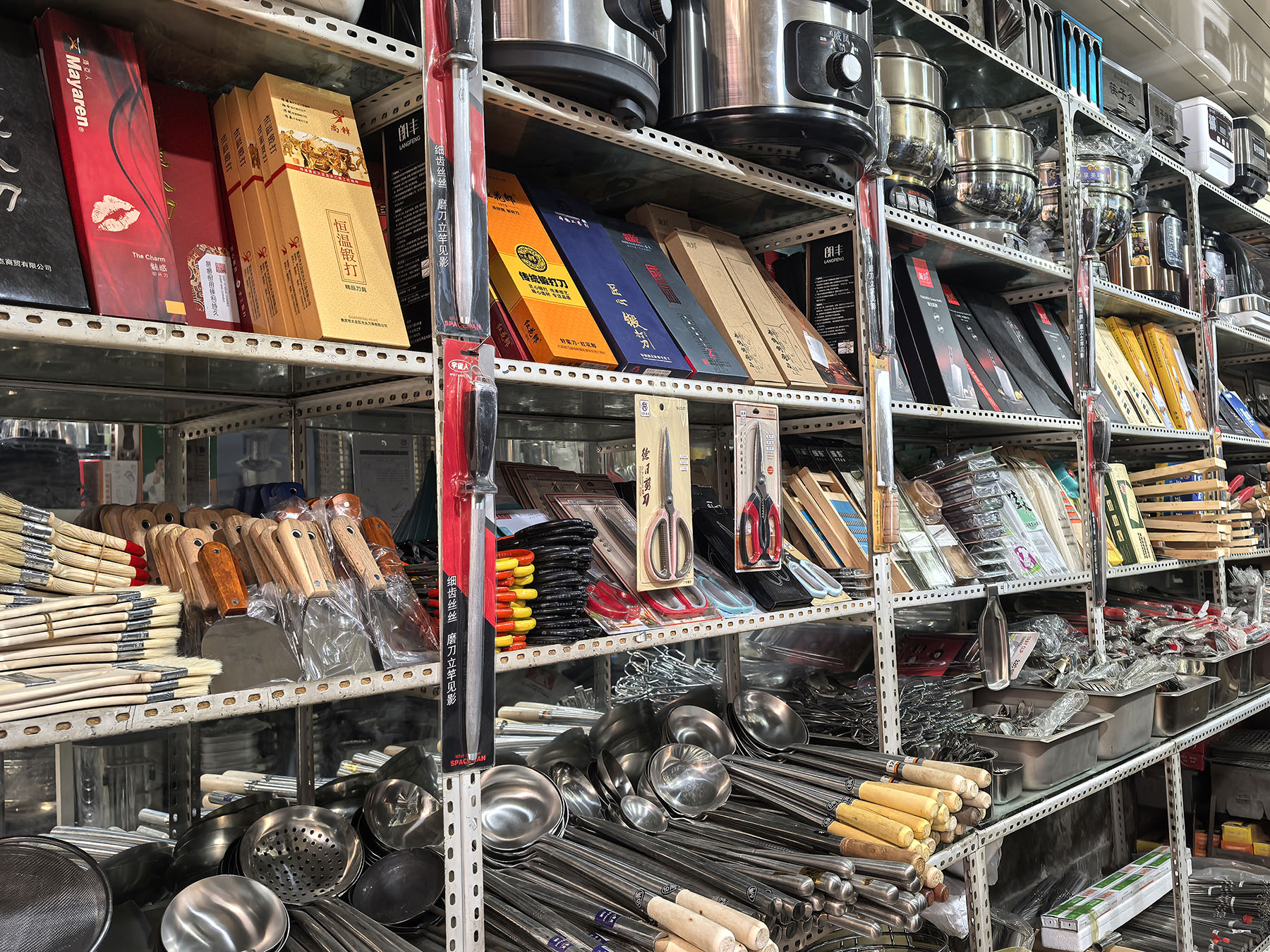
As you walk through the narrow lanes of Yantan Small Commodities Wholesale Market in Lanzhou, Gansu province, you pass stacks of plastic basins, stainless steel buckets and cooking pots. The air is heavy with the smell of rubber and dust.
Inside one of the market's small shops, Wang Cheng, wearing a plaid shirt with faded cuffs, is busy rearranging the merchandise. Then he picks up a stockpot, turns toward his phone and begins speaking in fluent English with a striking American accent.
"Welcome to my shop," he said. "This is a stainless steel stockpot. It's durable and resistant to rust."
Wang is not speaking to a foreign customer. He is filming a product video for Douyin, the Chinese version of TikTok. The unexpected contrast between his fluent English and the ordinary kitchenware shop has attracted widespread attention online.
His command of English is the result of an unusual learning journey.
Born in 1993, Wang grew up in Shaanxi province. He left school before completing junior high school, trained as a cook and later moved to Lanzhou to help his parents run their kitchenware business. He has now worked in the shop for six years.
Wang's interest in English began with Michael Jackson.
When he was in middle school, Wang came across the singer's Earth Song and its music video.
"The lyrics and the rhythm blew me away," he recalled. "I couldn't get it out of my mind. From then on, I wanted to learn more about Michael."
Years later, that fascination developed into a serious commitment to self-study. Wang has never had a formal English teacher. Instead, he taught himself by reading books and watching films and interviews.
He also developed what he calls the "echo method": listening to a sentence and repeating it again and again, trying to reproduce not only the words but also the speaker's rhythm, stress and intonation.
"I don't know anyone else in this market who speaks English," Wang said. "I suppose I'm the only one."
Learning sparks growth
What sets Wang's story apart from a conventional tale of professional advancement is that, at first, English offered him no obvious practical reward. Most of his customers were local, and Mandarin or the Lanzhou dialect was more than enough for his daily work.
Yet the absence of external pressure was precisely what made the experience so meaningful. Wang was not studying to pass an exam or earn a certificate. He was learning for its own sake, using the language to build a life richer and more expansive than his circumstances might suggest.
Before he began taking English seriously, Wang said, he lacked direction and confidence. The language gave him a private intellectual world beyond the daily routines of the shop, and studying gradually changed the way he saw himself and the world around him.
"I used to be a slacker. I felt lost in my personal life," he said. "As I continued learning, I could feel myself improving day by day. I was exposed to different ideas and different kinds of content. My horizons broadened, and I became more thoughtful and open-minded."
What began with music eventually led him to films and books he might never otherwise have encountered, and over time, English also began to prove useful in more practical ways.
In 2022, a French couple visited the shop looking for kitchen utensils. When the woman pointed to a garlic press and seemed unsure what it was called, Wang explained it to her in English. Her enthusiastic reaction filled him with delight.
"It was one of the first times an interaction with a foreigner made me feel that all my English study had paid off," he said. "I was so excited."
Online, the response has been even greater. Since his Douyin videos went viral, viewers have sent him messages praising his persistence. Some have even traveled to the market specifically to visit his shop and buy something from him.
"I don't take any of it for granted," Wang said. "I'm grateful for all the love and support I've received."
At first, his family did not understand why he devoted so much time to a language that he did not appear to need. "But once they saw how passionate and committed I was, they came to appreciate what I was doing," he said.
Wang now spends more time creating online content, though he said financial gain is not his main motivation.
"Material rewards are not that important to me right now," he said. "If I can inspire more people to learn English, that would mean a great deal to me."
For Wang, English is no longer simply a language to be spoken. It has become a way of reading, thinking and entering unfamiliar worlds.
He has recently been reading The Woman Who Could Not Forget, a memoir by the mother of Chinese American journalist, author and historian Iris Chang. Chang is best known for The Rape of Nanking, her account of the atrocities committed during the 1937 Nanjing Massacre.
"Reading has shown me the power of knowledge," Wang said. "Little by little, everything you learn builds up, and you become a better version of yourself."
Wang does not know whether he will always work in the kitchenware shop. But he is certain that he will never stop learning.
"The purpose is to improve yourself," he said. "That is something you can keep doing for the rest of your life."
Contact the writers at majingna@chinadaily.com.cn
