

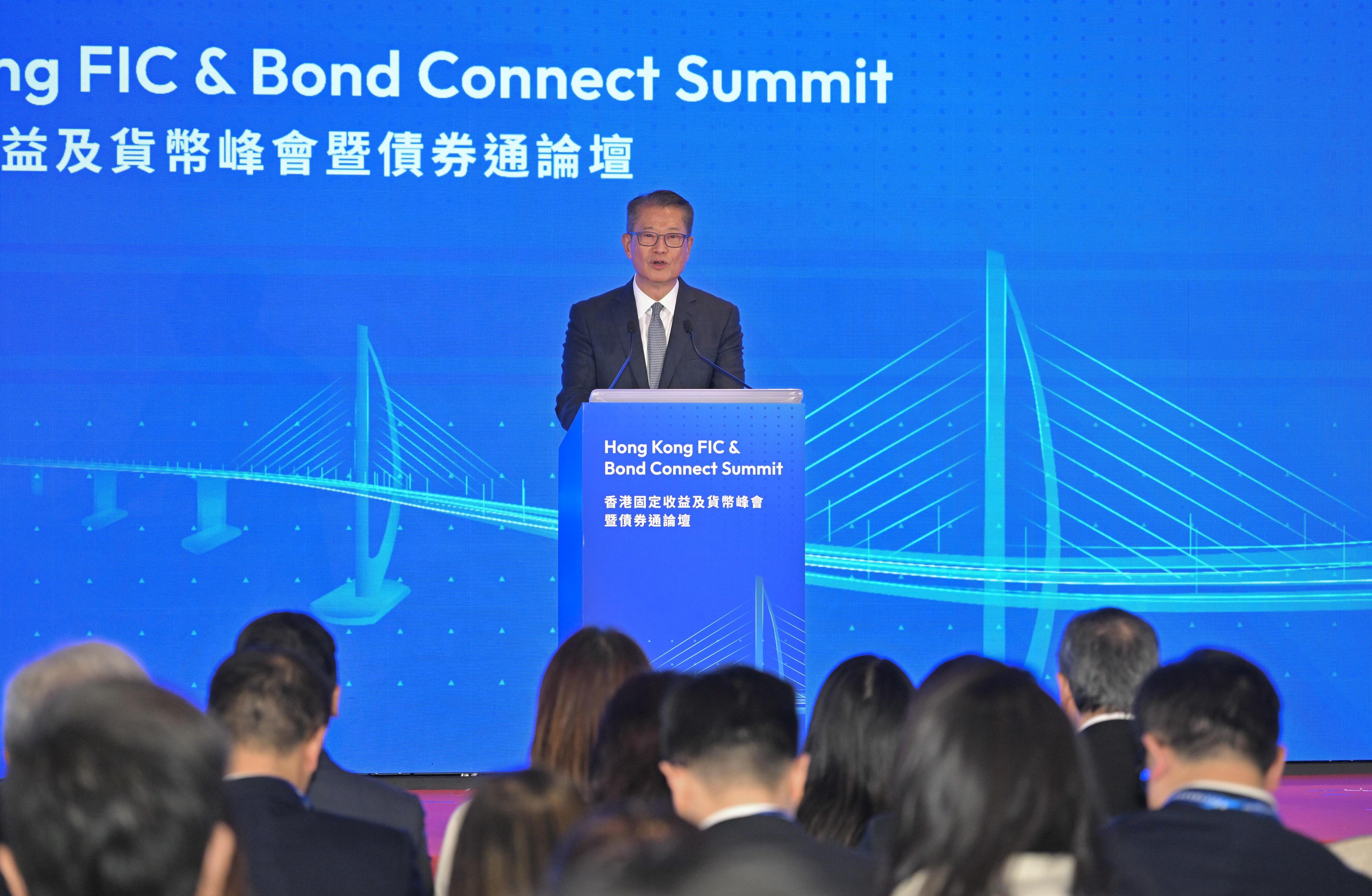
Hong Kong is positioning itself at the forefront of global technological innovation, leveraging its international innovation and technology hub status to be a leading center for artificial intelligence research and development, Financial Secretary Paul Chan Mo-po said on Sunday.
This will offer a springboard for the Chinese mainland’s AI companies to expand abroad, and enable the city to become a magnet for global talent, as well as a comprehensive provider of funding support across the entire innovation chain, he wrote in his weekly blog.
With the 36th Hong Kong Book Fair being held, Chan said the books he has recommended to young people this year focus on AI applications and human-machine collaboration. “In the AI era, we should not passively adapt to change. Instead, we must take the initiative to deeply understand the underlying principles and make AI work for us.”
The Hong Kong Special Administrative Region government will launch an enhanced version of the Digital Transformation Support Pilot Program later this year to help small and medium-sized enterprises adopt ready-to-use AI solutions.
Chan said the SAR’s strategic approach to AI has evolved from scattered, project-based initiatives to a more systematic and comprehensive ecosystem-building phase aimed at empowering a wide range of traditional and emerging industries through AI.
ALSO READ: Chan urges HK youth to embrace AI while pursuing future paths
The government places great importance on developing both the necessary infrastructure and a supportive ecosystem, he said. On the computing power front, construction has begun at Sha Ling Data Park which is expected to deliver about 180,000 PFLOPS by 2032 – equivalent to 36 times the city’s total computing capacity.
The Hong Kong Artificial Intelligence Research and Development Institute is also set to begin operations soon. In addition, 56 percent of the funds deployed by Hong Kong Investment Corporation last year have gone into hard tech, including AI.
The government is also promoting the development of the open-source RISC-V architecture ecosystem – a chip design standard that reduces costs and powers technologies like AI and the Internet of Things. These initiatives will significantly strengthen Hong Kong’s computing capabilities and foster a vibrant AI application environment, the finance chief said.
Last month, Hong Kong’s “Committee on AI+ and Industry Development Strategy” held its inaugural meeting, focusing on key areas like scientific research and innovation, data flow and security, computing infrastructure, application scenarios, talent cultivation and financial investment. In its initial phase, the committee will prioritize life and health sciences – a traditional strength of Hong Kong – as well as embodied AI, which can draw on the extensive industrial base of the Guangdong-Hong Kong-Macao Greater Bay Area.
READ MORE: HK unveils AI-focused digital education blueprint
By capitalizing on its unique institutional advantages under “one country, two systems”, Hong Kong acts as a hub for translating AI research into applications and as a strategic gateway for mainland AI enterprises going global, helping cutting-edge technologies and business models to align with international standards and market needs, Chan said.
At the same time, as a world financial center, Hong Kong can provide strong financial backing for these efforts and attract more technology companies to the city.
According to Chan, he had recently met with numerous AI-related enterprises, ranging from hardware equipment and critical materials suppliers to computing power providers all of which plan to expand their presence in Hong Kong to achieve stronger international growth.
“The future competition in AI will not be limited to building larger or faster models, but will be a comprehensive contest involving application scenarios, data environments, and talent pools,” Chan said.
He stressed that technological innovation ultimately depends on people. Hong Kong’s “AI Training for All” initiative covers everything from basic popularization and professional conversion to advanced upskilling, helping citizens learn to use, apply and optimize AI in their work and daily lives.
Contact the writer at akirawang@chinadailyhk.com
