

Trash collecting while trekking latest example of growing environmental responsibility
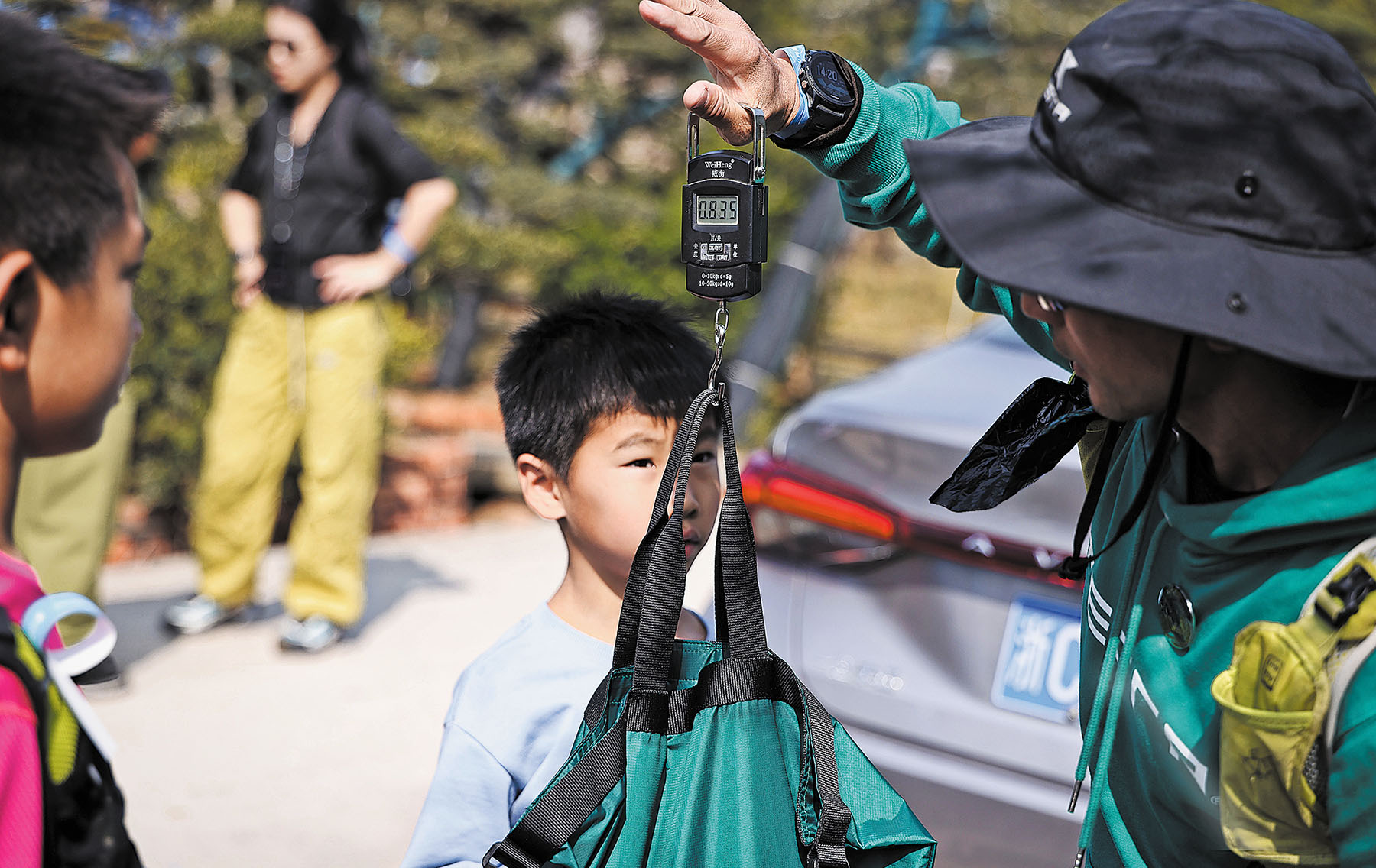
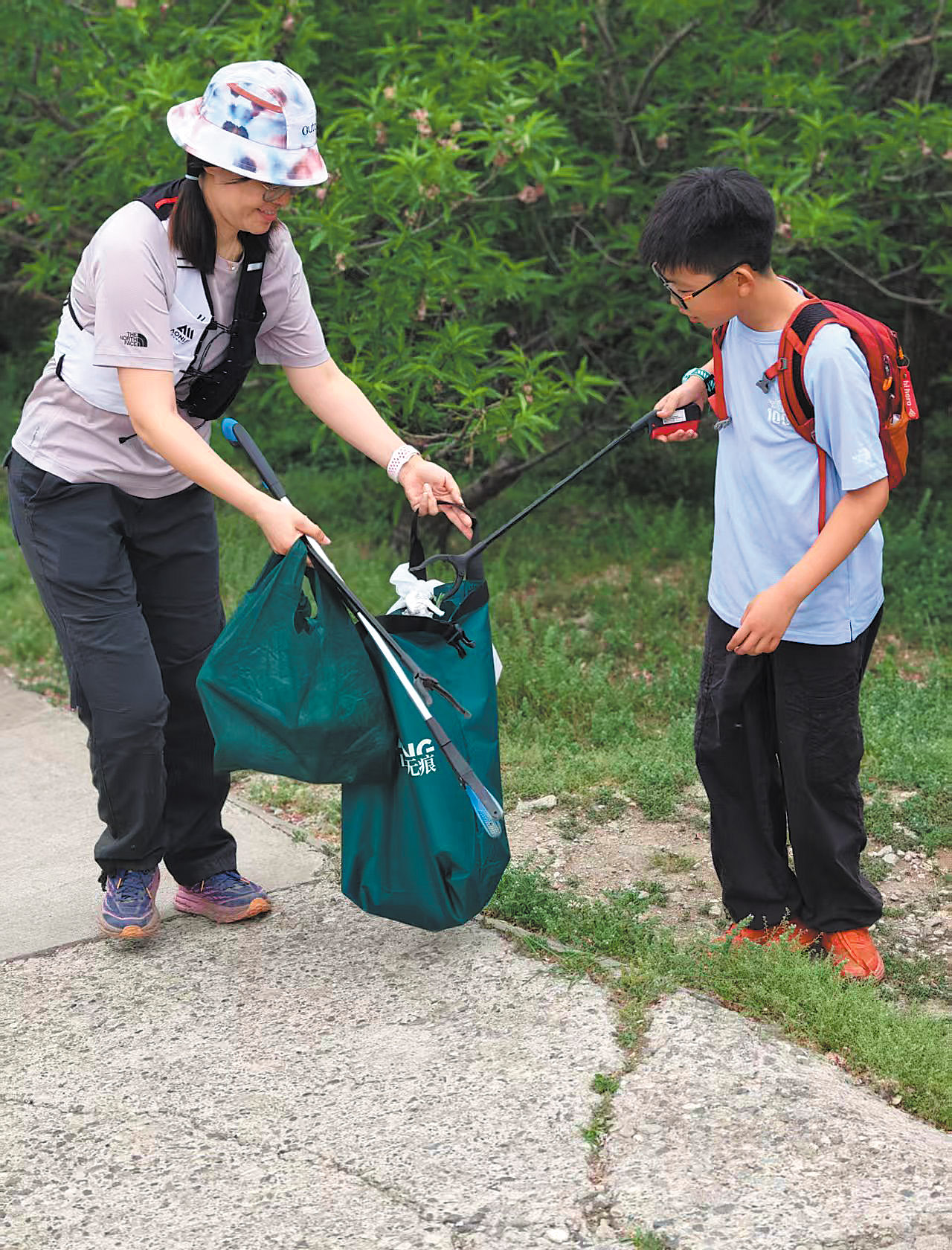
On a recent Saturday morning, 12-year-old Lele from Tianjin arrived at Beijing's Western Hills carrying a tool he had prepared himself — a litter picker.
Ahead of him was an 8-kilometer mountain hike expected to last four or five hours. Yet unlike many children his age, Lele was not focused on reaching the summit.
Instead, he was looking for trash.
As he walked along the trail with his mother, Qi Ji, he scanned the roadside constantly. A bottle cap tucked beneath a bush, a discarded tissue, a plastic wrapper hidden among rocks — none escaped his attention. Whenever he spotted litter, he quickly clutched it with his picker and passed it to his mother who carried a large garbage bag on her back.
This was Lele's second time joining a volunteer mountain cleanup activity. "Once I told him about the activity, he started preparing his own equipment," Qi recalled. "After participating in organized mountain cleanups, he simply can't ignore litter anymore when he's outdoors."
READ MORE: Trash-talking millionaire cleans up the streets
For Qi, the experience has become a form of environmental education far more vivid than classroom lessons.
"It's much more effective than simply telling children not to litter," she said.
What began as a volunteer activity has gradually become a shared lifestyle. And they are far from alone.
Across China, growing numbers of young professionals, outdoor enthusiasts and families are participating in "plogging" — picking up trash and litter while jogging. The idea of combining exercise with environmental responsibility started in Sweden a decade ago and now extends to hiking, running or walking while collecting litter.
What was once a niche practice embraced by a small group of outdoor enthusiasts is rapidly evolving into a broader social movement.
Mass movement
For many early participants, environmental activism was not the starting point.
Zheng Jiajia, one of the organizers of the Beijing event and a key promoter of the X-Plogging initiative, first began collecting litter while trail running.
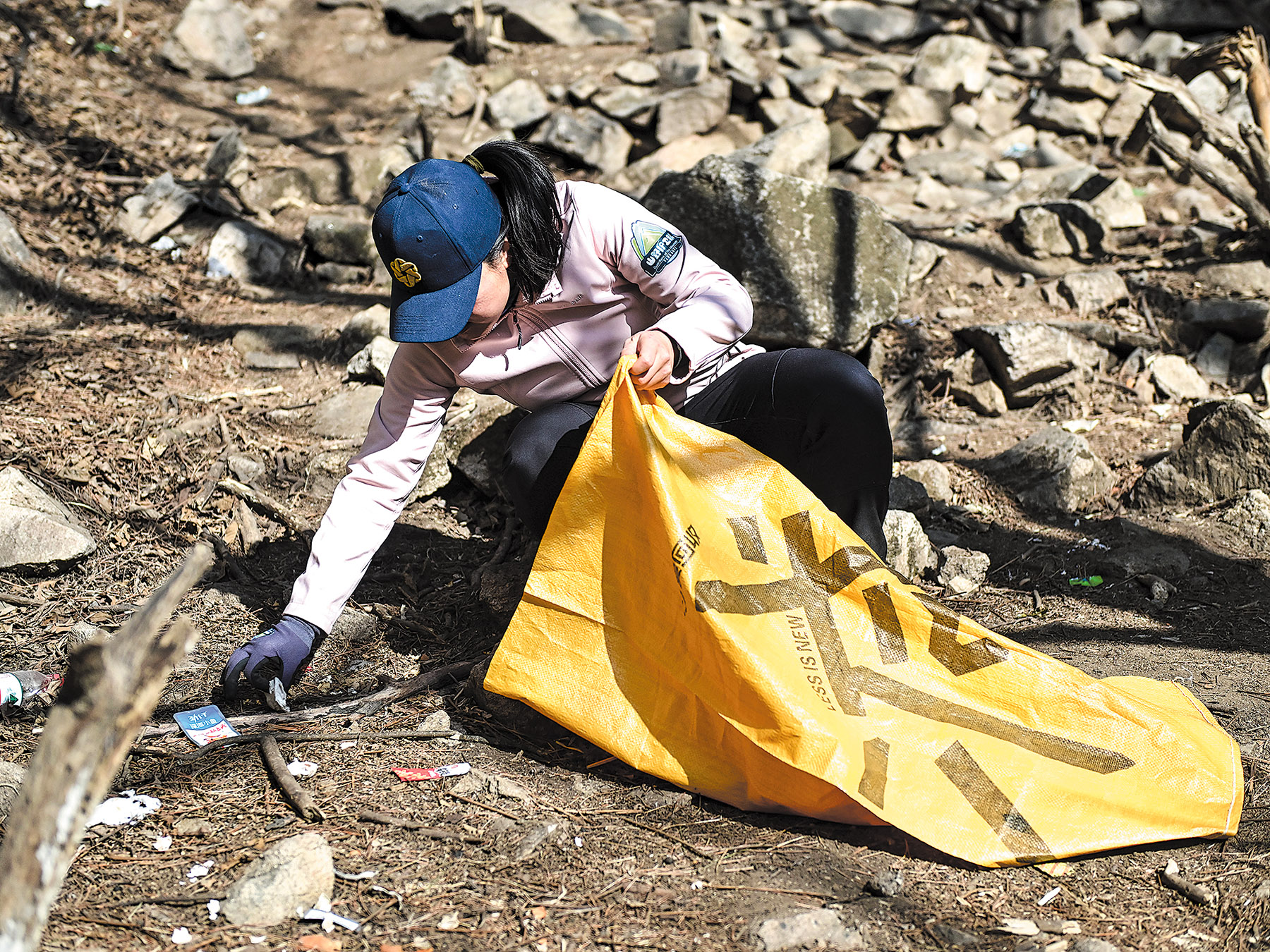
During long-distance runs in the mountains, she repeatedly encountered piles of discarded bottles, food packaging and camping waste in otherwise pristine landscapes.
She recalled witnessing what psychologists call the "broken windows effect" — the theory that visible signs of disorder encourage more acts of disorder.
"One person leaves a bottle behind, then others feel it's acceptable to do the same," she said. "A second bottle appears, then a third. Eventually people start treating the place like a garbage dump."
"You've walked so far and seen such beautiful scenery. Then you reach a viewpoint and find yourself surrounded by trash. It's heartbreaking."
At the time, litter collection was largely carried out by experienced hikers, trail runners and outdoor enthusiasts who spent significant time in the mountains.
Chen Ya, leader of Beijing-based volunteer group "Mountain Guardians", had a similar experience.
She began hiking in 2019 and participated in events across China, becoming increasingly concerned about the environmental impact of growing outdoor recreation.
Many of her group's earliest cleanup activities focused on Beijing's famous Three Peaks route, a challenging 22-km trail linking several mountain summits, and with a cumulative elevation gain of around 1,600 meters.
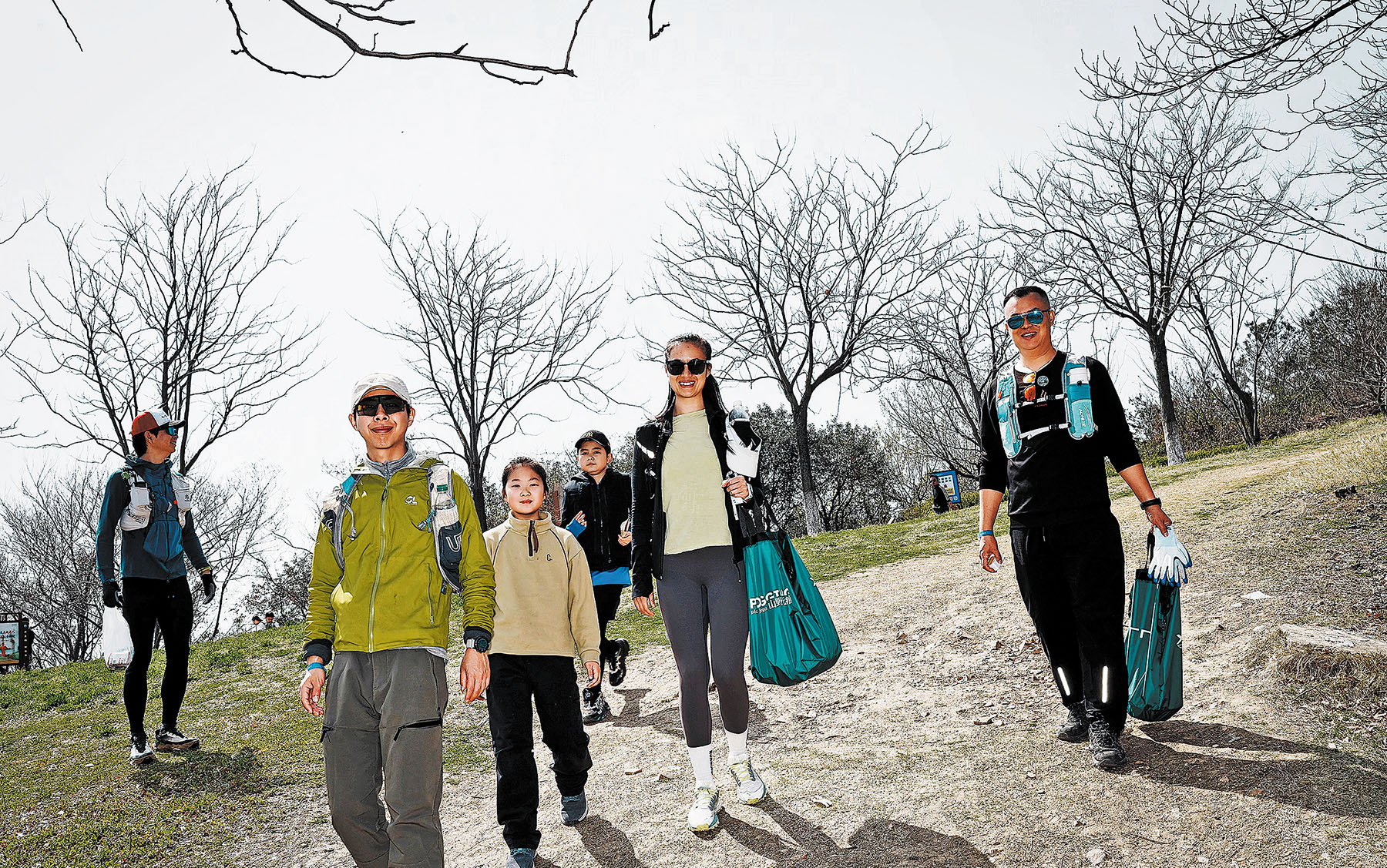
The route was demanding for experienced runners. Carrying bags full of collected trash made it even harder, she said.
"In the beginning, most participants were strong hikers and trail runners," Chen said. "Cleaning up the route was often more difficult than simply running it."
The results were striking. In April 2024, volunteers collected more than 108 kilograms of trash along the route. In March 2025, another cleanup removed over 200 kg of waste. The cleanup also continued in September 2025 and April 2026.
Yet, in recent years, the volunteers have noticed something has changed. "The amount of garbage on the same route has clearly decreased," Chen said. "Whether or not the number of people littering has changed, at least there are more people willing to pick it up."
The profile of those participating in the cleanup has also expanded.
"The threshold has become much lower," she said. "We used to mainly attract experienced outdoor enthusiasts. Now we reserve places for children, and those spots are often filled within minutes."
The same trend is visible nationwide. According to Liu Xiaoyu, head of Xterra China, which launched X-Plogging in many cities, participation in environmental outdoor activities has undergone explosive growth in recent years.
"What we are seeing is a transition from a niche community to the mainstream," she said.
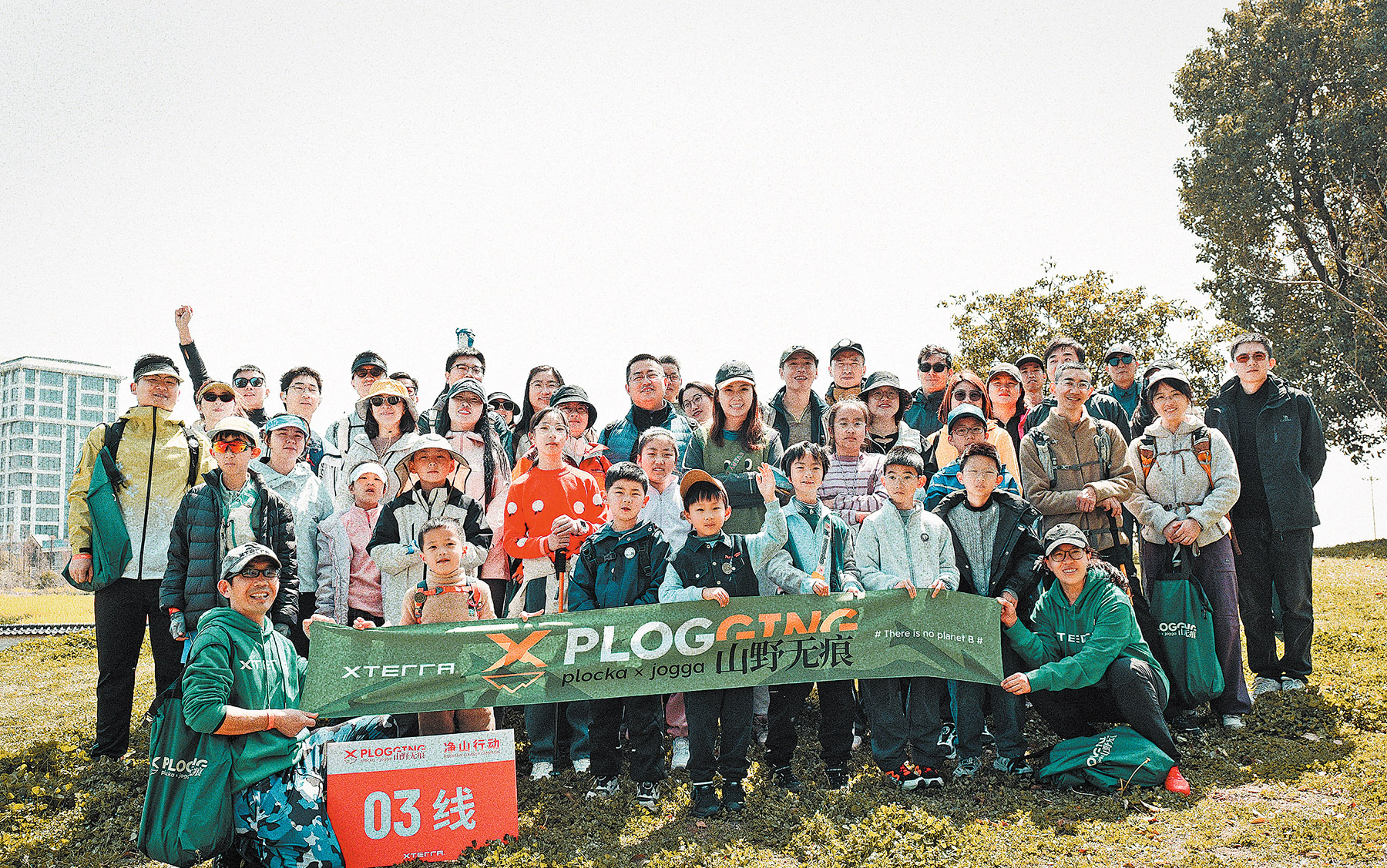
Initially, participants were largely environmental advocates and experienced outdoor athletes. Today, urban professionals aged 25 to 35 and family groups have become the dominant force. During a large-scale X-Plogging event held in Suzhou, Jiangsu province, in March, 140 families numbering 345 participants accounted for 65 percent of total registrations, according to Xterra.
New lifestyle boom
The rise of plogging is closely tied to China's rapidly expanding outdoor culture, one of the country's fastest-growing lifestyle trends.
According to the China Outdoor Sports Industry Development Report (2024-2025), released by the General Administration of Sport of China in October 2025, the number of outdoor sports participants nationwide surpassed 400 million by early April 2025.
The boom is also being shaped by national policy.
In January 2025, China unveiled guidelines on building high-quality outdoor sports destinations, emphasizing that the expansion of outdoor recreation should balance development with environmental protection and promote harmonious coexistence between sporting activities and the natural environment.
The guidelines call for integrating environmental principles into outdoor experiences, strengthening ecological awareness among participants and promoting green practices in sporting events.
Industry observers have said China's outdoor community is entering a more mature stage. Beyond conquering summits or sharing scenic photos online, participants are paying greater attention to concepts such as those pioneered by the Leave No Trace organization, which encourages environmental stewardship and responsible outdoor recreation.
The shift is also reshaping sporting events. Many trail-running competitions now encourage athletes to carry reusable cups to reduce waste. In 2025, Xterra and the Chinese Mountaineering Association jointly published China's first Mountain Outdoor Sports Environmental Protection Guidelines, helping establish standards for environmentally responsible outdoor activities.
Against this backdrop, mountain cleanups, beach cleanups and lake conservation events have become increasingly common across the country.
Social connections
If environmental protection explains why people join these activities, it does not fully explain why so many of them keep coming back.
Along mountain trails, participants often discover something unexpected: community.
At the recent Beijing's Western Hills plogging event, connections happened in unexpected ways.
Tian Tian, a doctor from the nutrition department of Beijing Chaoyang Hospital, encountered a former patient she had not seen in a decade. On another occasion, a young veterinary student mentioned she was looking for an internship during a cleanup activity and was introduced to a clinic owner taking part in the same event.
Chen, who also organizes volunteer cleanups, said such encounters are increasingly common. "Very few people come alone nowadays," she said. "Most are introduced by friends who previously joined our activities."
Liu from Xterra described the phenomenon as a new form of social gathering. "Compared with traditional volunteering, it's more like a social event built around sports and environmental protection," she said. "It addresses two common challenges facing young people today: mental exhaustion and a lack of meaningful social connection."
Participants exercise outdoors, interact with like-minded people and experience tangible accomplishments at the same time.
Xu Gaoyang, a psychotherapist at Beijing Anding Hospital affiliated with Capital Medical University, believes the popularity of plogging reflects how many young Chinese are responding to the pressures of modern urban life.
"The combination of hiking, environmental protection and social interaction is a very healthy response to contemporary stress," Xu said.
One attraction is the low-pressure social environment.
Unlike many social situations, participants do not need to introduce themselves through professional credentials, income levels or social status. Instead, they work toward a common goal from the outset. People who choose to spend their weekends protecting the environment also tend to share similar values, making it easier to build meaningful connections.
More fundamentally, Xu said, plogging offers a sense of meaning in an increasingly uncertain world.
ALSO READ: Locals act against plastic waste in Tibet
Outdoor cleanups provide a rare opportunity to see immediate results: a trail becomes cleaner, a mountain looks different, and individual effort produces visible change.
"You pick up several bags of trash and instantly see the environment improve," Xu said. "That helps rebuild a sense of personal effectiveness and agency."
At the same time, the activities draw people away from screens and anxieties toward direct experiences in nature. Some participants describe the experience as "returning to the real world".
Along the route of recent plogging event in Beijing's Western Hills, the cleanup efforts often drew spontaneous responses from others in the mountains.
One runner taking part in a nearby trail race stopped and said, "You are doing a great job." Several hikers and visitors also paused to acknowledge the volunteers as they passed through the area.
Contact the writers at zhengjinran@chinadaily.com.cn
