

Firms pursuing dynamic, co-creative strategy with 2026 FIFA World Cup
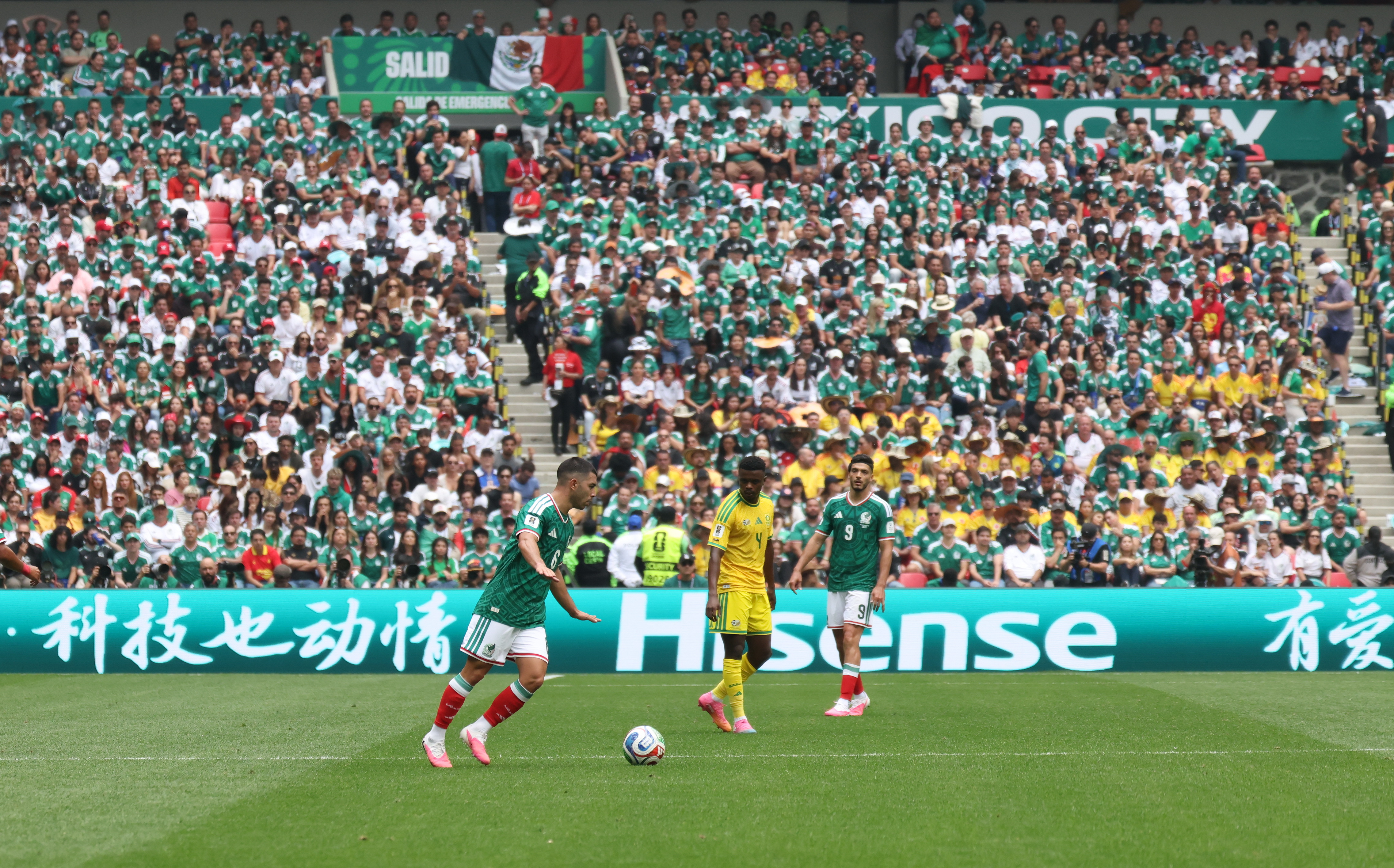
When the 2026 FIFA World Cup officially kicked off across the United States, Canada and Mexico this month, Chinese brands are less visible among top-tier sponsors than they were four years ago.
Only three Chinese companies — Lenovo, Hisense and Mengniu Dairy — remain among FIFA partners and FIFA World Cup sponsors, a sharp contrast to the wave of Chinese sponsorship that dominated stadium billboards during recent tournaments.
Yet the shift comes despite FIFA reporting its strongest commercial performance on record. The governing body said in March that all 16 global sponsorship positions for the 2023–26 cycle had been sold, making it the most successful commercial program in its history. Total revenue for the cycle is budgeted at nearly $13 billion.
But business leaders and researchers say the decline in sponsorship numbers does not signal waning interest from Chinese companies. Instead, it reflects a broader shift in how Chinese companies are using global sporting events to support going global strategies.
READ MORE: Nation's brands eye spotlight at World Cup
Rather than buying visibility alone, companies are increasingly treating the World Cup as a platform to demonstrate technology capabilities, strengthen brand positioning, deepen consumer engagement and expand their global footprint.
"It is a transition from a traffic-driven mindset to an effectiveness-driven mindset," said Hu Shan, principal at consultancy company Roland Berger. "Companies are paying much closer attention to return on investment and alignment with their global expansion strategies."
For Qiao Jian, senior vice-president of Lenovo, the shift can be summed up as a move from participants to co-builders.
"What Chinese companies export today is no longer a single product," said Qiao, who is also chief strategy officer and chief marketing officer of Lenovo.
"Increasingly, they are exporting integrated technology capabilities and becoming part of the infrastructure that powers global events."
The shift is becoming increasingly visible at the World Cup, where Chinese companies are moving beyond traditional sponsorship and embedding themselves into tournament operations.
For Lenovo, whose annual revenue reached a record $83.1 billion in fiscal year 2025/26, the World Cup serves as a showcase for its hybrid AI strategy as it seeks to expand higher-margin infrastructure and enterprise businesses globally. AI-related revenue accounted for roughly one-third of Lenovo's revenue during the past fiscal year.
Lenovo, FIFA's official technology partner, is supplying more than 17,000 devices and deploying more than 350 engineers across all 16 World Cup venues. The company is also introducing AI-powered digital twin technology capable of generating three-dimensional replicas of players and match situations.
"The World Cup is the world's largest AI testing ground," Qiao said.
She said the company views the tournament as an opportunity to demonstrate how its end-to-end AI infrastructure can support one of the most complex global events ever staged, far more than a conventional marketing campaign.
Hisense represents a similar evolution.
The company's overseas revenue now accounts for roughly half of total sales, according to company data, reflecting the importance of international markets in its strategy.
Having used the 2018 and 2022 World Cups to build brand visibility, the company is now moving deeper into tournament operations. As FIFA's official display technology partner for the video assistant referee system, Hisense provides RGB Mini LED display technology used in officiating operations during the tournament.
"Chinese companies are no longer simply buying advertising boards around stadiums," said Wang Xueli, director of the center for development of sports industry at Tsinghua University's School of Economics and Management.
"They are becoming part of the technological infrastructure behind major international sporting events."
While China's established global brands are embedding themselves into FIFA's technology ecosystem, a broader group of Chinese consumer brands is pursuing a different path.
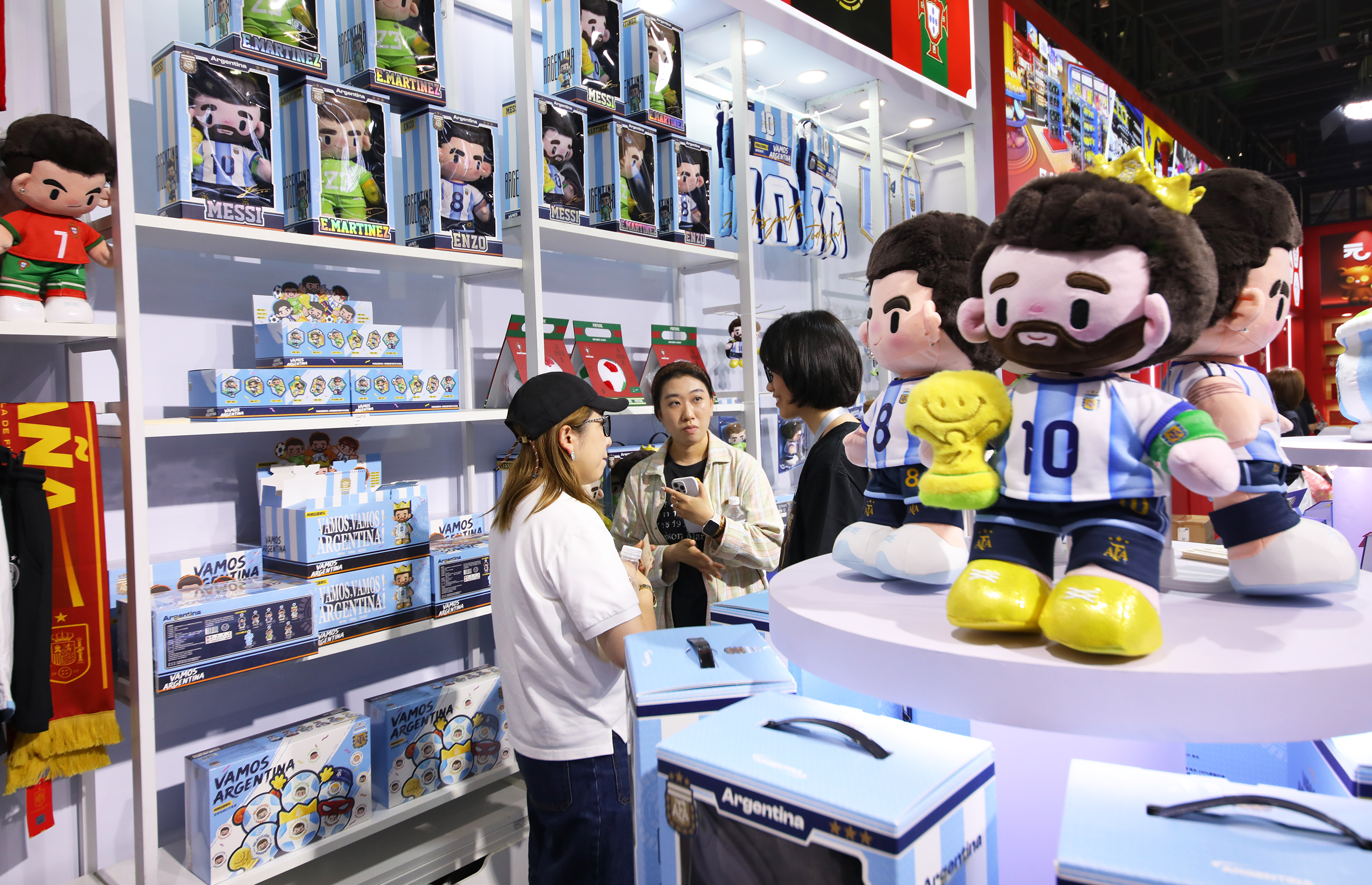
Rather than paying for official tournament sponsorship rights, many companies are partnering with national teams, soccer stars, influencers and local digital platforms to target specific consumer groups in overseas markets.
The home-robotics and smart-appliance maker Dreame Technology recently signed Portuguese soccer icon Cristiano Ronaldo as a global brand ambassador ahead of the tournament.
For Dreame, whose overseas business accounted for nearly 80 percent of total revenue in 2025, the World Cup is less about introducing the brand to consumers and more about strengthening brand recognition and emotional connection.
Chang Xinwei, global president of Dreame Technology, said the era of "buying exposure and hoping for results" was fading.
Consumers increasingly place greater trust in recommendations from content creators, communities and personalities they identify with than traditional advertising, he said.
"The goal used to be getting people to see us," Chang said. "Now it is getting people to want to engage with us."
Other Chinese brands have adopted similar approaches.
Luckin Coffee, Changan Automobile and Cotti Coffee are among companies that have partnered with national teams including Portugal and defending champion Argentina, targeting highly engaged fan communities rather than mass audiences.
The strategy allows companies to target specific markets at a fraction of the cost of official FIFA sponsorship while generating more measurable returns.
Analysts say the shift reflects a broader evolution among Chinese companies as they move from gaining awareness overseas to building long-term brand equity development.
"In the past, many Chinese brands used global sporting events to establish basic awareness," Wang said. "Today, they are increasingly using those events to strengthen positioning in mid — and high-end markets and deepen engagement with consumers."
Beyond the marketing, Chinese companies remain deeply embedded in the commercial and industrial ecosystem surrounding the World Cup.
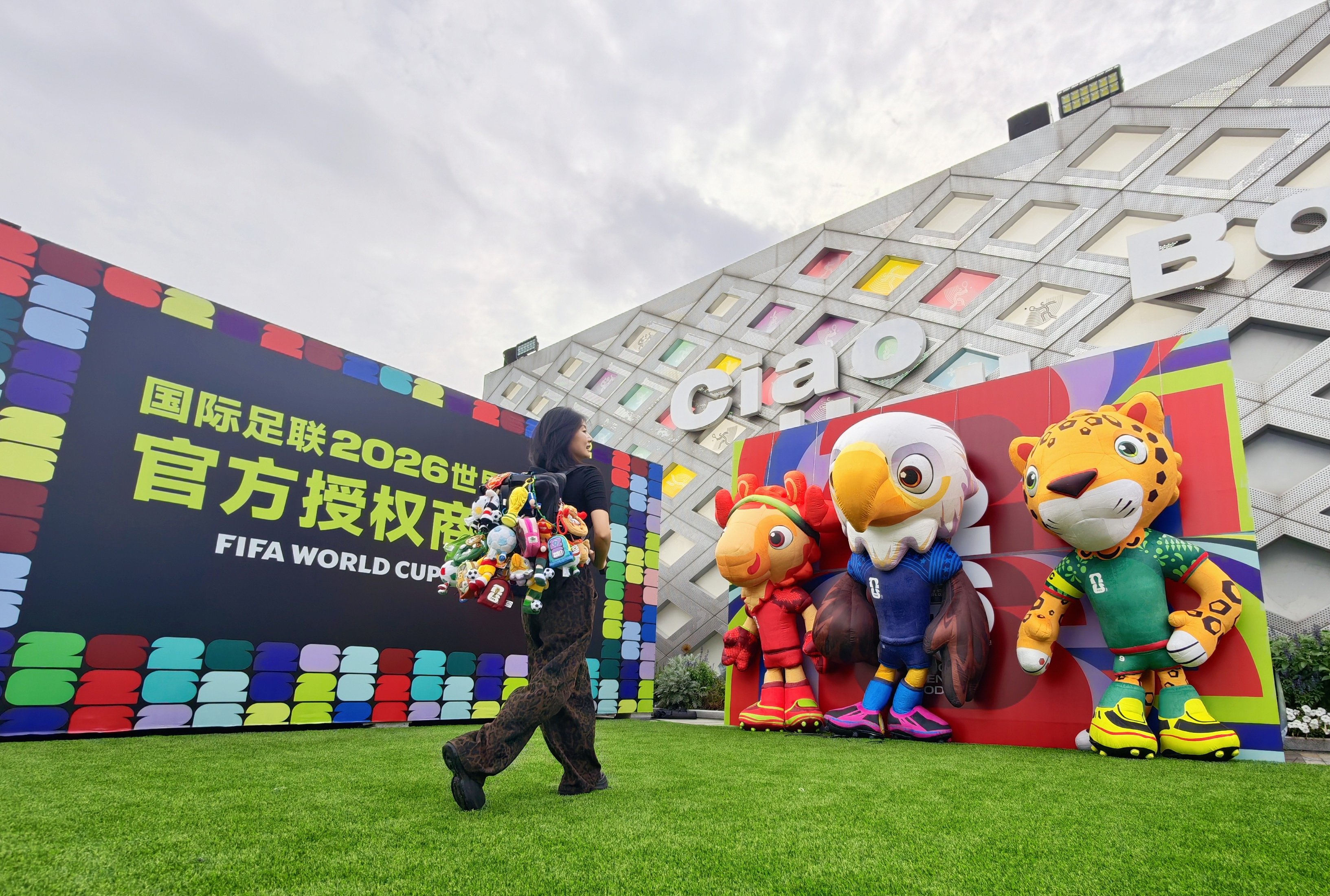
From officially licensed merchandise and consumer products to display technologies and digital infrastructure, Chinese firms continue to play an important role in the tournament's supply chain.
In Yiwu, Zhejiang province, a global hub for small commodity manufacturing, local manufacturers have long produced World Cup-related goods ranging from flags to souvenirs.
According to estimates from the Yiwu sporting goods industry association, Chinese manufacturers accounted for roughly 70 percent of the global World Cup merchandise supply during the 2022 tournament in Qatar.
While no comparable estimate exists for 2026, customs data suggest continued strong demand. Yiwu exported 2.83 billion yuan ($418.5 million) worth of sports goods and equipment in the first quarter, up 12 percent year-on-year.
ALSO READ: Firms fire up production for FIFA World Cup
Some companies are also leveraging FIFA licensing programs to sell authorized products, while others are expanding into ticketing, hospitality and travel services for soccer fans travelling overseas.
Zhou Mi, a senior researcher at the Chinese Academy of International Trade and Economic Cooperation, said the World Cup increasingly highlights China's role as a provider of industrial capabilities rather than simply low-cost manufacturing.
"The strength is not just producing a product," Zhou said. "It is coordinating an entire supply chain."
He said China's competitive edge lies in dense industrial clusters capable of delivering quality, scale and speed simultaneously.
The trend mirrors a broader shift among Chinese exporters, which are increasingly investing in product development, branding, intellectual property and global operations as they expand overseas.
Contact the writers at lijing2009@chinadaily.com.cn
