

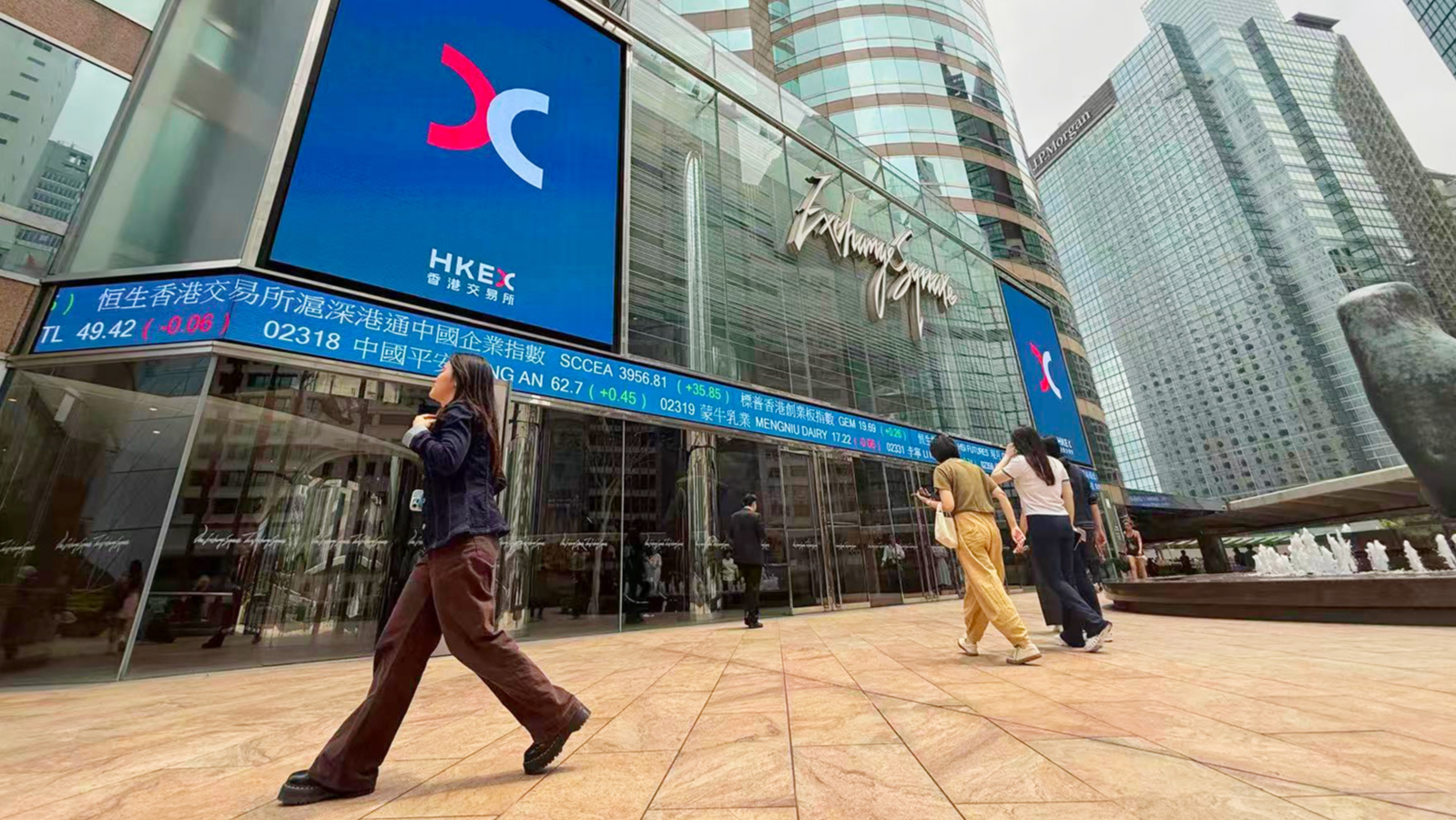
Hong Kong’s Hang Seng Index rose 0.33 percent on Wednesday to snap a five-day losing streak, providing a much-needed boost to investor sentiment. However, with a massive IPO lock-up period expiring in July, concerns are mounting that the influx of newly tradable shares will raise pressure on the already sluggish market and spark volatility.
Analysts say the overall impact might be less severe than feared, given the robust momentum in the booming artificial intelligence sector, but expect the outcome to be different for each stock, urging investors to remain prudent and assess the situation case by case.
At least HK$255 billion ($32.5 billion) worth of stocks from IPOs and secondary share sales in the Hong Kong market will see their lock-up periods expire in July, the highest monthly total for the remainder of the year, according to figures compiled by Bloomberg.
Among those facing imminent selling pressure is Knowledge Atlas Technology Joint Stock Co Ltd, a leading Chinese AI and large model solutions provider. According to a Hong Kong stock exchange filing, more than 25.68 million shares held by its cornerstone investors will unlock after July 7, accounting for roughly 68.63 percent of the company’s total IPO shares.
Eyes are also fixed on its counterpart AI startup MiniMax, which will see at least 16.50 million cornerstone-held shares unfrozen after July 8. Other major companies set to face a lock-up expiry in July include GigaDevice Semiconductor Inc, Shanghai Biren Technology Co Ltd, and Suzhou Ribo Life Science Co Ltd.
ALSO READ: SFC: Hong Kong capital markets see broad-based growth
Kenny Tang Sing-hing, chairman of the Hong Kong Institute of Financial Analysts and Professional Commentators, said the HKEX overhaul of its IPO allocation mechanism last year had squeezed secondary market supply for retail investors, thus pushing up the share prices of many recent IPOs.
“Once the lock-up periods end and unleash a large bulk of supply, it is likely to put pressure on those stocks’ sales,” he said.
However, Tang said he expected that stocks relevant to the robust AI ecosystem, such as semiconductor or printed circuit board (PCB) manufacturers, should be far more resilient against the unlocking wave.
He added that if a stock’s valuation has surged enough over the past few months to qualify it to be a major index constituent or be included in the Stock Connect channels, passive capital from exchange-traded funds tracking those benchmarks will provide liquidity to absorb the unlocked shares.
Liu Gang, chief offshore China and overseas strategist at CICC Research, said despite the headline figure for the upcoming expiry wave appearing to be massive, experience over the past year suggests that large-scale lock-up lapses will not necessarily have a large impact on the market.
“Not every investor would opt to sell their shares after the lock-up period ended, and not all decisions made by those investors after the period would have a significant impact on market supply,” he said. “If an industry’s structural trend is strong, or if the individual companies have deep market recognition, their lock-up expirations might not dent the broader picture.”
Liu warned that the real pressure will hit stocks characterized by small free floats, overhyped retail sentiment, or crowded positioning. “If key holders unlock their shares at scale and these risk factors converge, then the market could be weighed on,” he added.
The analyst said approaches to embrace the wave of lockup expiries will depend on investors’ own investment styles and horizons. But he advised investors to keep an eye on the industry macro-trends and companies’ fundamentals, specifically the revenue performance and capital expenditure, when managing their portfolio.
The HSI closed at 23,412.18 points on Wednesday, while the Hang Seng Tech Index — which tracks the 30 largest technology companies listed in Hong Kong — climbed 1.81 percent to 4,479.02 points.
