

Six months into island-wide special customs operations, trade and foreign investment are surging
It was a moment that captured the promise of a new era. On the eve of the May Day holiday, a container ship from Italy docked at Yangpu Port in Danzhou, Hainan province, carrying a set of zero-tariff production equipment worth about 16 million yuan ($2.36 million).
Within hours, the machinery — a state-of-the-art tablet packaging line — cleared customs and was rushed to the production floor of Hainan Zambon Pharmaceutical in Haikou National High-Tech Zone. By early June, installation and training were complete. Foreign engineers had barely left when local staff began scrubbing the workshop and familiarizing themselves with the new line, racing toward full operation.
This is not an isolated case. It is the new normal in Hainan, where island-wide special customs operations were launched on Dec 18. Six months into the special customs zone, the numbers tell a striking story of acceleration.
READ MORE: Hainan FTP sees sharp increase in global investment
From launch through the end of April, zero-tariff imports into Hainan had hit 2.26 billion yuan, according to the Hainan provincial government. Value-added goods entering China's mainland market under the duty-exemption policy reached 510 million yuan, saving enterprises 24.57 million yuan in tariffs. Passenger traffic through Hainan's ports rose 33.2 percent year-on-year, and the number of new foreign-invested enterprises jumped 35.5 percent.
But behind the aggregate figures are concrete, human-scale transformations — in a pharmaceutical plant, a chip factory, a coffee farm, a seaside village and a rainforest county. Together, they reveal how Hainan is not just opening-up, but redefining what "special customs operations" can mean for businesses big and small.
At Hainan Zambon, the new Italian packaging line is a game changer. "It is more than twice as efficient as the old one," said Xian Haiyan, head of the Hainan Zambon factory. "Once operational, annual tablet output will increase by 15 to 17 million boxes with two shifts. It takes up less floor space, and it is highly automated."
Crucially, the equipment uses the same design as other Zambon factories, making it easier to share best practices across the group's global quality system.
The tariff savings — about 1.3 million yuan — were not the only attraction. "We evaluated multiple domestic and foreign designs," Xian explained. "The Italian solution was the best fit. With Hainan's zero-tariff policy, the timing was perfect."
Nearby in Hainan Zambon's automated warehouse, stacks of "processed on the island, sold on China's mainland" finished products stand seven meters high."Every working day, we ship to cities across China — Jinan, Jilin, Qingdao, Changzhou, Shenyang," said public affairs supervisor Wang Zhu, scrolling through that day's orders. "We apply for customs clearance in the morning in a special window. By afternoon, the logistics trucks arrive. It is seamless."
From January to May of this year, Hainan Zambon sold products to the mainland totaling 62.28 million yuan in value and saving 180,200 yuan in tariffs. The company's confidence is so strong that Zambon Chairwoman Elena Zambon visited Haikou in April.
"She was deeply impressed by the dialogue with local officials and by what she saw at our factory," Xian said. "Now we are actively studying the feasibility of moving part of our Southeast Asia-bound production to Hainan."
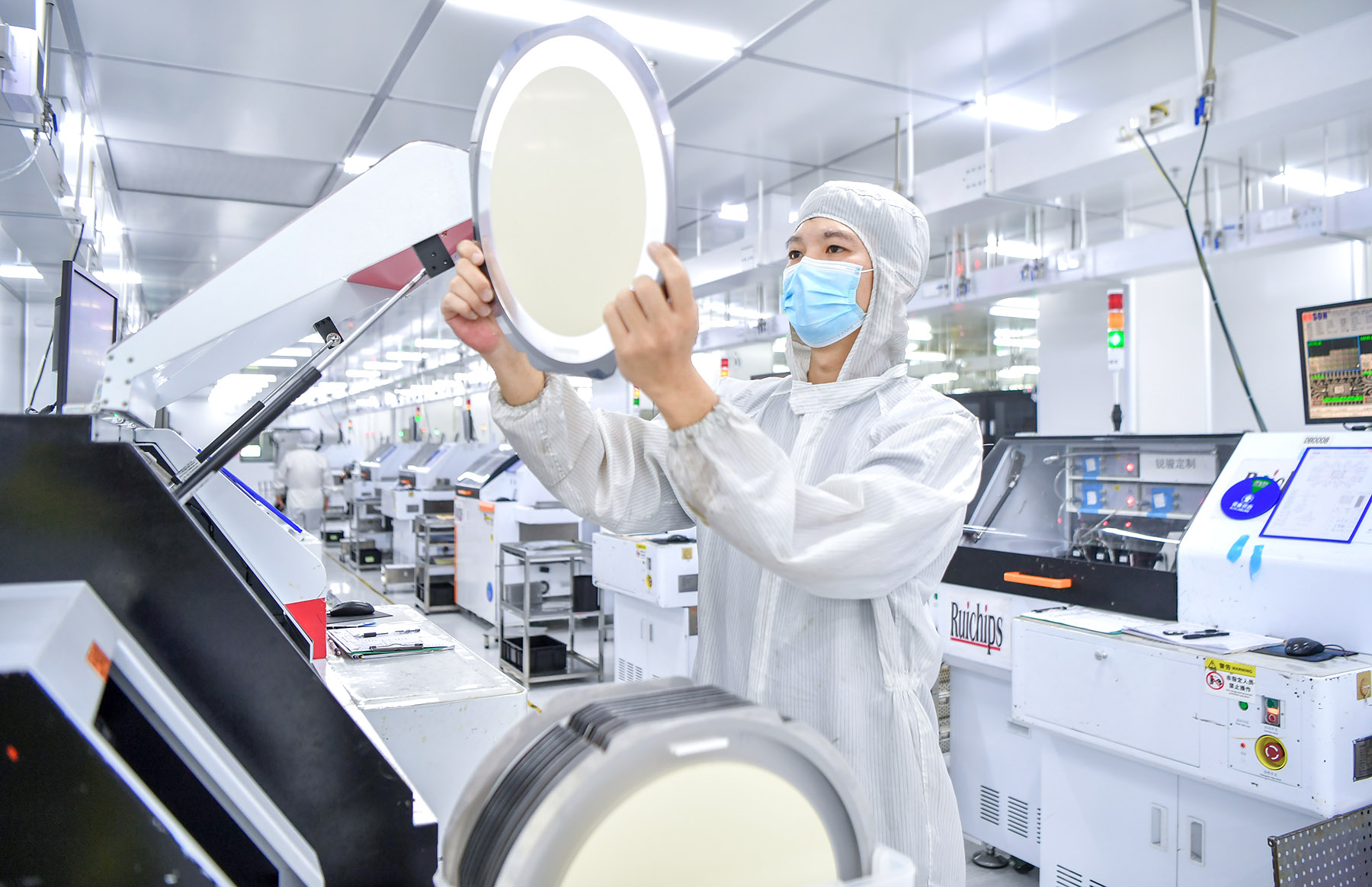
Not far away, at Haikou Ruichips Semiconductor in the Haikou Integrated Free Trade Zone, another story is unfolding — one of "bringing in" and "going global". Using production equipment imported under Hainan's zero-tariff policy, Ruichips has independently produced and exported 773,000 transistors, valued at 1.85 million yuan. It is the first semiconductor case since the special customs launch, and it demonstrates how the policy can help high-tech industries leapfrog.
Ruichips has built a semiconductor packaging and testing base in the zone, integrating advanced assembly and intelligent module manufacturing. The company said zero-tariff equipment gives it real competitiveness, as lower costs mean it can upgrade technology and expand capacity faster. The company also plans to import raw materials from overseas to further cut production costs.
Macun Port Customs has been instrumental, assigning special service personnel to guide the company through policy application and creating a green lane for precision equipment inspection."Supporting high-tech industries is a key focus of our work," said Lin Yonglin, deputy head of Macun Port Customs. "We will help more 'Made in Hainan' products reach global markets."
Such favorable policies also benefit traditional industries. Huang Haiwen, logistics supervisor at Charoen Pokphand Group (Hainan) Xinglong Coffee Industry Development Co — a Sino-Thai joint venture in Wanning — said if there is one word to describe the past year, it is "breakthrough".
By late 2025, the company had successfully shipped raw coffee beans from Colombia and Brazil to Hainan for processing, then exported the finished product to Australia. "The 'both ends outside' model — raw materials from abroad, processing in Hainan, export to a third country — really works," Huang said with evident pride.
Even more gratifying, Xinglong Coffee Valley was certified as a national scenic spot. "Nearly 400,000 tourists visited last year," Huang said. "They came not just to drink coffee, but to experience a lifestyle."
To Huang, the special customs policy is a "wall-breaker". But the real key, she argued, is that companies must actively turn policy dividends into real business — "buying raw materials globally, selling products globally". Her next ambition: "We want to move from being a participant to having a voice. I hope the global coffee trade will eventually use 'Hainan standards' that we helped to establish."
Hainan's well-known tourism industry is also riding the policy dividend to reach new heights. In Bohou village in Sanya, Su Shaohong, Party secretary of the village, rattles off growth numbers with satisfaction, but what truly excites him is the new faces.
"Russian, South Korean and South African visitors — many just follow their phone maps and show up," he said, remembering a Russian mother who wanted to buy fruit for her child but couldn't pay."The disappointment in that child's eyes really got to me."
That incident sparked a wave of upgrades. The village added English to all street signs, installed bilingual direction boards showing distances to the airport, set up foreign currency exchange points and organized basic English classes for homestay owners and night market vendors.
"Now at least they can say 'How to eat this' and 'How much'," Su laughed. However, he cautions against uniform development:"The province should plan better so that not every village builds the same homestays. Some rely on rainforests, some have Li (ethnic group) brocades — we need our own character, our own unique selling points."
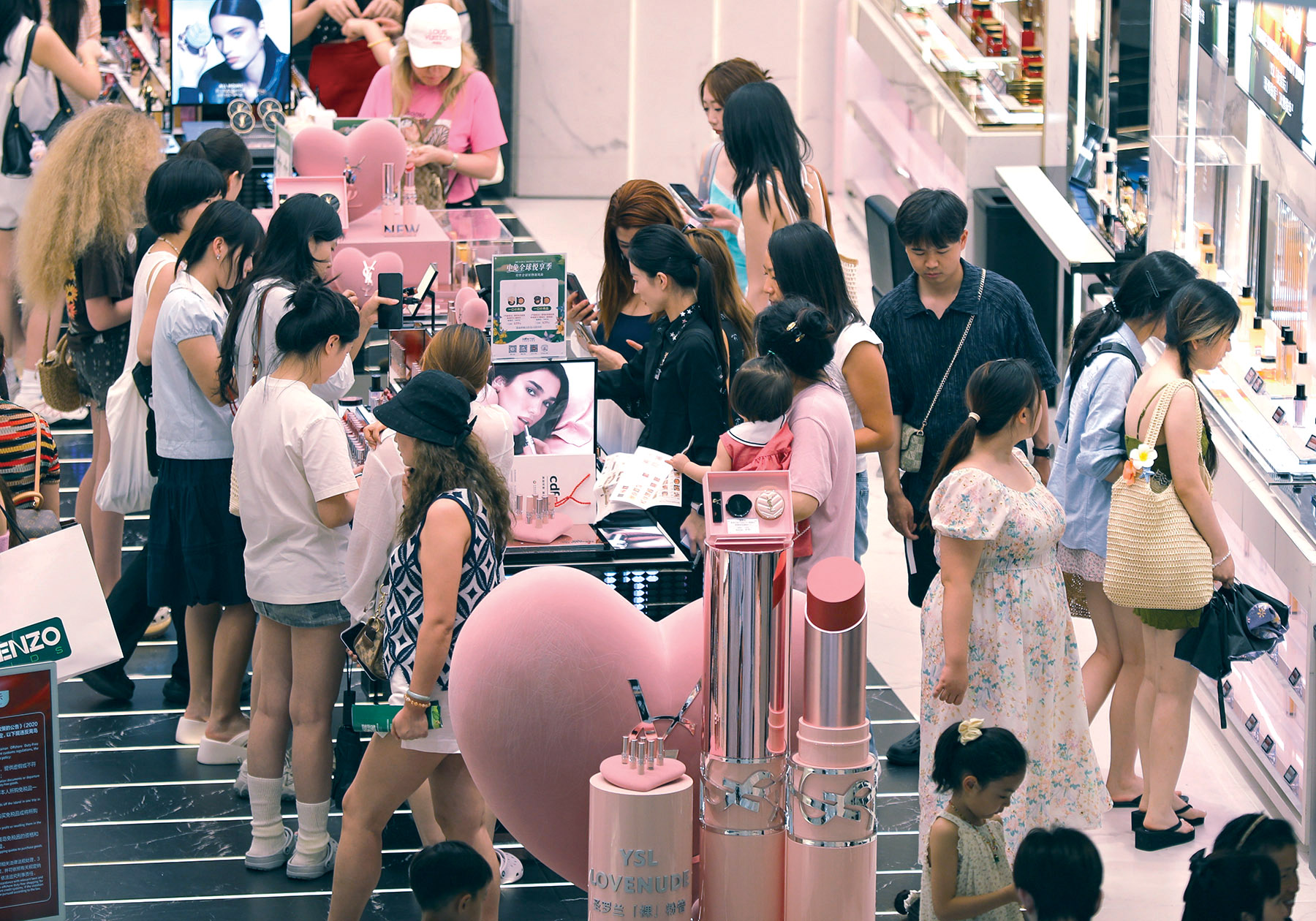
What do these stories add up to? A modern industrial system that is no longer a blueprint but a living reality. From Dec 18 to April 30, Hainan added 128,000 new enterprises, including 1,016 foreign-invested ones, a 35.5 percent year-on-year increase. Customs-registered foreign trade firms surpassed 100,000 for the first time, while offshore duty-free sales reached 18.43 billion yuan, up 23.2 percent.
In the first five months, Hainan's four leading industries — tourism, modern services, high-tech manufacturing and tropical high-efficiency agriculture — generated about 230.5 billion yuan in value, accounting for roughly 70 percent of the island's GDP.
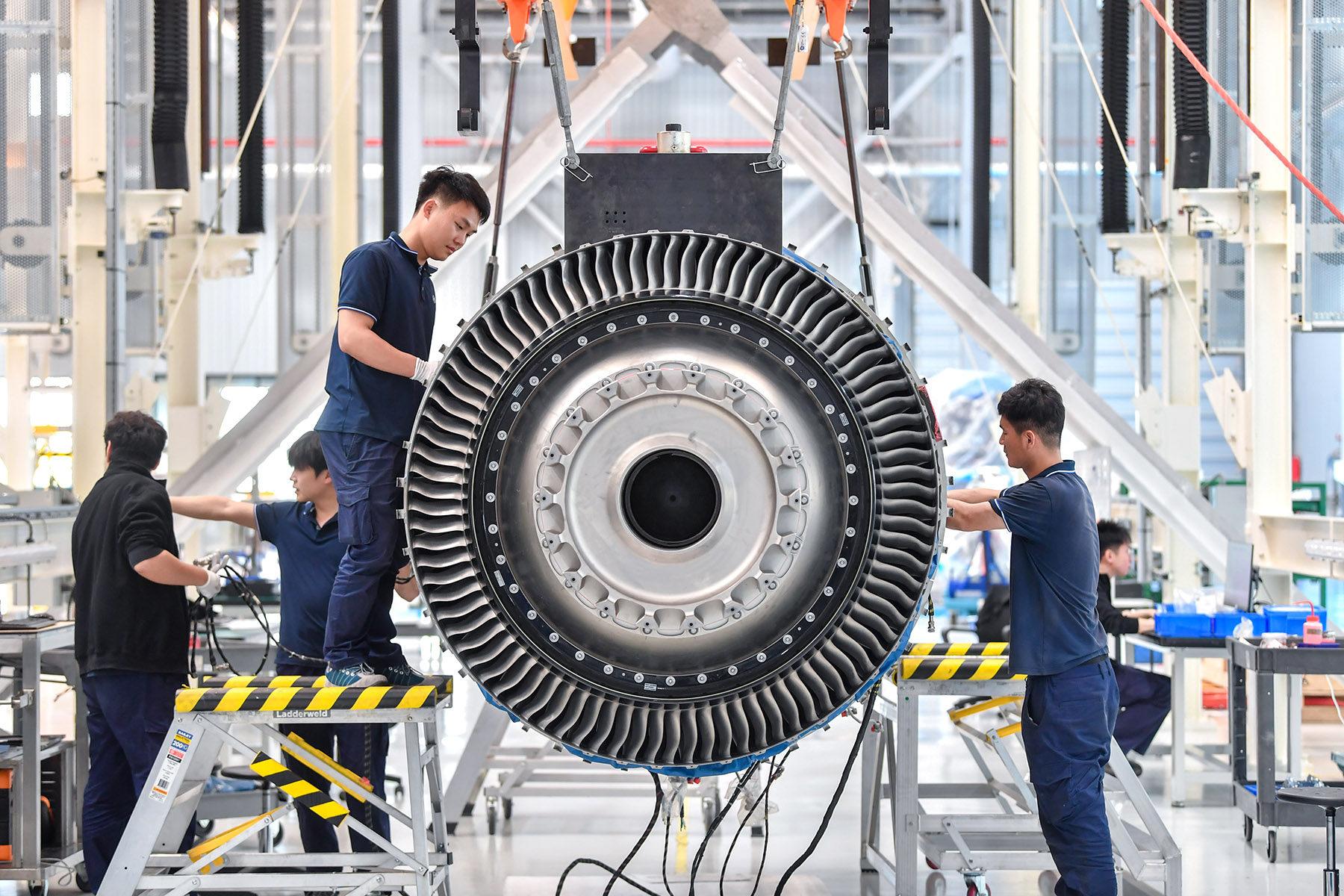
High-tech enterprises now number 1,552, contributing 17.3 percent of GDP, with advanced manufacturing clusters in biomedicine, petrochemical new materials and premium food processing gaining momentum.
Tourism remains a powerhouse: 54.21 million domestic and international visits in the first five months, up 11.8 percent, generating 120.37 billion yuan, a 14.3 percent increase.
Yang Shanhua, deputy director of Hainan's Development and Reform Commission, said the island-wide special customs operations have accelerated the building of a modern industrial system.
Zhao Jinping, vice-president of the China Association of Trade in Services, said Hainan Free Trade Port can serve as a stress test for China's high-level opening-up, against the backdrop of escalating global geopolitical uncertainties and rising trade protectionism.
"As its institutional and policy frameworks continue to improve, Hainan will evolve into a crucial hub enabling enterprises to tap into new investment and trade opportunities across the bloc of Regional Comprehensive Economic Partnership, the largest free trade agreement in the world," Zhao said.
Tu Xinquan, director of the China Institute for WTO Studies at Beijing's UIBE, said: "As a frontier and test bed for China's reform and opening-up, Hainan can act as a core hub connecting the Chinese mainland with other members of RCEP, much like Singapore and the Hong Kong Special Administrative Region have facilitated exchanges between the Chinese mainland and Western countries."
Pamela Mar, managing director of the Digital Standards Initiative of the International Chamber of Commerce based in Singapore, said Hainan can play an "excellent" role in demonstrating what seamless cross-border trade looks like.
"It means that Hainan's systems for cross-border trade and compliance will be able to interconnect with many other trading partners, and enterprises in Hainan will be able to treat trade seamlessly using globally interoperable trade standards for data and documents," Mar said.
Peter Burnett, chief executive of the China-Britain Business Council — who has visited Hainan several times — said: "Hainan is not just a free-trade zone — it's a free-trade port, the only one in China. That means the whole island is included, with very low tax rates and zero-tariff policies. I expect to see investment, growth and prosperity in Hainan."
Sean Stein, president of the US-China Business Council, offered a concrete example of how Hainan's policies are changing investment decisions. "Previously, a major US company that refurbishes used products from Southeast Asia and Japan could not do so in China due to regulations. Now, after the kickoff of island-wide special customs operations, the company is setting up a base in Hainan to renovate and re-export the products globally," Stein said. "That's a big, encouraging change."
Guo Da, executive president of the Hainan Institute for Free Trade Port Studies, said high-level free trade ports such as Hainan can play a bigger role as RCEP cooperation deepens. Currently, about 40 percent of Hainan's foreign trade flows to RCEP member economies, he noted.
Driven by unified RCEP rules and Hainan's free-trade port policies, trade between Hainan and RCEP members has grown at an annual average rate of over 20 percent in recent years, he said.
Chi Fulin, president of the China Institute for Reform and Development, said: "China's vast market has become the largest source of certainty for RCEP's development.
"The next five years are crucial for China to build a strong domestic market. The efforts to accelerate China's tariff reduction commitments under the RCEP framework, especially on intermediate goods, and to further open up services trade will provide enormous new growth engines for RCEP cooperation."
Chi also highlighted the strategic role of the Hainan Free Trade Port. "As a major gateway, Hainan is well-positioned to pioneer breakthroughs in finance and data flows, and serve as a vital platform linking the Chinese market with ASEAN, thus better safeguarding regional industrial and supply chain stability."
Nicholas Kwan, deputy head of the chief executive's policy unit of the Hong Kong SAR, said: "Hong Kong has long aspired to join the RCEP and looks forward to cooperating with Hainan to achieve a 'one plus one greater than two' effect.
ALSO READ: RCEP seen as key anchor for Asian growth
"Hong Kong can be a great partner for Hainan. For instance, in the commercial space sector, Hong Kong's financial and service strengths can be effectively aligned with Hainan's Wenchang commercial space launch site to facilitate cooperation."
Kim Do-hoon, former president of the Korea Institute for Industrial Economics and Trade, said that to give full play to Hainan's potential, more efforts are needed to cultivate local industries such as transport, and attract more big companies to invest in the island.
Zhu Jianmin, chairman of Oxiranchem Group, said: "The Hainan FTP's tax policies, unique geographic location and logistics advantages have enabled us to source raw materials globally and target ASEAN markets effectively."
Six months in, Hainan has passed its first major test. The world is watching — and increasingly, the world is participating.
Contact the writers at masi@chinadaily.com.cn
