

Broader interest deductions aim to enhance city’s competitiveness
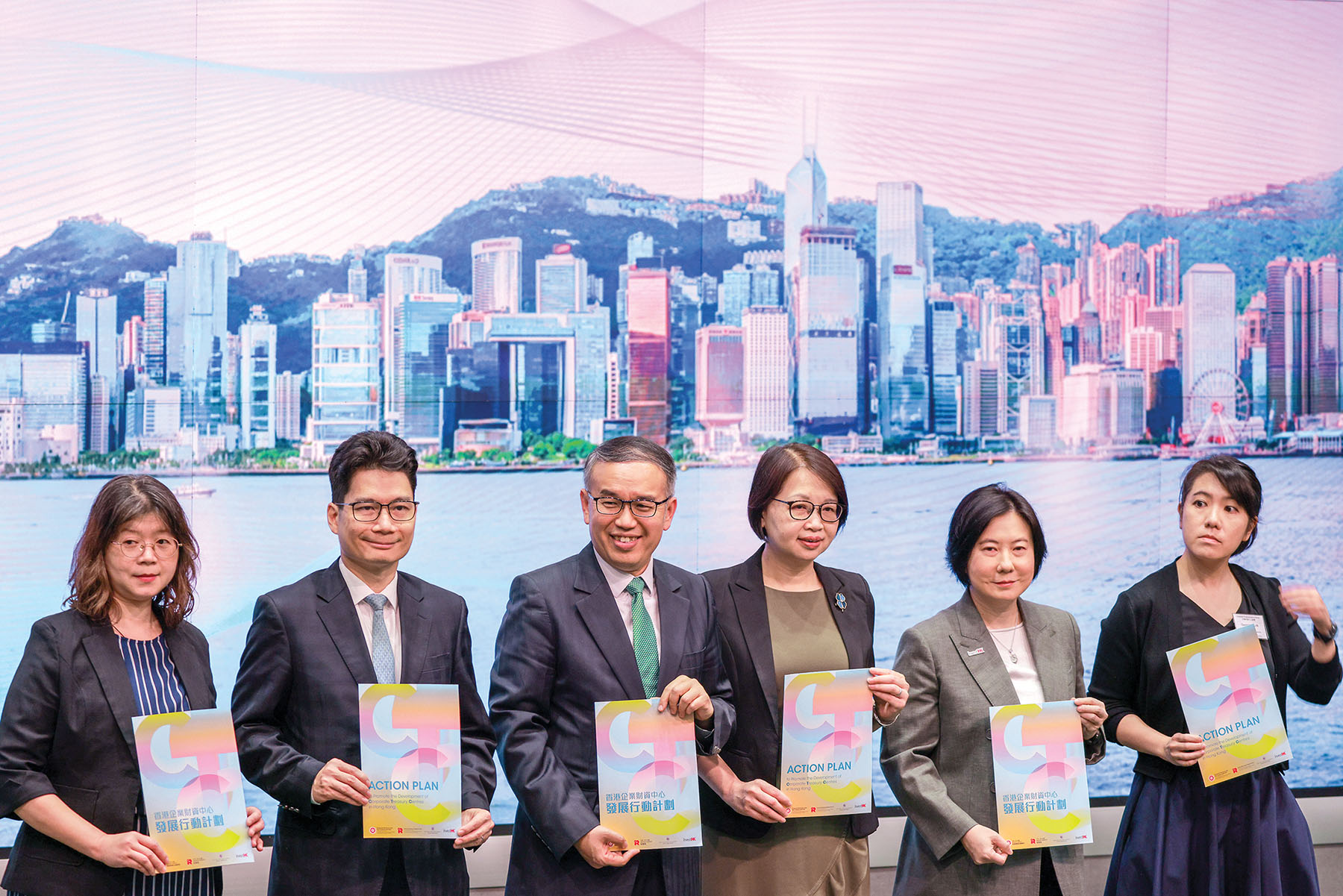
The Hong Kong Special Administrative Region government is set to revamp its tax concession policies, including broadening the scope of interest deduction and introducing a pre-approval mechanism, in an effort to strengthen the city’s competitiveness as a hub for multinational corporate treasury centers (CTCs).
Secretary for Financial Services and the Treasury Christopher Hui Ching-yu announced the initiative on Tuesday, as he unveiled a government action plan to foster CTC growth in Hong Kong at the Corporate Treasury Centre Forum.
“The goals (for the action plan) are, firstly, to attract more multinational corporations to establish CTCs in Hong Kong, and secondly, to help existing CTCs scale up operations and fully leverage Hong Kong’s comprehensive financial ecosystem,” Hui said.
Revising the current tax concessions regime is one of the road map’s four key pillars. The HKSAR government plans to introduce a tiered system, expand the scope of interest deduction and allow the deferral of interest expense deductions.
A pre-approval mechanism will also be implemented for applicants seeking tax concessions. “Once the corporation gets approval, its CTC and associated companies will enjoy more tax benefits, higher tax certainty, and greater flexibility in their compliance arrangements,” Hui said.
The authorities aim to launch a consultation on the proposed changes within this year, and table legislative amendments to the Legislative Council in the first half of 2027.
According to the action plan, the government will continue to expand Hong Kong’s network of Comprehensive Avoidance of Double Taxation Agreements. The treaty, which Hong Kong has so far signed with nearly 60 jurisdictions, is a tool that prevents individuals and businesses from being taxed twice on the same income in both the source and residence jurisdictions.
Priority will be given to negotiations with economies involved in the Belt and Road Initiative, with the aim of “attracting more businesses to establish a presence in Hong Kong and encouraging them to use the city as a gateway to go global”, Hui said.
The government will also step up engagement with industry stakeholders and enhance promotional efforts, targeting companies — particularly from new economy sectors — through road shows and seminars.
ALSO READ: Hong Kong civil servants get flat 2% pay rise
Huang Ge, chairman of the Hong Kong Chinese Enterprises Association’s Treasury Centre Committee, highlighted the SAR’s mature financial system, sound legal framework, and vibrant, free-flowing market ecosystem, hailing Hong Kong as “an ideal platform” for treasury management.
“Serving as the world’s largest offshore renminbi hub … coupled with its diverse capital markets and comprehensive professional services chain, Hong Kong is naturally positioned as an ideal platform for multinational and Chinese mainland enterprises to coordinate global capital, asset allocation and risk management,” Huang said at the forum.
“Promoting the development of corporate treasury centers is not only essential for Hong Kong to consolidate its core financial strengths, but also a key step in supporting the nation’s high-level opening-up and helping enterprises bring in investment and go global,” he added.
The HKSAR has surpassed Switzerland as the world’s largest cross-border wealth hub for the first time, according to Boston Consulting Group’s BCG Global Wealth Report 2026, which was published in late May.
The report said that cross-border wealth booked in Hong Kong increased 10.7 percent in 2025 to reach $2.9 trillion, fueled by mainland capital inflows, robust initial public offering activity, and equity-market gains.
Contact the writers at gabylin@chinadailyhk.com
