

Hong Kong police have dismantled a “compensated dating” scam syndicate, arresting eight people in connection with 80 fraud cases totaling over HK$6.2 million ($790,000) in losses.
The operation, codenamed “Tight Net”, was carried out on August 4 at multiple locations across the city, according to a police press conference on Monday.
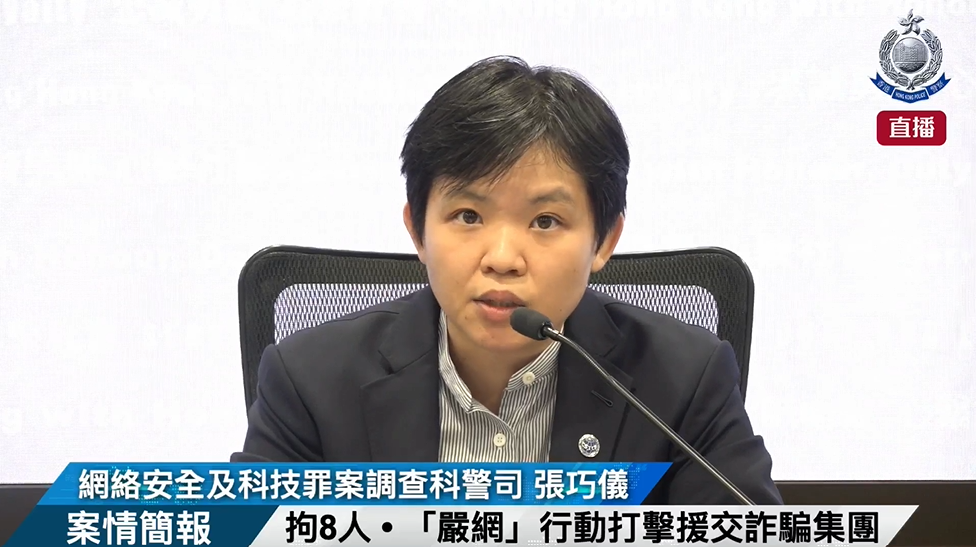
The raid resulted in the arrest of four men and four women, aged 23 to 57, on charges including conspiracy to defraud, money laundering, and possession of dangerous drugs. The syndicate’s alleged mastermind and a core member were detained and charged in court, while the other suspects were released on bail, said Chief Inspector Chan Lai-yu of the Cyber Security and Technology Crime Bureau.
ALSO READ: Hundreds lured into HK$100m 'Fun Coffee' scam in HK, Macao
Police said the scheme, which began in 2024, used online advertisements to lure victims by offering a “sugar daddy” arrangement with monthly payments of HK$50,000 to HK$70,000. Under the pretense of involving lawyers, scammers posing as wealthy individuals drew victims into private chat groups, gradually gaining their trust.
During discussions of the terms, victims were required to sign confidentiality contracts and pay legal fees or penalty fees, with the promise that all fees would be fully refunded after the contract was completed. Once victims made the payments, they found they were unable to contact the scammers.
Some victims fell for a secondary scam as well, with fraudsters claiming they could recover the lost funds, only to charge a handling fee and then disappear again.
Chan said 65 percent of the victims were female, aged between 19 and 41. Among the victims 52 percent worked in service, retail, or clerical roles, 20 percent were students, and 15 percent were professionals such as teachers or medical workers.
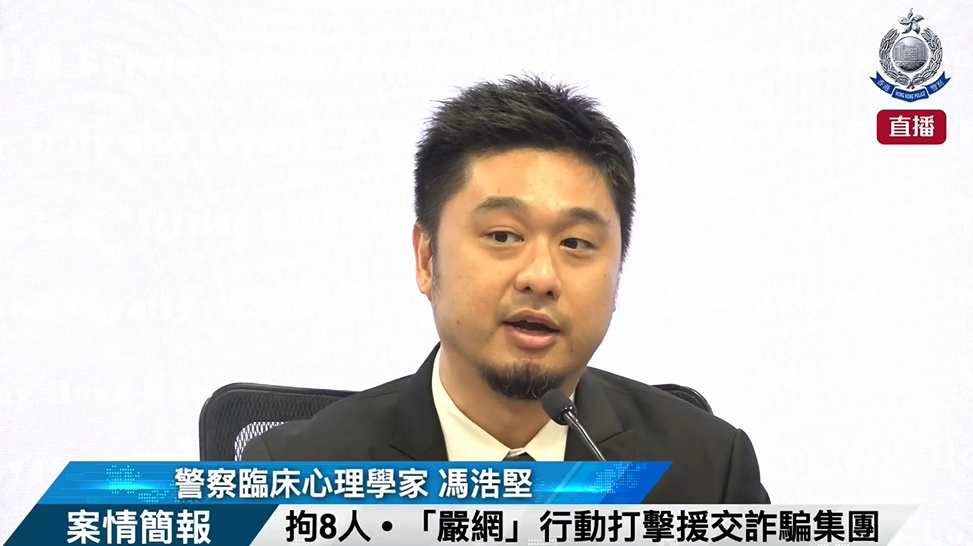
Police clinical psychologist Fung Ho-kin said the scammers used personalized scripts and manipulation techniques to lower victims’ guards.
To female victims, the scammers posed as successful men who were busy, disciplined and had good taste in order to win their admiration. To male victims, they often posed as vulnerable women — lonely, suffering from health issues, or scarred by past relationships — to gain sympathy.
Fung said the fake lawyer element was the most deceptive part of the scam, giving victims a false sense of security. Instead of triggering red flags, paying the “lawyer” made victims believe they were protected.
“They allowed victims to negotiate the terms, to say what they were willing to do or unwilling to do. The process gave the victims a sense of control and a feeling they were respected,” Fung said.
Superintendent Cheung Hau-yee of the Cyber Security and Technology Crime Bureau said the number of compensated dating scams has been declining. In the first half of 2024, there were 1,055 cases with losses of HK$58 million. In the same period last year, the number fell to 582 cases involving HK$24 million. For the first half of this year, 426 cases were recorded, with losses of HK$18 million.
Attributing the decline to the public’s better awareness of scams, Cheung said the police will work with social media platforms to further crack down on such cases.
Evan Li contributed to the story.
