

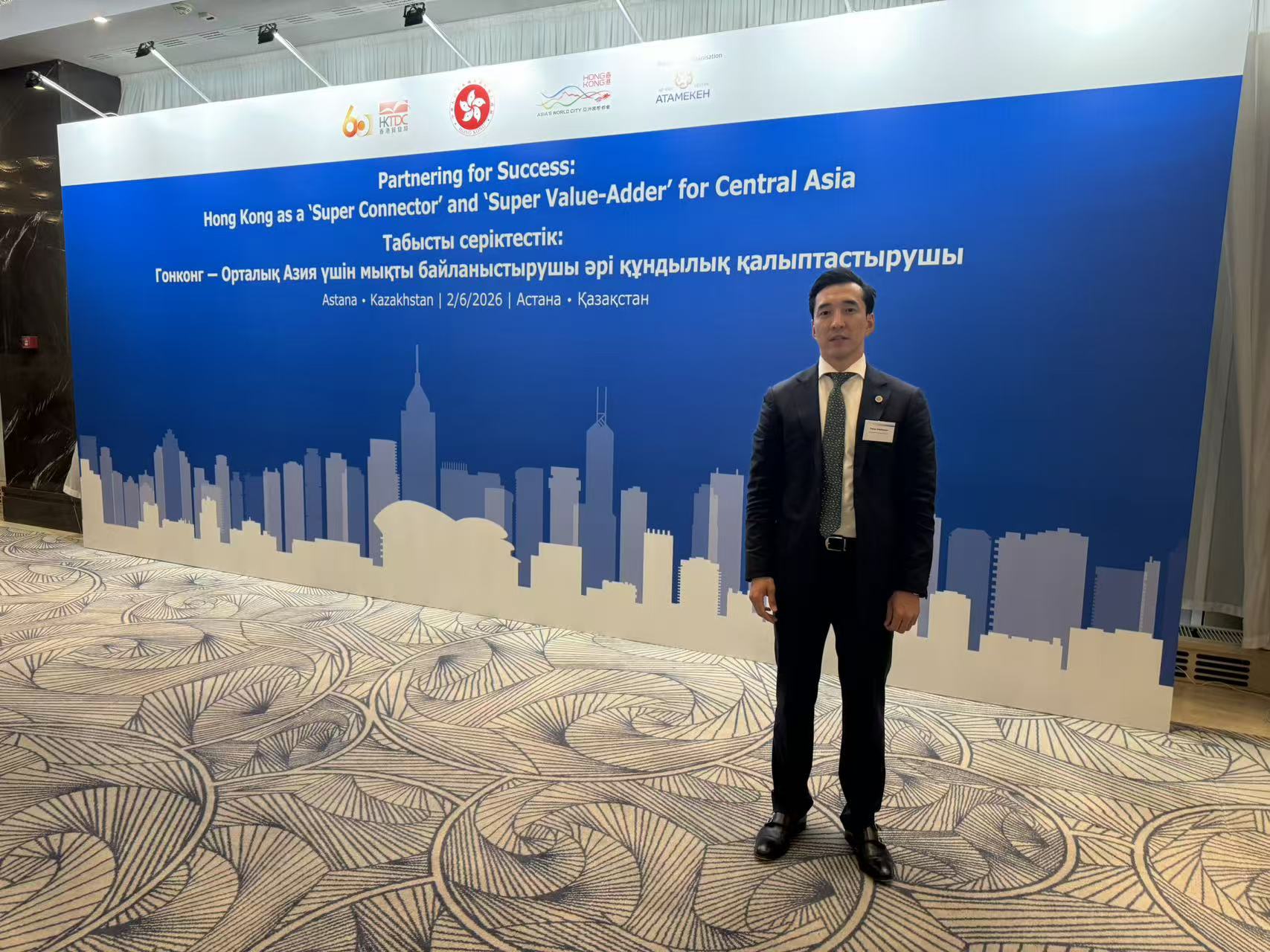
As Hong Kong Chief Executive John Lee Ka-chiu concludes his landmark visit to Kazakhstan, the two sides have signed 43 memoranda of understanding and cooperation agreements, marking a new chapter in their bilateral relationship. At the heart of the deepening partnership is a shared vision of mutual growth — linking the special administrative region’s gateway to Asia with Kazakhstan’s strategic position at the crossroads of Europe and Central Asia.
What does Kazakhstan need from Hong Kong?
In an interview with Hong Kong media outlets on Tuesday, Timur Onzhanov, deputy chairman of the management board of Baiterek National Investment Holding JSC — Kazakhstan’s state-owned financial operator that controls key state-owned banks, public banks and public funds — offered a clear answer.
“I can say that following today’s meetings and the visit of the chief executive of Hong Kong with a big delegation of different business representatives, there are many areas where Kazakhstan and Hong Kong (SAR) and Chinese mainland business communities can work with,” Onzhanov said.
ALSO READ: Kazakhstan-backed firms expected to seek HK listings this year
He identified five key areas where cooperation could generate the strongest synergy: agriculture, tourism, logistics, energy and chemical industries, and financial cooperation.
“We are the government’s financial ecosystem, and our subsidiaries and we ourselves have been very much active in the capital markets in recent years, which might give a boost to further deepening the financial cooperation with Hong Kong-based companies and platforms.”
Stressing that Hong Kong’s value to Kazakhstan goes beyond providing capital, he said, “Hong Kong gives us access not only to equity and debt capital investors, but also to companies in the real sector in different industries.”
Gateway to Asia
Onzhanov — who has visited Hong Kong several times, most recently at the end of March this year — described the SAR as “a great cosmopolitan big city” and “a gateway to Asia.” His views echo a broader strategic understanding that Hong Kong’s role extends well beyond traditional financial intermediation.
As analyzed in a recent forum on Hong Kong–Kazakhstan financial cooperation, Hong Kong’s contribution is not merely as a financing venue, but as a full institutional interface. With approximately 75 percent of global offshore renminbi payments processed through it and the world’s largest offshore renminbi liquidity pool — reaching about 1.1 trillion yuan by the end of 2025 — the HKSAR offers distinctive advantages. These include a common law system, a world-class professional services ecosystem, a mature capital market, and access to global investors.
Direct flights and beyond
The visit has already delivered tangible progress, Onzhanov said highlighting the resumption of direct flights between Hong Kong and Almaty, scheduled to launch in the first quarter of next year, as a key development.
“I think this will facilitate the joint people-to-people interaction between Hong Kong and Kazakhstan,” he said, adding that it will, in the midterm, give a boost to the tourism development in both the places.
On the business front, Onzhanov said, “Kazakhstan and Hong Kong companies in the financial sector are working closer. Not only state-owned institutions but also private sector financial institutions are using the opportunities and platforms in Hong Kong to access international markets.”
Modernization agenda
Baiterek National Investment Holding is a major financial operator for Kazakhstan’s government, with subsidiaries spanning development bank services, an entrepreneurship development fund, export insurance and housing support — tools designed to promote the sustainable growth of Kazakhstan’s economy.
Looking ahead, Onzhanov said Hong Kong companies could play an important role in Kazakhstan’s ambitious modernization agenda. “Kazakhstan has been advancing its economic reform agenda in recent years, and we have plans for the upcoming years to boost the infrastructure modernization in Kazakhstan,” he said.
READ MORE: HK, Almaty to restore direct air ties in 2027
The Baiterek executive pointed to opportunities in innovation and technology clusters, advanced agri-tech companies, the aviation industry, logistics warehouses and industrial parks.
He expressed his belief that a lot of the Chinese mainland companies with branches and offices in the HKSAR and intermediary companies and facilitators based in the city can help them “execute and deliver this long-term plan to modernize the Kazakh economy and the infrastructure projects.”
