

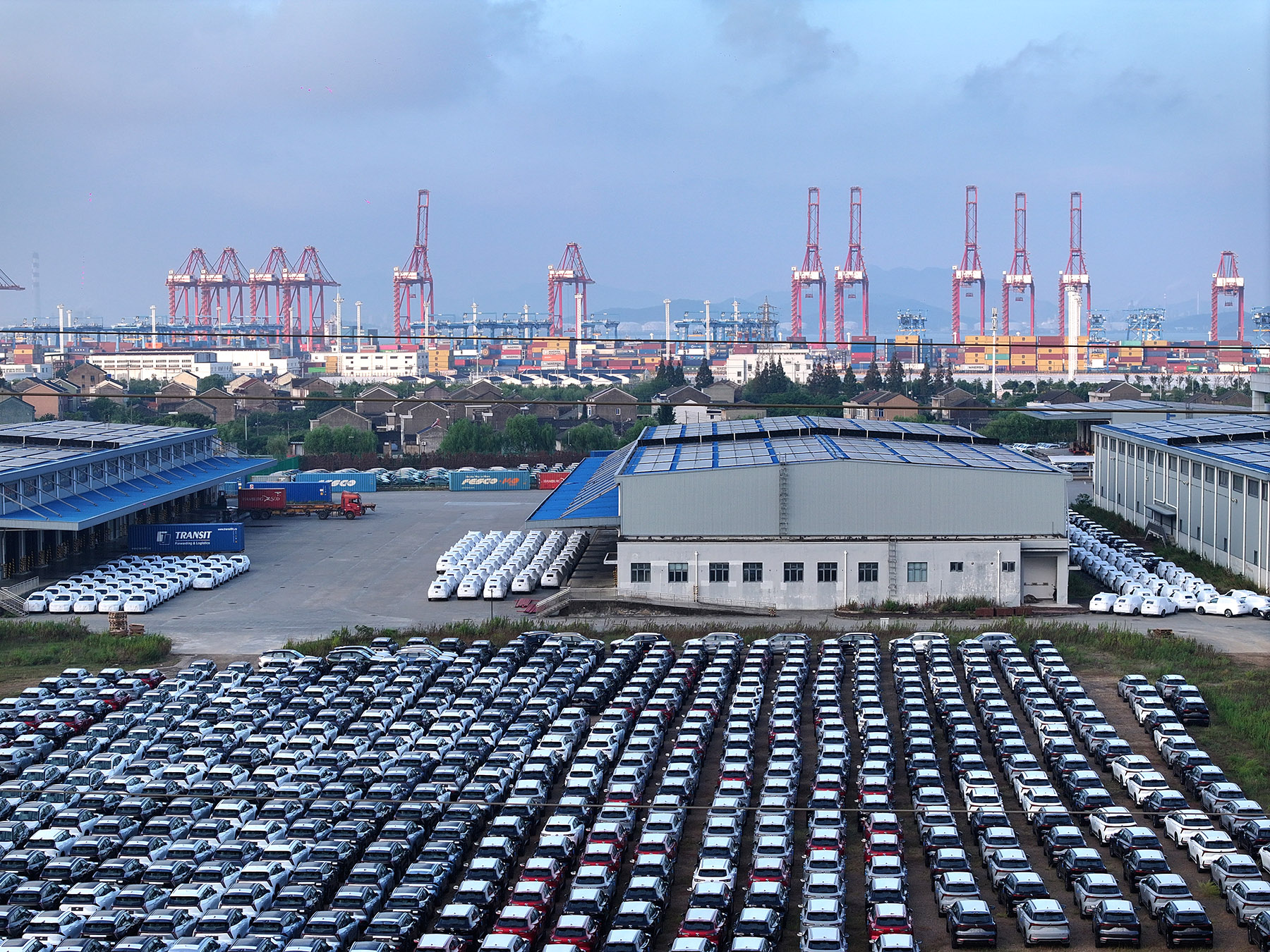
Chinese enterprises are accelerating their expansion into the Russian market, driven by strong momentum and the continuous warming of bilateral economic and trade cooperation.
"As a leading technology company in Russia, Yandex is committed to building an efficient and trustworthy bridge for cooperation between Chinese and Russian enterprises, helping to improve the quality and efficiency of bilateral economic and trade cooperation," said Sergey Ustinov, general manager of Yandex Ads Asia-Pacific.
According to the Ministry of Commerce, bilateral trade volume reached $227.9 billion in 2025, exceeding the $200 billion mark for the third consecutive year. China has also maintained its position as Russia's largest trading partner for 16 consecutive years.
READ MORE: China-Russia dialogue focuses on deeper economic ties
The positive trend continued into the first quarter of this year, with bilateral trade surging 14.7 percent year-on-year to $61.2 billion. Specifically, China's exports to Russia jumped 22 percent, while imports from Russia grew by 9 percent. This robust performance has not only marked a solid start to the year, but has also injected strong confidence into the broader economic landscape of both nations.
The structure of this booming trade has been continuously optimized, with the proportion of mechanical and electrical products, as well as high-tech goods, steadily increasing. This shift fully leverages the complementary advantages of both countries in resources, industries and markets. While Russia's supply of energy, minerals and agricultural products to China remains highly stable and essential, China's advantageous products — such as automobiles, home appliances and advanced machinery equipment — have maintained strong and sustained export momentum, meeting the growing demand of Russian consumers and businesses alike.
The automotive sector, in particular, highlights this dynamic. In 2025, China's automobile exports reached 8.32 million units, with Russia ranking as the second-largest destination by importing approximately 583,000 vehicles.
To facilitate this rapid influx, local tech giants are stepping up. Through Yandex Auto and the UMO project — a new Chinese electric vehicle integrated with Yandex technology tailored for the Russian market — the company is helping bridge the gap between high-quality Chinese vehicle platforms and the actual needs of the Russian market, Ustinov noted. This support includes digital localization, local AI integration, market adaptability adjustments and practical commercialization assistance.
Beyond hardware, China's digital and service sectors are also making significant inroads. Leveraging its extensive digital ecosystem and search services, which boast over 111 million monthly active users, Yandex has become a crucial platform for Chinese brands to efficiently reach Russian consumers.
ALSO READ: Sino-Russian trade tops $200b
Over the past year, digital advertising spending by Chinese brands on Yandex Ads surged 111 percent year-on-year. Sectors such as gaming, B2B equipment and tourism were particularly active, showcasing a diversified portfolio of Chinese offerings and highlighting the strong vitality of Chinese internet and service companies expanding into Russian-speaking regions.
As Chinese companies shift their overseas strategy from mere product exports to sophisticated brand building and deep ecological integration, the demand for localization capabilities and long-term strategic partners is growing rapidly. They are increasingly focused on adapting their operations to fit local cultural nuances and consumer habits. In this context, an increasing number of Chinese enterprises are leveraging Yandex's innovative ecosystem and profound local operational experience to navigate these complexities, expand their presence and solidify their market influence.
Contact the writers at renqi@chinadaily.com.cn
