

As the global economic landscape undergoes profound shifts, officials and scholars from China and Russia have called for the accelerated alignment of macroeconomic strategies and financial innovation to support a stable, multipolar world order.
The call for deepened cooperation was the consensus at the first China-Russia Education and Economic Dialogue held in Moscow on March 17. Co-hosted by the Free Economic Society of Russia and Renmin University of China, the high-level forum explored the transition from outdated economic models toward new paradigms of global development.
Zhang Donggang, Party secretary of Renmin University of China, emphasized the strategic significance of the China-Russia comprehensive strategic partnership of coordination for a new era. Zhang noted that as key forces contributing to the economic vitality of the Eurasian continent, both nations face shared opportunities and challenges that require unified action.
READ MORE: Sino-Russian trade tops $200b
"We perceive fresh opportunities transforming international relations and strengthening cooperation," Zhang said. "Numerous shared challenges require shoulder-to-shoulder responses crafting unified action plans."
Zhang highlighted China's ongoing economic transformation, referencing the strategic framework of the country's 15th Five-Year Plan (2026-30). He said China is steadfastly pursuing a comprehensive modernization model anchored in high-quality development, technological self-reliance and green, low-carbon technologies.
These insights drew strong interest from Russian participants. Sergey Ryabukhin, first deputy chair of the Federation Council Committee on the Budget and Financial Markets of Russia, noted that China's strategic planning offers valuable reference points for Russia as it works to build a modern economy driven by high-tech industries and robotization.
A major focus of the dialogue was the modernization of the international monetary system to better reflect the needs of emerging economies. Sergey Glazyev, an academician of the Russian Academy of Sciences, outlined a framework for a new financial architecture based on transparency and mutual trust.
Glazyev proposed the exploration of a "world settlement digital currency", which would be pegged to a dual mechanism comprising a basket of national currencies and a basket of exchange-traded commodities.
He suggested that such a system, potentially anchored within the BRICS framework, could be formalized through international treaties to enhance global financial stability. Furthermore, he called for the establishment of an independent international credit rating agency to provide objective assessments and contribute to a fairer global governance system.
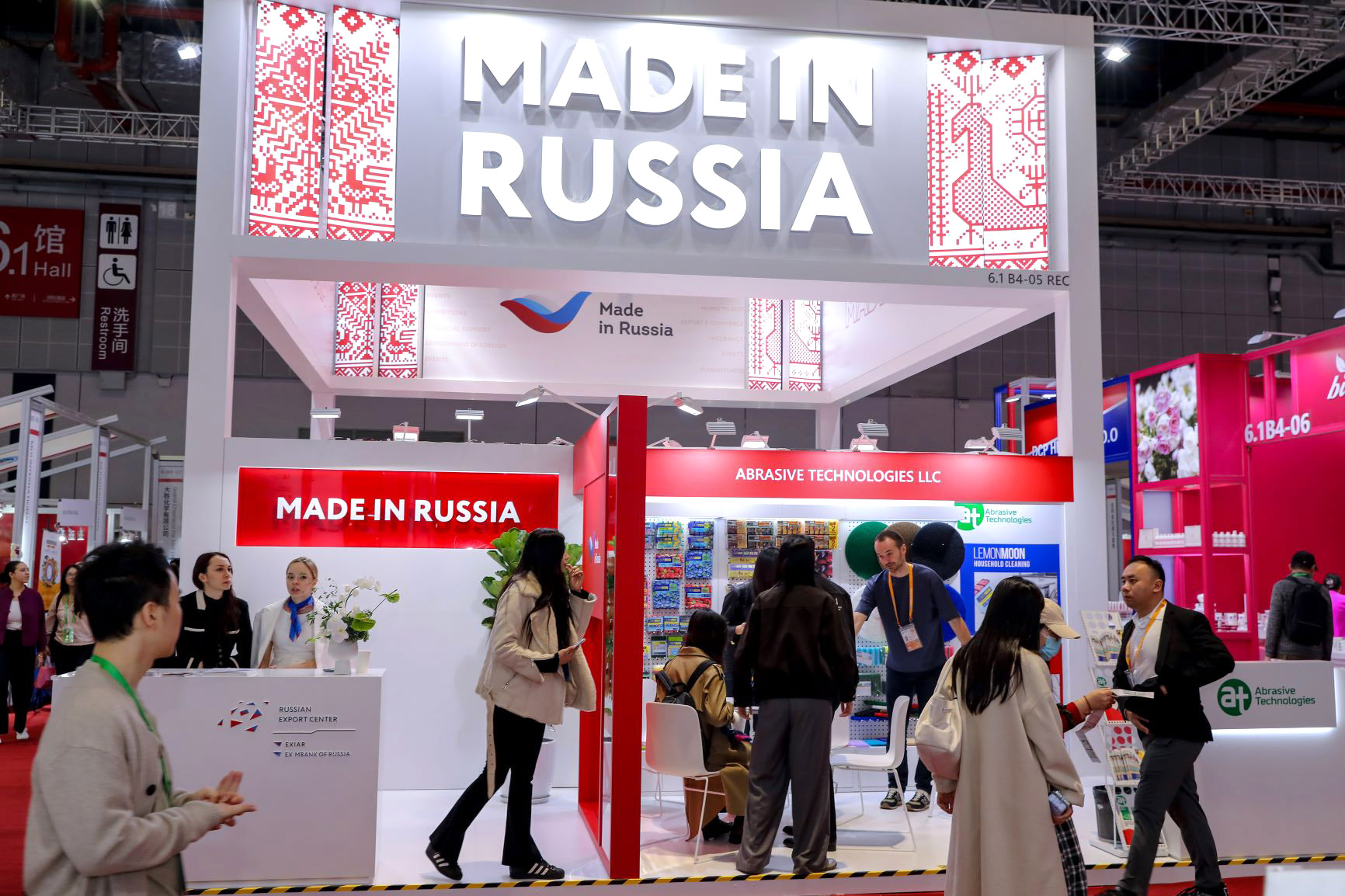
The dialogue took place against a backdrop of robust bilateral economic performance. In 2025, trade between China and Russia reached a historic high, a trajectory that has continued into early 2026.
Experts also stressed the role of education and technology in sustaining economic resilience.
ALSO READ: Chinese, Russian finance ministers agree to expand fiscal cooperation
Oleg Smolin, first deputy chairman of the State Duma Committee on Science and Higher Education, highlighted the importance of artificial intelligence in global competitiveness, while emphasizing that the "natural intelligence of youth" remains the foundation of innovation.
Sergey Bodrunov, president of the Free Economic Society of Russia, echoed this sentiment, stating that deepening academic ties will provide the intellectual infrastructure needed for a sustainable global economy.
"National economic development relies on training professionals, business experts and modern specialists. There is no modern industry without education," Bodrunov said.
Liu Hongjie in Moscow contributed to this story.
Contact the writers at renqi@chinadaily.com.cn
