

From Ping-Pong Diplomacy to sports and youth exchanges, China and US continue building bridges
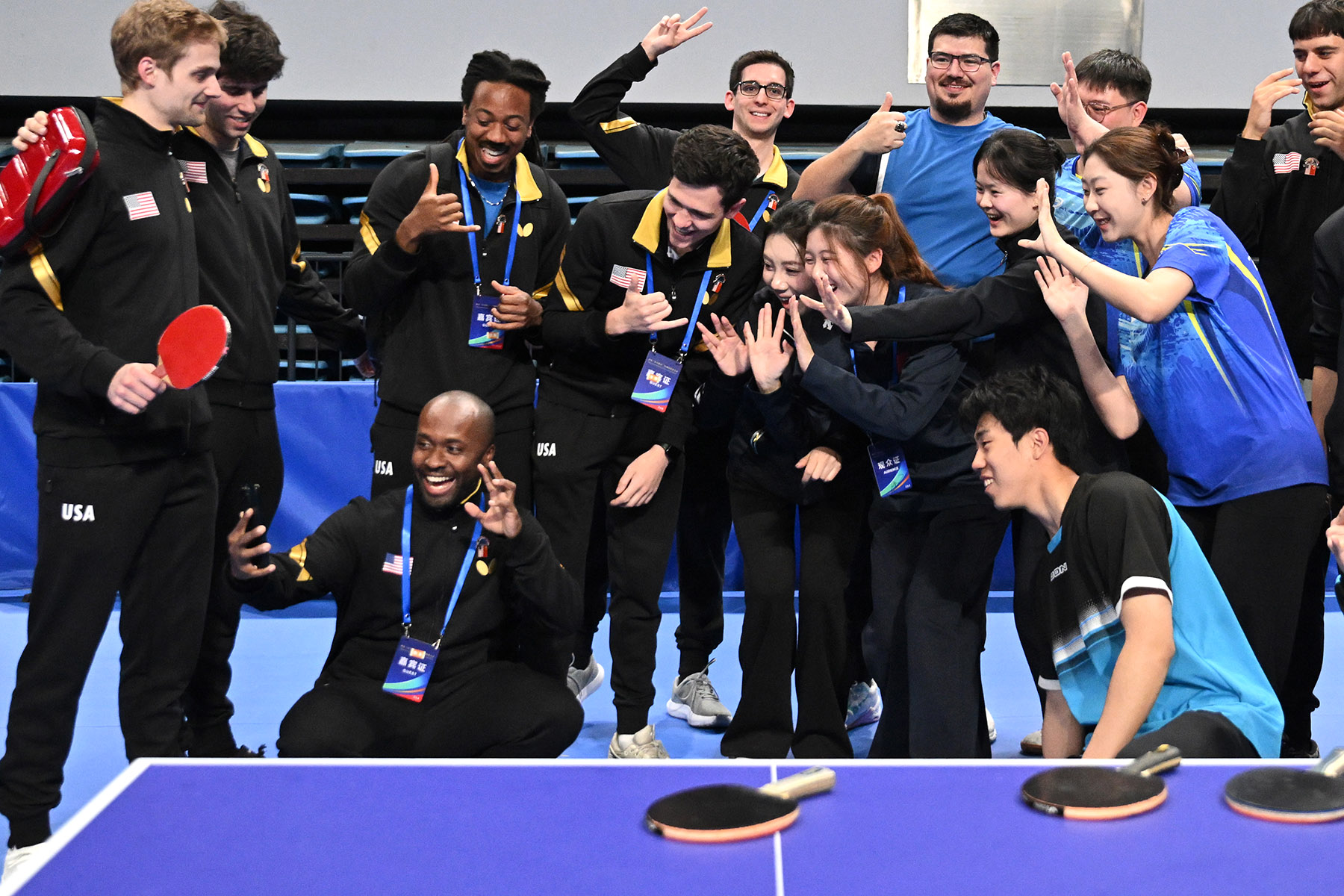
Deliah Autry, 30, is a member of the United States Women's National Flag Football Team, a three-time world champion, and a doctor of physical therapy specializing in pediatrics.
Last August, she made her first trip to China, attending the 12th World Games hosted by Chengdu in Sichuan province. The souvenirs that impressed her most included a Labubu doll and the games' medals, she said.
"The medal itself is so intricate and detailed, and has a little necklace. It is something that I would love to show my kids one day," she said.
READ MORE: Exchanges among young people exceed expectations
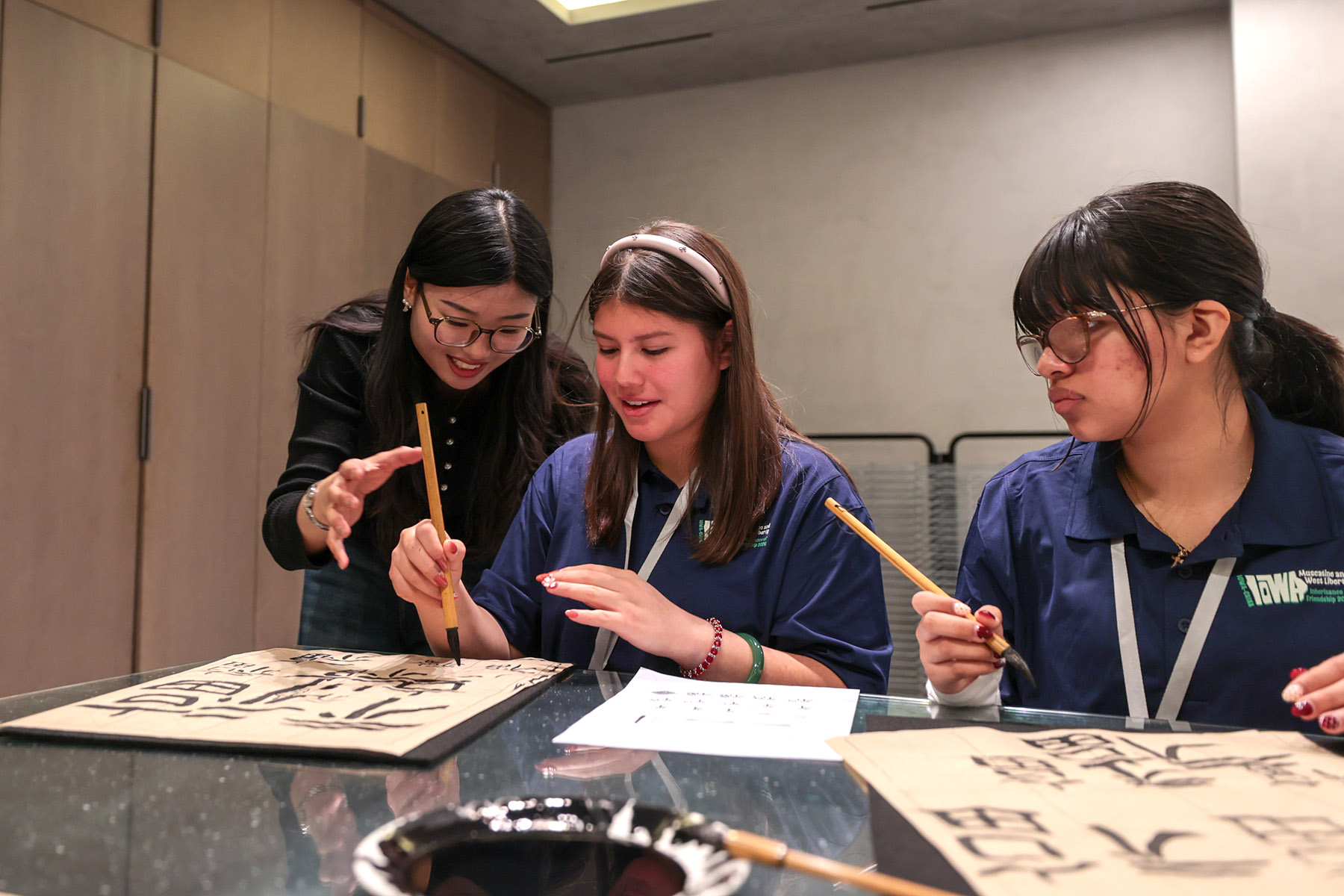
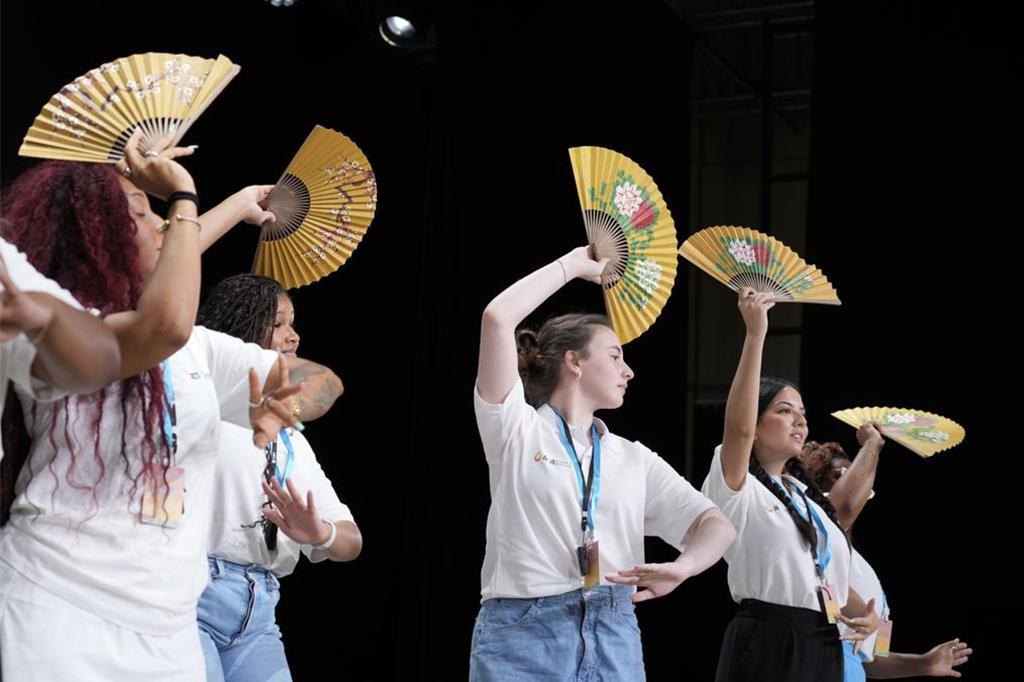
The cultural events also impressed her. At the athletes' village, Chinese college students helped them try immersive cultural activities.
"We got to do arts and crafts, learn how to write our names in Mandarin. We got to try on traditional Chinese clothing, so it was just an awesome way for us to learn from them … a great experience and a way for us all to connect," Autry said.
She made her second trip to China last month. In Beijing, she took part in the commemoration to mark the 55th anniversary of China-US Ping-Pong Diplomacy and the launch ceremony of the China-US Youth Sports Exchange Events, which received a congratulatory message from President Xi Jinping.
Autry said she now has a better and deeper connection to and understanding of Chinese culture.
"I am impressed by the people, how genuine and kind-hearted everybody is, and I think it is something that I have personally attached to you (China) because you see the true humanity and love, especially for sports," she said.
In Beijing, she watched a high school flag football team from Tacoma, Washington state, playing against a Chinese student team.
Autry said flag football is a great avenue to continue making connections between the cultures, despite language barriers and differences in cultures and politics.
"There were a lot of handshakes, high-fives, and smiles, and I think that just brings the positivity forward… It was just an awesome display of how sports bring everybody together," she added.
"There is a mutual understanding and respect for these athletes, and we all know that we are playing with the same passion and love for the game," she said.
Autry said sporting events and exchanges are a great way to show young people how cultural differences and language barriers are just small things and "what the true purpose is in life, which is to find a deeper connection with other humans across the world".
Last year, Autry met a lot of the players from the Chinese women's national team at flag football tournaments.
"I follow a lot of them on social media, and we are able to connect. And there have been times throughout the year where we have seen each other outside in other tournaments and it is just really awesome to build that connection," she said.
Reaching out
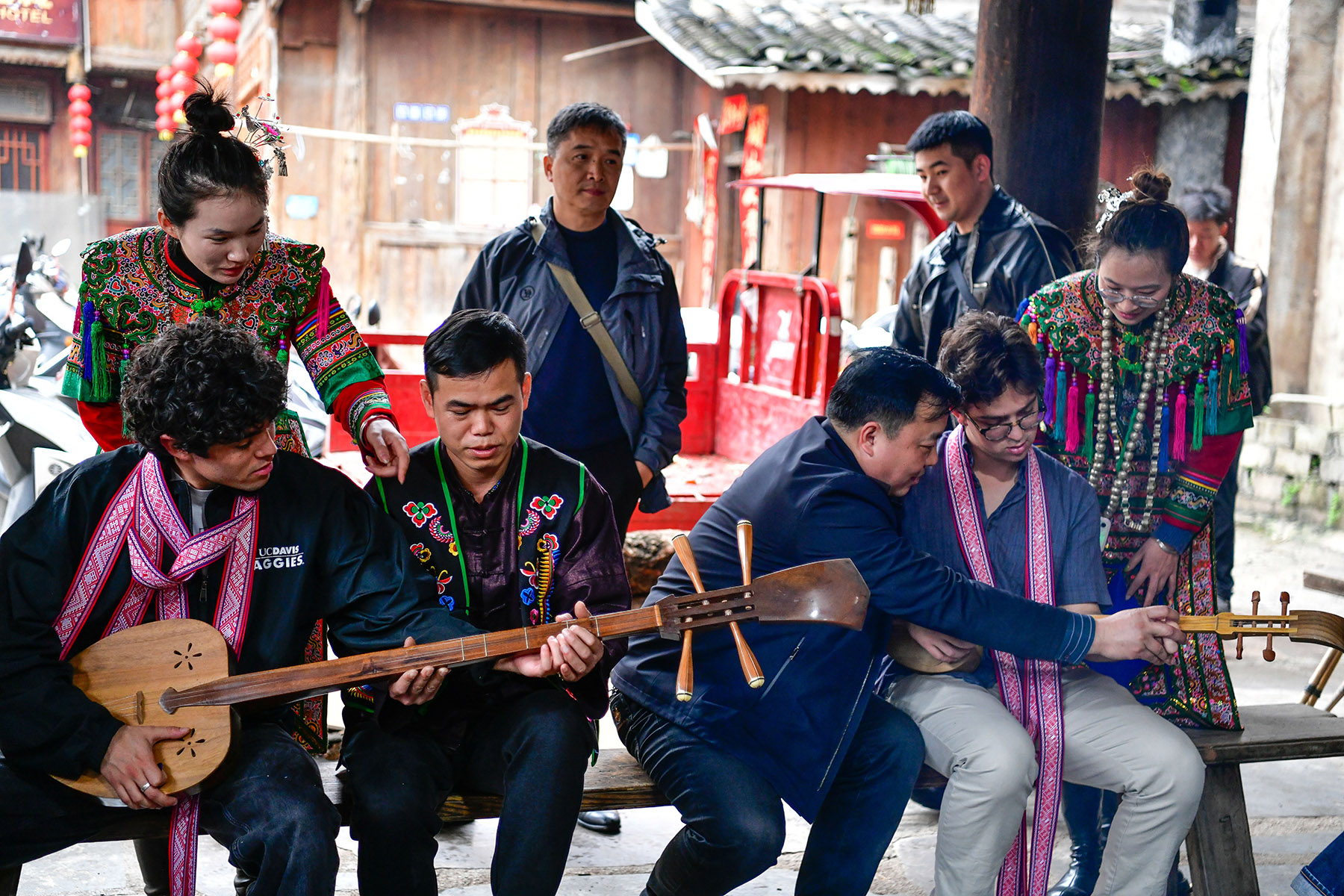
Justin O'Jack, chief representative of the University of Virginia's Pacific Asia Office, encourages young Americans to engage in more trips outside the US.
"These kinds of trips, where students can travel abroad and spend time in a country like China, really have a transformative impact on a young person's life," he said in an interview with China Daily, "… if their only impression of China is through the media that they consume, of course it's going to be different than experiencing it as a person here in China," he added.
O'Jack studied abroad when he was a college student, first in India and then in China.
"That experience as a student studying abroad in China definitely has influenced me in many ways, one of which is in the career that I chose — first running study abroad programs in Shanghai for American students and now representing an American university."
He said Chinese students represent the majority of international students applying to his university's undergraduate program for the current class graduating in 2030.
"Chinese students by far make up the majority of applications we received — I would say, (there are) over 10,000 applications from around the world. Over 40 percent of those were from students here in China," he said.
"The interest in studying abroad in the US continues to be very strong, especially among the undergraduate student population," he added.
During the COVID-19 pandemic, there was a hiatus in the number of American students from his university studying in China, and now "we are seeing that start to grow and rebound", O'Jack said.
"We are not at the pre-pandemic levels yet, but we are still working and heading in the right direction," he said.
Sharing ideas
In 2023, President Xi proposed an initiative to invite 50,000 young Americans to China for exchange and study programs over a five-year span.
O'Jack noted that the program has largely focused on high school and younger groups of students, and "that is important because the youth are our future".
Anders Ibsen, 40, who was sworn in as mayor of Tacoma in January, hosted a Chinese ping-pong delegation at Lincoln High School in the city, a school that Xi visited in 2015.
Ibsen said it is very important to "give young people an understanding about what it means to have greater partnerships, especially with our growing global economy".
"That's the basis of shared prosperity as well as peace … in someone's life. If they can understand that it's a big world and that there are a lot of other different ideas out there, then we're all better off," he added.
Last month, Ibsen traveled to China with Tacoma high school students, his second visit to the country."I first visited here in 2018. I visited Fuzhou (in Fujian province), which is one of Tacoma's four sister cities."
"To give you some reference, the city of Tacoma is a major port city on the west coast … About half of our total trade comes from China. As a result, we very strongly value the partnership," he said.
Chinese trade will continue to be very important to the port of Tacoma, as well as the investments it has seen in the local economy, Ibsen said.
During the trip, Ibsen said the group was also able to learn more about innovative programs the government is working on. "There's always something to learn. We should always continue being students," he said.
When asked about what impressed him most in China, he said it was "the people".
"In the case of the city of Tacoma, my primary concern is keeping my residents safe and prosperous … and by having these cultural exchanges, we can focus on the results, we can dispense with noise, we can dispense with politics," he said.
"We can just focus on what makes things better for people, what makes for a happier, more peaceful world. And that is the strength of cooperation. That's why we're here," he added.
Lasting impact
The first US table tennis delegation arrived in China in April 1971, for the icebreaking visit that helped boost the launch of bilateral diplomatic ties.
At that moment, Jan Berris had been in her position at the US consulate in Hong Kong for just two years "as a very junior consular official working on cultural affairs". However, she said she knew that "the event would have repercussions on the US and China as well as the rest of the world".
"But I had no idea that it would have such a huge impact on my own life," said Berris, who is now vice-president of the National Committee on US-China Relations, a nonprofit organization and advisory body founded in 1966 to encourage understanding and cooperation between the two nations.
When she returned to the US the month after the historic visit, two of her former professors at the University of Michigan asked if she would consider working at the committee based in New York.
The committee was then preparing to co-host with the US Table Tennis Association the visit of the Chinese ping-pong team to the US.
"My professors were on the board of the national committee and they felt that my diplomatic experience, brief as it was, would be helpful," Berris said.
She said she was not quite sure that she really wanted to live in a big city as "it was formidable".
"Actually, my undecided state was resolved by another major announcement that was made just a few months later, when President Richard Nixon went on national television and announced that Dr Henry Kissinger had made a secret visit to China," she explained.
ALSO READ: China, US can inject impetus into recovery
One of the results of that visit was the Chinese ping-pong team's visit to the US in April of 1972.
"That helped me make my decision," Berris said. The next day, she asked the US State Department if she could work on the planning for the Chinese team's visit.
What began with a small ping-pong ball — slowly at first, and then in leaps and bounds — grew into a "broad and eventually very deep" network of relations between the two countries in every profession, and every field imaginable that brought all levels in the two societies together, she said.
"Now, a lot of people ask me how I can work in the same job for 55 years. But for me it has been easy, because I love my job," she said.
The first exchanges and the visits of the two ping-pong teams, with the hundreds and thousands of exchanges that followed, "serve to help people from both countries humanize the other" side, she said.
Contact the writers at zhangyunbi@chinadaily.com.cn
