

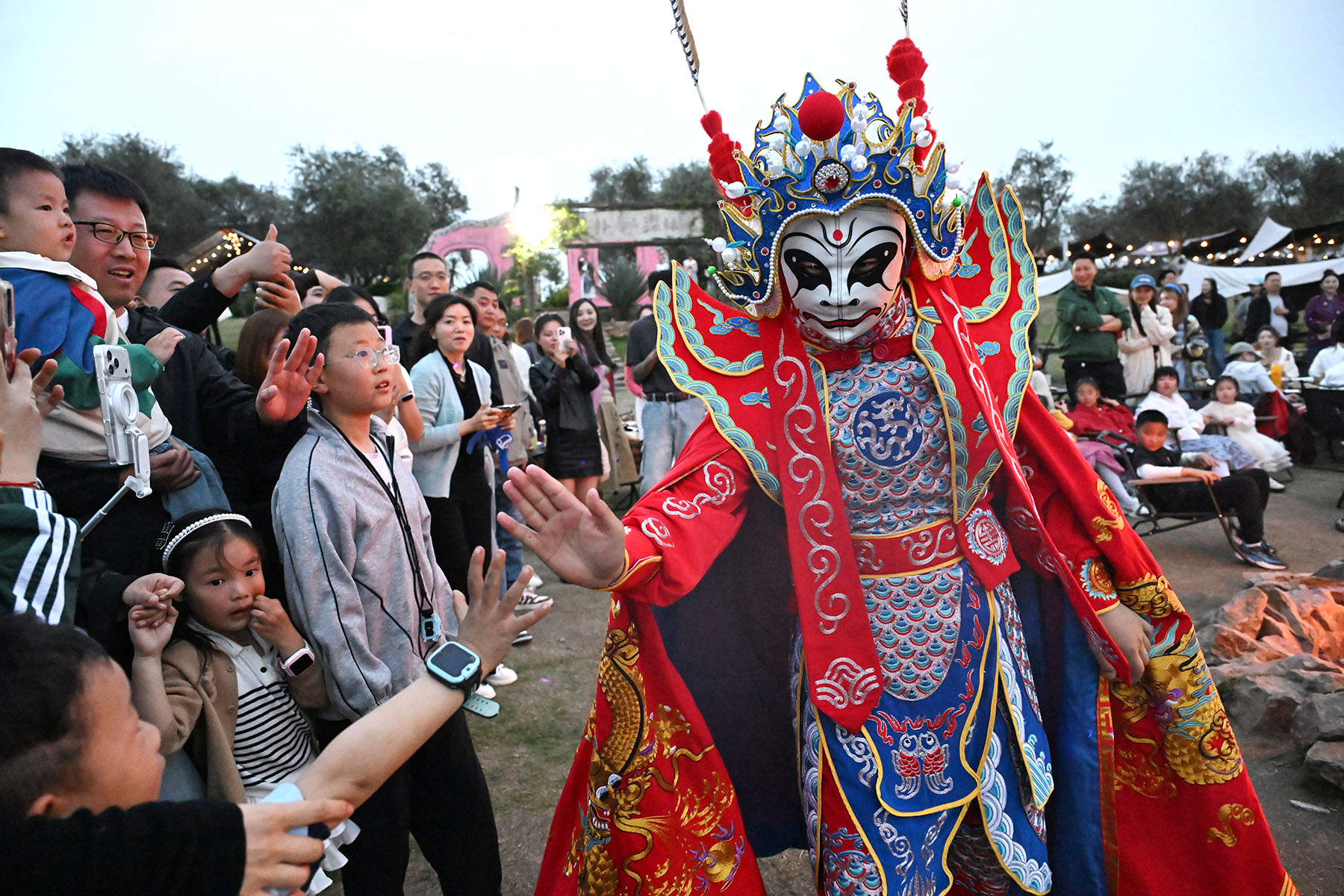
When visitors arrived at the ancient city wall of Nanjing in Jiangsu province during the May Day holiday, many expected a typical historical tour. Instead, they were greeted by actors portraying Ming Dynasty (1368-1644) figures strolling along the ramparts, inviting tourists into improvised scenes, posing for photos and weaving vivid stories about the site's centuries-old past.
"I originally came just to see the city wall relics," said Wu Jiaying, a tourist from Zhejiang province. "But the interactive performance made history come alive."
Across China during the just-concluded five-day holiday, such immersive encounters became increasingly common, reflecting a broader shift in the country's tourism market. Travelers — particularly younger ones — are moving away from traditional "checklist" sightseeing toward experiences that offer atmosphere, storytelling and emotional engagement.
READ MORE: Experience tourism spurs China's holiday surge
"Tourism today is less about visiting the most famous sites and more about whether the experience creates emotional resonance," said Wu Liyun, a professor at the China Academy of Culture and Tourism at Beijing International Studies University.
"What travelers seek is emotional value — the feeling of being relaxed, understood and connected with a place."
Cities across China experimented with new tourism formats during the holiday, combining cultural heritage with interactive storytelling.
In Chengdu, Sichuan province, themed "city walk" routes linked more than 500 cultural and life style venues, from historic streets and parks to music venues and food markets. Historical characters appeared along popular walking routes, interacting with visitors through improvised performances and poetry recitals.
Meanwhile, in Anshun, Guizhou province, the 600-year-old Yunfeng Tunpu — often described as a "living relic" of Ming Dynasty military settlements — reimagined traditional sightseeing by turning the entire village into a live-action role-playing game. Rather than passively listening to tour guides, visitors adopted character identities to solve a historical mystery, hunting for clues and interacting with NPCs inside ancient military tents and batik workshops.
For local businesses, such interactive formats help extend visitor stays and encourage spending on accommodation, dining and entertainment rather than relying solely on ticket revenue.
Travel platform data suggest that younger travelers are driving the shift, prioritizing personal interests over generic itineraries.
According to a report jointly released by online travel platform Fliggy and lifestyle app Xiaohongshu, also known as RedNote, around 69 percent of surveyed users chose their holiday destinations primarily based on personal interests rather than traditional sightseeing priorities.
Concerts, sporting events and festivals have also become major tourism drivers. Online platform Tongcheng Travel said city soccer tournaments boosted visitor flows to destinations including Nanjing and Suzhou in Jiangsu province, Shenzhen in Guangdong province and Hangzhou in Zhejiang province.
Also an online travel services provider, Qunar said hotel bookings near Zhengzhou Olympic Sports Center in Henan province rose 214 percent year-on-year during the May Day holiday as concerts attracted visitors from across the country.
Analysts say these diverse interests are reshaping travel flows, drawing visitors well beyond traditional tourism hot spots.
Reflecting this structural change in tourism consumption, Wu said: "In the past, tourism relied largely on natural or historical resources and ticket sales. Today, destinations must combine those resources with creative products and local lifestyles to build deeper, more memorable experiences."
Local neighborhood culture, markets and interactive performances are increasingly becoming tourism attractions themselves, she added.
Economists say the phenomenon highlights the rise of the "emotion economy".
"The object of consumption is shifting from the utility of goods to the symbolic and experiential value they carry," said Tian Lihui, a professor of finance at Nankai University.
According to consultancy iiMedia Research, China's emotion-driven consumption market reached 2.72 trillion yuan ($377 billion) in 2025 and is projected to exceed 4.5 trillion yuan by 2029.
The trend is also providing fresh momentum for domestic consumption and economic growth.
In January, the State Council, China's Cabinet, issued a work plan to guide efforts in optimizing and expanding the supply of services, including experience-based and emotion-driven services.
ALSO READ: Efforts to boost holiday spending gain traction
This model allows businesses to move beyond price competition toward higher-value offerings, Tian said.
"Businesses are no longer just selling products — they are curating experiences," he said. "A cafe sells a moment of quiet, a hotel sells rest and a tourism destination becomes the stage for emotional storytelling."
The Ministry of Culture and Tourism said local governments organized around 13,700 cultural and tourism events nationwide during the holiday while issuing more than 280 million yuan in consumer subsidies and vouchers.
As competition between destinations intensifies, the shift toward immersive and lifestyle-oriented tourism is likely to accelerate.
"What attracts visitors now is not only landmarks," Wu said. "It is the opportunity to experience a city's culture, lifestyle and emotional atmosphere."
Contact the writers at lijing2009@chinadaily.com.cn
