

From overseas-based production to reviving factories, companies take new approaches
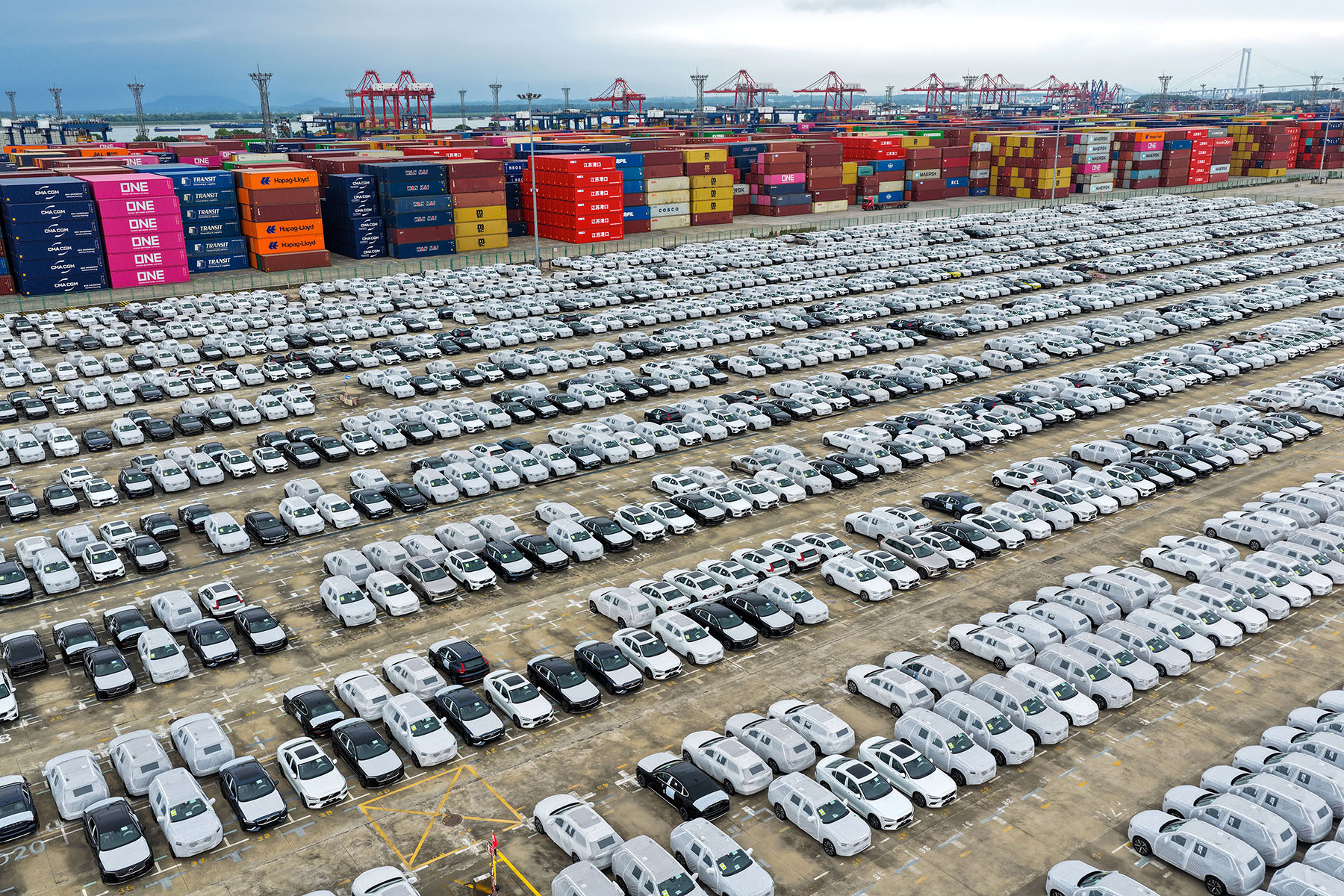
Automakers in China are expanding their reach overseas more than ever — and increasingly, they are no longer just shipping cars.
Last year, China exported 7.09 million new vehicles, up 21.1 percent year-on-year, making the country the world's largest vehicle exporter for three years on end, according to the China Association of Automobile Manufacturers.
China-made vehicles, from not only Chinese marques like Chery and BYD but also from global brands including Tesla, Ford, Hyundai and Chevrolet, are now seen across markets ranging from Southeast Asia and South America to Europe and the Middle East.
A major driving force of China's exports has been new energy vehicles, whose exports last year accounted for 2.61 million units, doubling from a year earlier and making up more than 37 percent of total exports, said the CAAM.
READ MORE: January sales see annual rise
The association expects NEVs to drive China's vehicle exports further to 7.4 million units this year.
Behind the headline numbers, however, a deeper shift is underway.
Traditional trade-driven vehicle exports are fast evolving into a far more complex form of globalization — one that includes overseas sales, manufacturing, localized supply chains, research and development, service networks and, increasingly, cooperation with international automakers to rebalance global production capacity.
For China's automakers, going overseas is no longer a strategic option but a structural necessity, said Zhang Yongwei, president of China EV100, a Beijing-based industry think tank.
"One market, even as big as China's, is limited," he explained.
Last year, China's overall vehicle market hit a record 34 million units, leaving limited room for long-term volume growth. The CAAM estimates the Chinese market will grow just 1 percent year-on-year from 2025.
"So, the competition will hinge on who can establish a solid foothold overseas and operate across both domestic and international markets," he said.
Global giants have set an example. Toyota, the world's No 1 carmaker, has a combined production capacity of around 10 million vehicles a year, with only 3.4 million made in Japan. Volkswagen AG, the second-largest car group, at its peak, produced 40 percent of its global sales in China.
Complex environment
Electrification has reshaped the competitive landscape, offering Chinese brands — strong in batteries, software and cost control — a rare opportunity to enter mature markets at scale.
Statistics from the CAAM showed that China started its bulk exports in 2001, when it shipped 26,000 vehicles overseas after the country's entry into the WTO. The amount was negligible compared with top exporters such as Germany and Japan.
The figure grew gradually to hit 1 million units in 2012 but plateaued around that level until 2021, when its NEV exports helped drive the volume to 2 million units.
The meteoric rise since then has captured the world's attention. While some importers praise the vehicles' cutting-edge tech and stylish designs, others are more concerned about how to protect their own automotive industry.
A telling example is the EU's imposition in late 2024 of duties ranging from 7.8 percent to 35.3 percent on battery electric vehicles imported from China, even those made by European carmakers including Volkswagen and BMW.
Its position did not soften until early 2026 when the European Commission issued a guidance document allowing carmakers to submit price undertakings, including "the minimum import price, sales channels, cross-compensation, and future investments in the EU".
Following the United States, Canada slapped a 100 percent surtax on China's vehicles in 2024.
It did not start thinking about scrapping the plan until Prime Minister Mark Carney's visit to Beijing in January, although most of China's EV exports to Canada had been from Tesla's Shanghai plant.
"Complete-vehicle trade now faces a much more complex environment," said Zhang. "In the new stage of development, many automakers and parts suppliers are choosing to localize production overseas, gradually shifting vehicle manufacturing and supply chains abroad — a model that is welcomed by many host countries," he said.
That shift is now visible in both corporate plans and concrete investments.
By 2026, Chinese automakers are expected to have overseas production capacity of around 3 million vehicles, with actual annual output exceeding 2 million units, according to industry estimates.
China's earlier attempts at overseas expansion were often experimental and fragmented — focused on exports and semi or complete knockdown assembly.
The latest wave, by contrast, is broader, deeper and far more systematic. Rather than asking how many cars can be sold abroad, companies are asking how to embed themselves into local industrial systems.
This means building factories, reviving idle plants where possible, localizing supply chains, conducting R&D close to end-users and establishing long-term service ecosystems.
South America, Europe
Chery, a Fortune 500 company and China's largest auto exporter, labels its overseas strategy as "in somewhere, for somewhere, be somewhere", developing and producing cars locally for different markets.
SAIC Motor, another major exporter and partner of Volkswagen and GM, unveiled a "Glocal" strategy, vowing to deepen localized ecosystem development while elevating the brand into a globally recognized one.
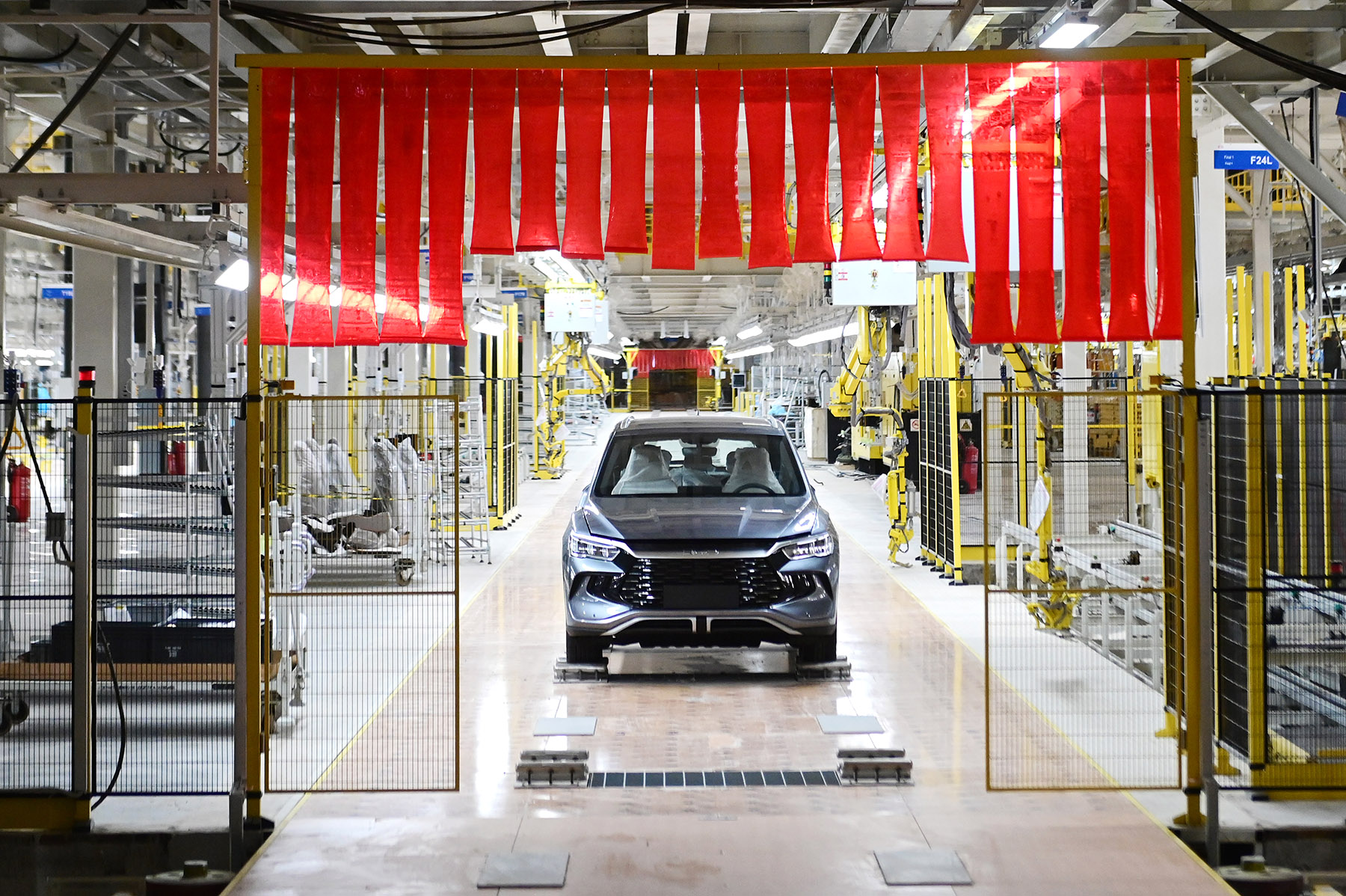
BYD's expansion in Brazil offers a clear example of deep localization.
The company's factory in Camacari of Bahia state has produced around 25,000 electric and hybrid vehicles since operations began in October 2025.
According to Alexandre Baldy, head of BYD's Brazil business, the company plans to ensure that 50 percent of components produced at the plant are locally manufactured or sourced by the end of 2026.
Stamping, welding and painting workshops are nearing completion, and annual capacity is expected to increase from 150,000 units in 2026 to 300,000 units.
The higher localization ratio will not only help BYD meet regulatory requirements but also enable it to export Brazil-made vehicles to countries in Mercosur, the regional economic organization, as early as this year.
Bahia's Secretary of Economic Development Angelo Almeida said BYD's arrival represents the rebirth of Camacari's automotive hub, generating employment, income and innovation.
"The project will create a value chain of maintenance, logistics, food and security. It is projected to bring in 10,000 direct jobs alone,"Almeida said.
He said BYD may push the state's industry toward green technology production by leveraging local research.
"BYD has already expressed its intention to establish an R&D center here, which could consolidate the state as a reference hub for electric mobility, automotive software and electric propulsion system development," Almeida said.
Europe is one of the most important overseas markets for Chinese automakers, but also one of the most demanding.
Rather than relying solely on greenfield investments, Chinese automakers are increasingly adopting flexible, asset-efficient strategies.
XPeng has worked with Magna International to produce its G6 and G9 models at Magna's Graz plant in Austria since the third quarter of 2025. The plant has been producing Mercedes-Benz's iconic G-wagon.
In January, the company announced that trial production of its 2026 P7+ model had been completed at the same facility, laying the groundwork for its European launch in the first half of the year.
GAC Group has also partnered with Magna as well, with its AION V entering production at the Graz plant in November 2025.
Leapmotor, leveraging its joint venture with Stellantis, plans to begin localized production at Stellantis' Zaragoza plant in Spain in the third quarter of 2026.
BYD, meanwhile, is pursuing a longer-term European manufacturing strategy.
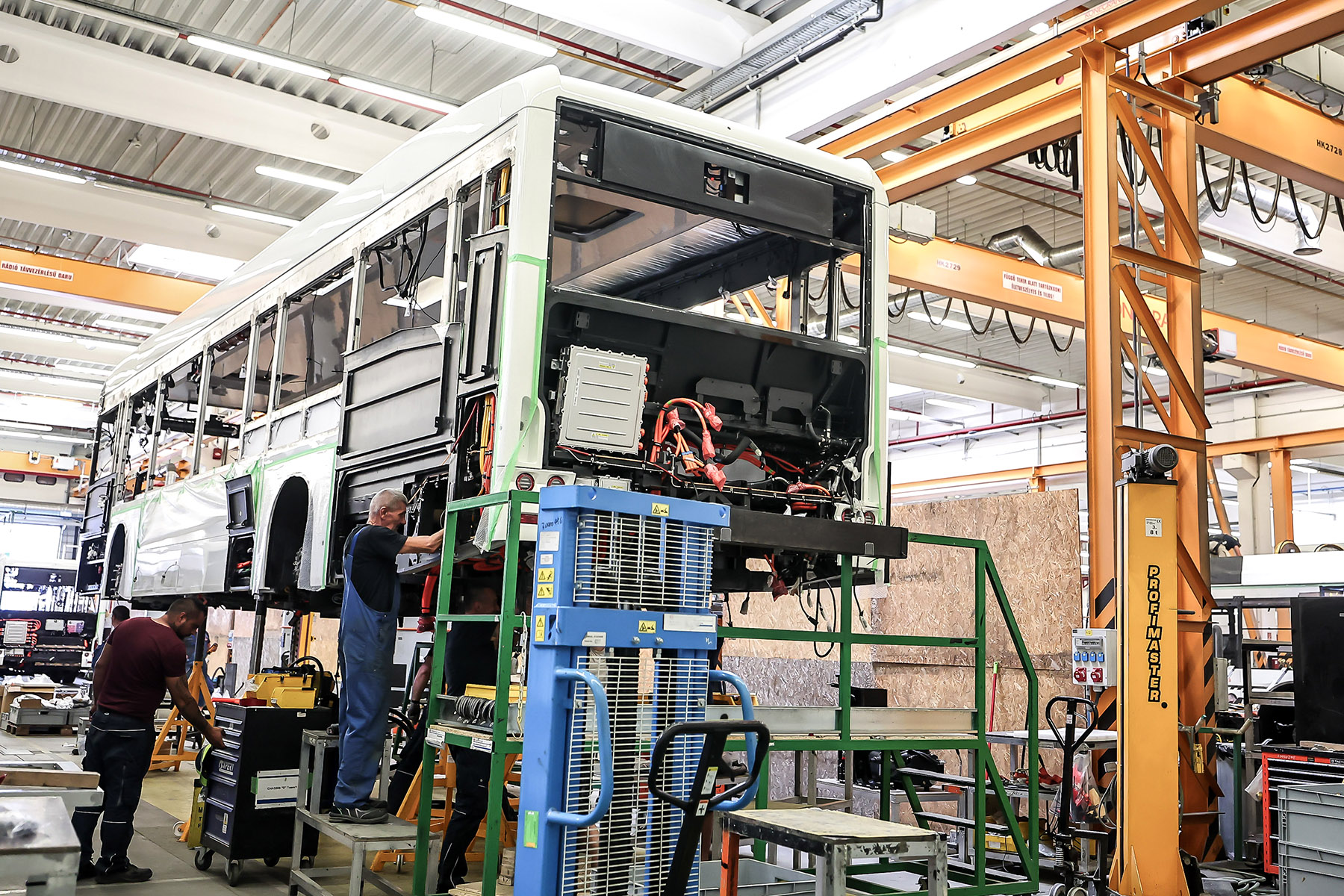
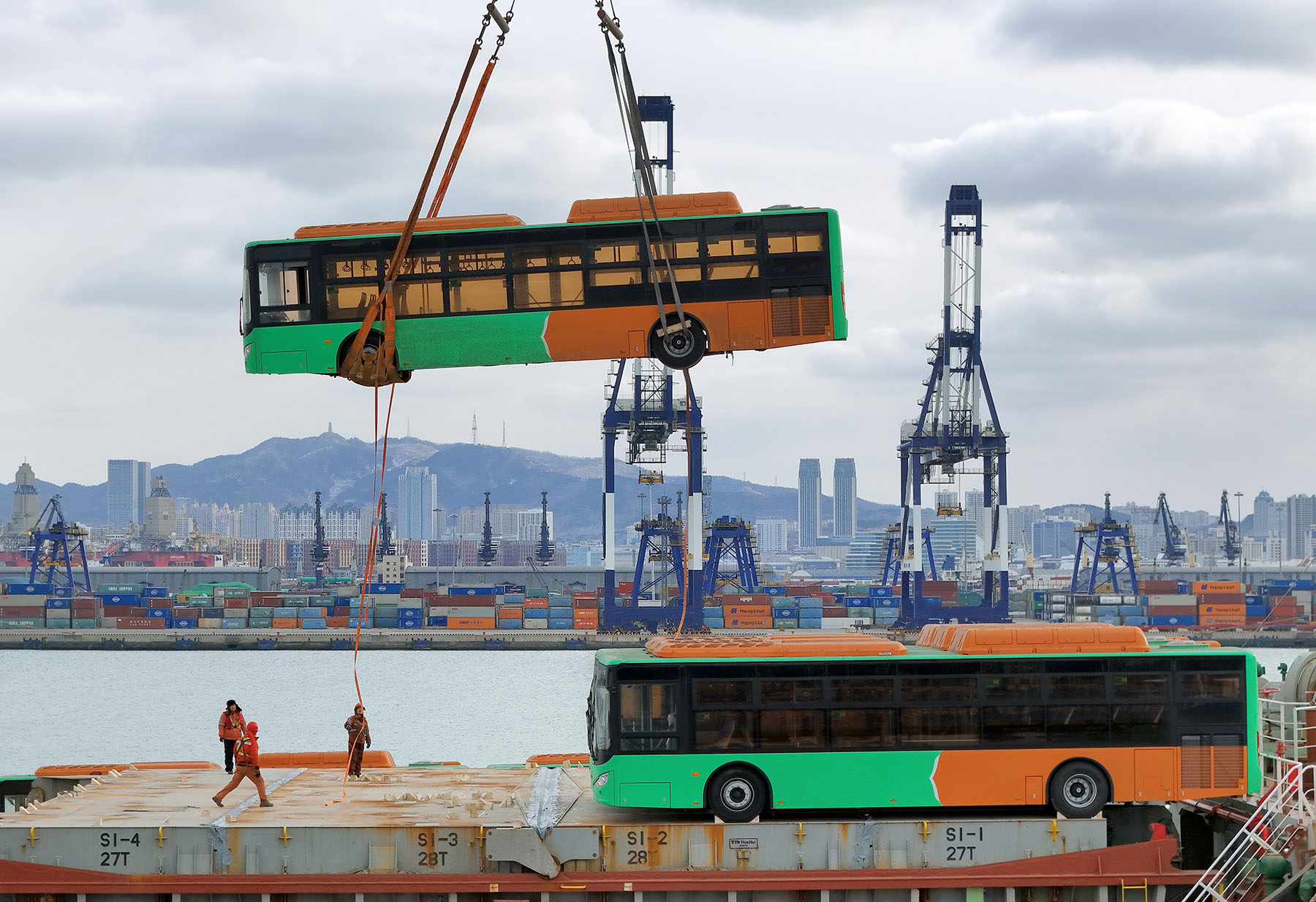
After establishing an electric bus plant in Hungary in 2016, the company launched an expansion project in 2025 to increase annual production capacity for electric buses and trucks from 400 to 1,250 units.
It is also investing 4 billion euros ($4.62 billion) in a passenger vehicle plant in the country — its first such facility in Europe. Trial production has started, with mass manufacturing slated to begin in the second quarter of 2026.
Restarting idle facilities
In many cases, Chinese carmakers' overseas manufacturing also means helping traditional automakers in mature markets address declining utilization rates.
BYD's Brazilian plant was built on a former Ford site covering 4 million square meters.
Great Wall Motor, China's largest SUV and pickup maker, saw its first Brazilian factory in Sao Paulo open in August 2025 on a site acquired from Daimler AG. The plant produces three models — the Haval H6 and H9 SUVs, and the Power P30 pickup — with an initial annual capacity of 50,000 units.
Ricardo Bastos, director of institutional affairs at GWM Brasil, said GWM is exploring several states for a potential second factory, either consolidating existing resources into a larger facility or building a new plant from scratch, with a final decision expected after mid-2026.
Chery partnered with Spain's EV Motors to revive a former Nissan plant and collaborate with local brand Ebro, achieving its first localized European production by the end of 2024.
Geely and Ford are in discussions about using spare production capacity at Ford's European plants to manufacture vehicles for the region.
Ford's European sales fell from 518,000 units in 2023 to 327,000 units in the first three quarters of 2025, according to Statista.
A person familiar with the matter told China Daily that Ford's plant in Spain, which has been operating since 1976, is the most likely facility to be involved. Reuters also reported that the two companies discussed a framework for sharing vehicle technologies, including automated driving.
In response to an inquiry from China Daily, Ford said: "We have discussions with lots of companies all the time on a variety of topics. Sometimes they materialize, sometimes they don't."
Geely has already adopted similar approaches through partnerships with Renault in South Korea and Brazil, producing vehicles based on Geely technologies using Renault's factories and sales networks.
The Financial Times reported in late January that China's Chery Automobile and Jaguar Land Rover may also discuss producing vehicles in the UK using one of JLR's existing plants.
The United Kingdom has been actively courting Chery to make its vehicles in the country for the last few years, said the FT, citing three people close to the talks.
A new JLR deal with Chery will be crucial for the UK government to achieve its target for the UK to produce 1.3 million vehicles annually by 2035, almost double the 738,000 units forecast by the Society of Motor Manufacturers and Traders for 2025.
Chery, together with Omoda and Jaecoo, took a 2.7 percent share last year in Europe's second-largest vehicle market from near zero in 2024, according to the society.
The group said the first models under its Lepas brand will hit the market in the UK in the next few months.
Full ecosystems
Localization today goes far beyond manufacturing.
XPeng announced in January that it plans to establish an independent European supply chain team, following the opening of its Munich R&D center in September 2025.
Together with production in Austria, the company has formed a closed-loop "R&D plus manufacturing" European strategy.
BYD established its European headquarters in Budapest, Hungary, in 2025. The 250 million euro facility integrates sales, after-sales services, vehicle certification and localized design.
It has also committed to joint research projects with Hungarian universities, focusing on intelligent driving assistance and next-generation electrification technologies.
Leapmotor is leveraging Stellantis' European R&D resources to adapt vehicles to local regulations and user preferences.
Changan has built three facilities in Europe alone: a design center in Italy's Turin, a power train center in the UK's Birmingham and another design center for its premium Avatr brand.
ALSO READ: All eyes on March after sales decline
Staffed with around 500 local designers across Europe, Changan said it believes it can provide the best products for European customers.
"One of our recipes for success is to establish a deep relationship with customers, understand their needs and invest in the user experience,"Klaus Zyciora, vice-president at Changan Automobile and head of the group's global design.
"Our team, consisting of more than 31 nationalities, will create experiences and products that deeply resonate with customers," said Zyciora, former design head at Europe's largest carmaker Volkswagen AG.
Automotive globalization has reached a structural turning point: It is defined by how deeply companies integrate into local economies, how they participate in industrial upgrading and how effectively they help reshape global production.
Bearing that in mind will be crucial to any Chinese carmaker that is not content with the size of the market in China, said Zhang at China EV 100.
"For China's automakers, going global now increasingly means becoming local — and becoming part of the global automotive solution," he said.
Contact the writers at lifusheng@chinadaily.com.cn
