

Breakthroughs in advanced manufacturing, robotics, and low-carbon materials highlight a new wave of youth-driven industrial transformation.
When Wang Xiaolong talks about industrial machine tools, he is not speaking in abstract policy terms. As chairman of Ston Robot Yinchuan, he works with them every day — designing, refining, and pushing them closer to technological independence.
This year, as a member of the 14th National Committee of the Chinese People's Political Consultative Conference (CPPCC), Wang is bringing that hands-on experience to Beijing. The annual sessions of the National People's Congress (NPC) and the CPPCC National Committee will open on March 5 and March 4, respectively.
"Industrial machine tools are the cornerstone of manufacturing," he said. "One of my proposals calls for strengthening the independent and controllable development of high-end industrial machine tools, with particular emphasis on core components such as industrial control systems, bearings, and guide rails."
READ MORE: What to watch at China's two sessions as new five-year plan begins
He noted that genuine breakthroughs depend on more than incremental improvements.
"Industrial machine tools are a multidisciplinary field integrating a wide range of technologies," he said. "To achieve original innovation and gain deeper independent control over core technologies, we must not only prioritize applied research but also reinforce fundamental research."
In Wang's view, strengthening basic research is not an abstract ambition but a practical pathway to industrial upgrading.
His company has developed a series of high-precision machining centers tailored to the new energy vehicle sector. "Since launching our self-developed products, they have been widely adopted by major domestic new energy vehicle manufacturers and parts suppliers," he said. "In the past, this type of high-end equipment relied largely on imports."
For Wang, reducing that dependence is both an industrial necessity and a strategic imperative.
"As a major manufacturing nation, China is striving to become a manufacturing powerhouse," he said. "To achieve high-quality development, we must develop our own advanced industrial machine tools and secure self-reliance in core technologies, so that we are not constrained by external factors."
A similar push for high-quality development is unfolding in another frontier: embodied intelligence.
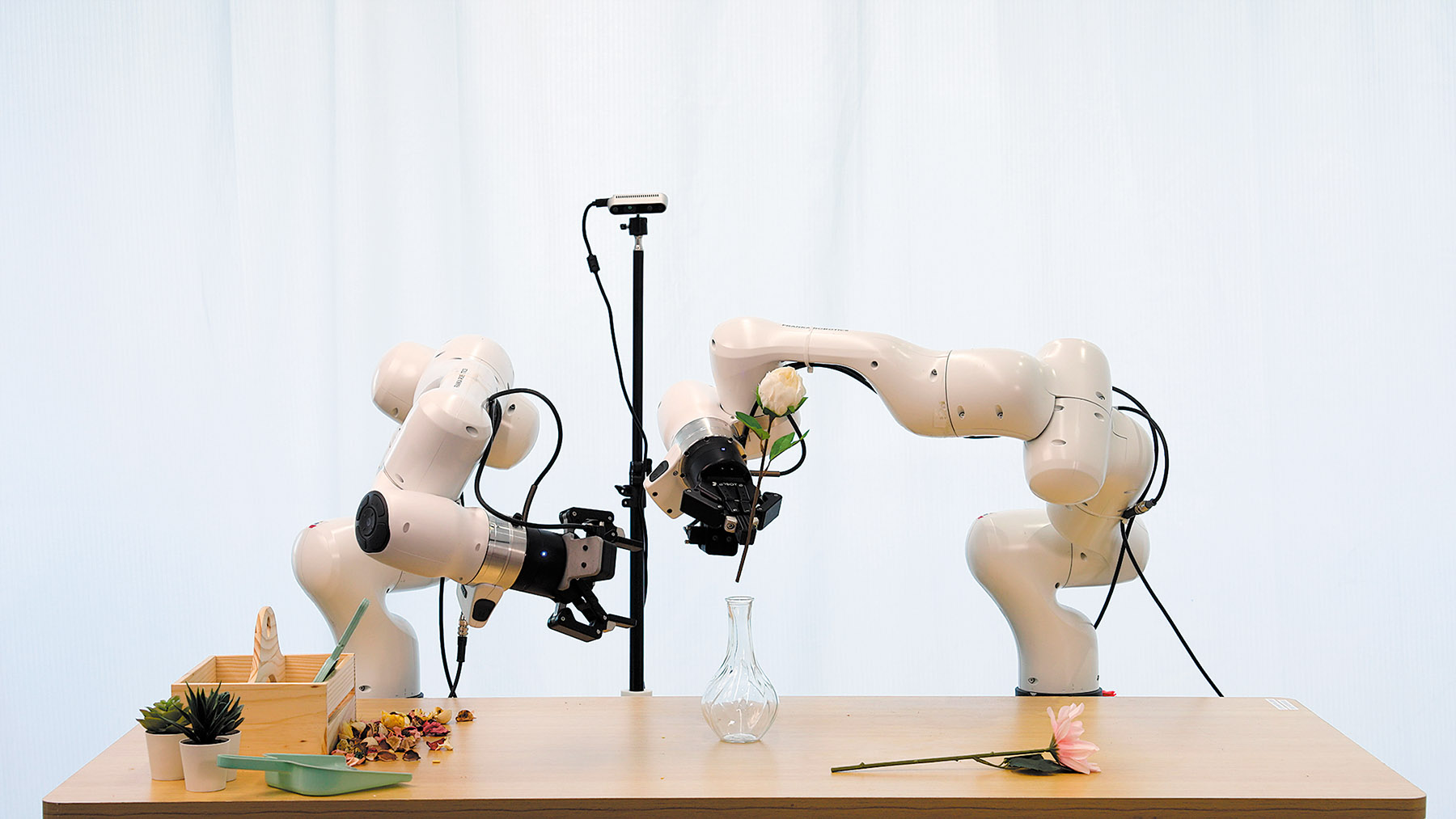
In early February, Robbyant, an Ant Group company focused on building foundational platforms for embodied intelligence, unveiled LingBot. The system is designed to bring intelligence out of the digital realm and into the physical world, equipping robots with the ability to perceive, reason, and act in real-world environments.
"Our core belief is that while digital intelligence has not yet reached its limits, the next major breakthrough in AI is likely to emerge from the physical world," said Zhu Xing, CEO of Robbyant. "Our mission is to bridge the gap between the digital and physical worlds by inventing smarter 'brains' for robots."
Zhu said the company envisions embodied intelligence evolving much like large language models, where stronger foundational models drive broad improvements.
"As high-quality physical-world data accumulates, model capabilities improve steadily — offering a scalable path for robotics," he noted.
At the heart of LingBot is LingBot-VA, described by the company as the first causal video-action world model. According to Zhu, it enables robots to "imagine" possible future scenarios and generate corresponding actions — allowing them to reason about what might happen next and respond accordingly.
In a notable move, Robbyant has chosen to open-source its core technologies.
"Our goal is to work with industry partners to strengthen the foundational capabilities of embodied intelligence, so that robots can move beyond laboratories and into commercial applications and everyday service scenarios," Zhu said.
Youthful tide
Beyond established industry leaders, a new generation of young scientists is also stepping forward.
Li Jiarui is one of them.
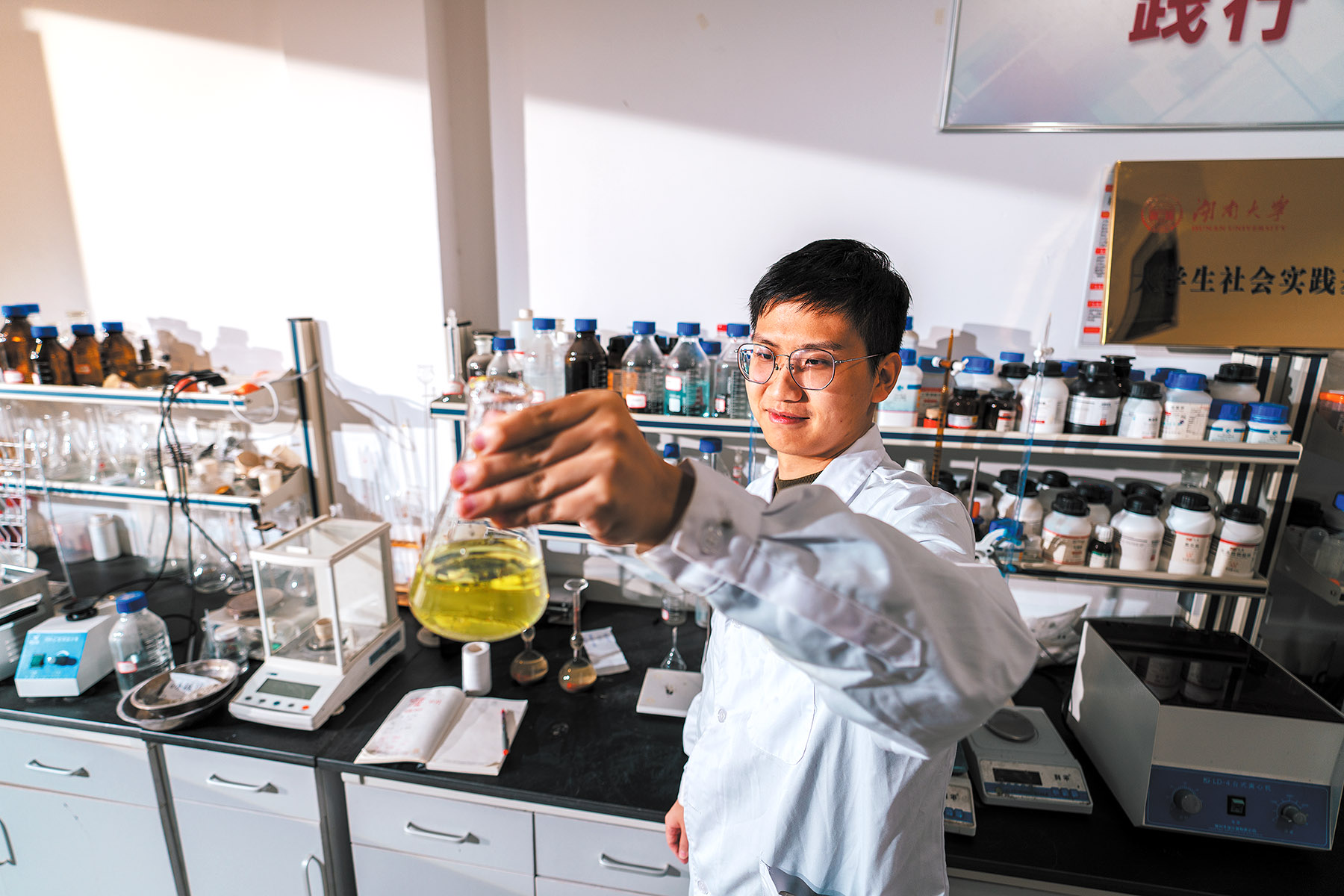
At 26, Li is a PhD student at Hunan University and the founder of Hunan Ningying New Materials Technology. With 24 patents to his name, he is also the youngest recipient of high-level talent recognition in Changsha, capital of Hunan province.
Li's journey began when he was just 19, at a time when China's carbon peaking and carbon neutrality goals were reshaping industrial priorities.
"Back then, we were studying infrastructure demand under the Belt and Road Initiative," Li recalled. "Our first product, a high-performance water-reducing agent, was designed to adapt to diverse construction environments and infrastructure needs in Belt and Road markets."
As his research deepened, innovation followed. Over the next few years, Li and his team developed three additional products. Among them, a low-carbon cement activator — put into use in 2023 — stands out as a milestone.
"Unlike traditional additives, our product marked a major advance by shifting to a liquid form," Li explained. "It can be added directly during the concrete mixing process, offering greater flexibility while ensuring compliance with national additive standards."
Behind these achievements, however, lay years of uncertainty.
ALSO READ: Reviving the Hani legacy
In 2021, the company successfully developed a product designed to modify and reutilize solid waste as a substitute for cement, aiming to cut both costs and environmental impact. Yet soon after its completion, cement prices dropped sharply, wiping out the product's economic advantage almost overnight.
"In scientific research, conducting countless experiments is not the hardest part," Li said. "What's truly challenging is not knowing when a major breakthrough will come — or even whether you're heading in the right direction."
For Li, persistence has become both a research principle and a life lesson. "There are very few overnight successes in the world," he said. "If an entrepreneur gives up too soon, he may never see the results that perseverance can bring."
Looking ahead, Li hopes to continue pushing boundaries through science.
"I want to achieve more breakthroughs — innovations that can fundamentally change the way people produce and live," he said.
Contact the writers at guojiatong@i21st.cn
