

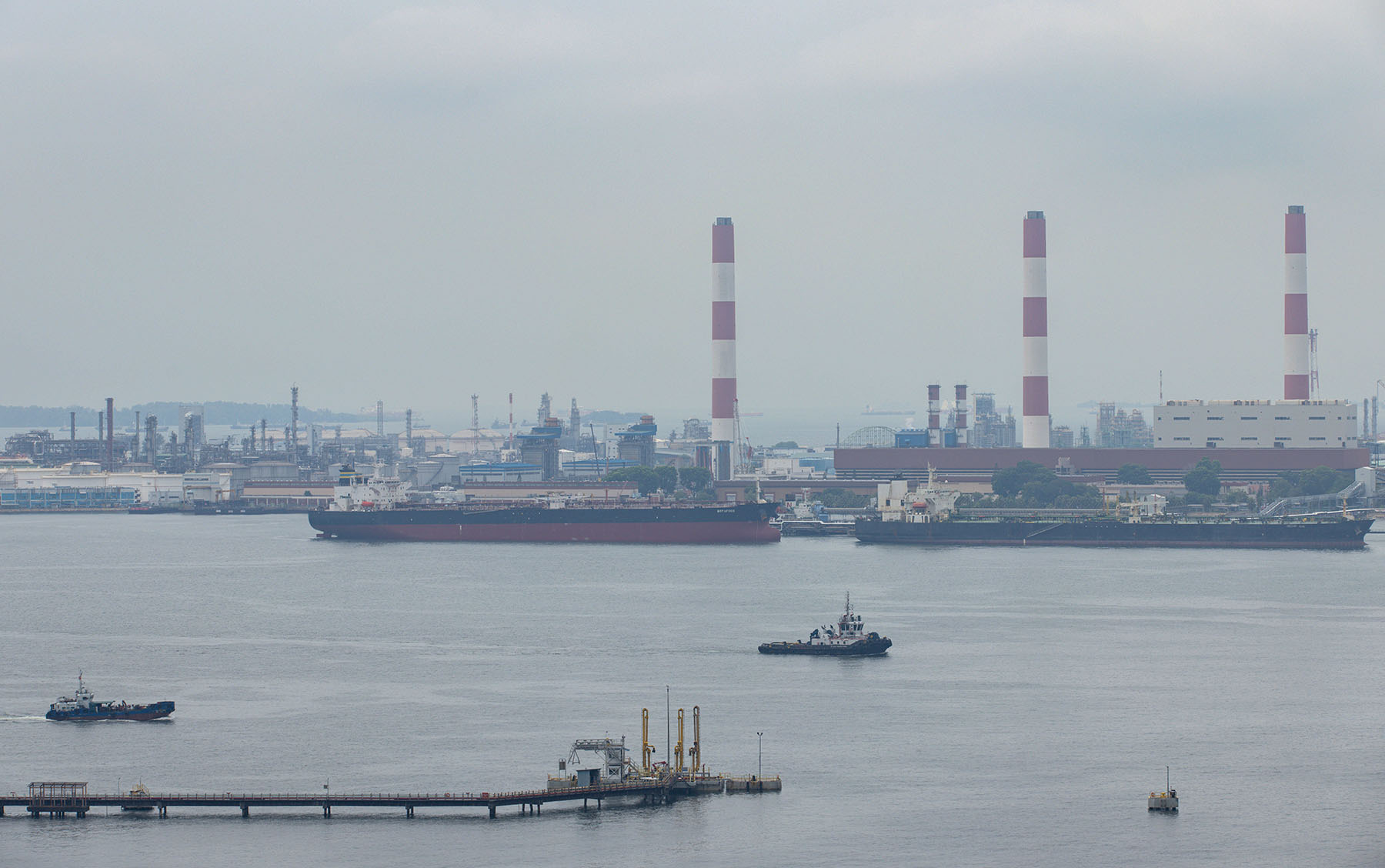
The households' utility bills could rise as Singapore's carbon tax will almost double in 2026 to $45 per ton of greenhouse gas emissions.
The total electricity and gas utility bill of an average four-room flat of Housing and Development Board, or HDB, will go up by about $3 a month, a government spokesperson told The Straits Times on Jan 21. This is assuming other market forces that influence the quarterly tariffs remain constant, and excluding goods and services tax.
There is some respite until March, at least, as households will pay less for electricity and gas until then due to lower energy and fuel costs. In addition, households are given rebates to help cushion the impact.
READ MORE: Cooling sustainably
The spokesperson said the decline in energy costs this quarter more than offset the impact of the carbon tax increase. It was previously reported that electricity tariffs for homes will decrease by 0.84 cent per kilowatt-hour, while gas tariffs will fall by 0.67 cent per kWh, from January to March.
Singapore's carbon tax rate has been rising since 2024, to further push large emitters — which include the power sector — to reduce their emissions, since the tax puts a price on pollution. The $5 tax rate between 2019 and 2023 was deemed low.
In 2024 and 2025, the tax rate rose to $25 a metric ton, up from $5 a ton previously, with the monthly utility bills of a typical four-room flat rising by around $4. The $45 tax rate for emitters will be in place until 2027, with a view to reaching between $50 and $80 a ton by 2030.
To help households defray their utility expenses, the government provides up to $380 a year in U-Save rebates, with double the amount given in recent years "to support living expenses amid higher inflation and to cushion the impact of the increase in carbon tax and water prices", said the spokesperson.
In January, more than 950,000 Singaporean households in HDB flats will receive up to $190 in U-Save rebates.
"We will continue to review our support to ensure households are adequately supported," the spokesperson said.
Economist David Broadstock, a partner at energy industry consultancy The Lantau Group, noted that the planned increase in carbon tax in the coming years may nearly double the impact on utility bills in 2030.
"The carbon tax helps to raise money to deal with the pollution impacts created from making energy… but also increases the price of energy to discourage energy consumption where it can be avoided," he said.
"Price raises need to be large enough to facilitate real change, but at the same time, need to occur at a scale and pace that allows consumers reasonable time to prepare and adjust behaviors."
Managing rising costs
Climate observer Melissa Low added that while residents can expect U-Save rebates to help them, these may not cover the full increase in the long term. The research fellow at the National University of Singapore Centre for Nature-based Climate Solutions urged households to switch to energy-saving appliances and adopt energy-efficient habits to manage rising costs.
There are about 50 carbon taxpaying facilities in Singapore, mainly in the manufacturing, power, waste and water sectors. These emitters account for about 70 percent of the total national emissions.
While the higher carbon tax is in place, eligible companies here that face strong competition globally are granted "carbon tax relief" in the form of allowances. Such companies may come from the chemicals, electronics and biomedical manufacturing sectors, but the amount of these "tax discounts" is not made public.
The Straits Times reported in June that the projected revenue from Singapore's carbon tax for 2024 — the year the tax rate increased to $25 — was lower than expected.
The revenue was projected to be about $642 million, when calculations showed that the total tax revenue should be about $1 billion, assuming Singapore's emissions were similar to previous years.
ALSO READ: Staying afloat
Experts said this discrepancy was likely due to the allowances given to trade-exposed emitters to help them stay competitive and ease cost strains.
Asked if the allowances will be increased or extended to more firms amid the tax hike, the spokesperson said: "The government reviews and adjusts allowances based on how companies have fared in lowering their emissions, as well as international developments and advancements in decarbonization technologies."
The allowances will be calibrated to spur companies to invest in methods and technologies to reduce their emissions. These allowances will be provided only for a proportion of the companies' emissions, and are based on international benchmarks or the companies' decarbonization plans, she added.
In September, several environment groups here penned an open letter pressing the government for more transparency on the tax "discounts" given to some large emitters in Singapore.
Later that month, Deputy Prime Minister Gan Kim Yong told Parliament that the government planned to release aggregated data on carbon tax allowances in 2027.
