

For a long time, executive-led governance has been widely understood as a fundamental constitutional principle of the Hong Kong Special Administrative Region’s political system. This understanding is indisputably correct. Under executive-led governance, the chief executive serves as both the head of the SAR and the head of the SAR government. The chief executive enjoys immense policymaking power, financial prerogative, and unchallenged authority over personnel appointments. However, executive-led governance also has a second layer of meaning. Since the chief executive and the executive branch bear the primary function in the governance of Hong Kong, the chief executive and his/her government must bear the primary responsibility for the effectiveness of Hong Kong’s governance. Therefore, executive-led governance should also be a spirit. Under executive-led governance, the government should be proactive, enterprising, reform-minded, innovative, resilient, practical, and capable of safeguarding national security, promoting Hong Kong’s prosperity and stability, and driving its long-term development.
 However, for the majority of the period since Hong Kong’s return to the motherland, the spirit of executive-led governance failed to materialize. One reason is that the government long adhered to passive governance philosophies, such as “small government, big market”. A second reason is the obstruction by local anti-China forces and external forces. A third reason is that some judges were relatively lenient in granting judicial review cases and, through their rulings, eroded the executive branch’s policymaking power. Today, with hostile forces both inside and outside the governance structure kept at bay, the principle of “patriots administering Hong Kong” being fully implemented, the Judiciary essentially respecting the powers of the executive branch, Hong Kong facing the arduous challenges of economic transformation and industrial upgrading, persisting social and livelihood issues, a volatile international political and economic situation, and the continuous containment of China (including the Hong Kong SAR) by the United States and its allies, the spirit of executive-led governance must become the cornerstone of good governance in Hong Kong.
On Dec 16, President Xi Jinping met with HKSAR Chief Executive John Lee Ka-chiu, who was on a duty visit to Beijing, and instructed that the HKSAR government should proactively align with the national 15th Five-Year Plan (2026-30), uphold and perfect executive-led governance, solidly promote high-quality economic development, become deeply involved in the construction of the Guangdong-Hong Kong-Macao Greater Bay Area, and better integrate into and serve the national development strategy. The key to accomplishing these assignments lies explicitly in “upholding and perfecting executive-led governance”.
In 2025, the fourth plenary session of the 20th CPC Central Committee adopted recommendations for the 15th Five-Year Plan, one of which is to enhance the effectiveness of governance in Hong Kong and Macao and promote their socioeconomic development. The central government pledges to support the two SARs in better integrating into and contributing to the overall development of the country.
Undoubtedly, active participation in the 15th Five-Year Plan is the only way for Hong Kong to align with national development strategies, plan for its future, and contribute to national development.
President Xi’s expectations for the HKSAR government and all sectors of society, and the central government’s support and expectations for Hong Kong’s role in the upcoming 15th Five-Year Plan, are instructions to strengthen the spirit of executive-led governance. Under the new circumstances, how to effectively promote the spirit of executive-led governance and ensure that the government, with the support of the Legislative Council and the Judiciary, unites and leads all sectors of society in planning Hong Kong’s future development strategy, promoting its long-term development, and accelerating its integration into national development has become a critical issue for both the central government and the SAR.
President Xi’s expectations for the HKSAR government and all sectors of society, and the central government’s support and expectations for Hong Kong’s role in the upcoming 15th Five-Year Plan, are instructions to strengthen the spirit of executive-led governance
In recent years, the SAR government has exuded the spirit of executive-led governance by actively participating in and leading Hong Kong’s socioeconomic development, and has achieved results. However, there remains much room for improvement. On Jan 26, Xia Baolong, director of the Hong Kong and Macao Work Office of the Communist Party of China Central Committee and the Hong Kong and Macao Affairs Office of the State Council, emphasized the significant constitutional and practical importance of executive-led governance at a forum. He pointed out that, constitutionally, executive-led governance, as an important principle in the design of the SAR system under the Basic Law, is an institutional guarantee of the full implementation of the “one country, two systems” policy, and is crucial to maintaining the constitutional order and achieving effective governance in the SAR.
In practice, executive leadership has the advantages of strengthening overall planning and effective execution of policies, effectively safeguarding national sovereignty, security and development interests; helping to seize opportunities, and effectively promoting economic prosperity and development; concentrating resources to accomplish major tasks and taking care of the interests of all parties, effectively improving social well-being; upholding principles while facilitating innovation, and maintaining policy stability, effectively enhancing international competitiveness and influence; and facilitating rapid response and efficient handling, effectively addressing and resolving various risks and challenges.
Xia’s remarks can be said to have provided an authoritative and specific exposition of the spirit of executive-led governance, which serves as significant guidance for the work of the SAR government and all sectors of society.
Xia pointed out that upholding and improving executive-led governance hinges on the chief executives and the SAR governments strengthening their sense of responsibility for Hong Kong and Macao, and earnestly shouldering the responsibility of being the primary responsible parties for governing. The chief executives play a crucial role with significant responsibilities; they must exercise the powers conferred by law effectively and assume comprehensive leadership responsibility for the SARs. The chief executives and the SAR governments must implement executive-led governance at all levels, striving to build an effective government. Government departments, under the leadership of the chief executives, should proactively strengthen top-level design and strategic planning for the development of the SARs, and align with the national 15th Five-Year Plan.
I believe that, with the earnest instructions and strong support of the central government, Hong Kong will live up to its responsibilities, continuously uphold and improve its executive-led governance, and the chief executive and the SAR government will earnestly shoulder their primary responsibility for governing. Hong Kong will also actively participate in the 15th Five-Year Plan, thereby aligning itself with the country’s national development strategy, particularly in strengthening the SAR’s role as an international financial, trade and shipping center, building an international innovation and technology center, creating a hub for high-end international talent, and actively participating in the development of the Greater Bay Area.
Hong Kong will also closely align itself with the country’s foreign policy, assisting the central government in expanding China’s international presence, enhancing its soft power globally, accelerating the development of the Belt and Road Initiative, promoting economic globalization and multilateralism, and opposing hegemony. Currently, the bullying behavior of the Trump administration has alienated and offended many countries, including the United States’ allies and partners, who are actively seeking to diversify economic ties, including strengthening economic and trade ties with China. As an international metropolis with extensive external connections, Hong Kong can take this opportunity to expand its international interactions and help the country build a more favorable international environment for China’s development by strengthening ties with Europe and the Global South.
It can be expected that, with the trust and support of the central government, the spirit of executive-led governance will take deeper root and be carried forward, and the “one country, two systems” policy, the principle of “patriots administering Hong Kong”, and good governance in the SAR will be promoted more proactively and effectively.
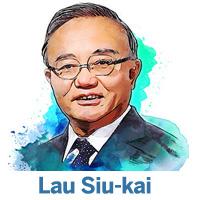
The author is a professor emeritus of sociology, the Chinese University of Hong Kong, and a consultant for the Chinese Association of Hong Kong and Macao Studies.
The views do not necessarily reflect those of China Daily.
