

China’s efforts for peace, prosperity stand in stark contrast to US’ zero-sum-game geopolitics
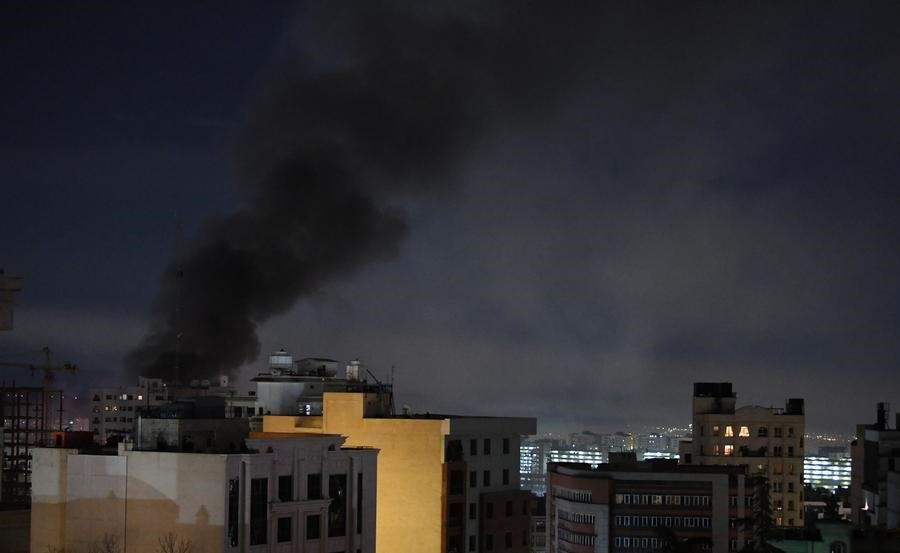
With the illegal and unprovoked war waged on Iran by the joint forces of the United States and Israel, West Asia is once again the explosive focal point of global power politics.
Two trajectories have been moving in opposite directions, shaping the current reality. One is destructive, based on zero-sum-game geopolitics and the law of the jungle. The other is constructive — built on cooperation, win-win mutual benefit, and the rule of law.
The first is spearheaded by the US and its allies to divide and conquer nations and regions, and set the world on the path to the unknown. The other, led by China, aims to unite, bringing prosperity to nations and whole continents, and moving toward a shared future for humanity. The first is known as “peace through strength”, the other as “peace through development”.
READ MORE: Chinese envoy urges US, Israel to cease military operations against Iran
Almost all the nations of this region have joined the Belt and Road Initiative since its launch in 2013. The pace of cooperation between China and the Middle East and North Africa has accelerated dramatically in proportion to, and in the opposite direction of, the geopolitical failures and disasters of the Anglo-American alliance — such as the invasions of Afghanistan in 2001 and Iraq in 2003, and the clandestine war against Syria in 2011.
China has become the top trade partner of all the Arab countries and Iran, and trade between China and these countries increased nearly tenfold between 2004 and 2024’s new high of $407 billion.
China is heavily involved in infrastructure projects in Arab countries, including ports, railways, roads, and energy. Recently, the focus has shifted to include industrialization and technology transfer.
A breakthrough came at the December 2022 summit between President Xi Jinping and leaders of the Arab world in Riyadh, Saudi Arabia. In his speech on Dec 9, 2022, President Xi outlined the concrete economic and financial measures China was offering to Arab countries.
The day before the summit, Xi and Saudi King Salman bin Abdulaziz Al Saud signed a comprehensive strategic partnership agreement. This partnership is symbiotic with the Saudi Vision 2030. Immediately, 30 memorandums of understanding were signed between Chinese and Saudi entities, with contracts worth $30 billion.
The deals included electric vehicle production, renewable energy, cloud computing, information technology, petrochemicals, and infrastructure development in Saudi Arabia.
In February 2023, Iran, which is not an Arab country, finalized a 25-year comprehensive strategic cooperation agreement with China during a state visit to Beijing by Iran’s then-president Ebrahim Raisi. Interestingly, a month later, China brokered the restoration of diplomatic relations between Iran and Saudi Arabia, which had been severed in 2016.
By the end of 2023, Iran, Saudi Arabia, the United Arab Emirates, Egypt, and Ethiopia were all invited to join BRICS, creating BRICS Plus. Saudi Arabia has not formally joined yet. These nations are also either full members or observers of the Shanghai Cooperation Organization, which is increasingly expanding from a solely security cooperation organization to also becoming an economic cooperation mechanism.
An ominous development came with Israeli Prime Minister Benjamin Netanyahu’s speech in the United Nations General Assembly on Sept 22, 2023, in which he presented a map of the “Middle East” with only Israel in the historical land of Palestine, and no Palestinian territory.
Netanyahu was emboldened by the announcement a week earlier of the US-backed India-Middle East-Europe Economic Corridor during the G20 Summit in India. It was obvious from the outset that this “initiative” had no economic substance but instead represented a major destabilizing geopolitical move to divide and conquer the region.
Less than a month after Netanyahu’s UN speech, which was intended to erase the Palestinian issue, Hamas launched its Oct 7, 2023, attack on Israel. After that, a new stage of horrific crimes committed by Israel against the people of Gaza began. That development led to the first attack on Iran in June 2025, and eventually to the current one.
ALSO READ: Ceasefire essential to avert global catastrophe
Iran’s position in the Eurasian and transcontinental transportation corridors is indispensable. Its prosperity, security, and stability as an ethnically diverse nation are crucial for the stability of Western Asia, Central Asia, the Indian subcontinent, and the Caucasus.
If Iran is destabilized and fragmented, it will have dire consequences for the whole of Eurasia and probably the world. It is, therefore, imperative that the nations of the world, especially wiser world powers, intervene in this hour to bring reason back to the international discourse.
Diplomacy must prevail, and peaceful solutions that respect the interests of all nations must be the central focus in accordance with the United Nations Charter and other conventions.
The Belt and Road Initiative is the first stop on the long journey to a shared future for humanity. The China-proposed Global Development Initiative, Global Security Initiative, Global Civilization Initiative, and Global Governance Initiative will follow.
The author is vice-chairman of the Belt and Road Institute in Sweden and a distinguished research fellow at the Guangdong Institute for International Strategies.
The views do not necessarily reflect those of China Daily.
