

BRUSSELS/OTTAWA/HELSINKI/VILNIUS – The European Parliament has delayed until next week a decision on whether to restart work on the EU-US trade deal, after pausing its approval process last week, in protest over US President Donald Trump's push to acquire Greenland and his tariff threats against European allies, according to a senior lawmaker on Monday.
Confirming that no decision was taken on Monday to resume ordinary EU-US legislative procedures, Bernd Lange, chair of the European Parliament's Committee on International Trade, said in a post on X that the Parliament's negotiating team will meet on Feb. 4 to reassess the situation.
On Jan 21, the European Parliament decided to put on hold approval of the trade deal between the EU and the US following US threats of tariffs linked to Greenland.
Tensions eased afterward when Washington announced that a "framework deal" had been reached on Greenland-related issues and that threatened tariffs on eight European countries would be suspended.
RELATED ARTICLES
- Trump drops Feb 1 tariff plan, cites Greenland deal framework
- US allies unite over Greenland
- New US strategy elevates Western Hemisphere, allies' burden-sharing
- Concerns about US armed seizure of Greenland ease, transatlantic rifts remain
Under the EU-US trade deal reached in July last year, the EU would eliminate tariffs on all US industrial products and introduce tariff-rate quotas for a wide range of US agri-food products entering the EU market. In return, Washington would set a 15-percent tariff ceiling on most EU goods exported to the US.
Canadian patrol vessel to Greenland
Canadian Foreign Minister Anita Anand said on Monday a Royal Canadian Navy patrol vessel will be on the scene when the federal government opens a new consulate in Greenland next week, local media reported.
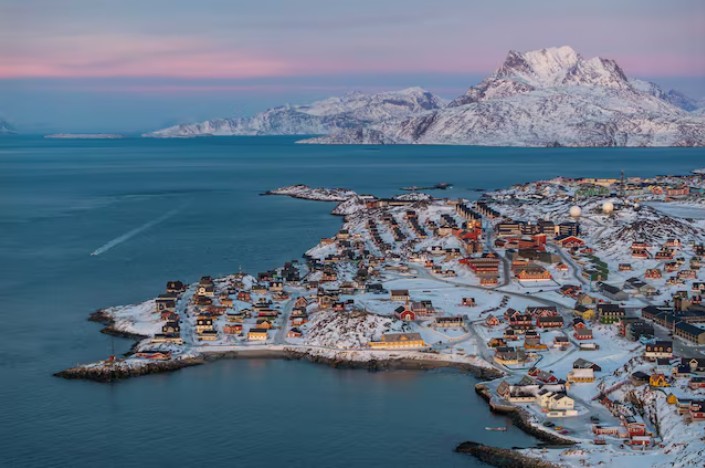
Anand spoke with The Canadian Press in advance of her trip to Greenland's capital Nuuk, where she will officially open the new consulate.
According to the report, Anand will be joined there by the Arctic patrol vessel as a symbol of Canada's growing collaboration with other Arctic countries.
‘European NATO’
Swedish Prime Minister Ulf Kristersson has emphasized the need to strengthen what he termed a "European NATO," arguing that European allies should assume greater responsibility for their own security, according to local media reports.
In an interview with Swedish Television late Sunday, Kristersson said the US had "acted in a way that has damaged mutual trust," adding that Europe must therefore "take control of our own situation and strengthen ourselves."
Stressing that this effort should be done through closer cooperation with European NATO partners, Kristersson said NATO is often associated primarily with the US, but European members constitute the backbone of security cooperation in Northern and wider Europe.
"The whole of our part of Europe is embedded in close cooperation within NATO. We must build our European NATO," he said.
There are "active discussions" with Britain and France about nuclear weapons capability, though he didn't give further details, he said, adding that He said Sweden is taking part "via NATO" in European discussions related to nuclear deterrence.
Greater defense responsibility
Lithuanian President Gitanas Nauseda has stressed that Europe must take greater responsibility for its own defense while underlining the transatlantic ties.
Nauseda made the remarks during a meeting with his Polish counterpart, Karol Nawrocki, in Vilnius on Sunday, the Baltic News Service reported on Monday.
Describing relations with the US as "a cornerstone of European security," Nauseda said that the transatlantic ties are "essential to maintaining credible deterrence and long-term security."
Speaking about support for Ukraine, Nauseda noted that Ukraine's ability to defend itself is a key factor in the security of the entire European continent, and therefore military, political, and financial assistance must be planned as long-term measures rather than short-term solutions.
