

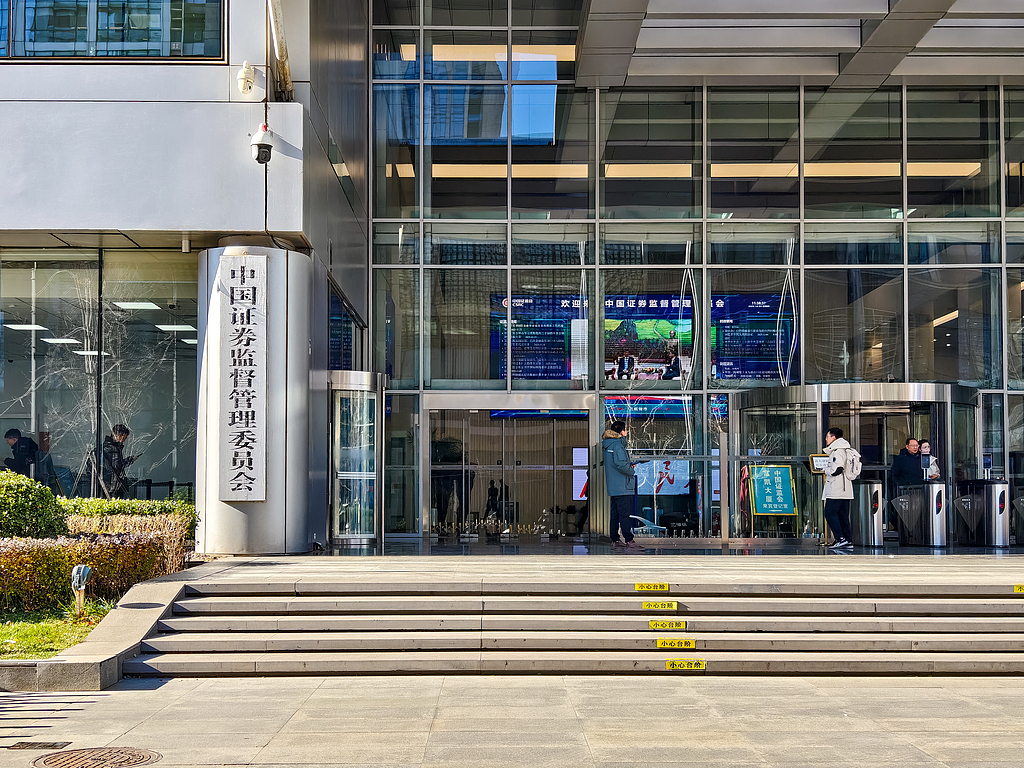
China will moderately relax leverage limits for high-performing securities firms, a key move that will accelerate the country's goal of building internationally competitive investment banks and advancing the high-quality development of its capital market, officials and experts said.
Wu Qing, chairman of the China Securities Regulatory Commission, the country's top securities regulator, said the commission will ease certain constraints on high-quality securities firms, including further optimizing risk-control indicators and moderately "expanding the room for (utilizing) capital and easing leverage limits to improve capital efficiency".
The move, analysts said, marks the commission's clearest signal yet that it will allow leading securities firms to take on more leverage to improve their functions as pivotal players in the capital market, showcasing a reinforced commitment to fostering steady, healthy development of the capital market in the 15th Five-Year Plan period (2026-30).
In a speech delivered at a conference of the Securities Association of China over the weekend, Wu said China aims to nurture a number of top-tier investment banks with "significant international influence" in the coming five years by promoting resource integration along with mergers and acquisitions.
Wu stressed that first-class investment banks are not the exclusive domain of large institutions. Smaller firms, he said, should focus on niche sectors, specific client groups and key regional markets to develop into specialized, high-quality boutique investment banks.
Differentiated supervision will be explored for small and medium-sized securities firms and foreign investment banks to promote their specialized development, while firms with compliance issues will face stricter oversight.
The A-share market responded positively to Wu's remarks, as an index gauging the performance of the securities sector rose 2.01 percent on Monday, while the benchmark Shanghai Composite Index went up 0.54 percent to close at 3924.08 points, according to market tracker Wind Info.
A report from China Securities noted that Wu's remarks, for the first time, clearly indicate the trend toward easing leverage limits for quality securities firms, a key move that will help improve market liquidity, increase brokerages' profitability and support their business growth in margin financing, derivatives and proprietary investment.
According to the report, the average leverage ratio of 43 Chinese listed brokers stood at 3.47 times (excluding client funds) as of end-September, with leading firms approaching five times — far below the more than 10 times typical leverage seen at global investment banks.
Liu Jipeng, a senior expert on capital markets and a professor at the Business School of China University of Political Science and Law, said investment banks will play a greater role in driving China's economic transformation, which play the leading force in the capital finance system that is based on equity investment and rooted in the capital market.
"The securities sector ... has broad prospects and great potential," the CSRC chairman said.
Wu called on securities firms to advance the application of artificial intelligence, big data and blockchain, adding that the commission will promote pilot mechanisms for innovation adoption in the securities industry and enrich scenarios for regulatory sandboxes.
Contact the writers at zhoulanxv@chinadaily.com.cn
