

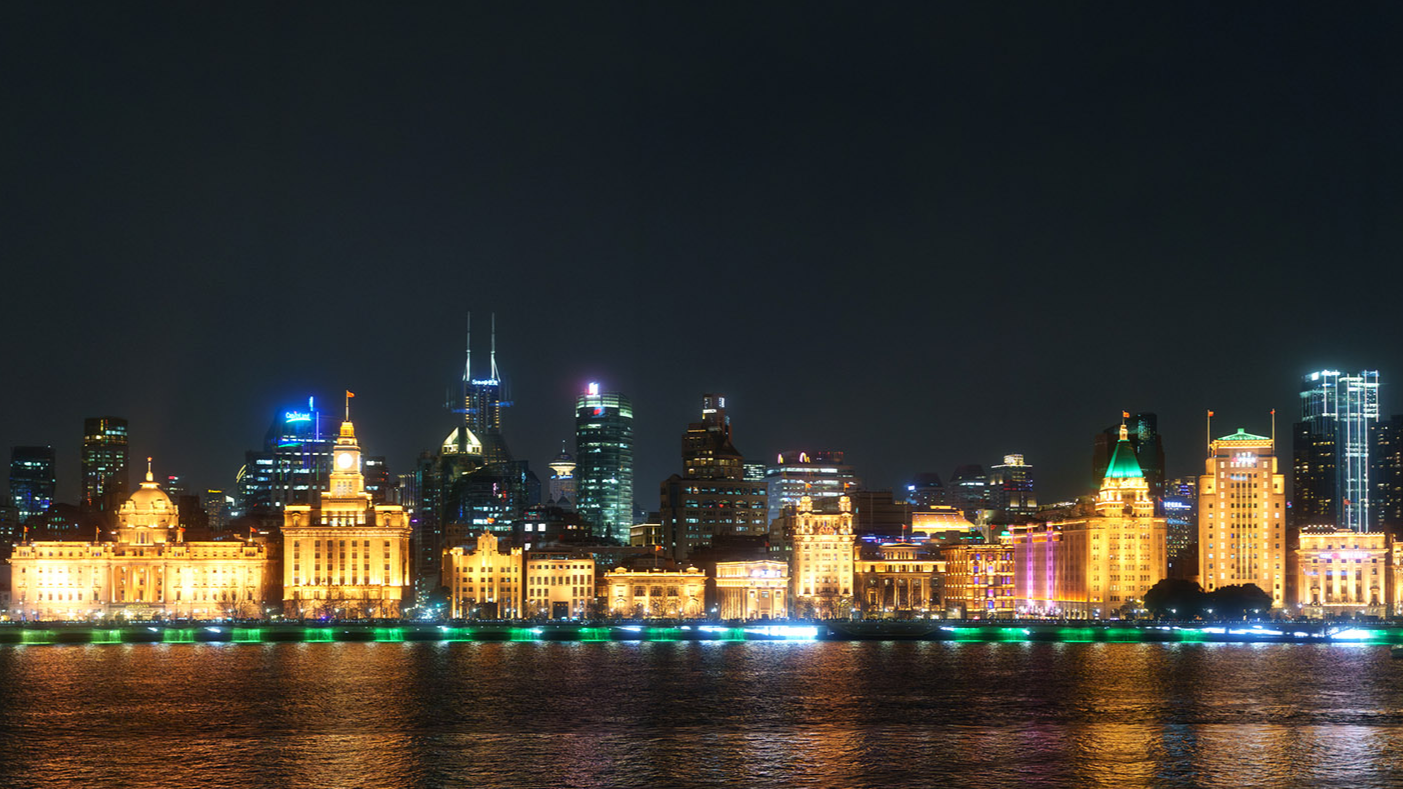
Shanghai ranks second among the world's leading maritime cities in the latest global ranking, moving up two places from the 2024 edition and trailing only Singapore, a rise that reflects the city's growing influence and capabilities in the maritime economy, industry experts said.
The report, formally titled The Leading Maritime Cities of the World 2026, benchmarks the world's leading maritime cities to identify those offering the strongest environments for maritime companies and professionals to connect, operate and grow. It is compiled by DNV, an international certification and classification body, and Menon Economics, a Norwegian consultancy specializing in economic analysis.
This year's top five maritime cities are Singapore, Shanghai, London, Rotterdam and Tokyo.
"Over the past decade, the top three positions have been dominated by Singapore and two European cities. The latest report underscored Shanghai's emergence as the first Asian city to break that pattern," said Li Zhiping, director of the shipping services research office at the Shanghai International Shipping Institute, which is affiliated with Shanghai Maritime University.
Shahrin Osman, business development director with DNV Maritime Advisory and co-author of the report, was quoted by the official WeChat account of the Shanghai municipal government as saying that Shanghai has followed a distinctive path in its maritime development.

According to Osman, Shanghai's advantage lies in combining its strong maritime industry with growing technological R&D capabilities. This gives the city strong influence across the entire maritime economy and helps explain its strong performance across many of the report's assessment metrics, Osman added.
Erik Jakobsen, partner and chairman of Menon Economics, said Shanghai's rise to second place in this year's ranking reflected the growing strength of its maritime economy in both industry and technology, according to the Shanghai municipal government's WeChat account.
The city has the world's largest container throughput, a leading liner network and strong industrial capacity. Shanghai's performance highlights the importance of closely combining technological R&D with large-scale industrial applications.
The world's leading maritime cities are international urban centers at the heart of economic clusters. They provide efficient services that support regional economic development while holding leading positions in international shipping.
Li said the Leading Maritime Cities of the World and the Xinhua-Baltic International Shipping Center Development Index are two major assessment systems that offer different perspectives on the global maritime industry.
The Xinhua-Baltic International Shipping Center Development Index evaluates 43 shipping hub cities worldwide based on port conditions, shipping services and the overall business environment. By contrast, the Leading Maritime Cities of the World report takes a supply-side perspective, examining whether maritime companies and executives would choose to locate their businesses, headquarters or R&D operations in a particular city, Li explained.
After holding third place among the world's international shipping centers for six consecutive years, Shanghai overtook London to rank second in the 2026 Xinhua-Baltic International Shipping Center Development Index published earlier in July, demonstrating the city's comprehensive capabilities as a global shipping center.
Now in its seventh edition, the biennial report on the world's leading maritime cities, initiated in 2012, has evolved from identifying where maritime activity is concentrated to assessing how well cities can build on their maritime industries and adapt to changes in the sector.
In the early stages of the research, more than 15,000 cities were assessed using objective maritime indicators, with 50 shortlisted as candidates for the final ranking.
The assessment then focused on five pillars: shipping; maritime finance and law; maritime technology; ports and logistics; and attractiveness and competitiveness. A total of 48 objective and subjective indicators were used to benchmark and assess the candidate cities.
Contact the writer at wang_ying@chinadaily.com.cn
