

When Laurie Pearcey first visited Shenzhen 20 years ago as part of an Australian youth delegation, the city looked nothing like the high-tech metropolis it is today. Yet the feeling that it was a city on the move was palpable, he said.
"Even then Shenzhen very much believed in the importance of openness and attracting people from all over the world."
Pearcey met his wife, a Chinese woman, in Sydney when she got her first job after studying for a master's degree there. And now they have moved back to China and settled in the Guangdong-Hong Kong-Macao Greater Bay Area. Pearcey is an adviser to the president and master of Shaw College at the Chinese University of Hong Kong, Shenzhen.
"I was very lucky because the educational ties between the two countries ultimately seeded the love of my life, which led to the birth of two beautiful children who will always be the product of the Australia-China bilateral relationship," Pearcey said.
For him, education has always served as a bridge connecting people. Years ago, while working at the University of New South Wales in Sydney, or UNSW, he met the university's first PhD student from the Chinese mainland, who arrived in the late 1970s to study electrical engineering.
"He went back to China and utilized the technology that he had developed as part of his doctoral thesis to build a huge power infrastructure supplier," Pearcey said, highlighting the lasting contribution the researcher's work has made to the industry.
Pearcey saw that same academic bridge evolve into industrial collaboration. Ten years ago, a researcher at the UNSW worked with a company in the Longhua district of Shenzhen on renewable energy storage and battery technologies as part of the UNSW Torch Innovation Precinct. It was jointly built by the university and the Beijing-based Torch High Technology Industry Development Center under the guidance of China's national tech and industrial authorities.
"I was so proud that it formed one of the landmark agreements in the first phase of the broader Torch partnership," Pearcey said.
During the orientation week at the Chinese University of Hong Kong, Shenzhen, recently, Pearcey welcomed a new Australian student who had come to the city to study China's supply chain, manufacturing and innovation.
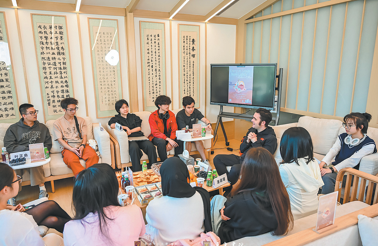
"He was just so amazed by the size, the scale, the ambition and also the quality of everything that he saw," Pearcey said.
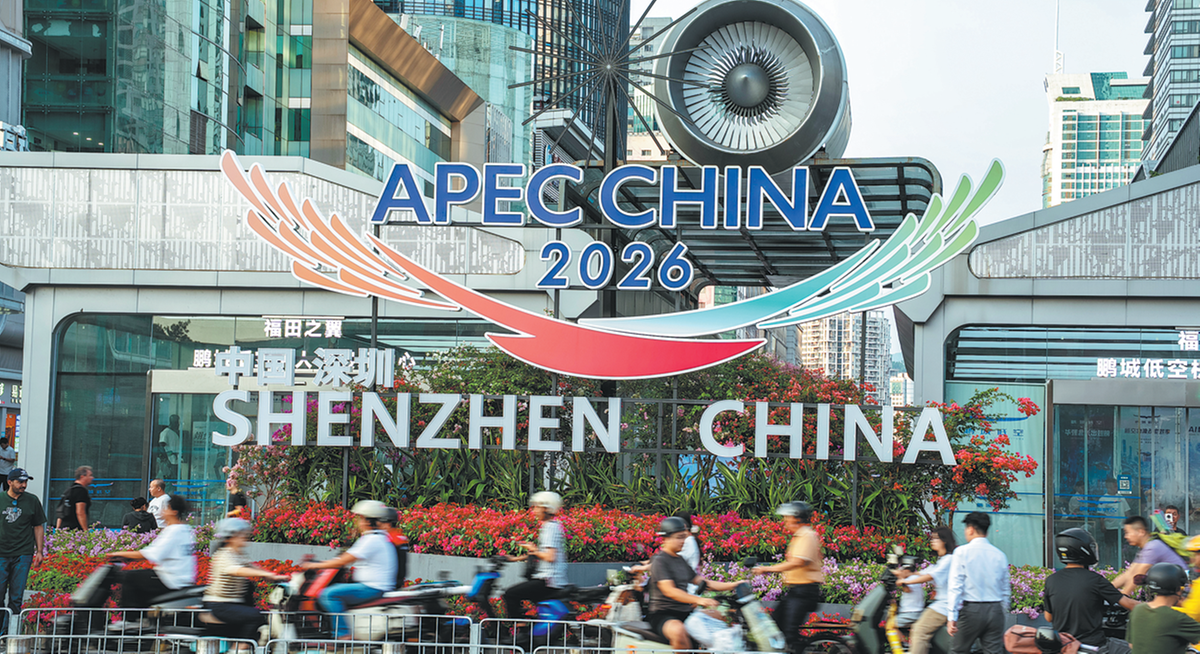
With Shenzhen hosting the APEC Economic Leaders' Meeting this year, Pearcey feels the city's pulse of innovation and human connection beating even stronger.
It warmly reminds him of Australia — APEC's birthplace, which hosted its first ministerial meeting. Founded in Canberra in 1989 with 12 member economies, the Asia-Pacific Economic Cooperation has now grown into a 21-member regional cooperation platform driving growth, trade and investment across the Pacific Rim. Sydney hosted the event in 2007.
This time, "the eyes of the world will be on Shenzhen", he said. "I think it's going to mean more and more people are interested in pursuing collaborations."
Thousands of kilometers away, the innovation is making its way quietly into the hands of Australian creators, bringing more people together.
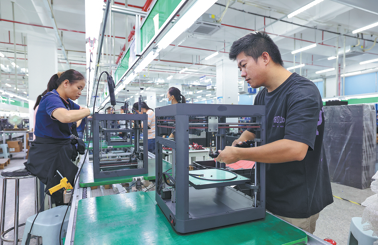
Zhong Xiaoshuang, head of integrated marketing in the Asia-Pacific region at xTool, a global desktop smart manufacturing brand in Shenzhen, said Australia's strong do-it-yourself culture and thriving small and medium-sized business ecosystem make it a natural fit.
One Australian creator, in particular, left a deep impression on Zhong.
"When this woman, named Gabby, was planning her wedding, local suppliers could not bring her ideas to life," Zhong said. "She bought an xTool machine and crafted place cards, menus and coasters for 250 guests.
"After that she used the machine to launch a customized wedding business and finally found the career direction she had been searching for."
To support similar creators across the country, xTool established 52 xTool Squad experience booths, offering hands-on training and local support.
It also worked with Frank Green, an Australian drinkware company, installing machines in six retail stores so customers can personalize their bottles in real time.
Zhong said xTool expects to expand further into Asia-Pacific markets, particularly by leveraging the opportunities presented by Shenzhen hosting the meeting.

Expanding role
The collaboration goes far beyond this. Enterprise drones made by the company DJI in Shenzhen have played a growing role in supporting Australian industries and public safety.
"Endeavour Energy is a power distribution company operating mainly in Greater Western Sydney and beyond," said Huang Yinan, DJI enterprise representative in Australia. "Since working with us, it has introduced drones for aerial inspections."
The drones fly along power corridors to detect insulator defects and overheating line hot spots, she said. "Drones are cost-effective, quiet and environmentally friendly."
Drones also work well in patrolling and lifesaving activities on Australian beaches, she said.
"We work with Surf Life Saving Queensland to use drones to monitor shark activity. Combining drones and AI technologies helps lifesavers identify risks earlier, alert beachgoers in advance and respond to emergencies more swiftly."
Patrick Mayoh, CEO of the Australia China Business Council in New South Wales, visited DJI and other technology companies during a trip to Shenzhen last December while attending the NSW-Guangdong Joint Economic Meeting in Guangzhou.
"I was impressed not only by the advanced manufacturing technology, but by the significant capital these companies are deploying in R&D to be at the top of their game."
Mayoh also posted videos of his visit on social media platform Xiaohongshu, or RedNote.
"One of them went viral … Australians who had not been to China told me it was exciting to see such forward-thinking companies."
In late March, with the support of the Australia China Business Council, the China (Shenzhen)-Australia (Sydney) Economic and Trade Cooperation Conference was held in Sydney, attracting a 20-strong Shenzhen business delegation.
"Energy was at the center of the conference, renewables in particular," said Rhys Roberts, national president and chairman of the Australia China Business Council. "Australia has the resources, and Shenzhen has the manufacturing scale. That's the natural basis for partnership.
"Conferences like this matter because trade still happens between people. When a city sends a delegation of that caliber it tells Australian business the opportunity is serious."
Chen Hong, director of the Australian Studies Center at East China Normal University, said exchanges between Shenzhen and Sydney exemplify the broader, resilient ties between the two countries.
Similar qualities
"The two cities are similar in their openness. Educational, academic and cultural exchanges have built trust and mutual understanding, which paves the way for economic and trade cooperation."
By the end of last year, 618 Australian-invested companies had set up shop in Shenzhen, and Shenzhen firms had established 66 direct investment entities in Australia, according to the Commerce Bureau of Shenzhen Municipality.
"APEC matters to Australian business because it does two things at once," Roberts said. "It puts the case for open trade back at the center of the conversation at a time when a good deal of the world is moving the other way, and it brings the decision-makers into one city for a week."
The APEC meeting will provide new impetus for regional cooperation. Its establishment reflects the historical choice of the Asia-Pacific region to achieve common development through open cooperation, Chen said.
The theme set for APEC 2026 is "Building an Asia-Pacific Community to Prosper Together".
"Shenzhen hosting the APEC meeting will further demonstrate China's firm stance in promoting regional economic cooperation and open development," Chen said.
Liu Jianqiao in Beijing contributed to this story.
Contact the writers at wangxiangyan@chinadaily.com.cn
