

China playing important role as technology advances globally
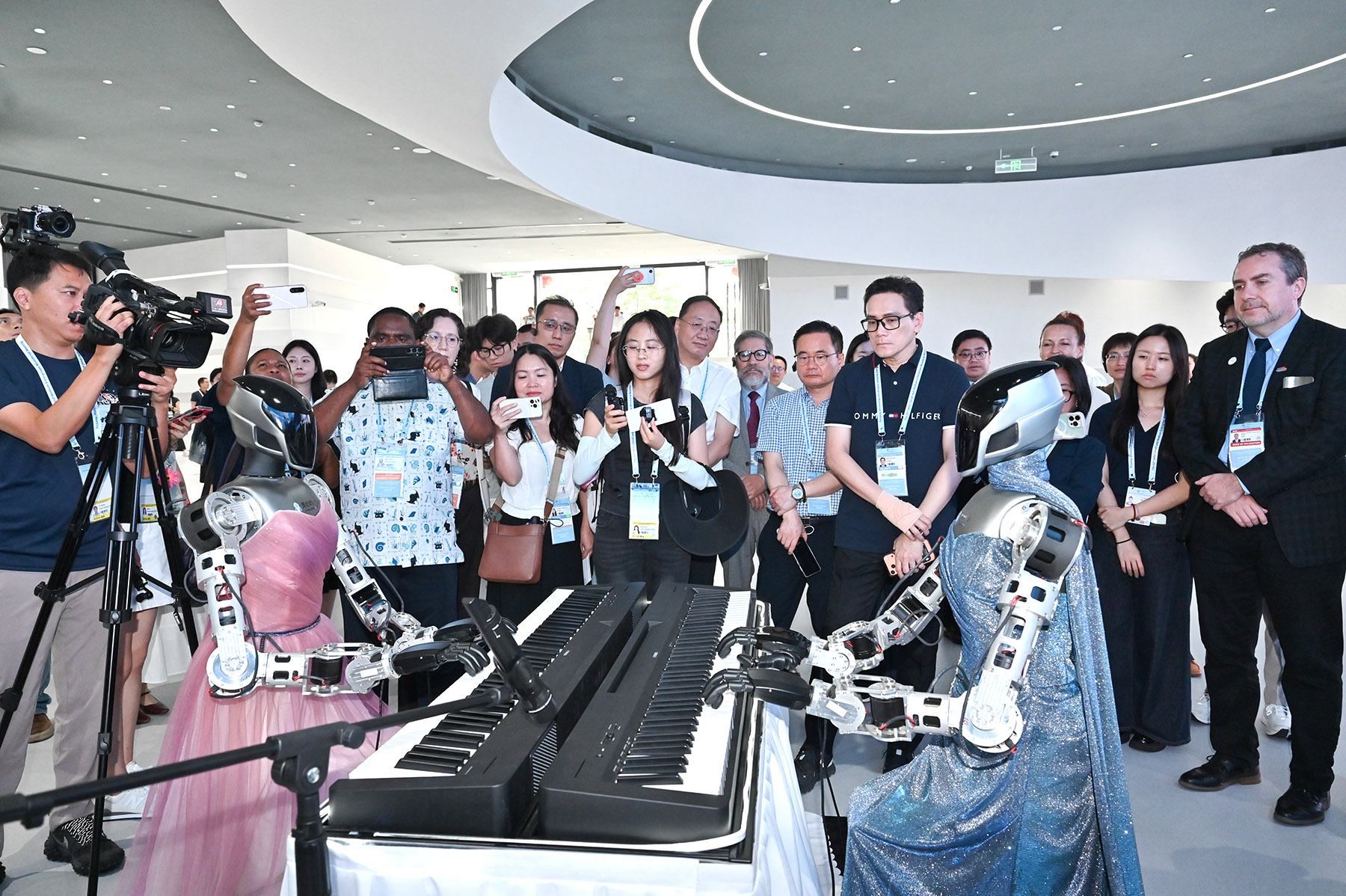
China's open-source artificial intelligence models and its proven ability to rapidly deploy the technology across the real economy can help APEC economies narrow the AI digital divide and accelerate adoption on the ground, industry leaders and experts say.
Collaboration on AI has emerged as one of the most substantive and closely watched priorities on this year's Asia-Pacific Economic Cooperation innovation agenda.
What remains unresolved is whether paper commitments can translate into operational capability for economies that lack computing power, governance frameworks and the local talent to run what they import. Samantha Zhu, chairwoman of Accenture Greater China, said the APEC region is emerging as a key player in the AI ecosystem and one of the world's leading innovation markets.
READ MORE: APEC reporters tour Shenzhen tech showcases
However, challenges persist. For example, APEC economies span the full spectrum of AI readiness, and hardware delivered to a developing economy without the capacity to maintain it is a photo opportunity, not a digital divide solution, experts said.
That is where China's particular configuration becomes relevant. China ranks first worldwide in downloads of open-source large language models, underscoring its edge in generative AI innovation, according to China's Ministry of Industry and Information Technology.
However, open-source access alone does not close a divide. What matters is whether models can be put to productive use. On that measure, China's domestic experience offers a template.
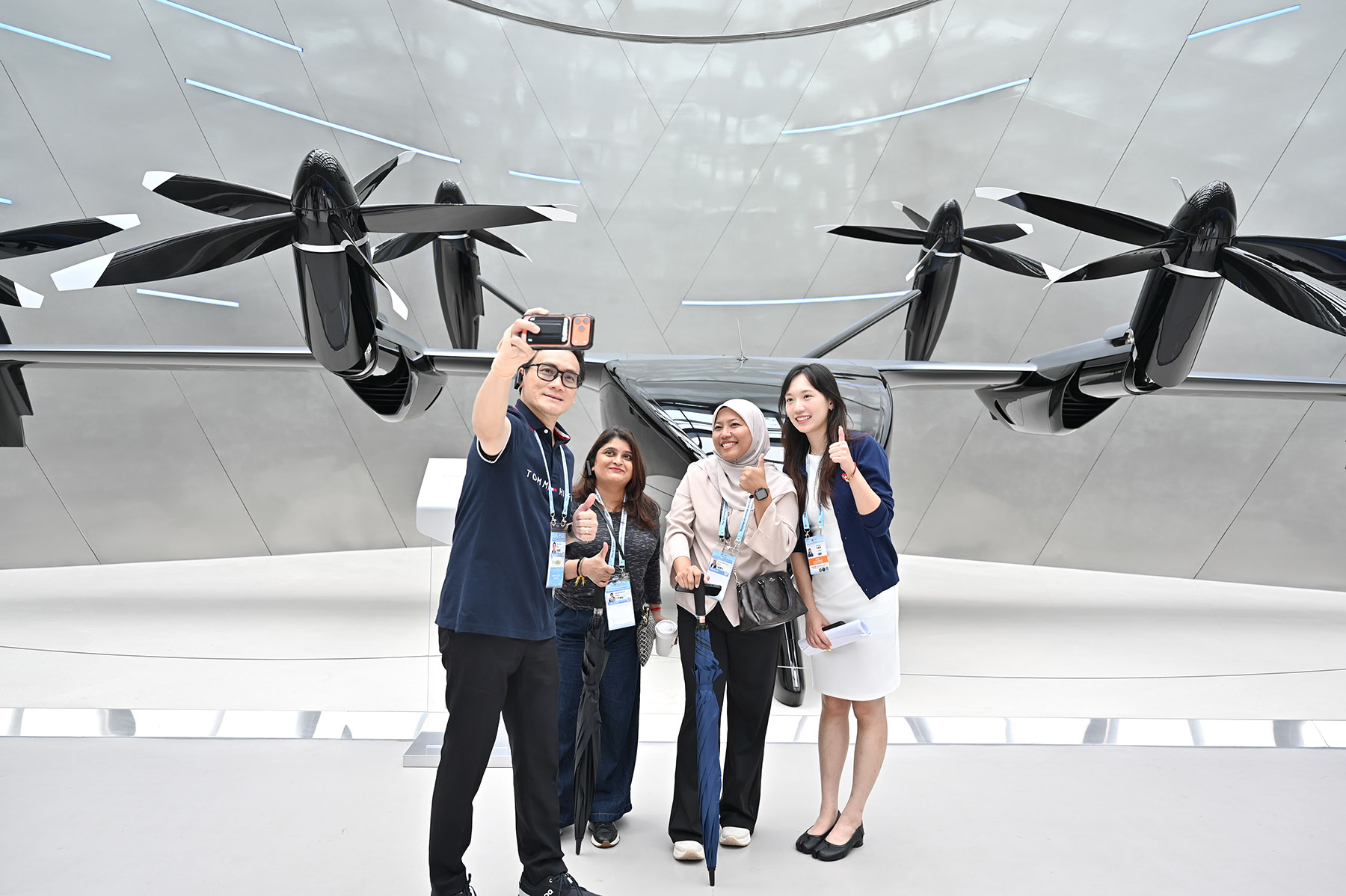
Zhu of Accenture said: "Our research shows that AI adoption is advancing quickly in China, with 88 percent of Chinese enterprises having moved beyond the pilot stage. Enterprises have also made significant progress in using AI to transform customer experience, digital twins, R&D and data governance."
China is emerging as a critical testing ground for the global development of AI, with robotics, intelligent vehicles and industrial scenarios converging at an accelerated pace, she said.
The value, Zhu said, comes from treating AI as a strategic business transformation priority rather than a technology initiative — investing in talent and operating models, not just tools.
That deployment capability is now moving outward. Jeff Shi, president of the Chinese AI company SenseTime's Asia-Pacific business, described a shift from exporting standalone software to offering industry-specific solutions and digital infrastructure that draw on China's full AI stack — data centers, token plans, governance frameworks and talent development. SenseTime serves more than 430 companies in the Asia-Pacific alone.
"Overseas clients now come to China to find Chinese technology, Chinese applications and Chinese opportunities," said Shi, pointing to a sharp rise in international visitors to the company's Shanghai headquarters in recent years.
For example, a 39-member technology delegation, led by Hong Seok-Hyun, chairman and chief executive of JoongAng Group, the largest media group in South Korea, visited SenseTime's headquarters in July 2025.
The delegation's visit focused on understanding SenseTime's advances in visual AI and multimodal large language models, exploring significant potential for bilateral technological collaboration.

Hong emphasized the inseparable link between AI and China. "You cannot discuss AI without mentioning China, and you cannot discuss China without mentioning AI."
Liu Qingfeng, chief executive of the Chinese tech company iFlytek, offered a concrete example of what deployment looks like in real-world applications.
The company's multilingual AI transparent screens now operate at two big shopping destinations in Bangkok, and its GuideX digital human at the Thai capital's Don Mueang International Airport serves travelers in more than 30 languages. "iFlytek counts 600,000 overseas developers across 220 countries and regions, and more than half of the 29 countries that signed the agreement establishing the World Artificial Intelligence Cooperation Organization in Shanghai on July 16 have AI cooperation with the company," Liu said.
The institutional scaffolding is being erected in parallel. The China Center for APEC Cooperation on Cross-border Data Flows, which has been established in Qianhai, Shenzhen, Guangdong province, is intended as a platform for policy research, regulatory alignment and industrial services.
Qianhai has already operationalized cross-border data verification for medical use and financial cases. Two major new cross-border data infrastructure projects have taken shape: the Shenzhen-Hong Kong cross-border data verification platform, which makes financial data flows trustworthy, and the Shenzhen-Hong Kong secure and convenient cross-border data channel, which gives medical data a "path to travel".
ALSO READ: GBA leads Rich List, fueled by AI growth
"The establishment of the China Center for APEC Cooperation on Cross-border Data Flows means that our exploration is expanding from the Shenzhen-Hong Kong bilateral model to a multilateral one," said Lin Zhifeng, general manager of the China (Qianhai) Internet Exchange.
The cross-border data verification platform model has already been replicated in Singapore, and the next step is to extend cooperation in more APEC economies, and from livelihood scenarios to broader industrial fields such as smart manufacturing, new energy and the battery industry, Lin said.
Zhang Shaogang, former vice-chairman of the China Council for the Promotion of International Trade, said Asia-Pacific's industrial division of labor historically relied on labor cost advantages, but AI-enabled flexible manufacturing and intelligent production are now shifting regional supply chains toward computing power, algorithms and scenarios.
"New trade chains — computing hardware, robotics, industrial large language models, intelligent solutions — are emerging, and they favor economies that can operationalize them, further cementing the Asia-Pacific's core standing in the global digital manufacturing system," Zhang said.
Contact the writers at masi@chinadaily.com.cn
