

Experts: China’s exports and imports growth to support global businesses
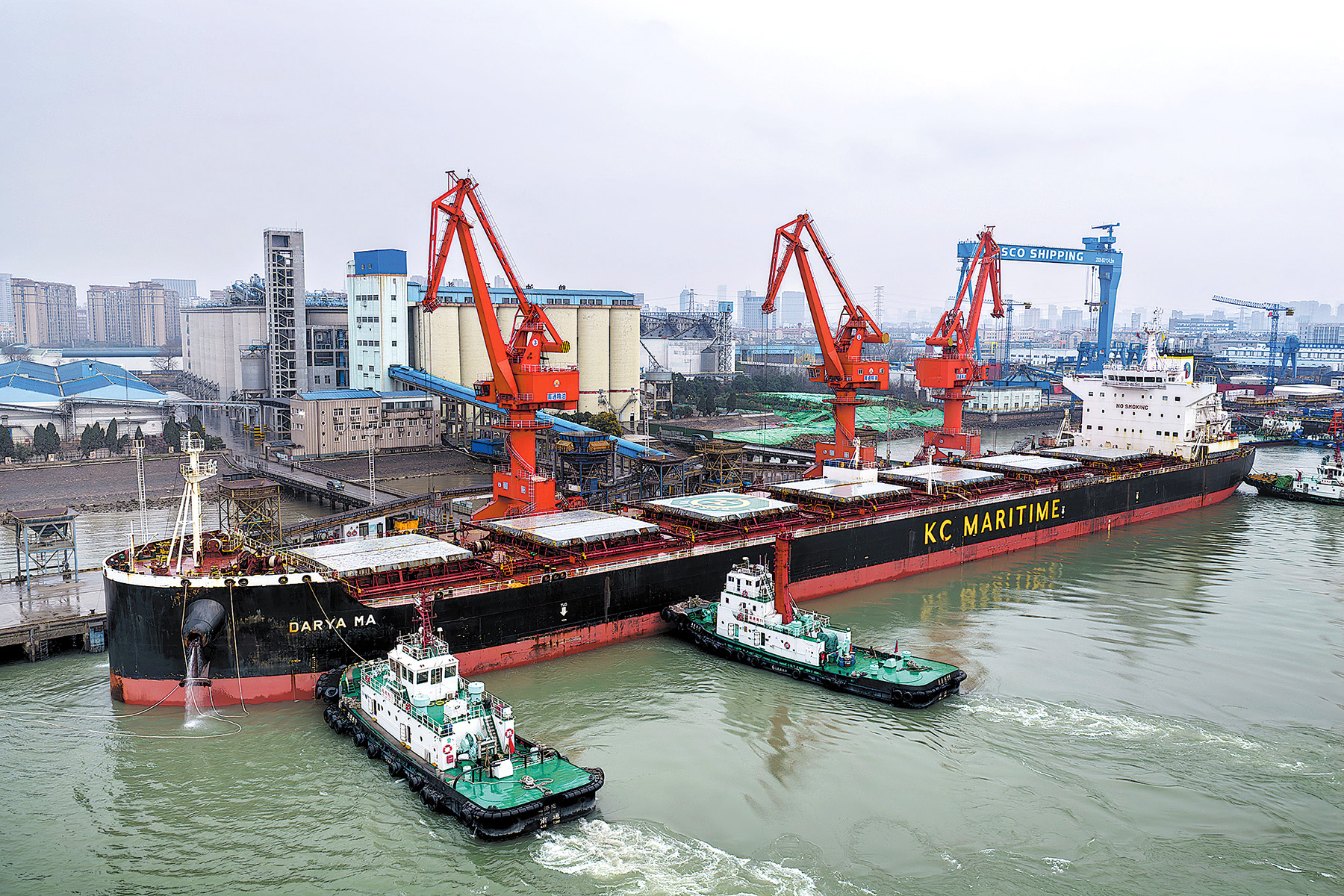
China’s brisk foreign trade growth, building on a steady climb up the export value chain and a massive domestic market that is opening wider to more imports, is delivering a crucial boost to economic growth in the final stretch of the year, experts and business executives said.
The country’s pursuit of more balanced foreign trade promises greater opportunities for global businesses to share its growth and innovation, while reinforcing China’s role as an anchor of stability for the world economy, they added.
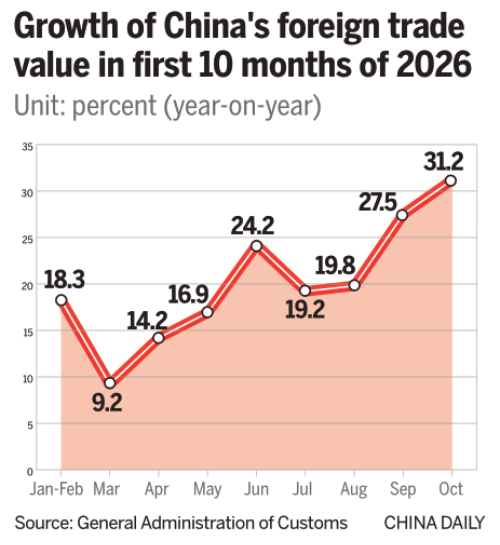
Their comments came as the General Administration of Customs said on Nov 10 that the total value of China’s goods imports and exports reached 44.81 trillion yuan ($6.7 trillion) in the first 10 months of 2026, up 20 percent year-on-year. In October alone, foreign trade grew 31.2 percent from a year earlier.
Exports helped fuel overall trade growth, with shipments rising 17.6 percent year-on-year to 25.99 trillion yuan over the period.
Behind much of China’s export strength this year is the global boom in artificial intelligence investment, which has provided a growing boost to shipments of chips and related products, said Feng Lin, executive director of research at Orient Golden Credit Rating International.
“A steadily improving export mix is also becoming an important driver of export growth,” she said, noting that years of manufacturing upgrades continue to bolster exports of high-tech goods, including computer and communications technology products.
That industrial progress has gradually shifted China’s manufacturing edge from low labor costs toward “a combination of strengths in supply chains, technological innovation and production efficiency”, said Luo Zhiheng, chief economist at Yuekai Securities.
Inside the workshops of Kyocera Document Technology (Dongguan) Co, an office equipment manufacturer in Guangdong province, a batch of newly developed high-end multifunction printers awaits shipment to Southeast Asia.
Yuan Xiji, a company executive, explained how the company climbs up the value chain. “We used to focus on basic assembly and processing, but have since become a research and development center,” Yuan said.
Luo, the economist, said the gains from exports also feed through to the wider economy, as stronger demand brings more orders to manufacturers, spurs production and helps underpin the recovery.
Foreign trade’s contribution to growth is reflected in data from the National Bureau of Statistics, which showed that net exports of goods and services added 1.2 percentage points to GDP growth in the first three quarters.
Exports also generate substantial investment and consumption, said Shan Hui, chief China economist at Goldman Sachs.
“If these indirect effects are taken into account, exports may have driven half or even more of China’s 4.6 percent GDP growth in the first three quarters,” Shan said.
Meanwhile, robust import growth is also emerging as a stabilizing force for China’s economy, as the rapid expansion of high-tech industries fuels demand in the domestic market.
According to Customs data, total goods imports grew 23.6 percent year-on-year to 18.82 trillion yuan in the first 10 months, with the value of integrated circuit imports surging 58 percent.
“We expect imports in US dollar terms to maintain strong year-on-year growth of around 30 percent in November,” said Feng of Orient Golden Credit Rating International.
“The Chinese market is an anchor of resilience for the global economy,” said Wang Xuekun, head of the Chinese Academy of International Trade and Economic Cooperation.
Beyond its vast market, China is also encouraging open innovation, with its technological advances providing fresh impetus for global development, Wang said.
Xiao Ping, the China and Asia regional hub manager for IEC LV Motors at ABB Group’s motion business, said, “China’s industrial capabilities and supply chain advantages are irreplaceable.”
Contact the writers at zhangchenxu@chinadaily.com.cn
