

At CIIE, executives highlight plans to spur investment and tap innovation ecosystem
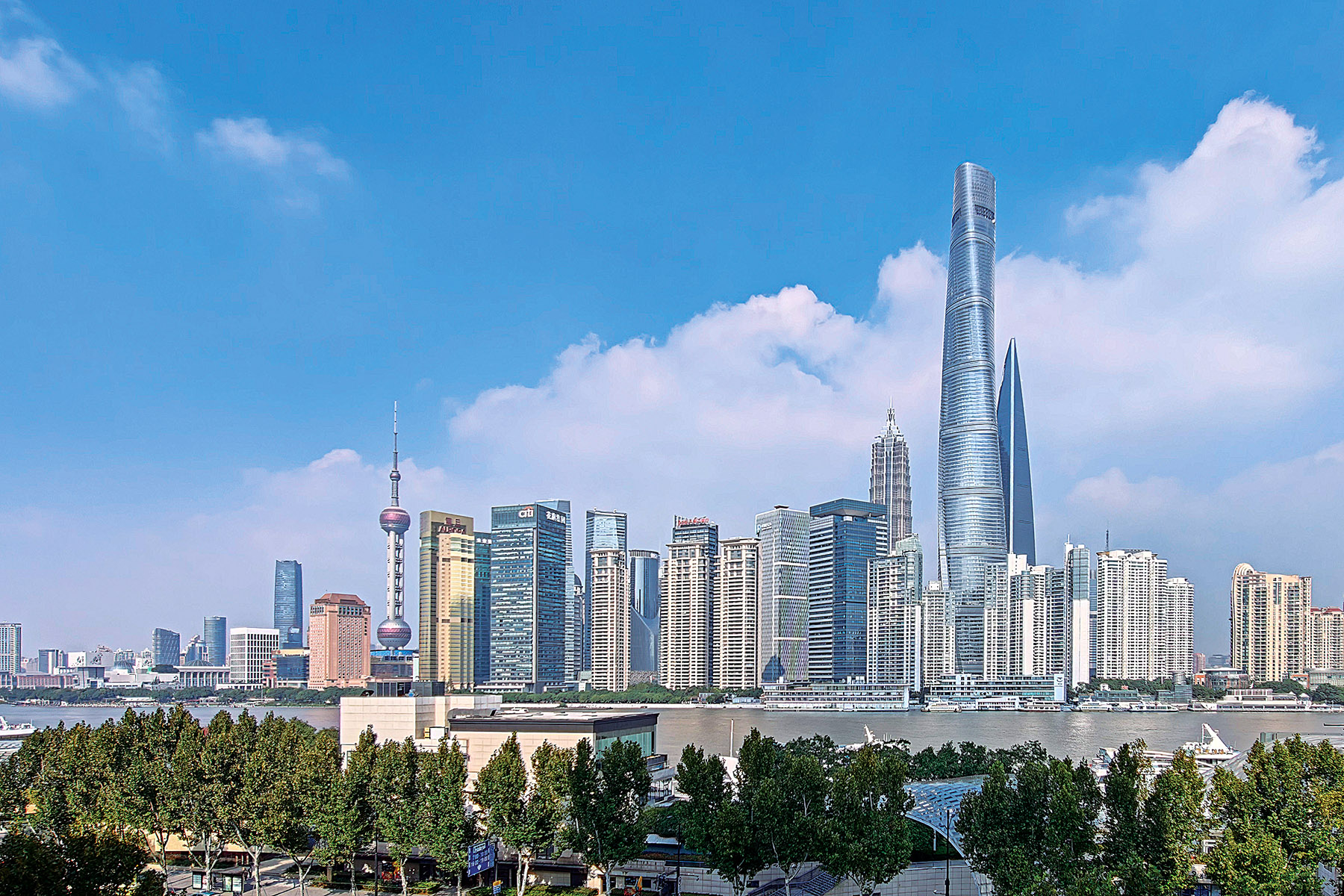
Multinational companies are confident of deepening their presence in Shanghai as the city further opens up to foreign investment and steps up its support for innovation, senior executives of MNCs said.
They made the comments on Nov 6, when a city promotion conference was held as part of the 9th China International Import Expo, or CIIE.
Shanghai will welcome more investment in the eight areas of integrated circuits, biomedicine, artificial intelligence (AI), next-generation electronic information, intelligent connected new energy vehicles, high-end equipment, advanced materials and modern services, the municipal government said on Nov 6.
Shanghai is the city with the highest concentration in China of various types of venture capital, with the amount invested in strategic and frontier fields overtaking all the other Chinese cities, Chen Jining, Shanghai’s Party secretary, said during the event.
The city is also seeing vibrant growth in entrepreneurship. More than 300 technology-based startups are founded every day. Over the past four years, both the number of Shanghai-based companies listed on the STAR Market at the Shanghai Stock Exchange and their total valuation have ranked first in the country.
Companies from around the world are welcome to integrate into Shanghai’s innovation ecosystem and create new engines for development, said Chen.
Foreign-invested enterprises are also accelerating their development in the city, Shanghai Mayor Zhu Zhongming said at the conference.
About 6,000 new foreign-invested enterprises are established in the city each year, with the total number of foreign companies exceeding 80,000.
The city is now home to the regional headquarters of 1,124 MNCs and 680 foreign-funded research centers.
Kwon Jongbae, chairman and CEO of Hyundai (China) Elevator Co Ltd, highlighted Shanghai as an ideal city for global manufacturing companies to do business thanks to its advantages of a world-class supply chain system, well-developed maritime logistics infrastructure, and strong government support for enterprises.
The company has now introduced an integrated R&D center in Shanghai to create synergy between its R&D facilities in South Korea and China. Products developed under this R&D system have been successfully delivered to the Cairo metro project in Egypt, involving the supply of 150 sets of metro equipment.
Over the next five years, Hyundai Elevator plans to increase its R&D investment in China by more than 30 percent, double the size of its R&D workforce, and reduce manufacturing costs by more than 5 percent, which will enable its sales revenue across Asia to double, he said.
Shanghai’s innovation momentum is growing strongly. Last year, Shanghai employed 254,000 college graduates. There are up to 1,630 national and municipal-level overseas senior professionals in the city. The number of high-tech enterprises in the city has topped 24,000.
While the total R&D expenditure accounts for 4.55 percent of Shanghai’s current GDP, this proportion will be further raised to over 5 percent by 2030. During the 15th Five-Year Plan (2026-30) period, the average annual growth rate of the three major pioneering industries — integrated circuits, biomedicine and artificial intelligence — will be above 10 percent.
Riding this tide is German pharmaceutical company Boehringer Ingelheim, which opened its new R&D center in Shanghai in October. By participating in eight editions of CIIE, the company has introduced about 50 innovative products.
According to Patrik Ziman, CFO of Boehringer Ingelheim Greater China, Shanghai has become a part of its global R&D map, and matches the importance of its European operations.
The company is attracting new talent to its Shanghai R&D team and expanding its manufacturing footprint in the city.
Sino Biopharmaceutical Limited (SBP Group), which serves as the pharmaceutical arm for Thailand’s Charoen Pokphand Group in China, has invested 1.8 billion yuan ($270 million) to build the global R&D center for Chia Tai Tianqing Pharmaceutical Group in Shanghai, which was officially launched in June this year.
Apart from collaborating with global industry leaders such as Boehringer Ingelheim, Sanofi and GSK, SBP Group has teamed up with local State-owned investment funds to jointly set up a 1-billion-yuan fund to target frontier areas such as AI drug discovery and novel antibodies.
“We wish to build innovation engines and an industrial ecosystem in Shanghai, so that growth momentum can be retained here,” said Eric Tse, chief executive officer of SBP Group.
