

Young people turn to Guizhou's old crafts for peace of mind, alternative lifestyles
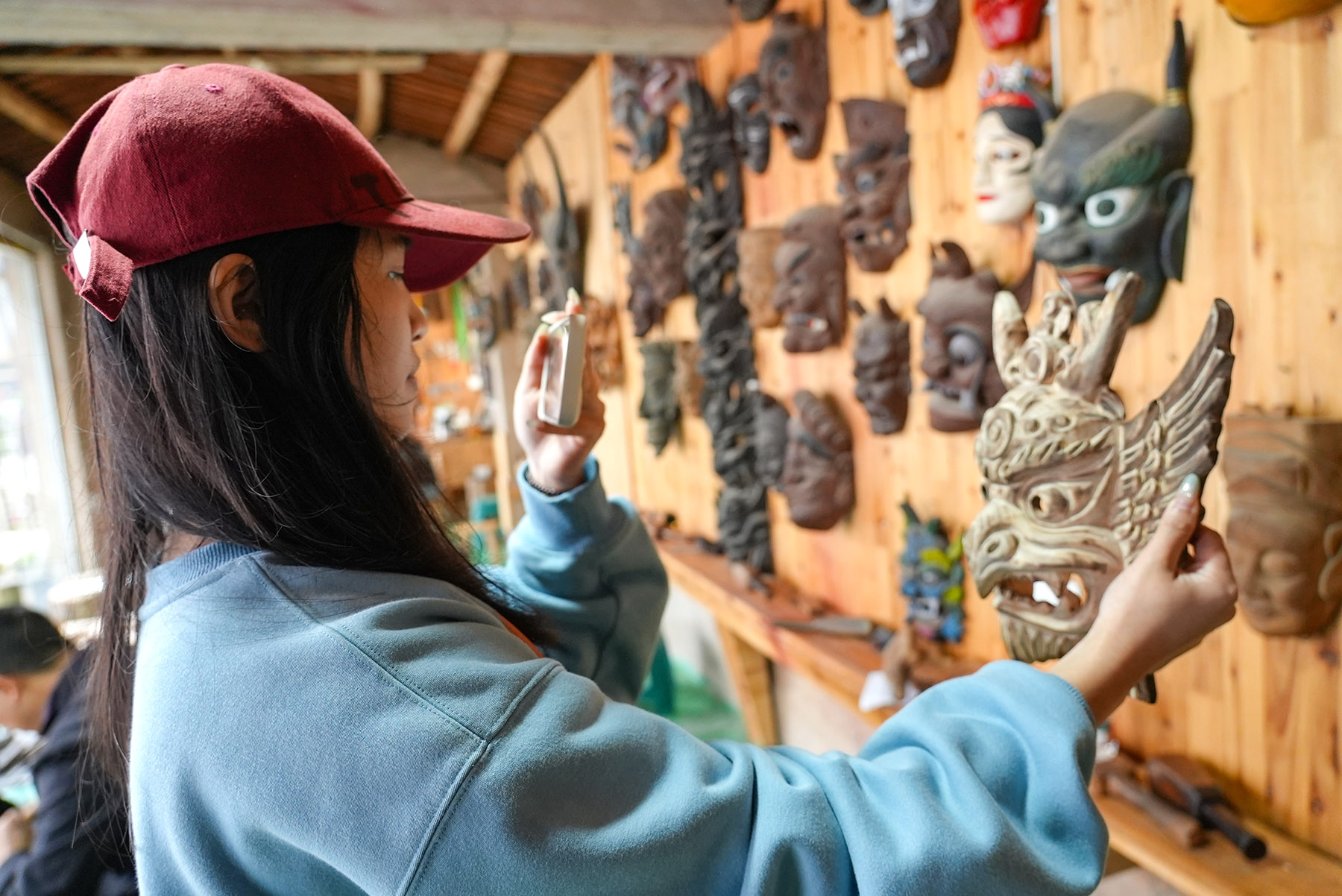
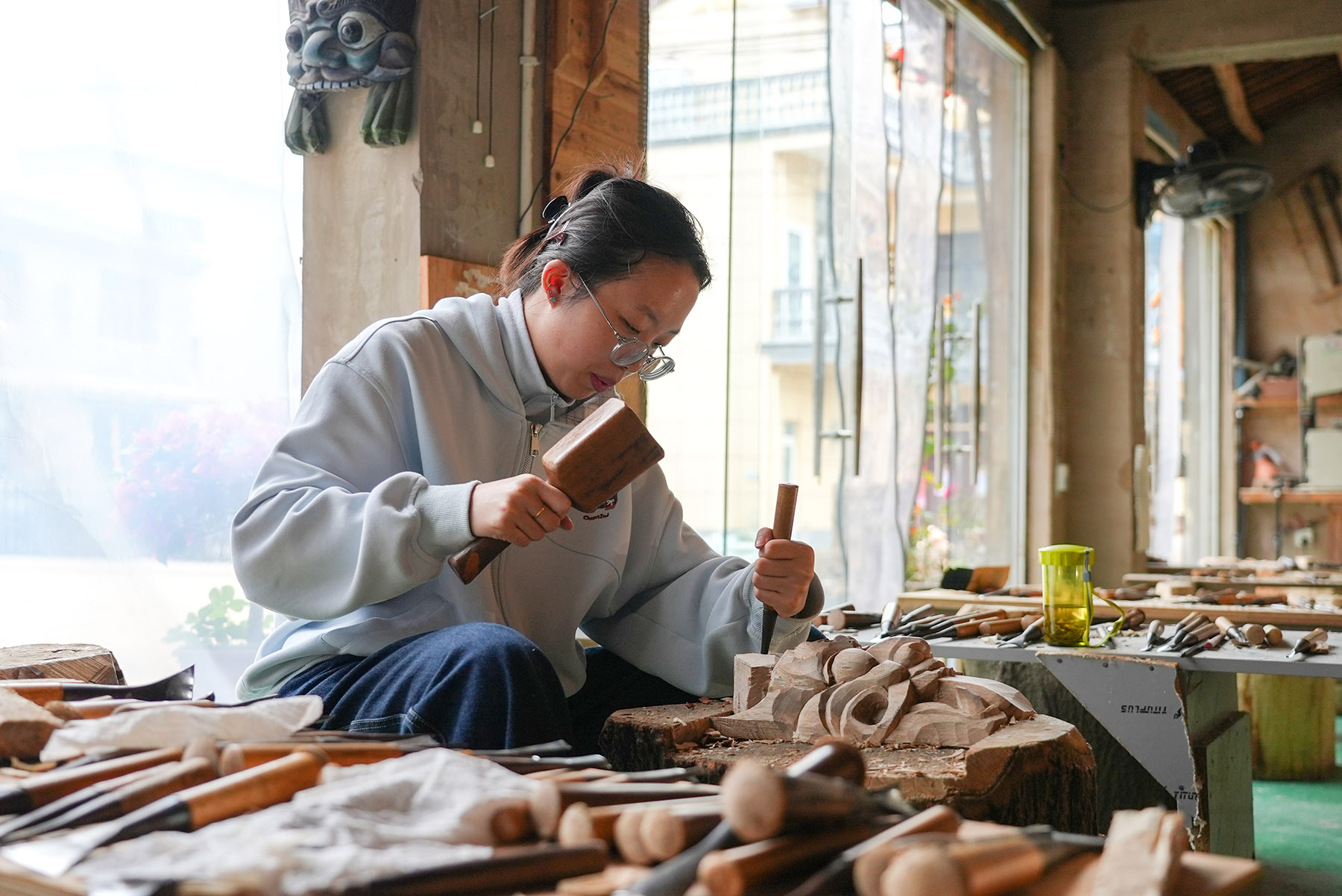
In Zhouguan village, Guizhou province, a young man from Beijing chipped away at a block of wood using a technique passed down through generations. Several days later, he had completed an unusual creation: a mask depicting Ganon, the final boss of the video game The Legend of Zelda, in the character's dragon form.
For Hu Yongwu, a mask carver in his 50s, showing visitors how to create images of video game characters from wood is nothing new.
"I have three more Zelda masks here. Want to take a look?" he said matter-of-factly.
An increasing number of young people are making their way to the village in Anshun, known for its wood carving, where they spend carefree days among piles of shavings and the thunk of chisels.
ALSO READ: Silk shines on the global stage
One visitor, Shi Jiayi, spent four days at Yalan workshop in the village, becoming so relaxed she got to know the neighborhood cats and dogs.
The 25-year-old, from Hangzhou, Zhejiang province, worked in livestream e-commerce before quitting her job and traveling alone to Yunnan and Guizhou provinces.
She chose to carve a mythical bird called boqi, which, according to legend, devours nightmares and unpleasant memories. "I don't sleep very well," she said with a laugh, pressing her chisel into the wood.
For a fee of around 400 yuan ($60), she spent four days making the mask under the guidance of a master craftsman.
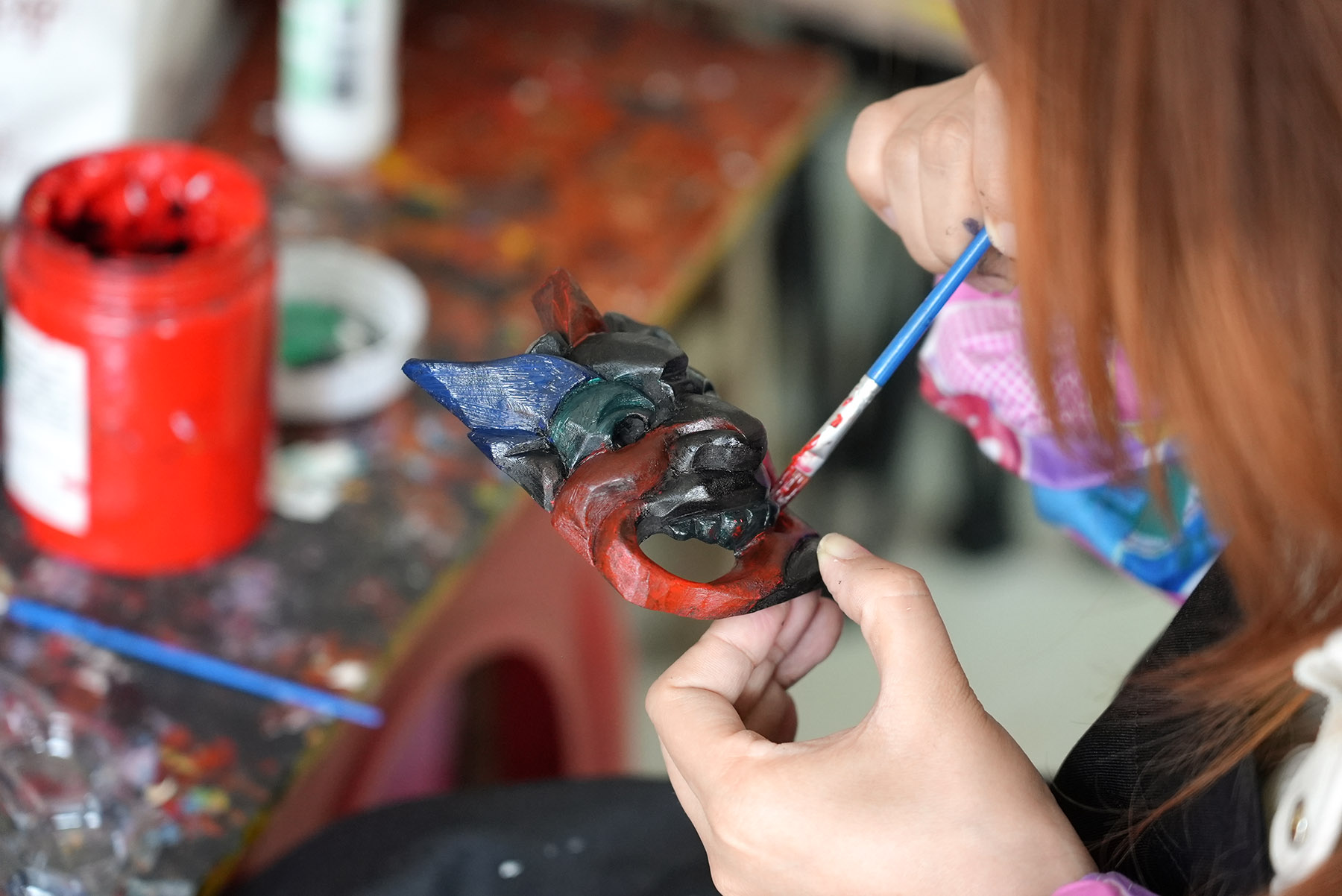
First, she carved the bird's basic outline, then worked with her mentor to refine the details. The wood was then heated over a fire to draw out the remaining moisture before the mask was painted. With her brushes, she carefully added emerald and other shades of green to the bird's feathers.
Life in the village is a far cry from city life, she said. "The good thing about staying here is that as soon as you open your eyes, you're carving wood," she said.
In her livestream sales job, she had to keep up with a relentless work pace and a constant stream of information. During her time in the village, her daily routine was much simpler: pick up a chisel, study the grain of the wood and gradually refine the piece in front of her.
Spending long stretches focused on a single object gave her a sense of immersion that she had not experienced in a long time.
After finishing her work, she posted a photo on her WeChat Moments feed, accompanied by a single line: "I've raised a mythical beast that eats nightmares."
Break with tradition
The changes young visitors have brought to Hu's workshop are immediately apparent. Many of their designs have little in common with the traditional subjects he usually carves.
"Look at this design," he said, pointing to a drawing on the wall. "It's half Nuo mask and half Buddha face. Young people like this sort of thing. I don't really understand it."
Hu was introduced to the craft of mask carving by older relatives when he was 11. He has been carving for more than four decades, specializing in masks for Dixi Opera.
Dixi, a form of folk theater that originated in the Anshun area during the Ming Dynasty (1368-1644), is closely tied to the region's military history. Its performances typically recount stories of heroes defending their homeland.
In the past, the subjects Hu carved most often were figures such as Guan Yu and Xue Rengui, both celebrated military heroes.
Traditionally, the Dixi masks were made mainly for performances and rituals. Practical considerations took precedence, resulting in relatively flat features and restrained decoration. Hu built on these traditional designs, adding details such as ears and dragon motifs to give the masks greater depth and more elaborate decorations.
He also accepted custom orders for masks, carving designs based on drawings supplied by customers.
As an instructor, he has witnessed the imaginative side of his young students, with their mask designs including video game characters and mythical beasts.
During peak periods, such as the summer holidays, more than 70 students can pass through the workshop. His two sons pitch in as assistants, and the room is filled with the clatter of hammers and chisels at work.

Looming boom
The novice artisans in Zhouguan are part of a much wider boom in hands-on learning, especially in Guizhou where traditional crafts are still practiced in communities across the province.
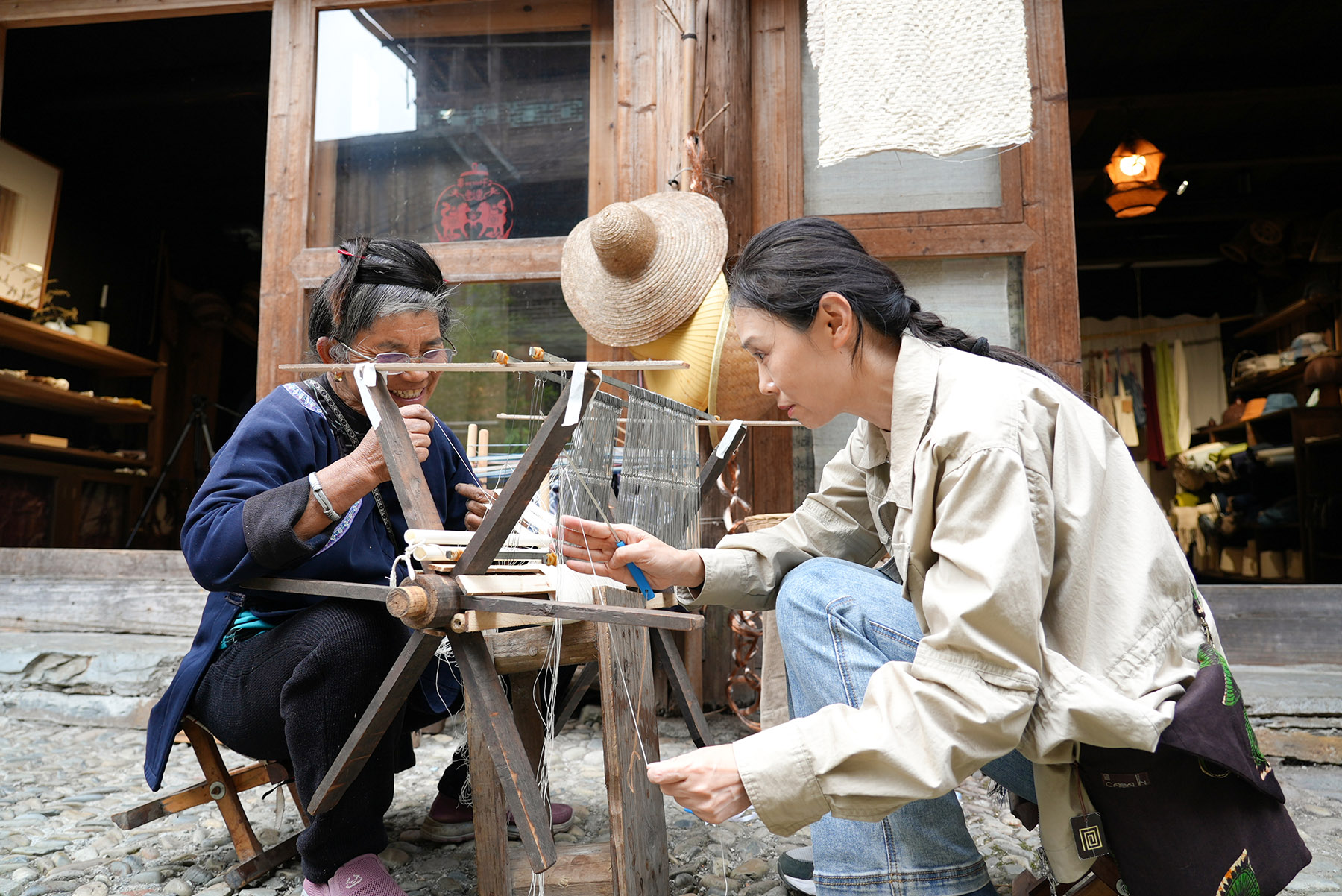
In late October, five students gathered around looms in Dali Dong village in Guizhou for a seven-day course in traditional Dong weaving that cost 5,000 yuan. The key principle for beginners is simple: "Weave slowly, live well."
The course was offered by Weave Wave, a handweaving studio founded in 2020 by Yi Shuai and her partner, who moved from Dali, Yunnan province, to the village to set up the operation.
The classes begin with an introduction to natural fibers including cotton, hemp and silk. Students then learn to spin thread and move on to warping, threading the loom, and weaving. Eventually, they can attempt designing their own fabric.
The third day of the course is crucial. Students are almost ready to start operating the looms, but before they begin, they have to learn how to arrange the warp, or lengthwise, threads.
In the studio's courtyard, one person holds a warping frame and leans back to keep the yarn taut. Another student stands in front of it, combing the threads one by one to make sure they are evenly spaced and held at a consistent tension.
"I started learning to spin thread from my mother when I was eight or nine," said Yang Manzu, 64, who teaches students techniques ranging from the basics to advanced skills.
"I've lost count of how many students I've taught, but I never imagined that people would come all the way to the village and pay to learn this," she said.
Zhu Lingling from Hubei is one of her students.
After graduating from college in 2024, Zhu didn't rush to find a permanent job. Instead, she traveled, tried different lifestyles, and learned new skills. She studied pottery in Jingdezhen, Jiangxi province, China's famed porcelain manufacturing "capital", and also turned her hand to coffee bean roasting and brewing.
She hopes to open a shop of her own one day and put her diverse skills to use. "Coffee is definitely going to be part of it," she said.
Yi said the arrival of students like Zhu reflected a different way of thinking about the balance between work and personal life.
She and her partner began offering weaving courses toward the end of 2023. The courses weren't the studio's main source of income. Most of its revenue came from producing custom handwoven fabrics for various brands.
"Taking a class doesn't mean giving up the career path I'm already on. It's about trying to find a new balance between work, personal interests and life," Yi said.
Monetary considerations
Not all the students, however, see weaving as just an escape from everyday routine.
Li Guangyao, 30, runs a coffee shop in Nanjing, Jiangsu province, and studied graphic design in college. He believes weaving and graphic design use different materials and tools, but share a similar aesthetic logic.
"Of course I enjoy the learning process. It makes me happy. But if I can make money from it when I return home, I'll be even happier," Li said with a smile.
During the course, he filled a notebook with information and sketches of what he had learned. The other students dubbed him the group's unofficial note taker.
Li also has a design studio, where handwoven fabrics can be incorporated into interior design projects by his team.
Weave Wave's Yi cautioned that combining personal interests with work doesn't mean escaping the demands of a real job.
"Freedom also means having to be more disciplined. It is fine to take a break occasionally when you are not feeling up to it. But if you want to do something well, you still have to stick with it over the long term," she said.
"Even when you move to the mountains, the worries don't disappear. But there are fewer outside distractions," she said with a laugh. "If my studio were in a big city, I'd probably find it hard to resist raising the course fees."
Ye Zhijie graduated from college earlier this year.
Before heading to Fuzhou in Fujian province to start a new job, she went to Zhouguan with her mother Zhi Limin. The two made the hourlong round trip by car and carved together whenever they could.
ALSO READ: A tradition worth dyeing for
Ye said she wanted to learn wood carving to mark the end of her student years.
"I'm about to move to another city for work. This is one of my last chances to enjoy myself before starting a new chapter. I wanted to do something meaningful," she said.
Zhi said she had noticed that many young people seemed to be quitting their jobs on impulse and heading for the mountains to spend money pursuing their interests.
For her generation, stability tended to come first. Even when people wanted to quit their job, they were expected to find another one before handing in their notice. Young people today, Zhi said, seemed more willing to make decisions based on what they want for themselves.
"We don't always understand it, but we respect their choices," she said.
The craft classes in Guizhou might not necessarily lead to new careers or business opportunities, but, at the very least, they are opening the door to a different life for many young people.
"By the end of the course, they can take home several meters of fabric. Whether the skill will prove useful in the end is something they can think about after they get back," Yi said.
Contact the writers at liuboqian@chinadaily.com.cn
