

Global roasters, domestic brands distill a vibrant coffee culture in Shanghai
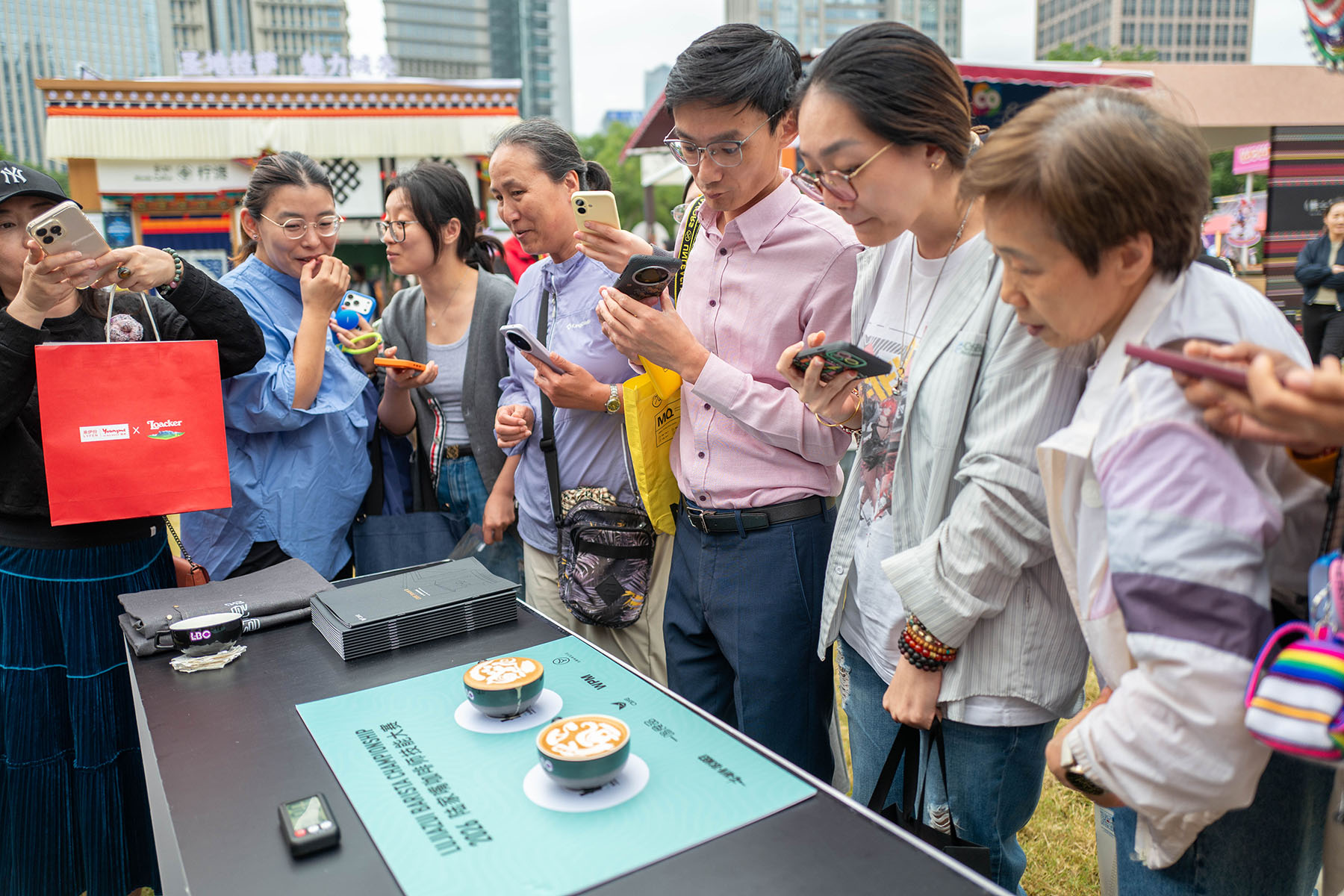
In Shanghai, a cup of coffee can trace its roots to myriad places and take countless forms.
The Mianyang, a signature brew made by Fu Dou Coffee in Guiyang, Guizhou province, is entirely dairy-free, yet it boasts a milky sweetness. Peruvian brand Shan-kay serves espresso tonic that tastes like craft soda. And coffee beans from Gongshan, a county in Nujiang Lisu autonomous prefecture, Yunnan province, are ground on a traditional stone mill, weaving folk heritage into modern cafe culture. Such creative concoctions offer a glimpse into the vibrancy of Shanghai's coffee scene.
The annual Lujiazui Coffee Festival, which was held for a week in October at the sprawling Lujiazui Central Green, encapsulates that momentum. Since its inception in 2016, attendance at the event has surged from 12,000 to 150,000, making it one of the world's top city coffee festivals. This year, it attracted more than 390 brands from five continents.
READ MORE: More than just beans and brewing
For overseas roasters, the biggest draw is the sheer scale of the festival. Kael Buttermann, founder of Shan-kay, noted that Shanghai may have more cafes than Peru.
Seeing clear potential in the market, Buttermann has registered his company in Shanghai and imported the first batch of beans. He plans to stay for two to three months to build a long-term local presence.
The growing scale of the festival mirrors the city's wider coffee market. A report released by Fudan University at this year's festival said the event itself is evolving "from a coffee consumption hub into a wellspring of coffee culture".
The commercial foundation beneath that shift is enormous. The 2026 China Urban Coffee Development Report, released in April by Shanghai Jiao Tong University, puts Shanghai's coffee shop count at 10,336 — the highest in any city in the world — with per capita annual consumption at 106.1 cups, nearly four times the national average.
What draws brands back to Shanghai is not the size of its coffee market alone, but the depth and diversity of that market.
There's something for everyone — whether one is looking for classic, signature, super-high-end or expensive coffee, said Rob Clarijs, founder of Dutch roaster A.M.O.C.and winner of the 2019 Coffee Masters London barista competition.
Beneath this diversity is a discerning, open consumer base shaped by China's millennia-old tea tradition.
Oskar Garberg, founder of Swedish roaster Standout Coffee, called it the market's most striking feature. "The big difference is that Chinese people have a long tradition of quality tea. They really have (the palate) and know what to look for. Clients here are precise in describing taste," he said.
Buttermann, from Peru, noted that Chinese people greatly value the effort and creativity coffee makers put into their drinks. "That's a thing we haven't seen anywhere else," he said.
Brew reinvented
The market's openness resonates with domestic brands as well.
Liang Jiachen, founder of Fu Dou Coffee, said the response in Shanghai has far exceeded his expectations. "People here are so willing to try fresh, creative coffees," he added.
As international flavors pour in, homegrown brands are reimagining coffee through an Eastern lens. Chayan, a tea chain from Changsha, Hunan province, introduced its coffee line at the festival, with drinks inspired by Chinese poetry and themed "I Dream of the East".
"Coffee came to China from the West. But once it did, we blended it with Eastern elements and turned it into something of our own," said Liu Qiaofang, a Chayan public affairs representative.
ALSO READ: Hearing-impaired baristas brew up expertise
The brand's pop-up store sold more than 1,000 cups each day at the festival, showing how deeply Shanghai's consumers have embraced this culturally rooted coffee.
Meanwhile, coffee from Gongshan offers a window into China's ethnic heritage. He Liyun, director of the culture and tourism bureau of Gongshan, brought stone-ground coffee and handwoven Dulong blankets to Shanghai. The blankets displayed at shops showcase the intangible cultural heritage of the Dulong ethnic group.
"Using a stone mill to grind coffee beans is a blend of traditional folk culture and modern food culture," the official said.
For many foreign visitors, a single cup of coffee becomes their first taste of local crafts and customs, opening the window to a broader view of Chinese cultural diversity, he added.
Li Junfeng, Chen Tianyi and Ma Tan contributed to this story.
Contact the writers at heqi@chinadaily.com.cn
