

French and Chinese team takes Mozart's last opera and transforms it into an elaborate, visual production that is sure to dazzle audiences, Chen Nan reports.
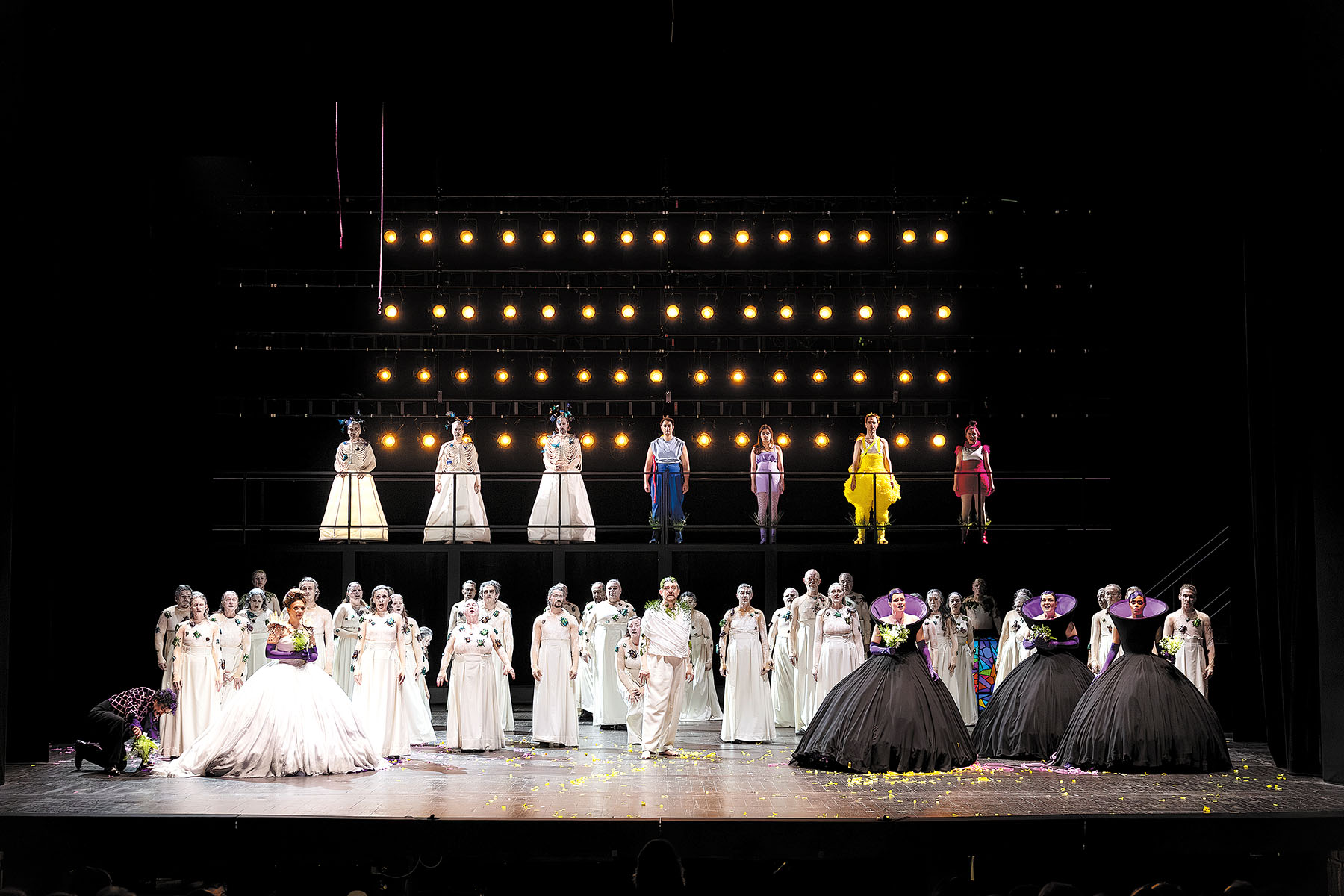
Lavish curtains, candlelit chandeliers, and a suspended, upside-down forest will set the scene for a new production of Mozart's The Magic Flute. The National Centre for the Performing Arts in Beijing is joining hands with France's Opera National de Bordeaux to bring the classic opera to Chinese audiences.
The production was announced in Beijing on Nov 2 and will run from Nov 24 to 29 at the NCPA. Following its premiere in Bordeaux in March, it forms part of the international celebrations marking the 270th anniversary of Mozart's birth.
READ MORE: International arts festival hits every note
Led by French director Julien Duval, the production brings together Chinese and French artists in a collaboration spanning stage design, costuming, lighting, and choreography. The NCPA's opera cast, chorus and orchestra will perform alongside an international and Chinese ensemble of singers, with NCPA music director Lyu Jia conducting.
"Written more than two centuries ago, The Magic Flute remains a work in which spectacle and entertainment coexist with questions of love, trust, wisdom, and humanity," notes Lyu. "The new production seeks to bring these themes to life through a combination of Mozart's enduring music and a contemporary theatrical imagination."
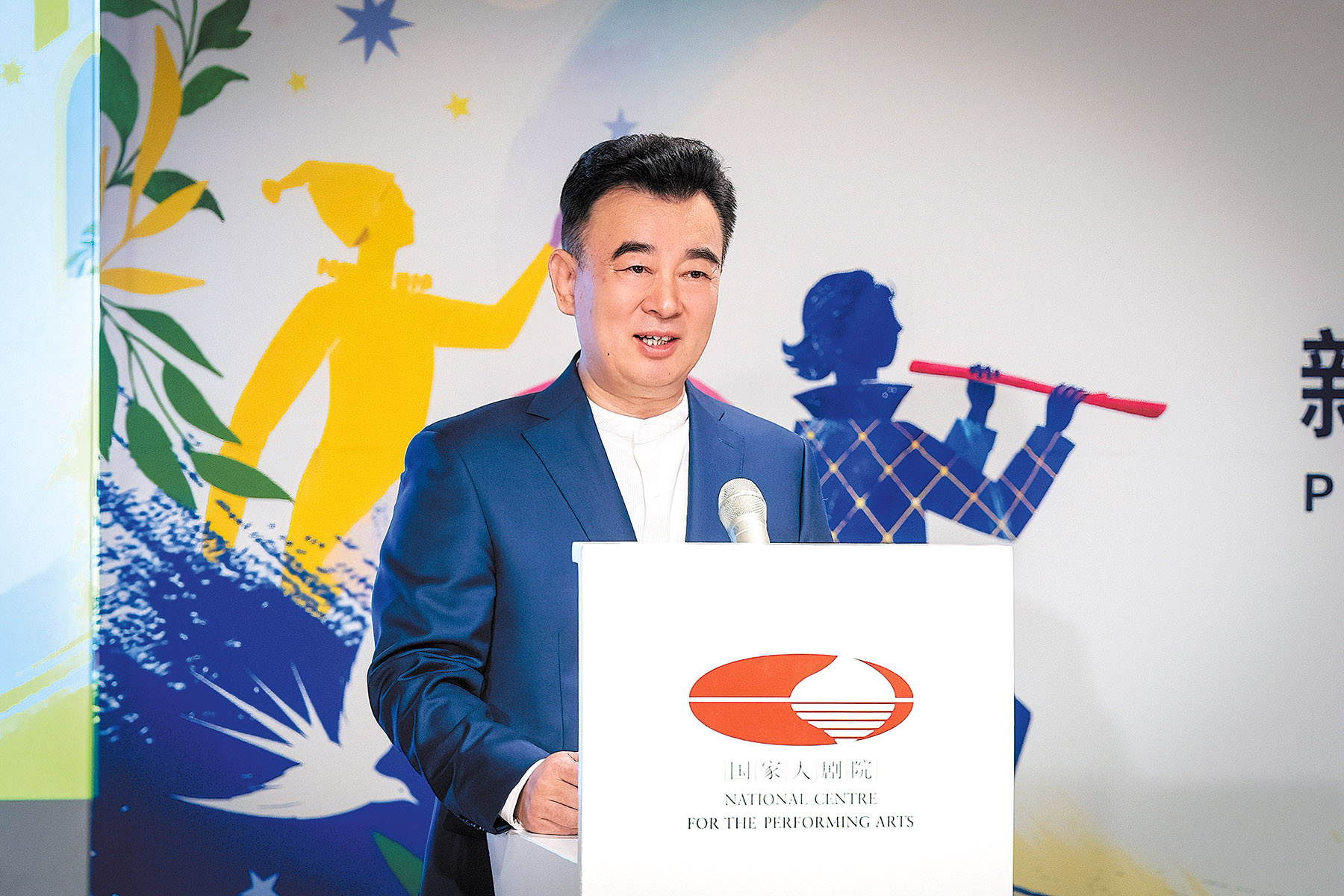
Rather than reproducing a traditional staging, the creative team seeks to give Mozart's final opera a contemporary visual language while retaining its musical and dramatic foundations, says Zhang Yao, vice-president of the NCPA.
"The Magic Flute is a story about love, a prince and a princess, but it is also about trust and betrayal," Duval says at the announcement in Beijing on Nov 2. "It has a strong, symbolic meaning. It tells us how we can become better people, and also touches on how we can live in harmony with nature rather than treating one another as enemies."
Written in 1791, the final year of Mozart's life, The Magic Flute is regarded as a landmark in German-language opera. Combining fairy tale adventure, comedy, romance, and philosophical allegory, it follows Prince Tamino and bird catcher Papageno on a journey to rescue Pamina, the Queen of the Night's daughter. As the story unfolds, the division between good and evil blurs, and the characters are challenged to prove their courage, wisdom and commitment to love.

For Duval, the story's symbolic dimensions offer considerable scope for a fresh theatrical interpretation.
"We want to offer audiences a more poetic expression on stage, one that communicates the story more effectively," the director says. "We hope that when people enter the theater, they will first see a world of vibrant colors, hear beautiful music, and leave with a lasting feeling of love."
The visual concept, described by the creative team as "fashionable, dreamlike and romantic", is shaped by a French-led team that includes choreographer Elsa Moulineau, set designer Olivier Thomas, costume designer Aude Desigaux, and lighting designer Anna Tubiana.
Thomas creates an imaginative theatrical landscape using an inverted forest, elaborate curtains and classical candlelit chandeliers. The contrasting visual elements help distinguish the Queen of the Night's dark domain from the world of light and wisdom that Sarastro represents.
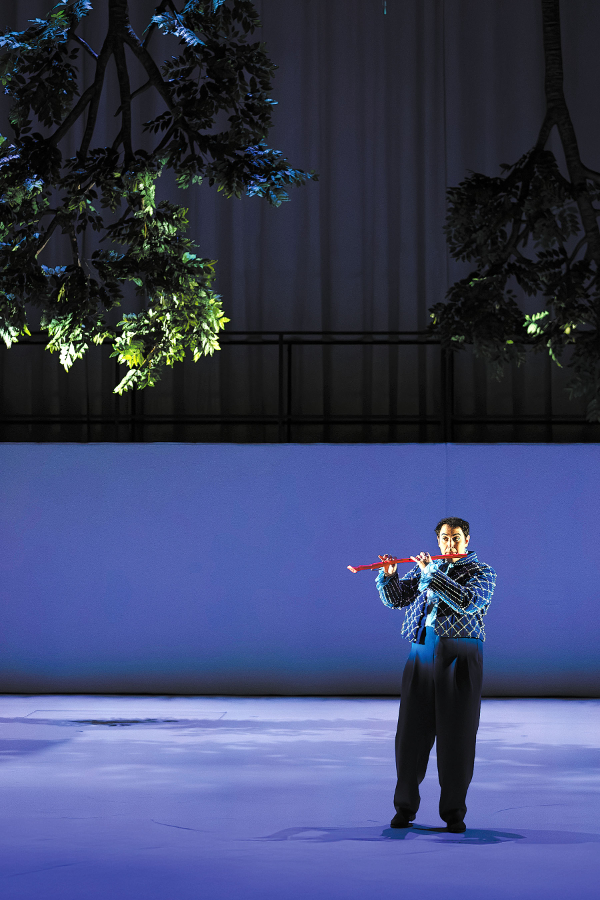
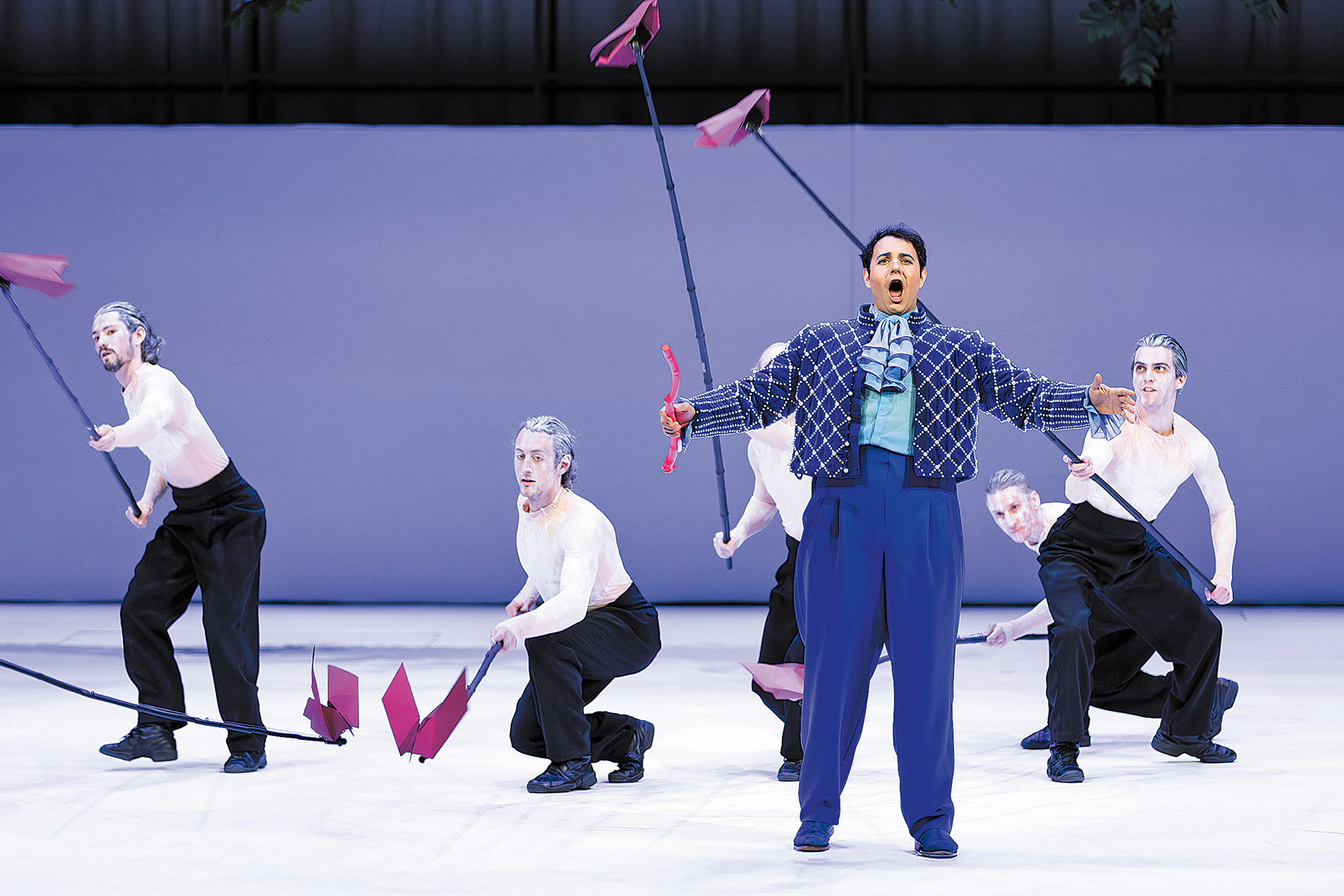
Costumes also play a significant role in defining the characters. The Queen of the Night appears in an elaborate outfit featuring candlelight-inspired shoulder ornaments, white gauze and deep purple lining. Tamino, played by German-American opera tenor Cameron Becker and Chinese opera singer Wang Chuan, wears a dark blue metallic costume and carries a pink flute. Pamina, played by German soprano Mojca Erdmann and Chinese soprano Zhang Meigui, wears an understated purple dress trimmed with soft fur, reflecting her gentle but resolute character.
Papageno, played by Austrian baritone Rafael Fingerlos and Chinese baritone Zhou Zhengzhong, wears a bright yellow feathered coat as the comical bird catcher.
Sarastro, played by Macedonian bass opera singer Igor Durlovski and bass opera singer Chen Peixin, wears a flowing ivory robe with green leaves adorning his shoulders to represent wisdom and nature.
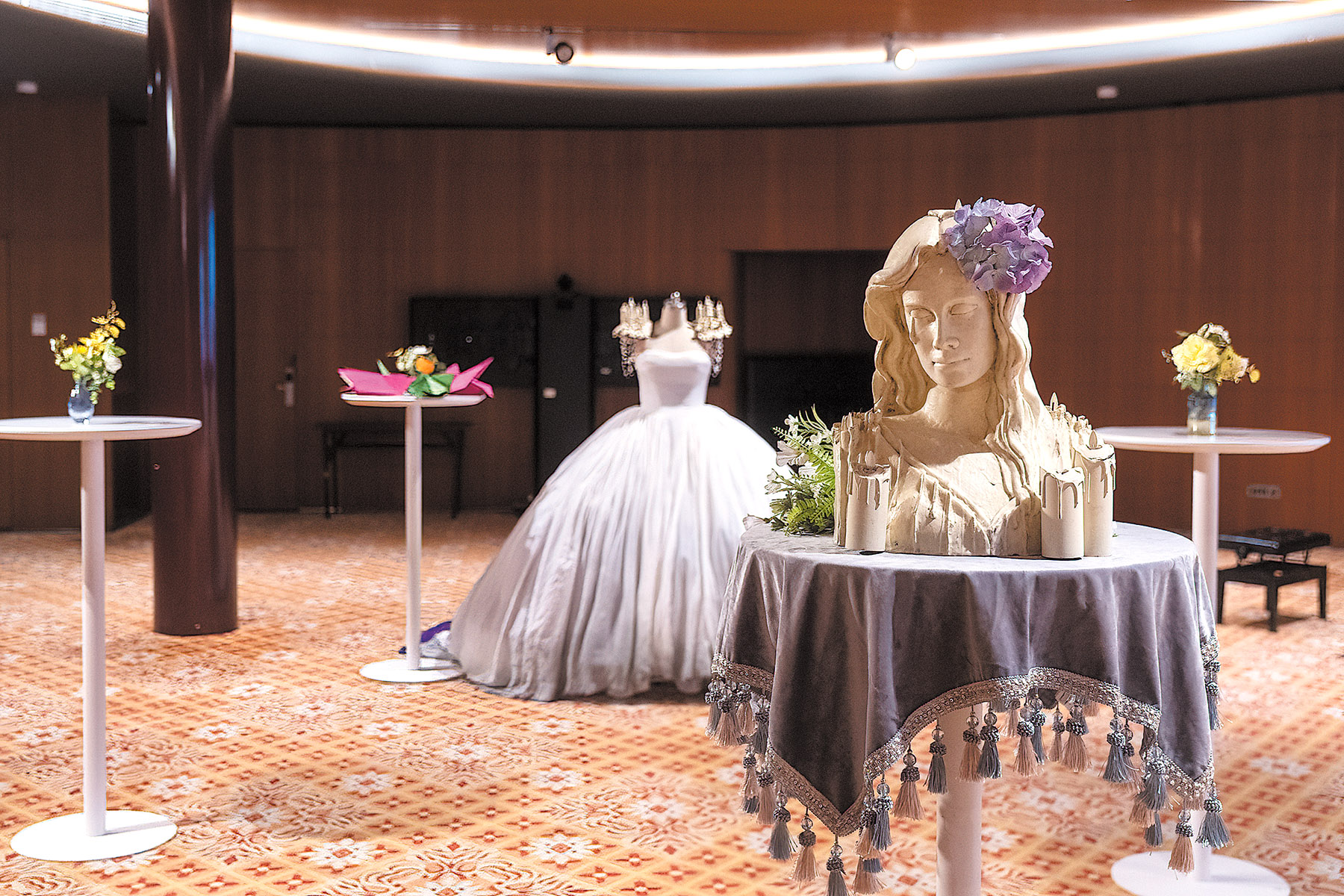
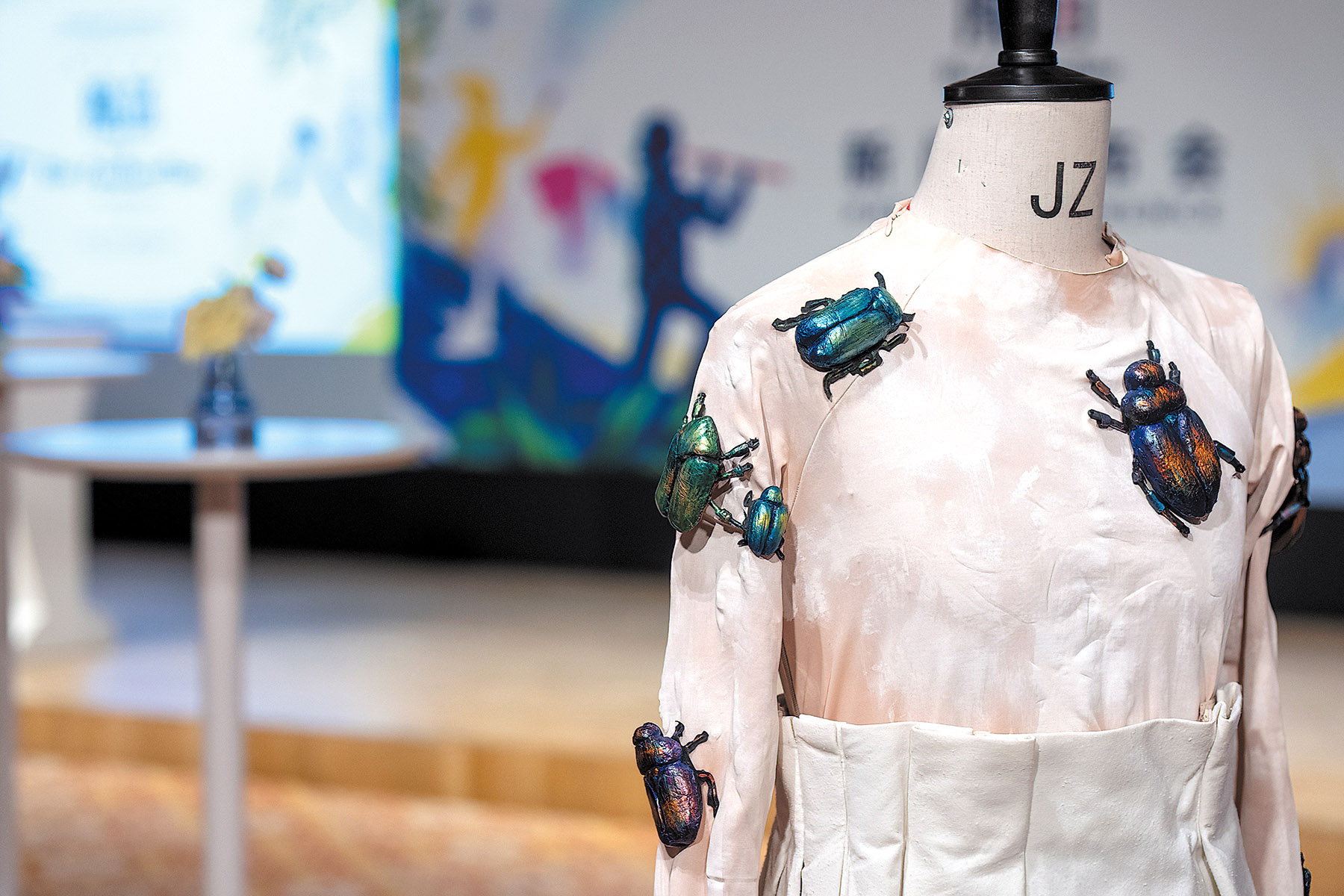
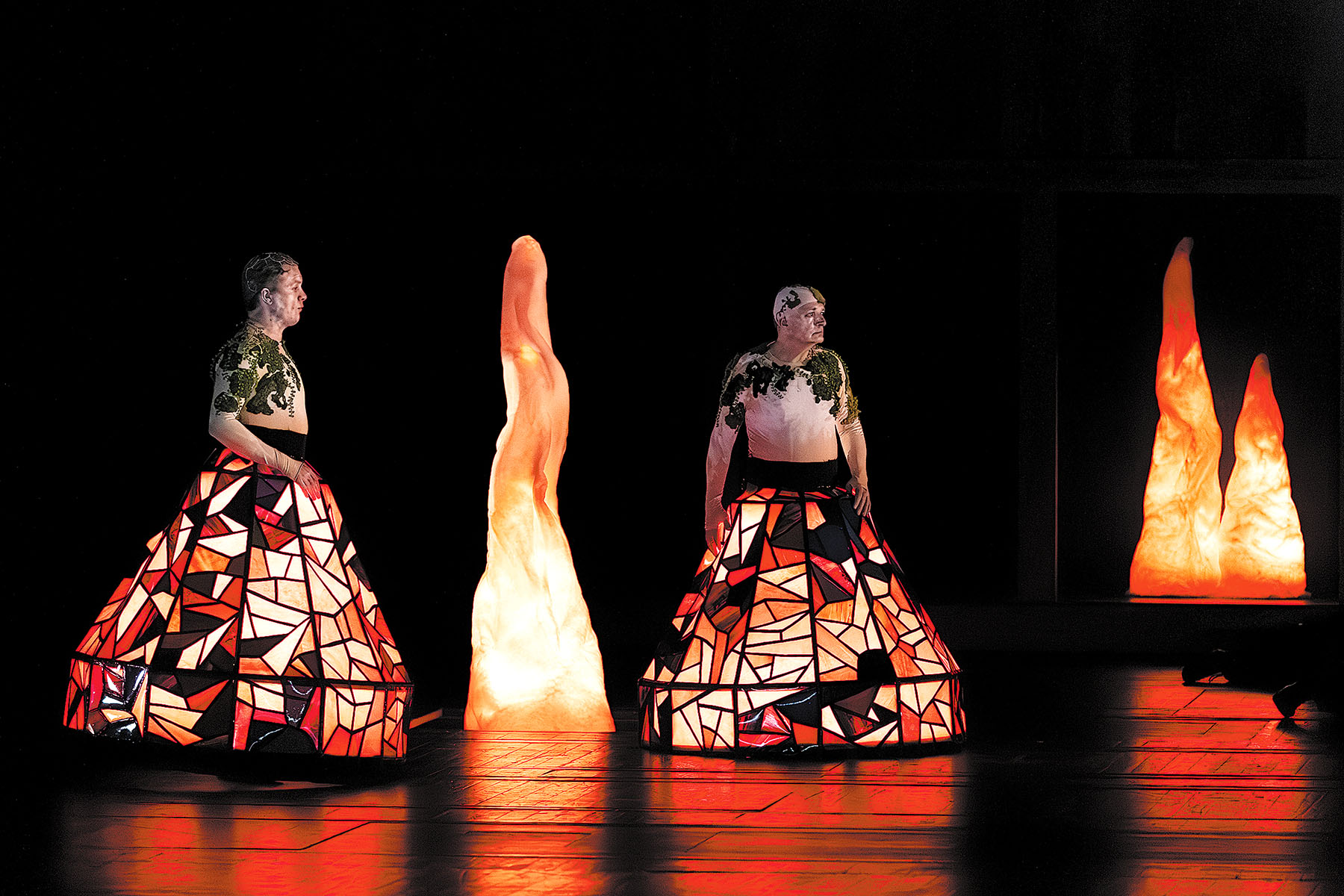
The production also uses two striking, oversized illuminated dresses with shimmering patterns that evoke stained-glass windows, adding another layer of visual fantasy.
The Queen of the Night, whose famous aria, commonly known as Der Holle Rache — often translated as The Queen of the Night's Aria — is among the most technically demanding passages in the soprano repertoire. It will be performed by Greek coloratura soprano Danae Kontora and French-Romanian coloratura soprano Gloria Tronel.
ALSO READ: Mozart meets Chinese rock
"The two casts bring different vocal colors, linguistic backgrounds and approaches to characterization, allowing the same roles to take on distinct dramatic nuances," says Zhang Yao.
"For the NCPA and Opera National de Bordeaux, the production represents more than a staging of a Mozart classic. It is also an opportunity to deepen artistic exchanges between China and France through a shared creative process, bringing together artists from different cultural backgrounds to reinterpret a work that continues to speak to audiences across generations," he adds.
Contact the writer at chennan@chinadaily.com.cn
