

Flexibility retrofits, market mechanisms address renewable grid bottlenecks
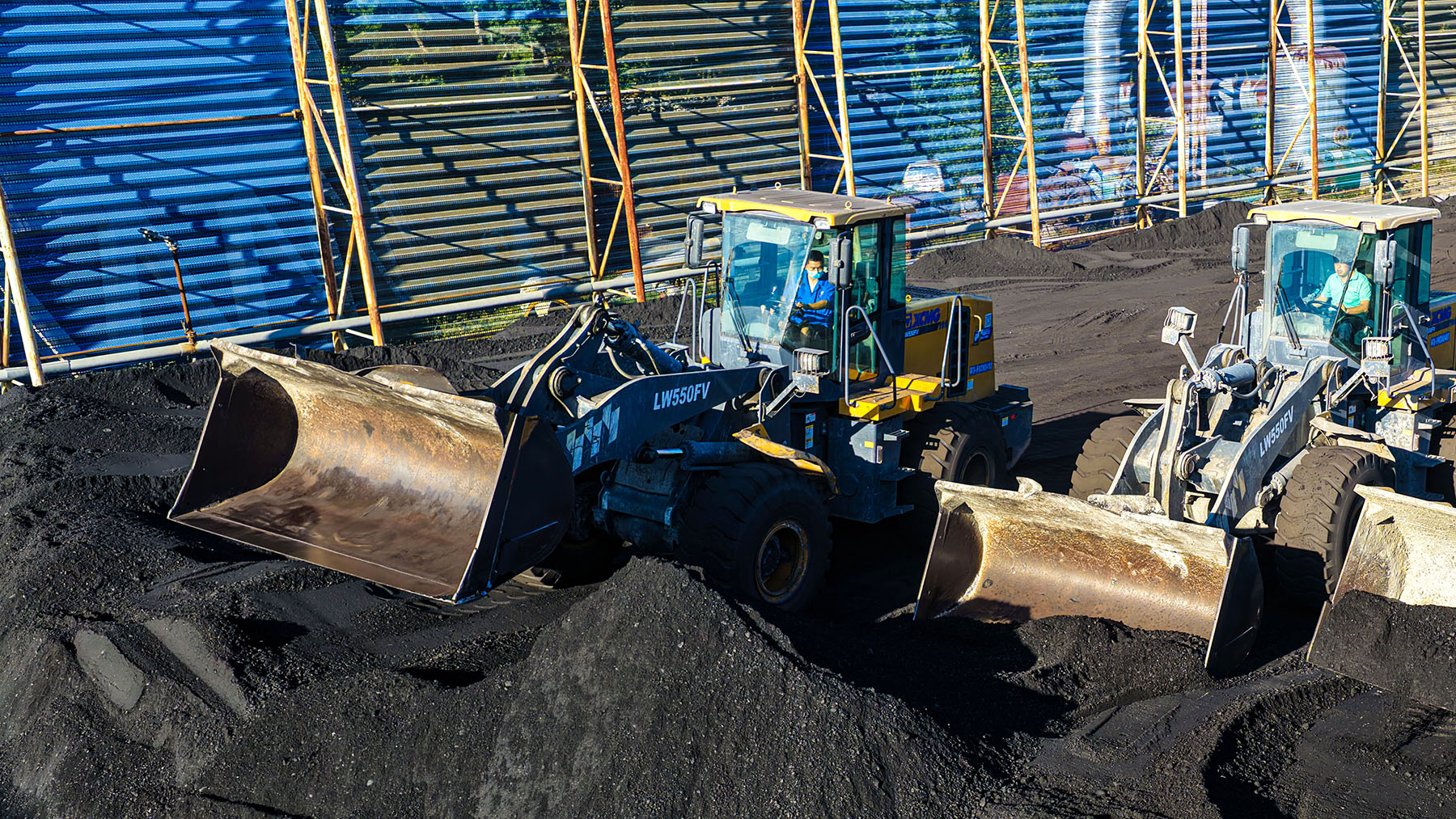
China's power sector made noticeable strides in its green transformation during the third quarter as coal-fired electricity generation and its share in the national mix continued to fall while domestic baseline energy security remained firmly consolidated, official data showed.
Coal-fired power generation dropped year-on-year across July, August and September by 4.0 percent, 4.6 percent and 1.9 percent, respectively, leading to a corresponding decrease in thermal coal consumption, said the National Energy Administration.
The steady recovery of supplies, on the other hand, has safeguarded energy security across industrial hubs and residential centers even as reliance on thermal power generation continues to recede, it said.
READ MORE: New energy to power green transition
Figures released by the NEA show that after the proportion of coal power in total electricity generation dropped below the historic 50-percent benchmark in the first half to 49.7 percent, it slid further to 49.1 percent by end-September.
In addition, newly added coal-fired generation accounted for merely 4.4 percent of the country's total incremental electricity consumption by the end of the third quarter, underscoring the rapid structural shift toward clean power, it said.
Industry experts stress that while coal power is steadily ceding ground to renewables, this does not signal an abrupt exit from the energy stage for the fossil fuel.
With mature technology, rapid ramping capability and dependable output, coal power remains the primary bedrock for safeguarding power security, offering essential reserves to stabilize the grid and accommodate intermittent wind and solar resources, they said.
However, the regulatory flexibility of thermal assets faces technical and economic boundaries.
He Zhao, vice-president of the China Electric Power Planning and Engineering Institute, said the country's average peak-shaving depth has reached roughly 40 percent following the flexibility retrofit of 485 million kilowatts completed during the 14th Five-Year Plan period (2021-25).
Further lowering the minimum technical output of generators will sharply raise retrofitting costs, indicating an urgent need for optimized policy mechanisms to strengthen enterprise motivation, said He.
Meanwhile, renewable energy absorption has faced headwinds. In the first half, utilization rates for wind and solar power dipped to 90.9 percent and 91.4 percent, down 2.3 and 2.6 percentage points year-on-year, respectively, highlighting the imperative for deeper cross-sector synergy.
In response, the NEA recently issued the "Implementation Opinions on Promoting the Integrated Development of Coal Power and New Energy", outlining five primary integration scenarios, supported by grid coordination and market-based compensation mechanisms.
The document establishes that by the end of the 15th Five-Year Plan (2026-30), integrated operational models will achieve mature commercial deployment, significantly lowering project carbon emissions compared to pre-retrofit levels.
ALSO READ: China advances clean energy transition
Public coal-fired power units, which account for nearly 90 percent of China's coal power system, will serve as the backbone of this transition, added He, emphasizing that relying on existing utility infrastructure enables a cost-effective transition without stranding capital assets, simultaneously relieving renewable grid bottlenecks and balancing supply security with decarbonization goals.
Furthermore, coastal coal-fired units will provide crucial footholds for offshore wind integration. As offshore wind expands into deeper waters amid scarce land resources in southeastern coastal regions, landing points and transmission corridors have become constrained.
Pairing coastal thermal plants with offshore wind farms enables developers to reuse existing facilities and transmission lines, resolving grid bottlenecks and accelerating the nation's marine clean energy transition, said He.
Contact the writers at zhengxin@chinadaily.com.cn
