

Amid continued fighting between the Saudi-led coalition in Yemen and the country’s Houthi militia, a visiting senior Emirati diplomat reaffirmed the United Arab Emirates’ support for Saudi Arabia and rejected attacks on Riyadh as “unacceptable”.
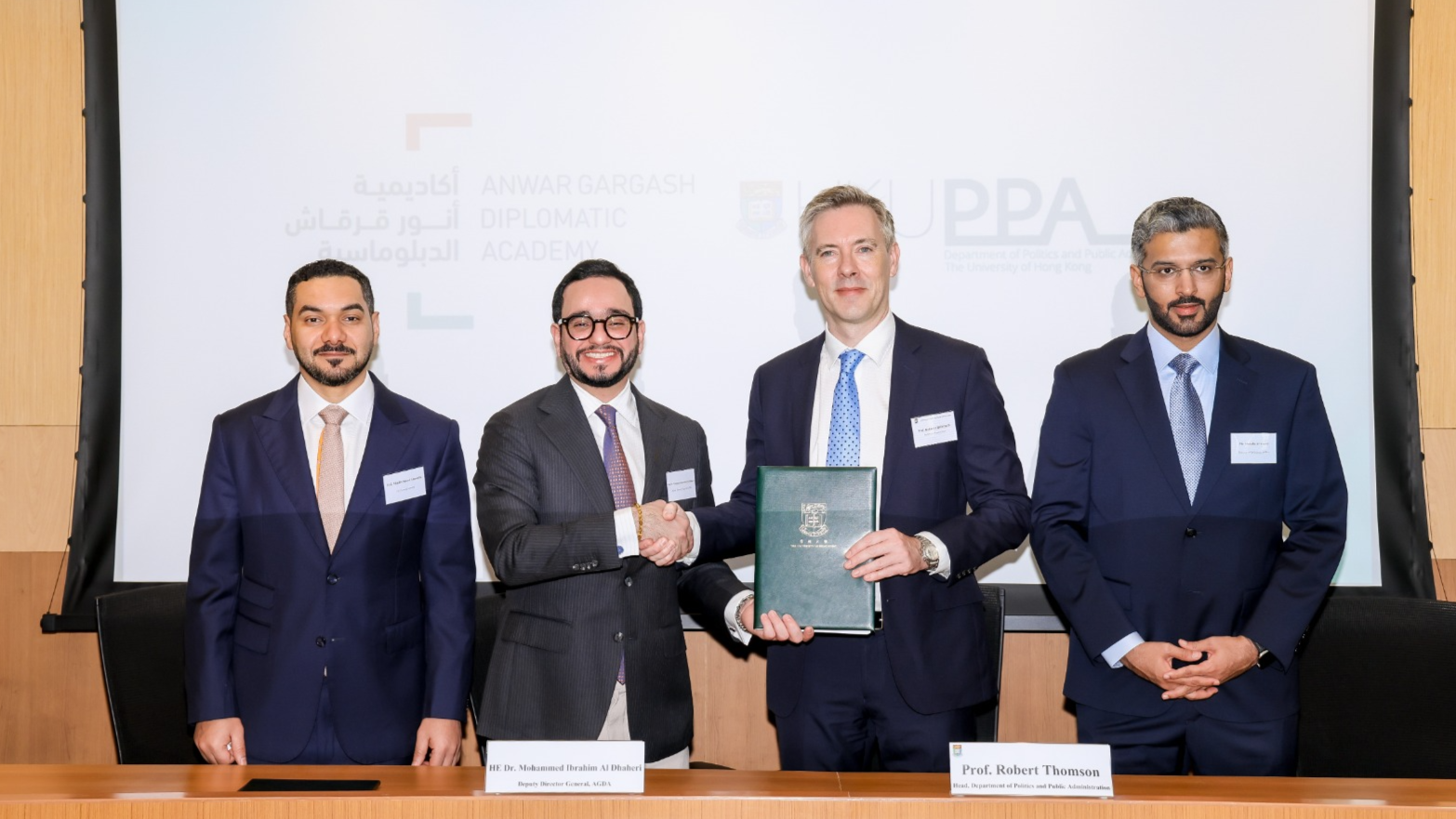
Mohammed Ibrahim Al Dhaheri, deputy director-general of the Abu Dhabi-based Anwar Gargash Diplomatic Academy (AGDA), made the remarks during a fireside chat titled “UAE Foreign Policy – Reading the Moment” in Hong Kong on Oct 23 following the signing of a memorandum of understanding between the University of Hong Kong’s (HKU) Department of Politics and Public Administration (PPA) and the AGDA.
Al Dhaheri also denied that the UAE was re-entering the Yemen conflict in support of Saudi Arabia in backing the Yemeni coalition government.
He said the UAE had withdrawn its forces in 2019. Last year, the UAE withdrew its counter-terrorism units at the request of Yemen’s legitimate government.
“We do respect sovereignty of nations,” Al Dhaheri said, while rejecting Yemen’s Houthi militia attacks on the Saudis as “unacceptable”.
“(The) security of Saudi is important to us. It's part of our security. And it's part of every single GCC country’s security. This is an important principle. It doesn't mean that (if) we have differences with the Saudis, their security does not matter to us. It's the opposite,” said Al Dhaheri, adding that the UAE “will be always open to supporting the Saudis politically”.
ALSO READ: Saudi airstrikes hit Sanaa as Houthis claim attacks on Riyadh
Since February 2026, Al Dhaheri has served as advisor in the UAE’s Office of the Minister of Foreign Affairs, with the rank of minister plenipotentiary, providing strategic counsel on institutional planning, foresight, and the advancement of the Arab nation’s foreign policy priorities.
He also reiterated that Houthis having the “ability to close the Bab el-Mandeb strait and the Strait of Hormuz” would be a “huge international issue”, mentioning the help being offered by other countries to repel attacks from the Houthis.
Al Dhaheri also said that the Saudis have the capability to defend themselves, citing treaties such as the Mecca agreement among Riyadh, Ankara and Islamabad signed in August and the Badr defense agreement MoU signed among Turkiye, Qatar, Pakistan, and Indonesia on Oct 21.
Asked whether the UAE had any similar agreements in the pipeline amid recent tensions that have escalated in the Middle East, Al Dhaheri said that Abu Dhabi had shown after Feb 28 that it had the capability to defend itself, which he said, was “really important to our security strategy”.
“So our security strategy (is) to build that capability more and more, which means (having) shared training courses with international partners, having a new stockpile when it comes to anti-missiles, having the technology to counter drones so we have stock capabilities,” said Al Dhaheri.
READ MORE: China to send special envoy to ease tensions in the Middle East, Red Sea
Apart from different partnerships it has with nations such as the US, France and the United Kingdom, the UAE has invested hugely on localizing security and military training through EDGE, an advanced technology and defence conglomerate owned by the UAE government.
On Feb 28, the US and Israel launched a surprise attack on Iran which triggered disruptions in one of the world’s critical waterways, when Iran retaliated.
The MoU between HKU’s PPA and AGDA aims to strengthen cooperation between the two institutions through academic exchange, seminars, visits, and other initiatives, according to a press release.
Contact the writer at jan@chinadailyapac.com
