

Appreciating the flowers goes beyond colors and shapes to the poetic imagery they evoke
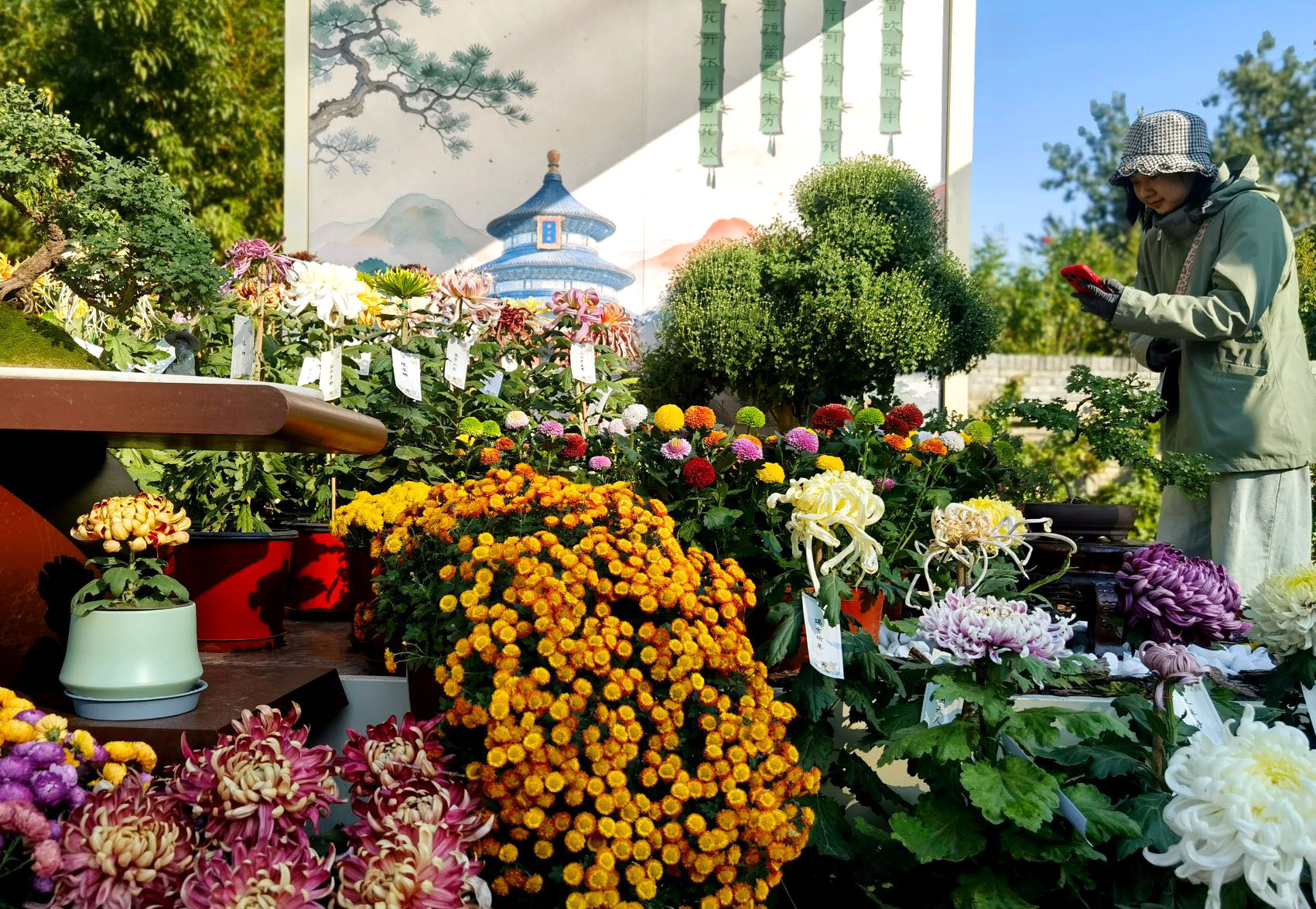
Hao Hong, 66, has something to boast about this autumn: a towering chrysanthemum that sets her apart from fellow growers in Beijing.
She began taking chrysanthemum-growing classes with her husband four years ago. What started as a pastime has grown into a passion for her, bringing new friends, months of painstaking work and the pleasure of comparing flowers with other growers.
Hao's enthusiasm reflects a fascination with chrysanthemums that has endured in China for centuries.
READ MORE: Flower road seeks its place on the map
More than 1,600 years ago, the poet Tao Yuanming wrote of picking chrysanthemums by the eastern fence and leisurely gazing toward the southern mountains, a scene that came to symbolize a peaceful life removed from worldly ambition.
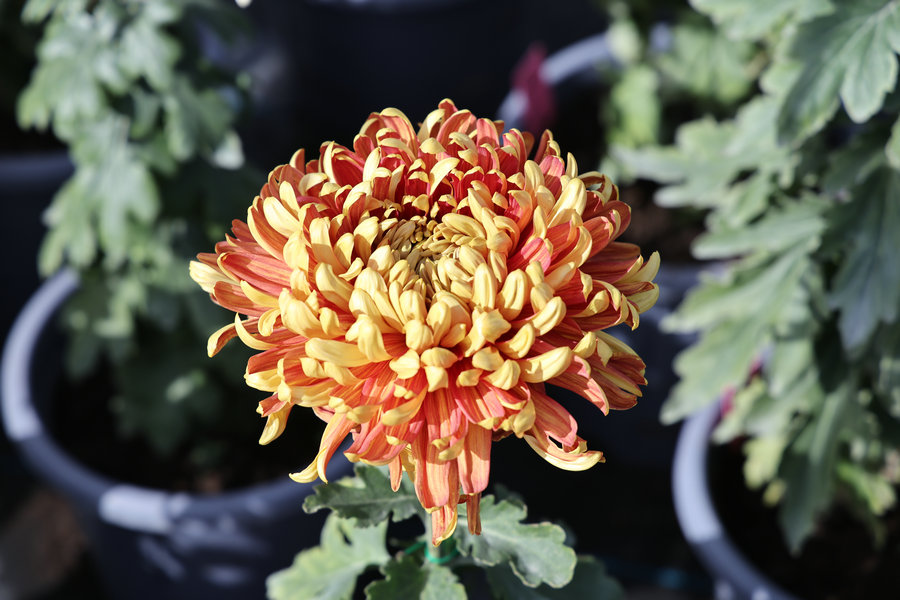
The flower became one of the "Four Gentlemen" in traditional Chinese art, alongside the plum blossom, orchid and bamboo, admired for qualities including integrity and resilience. Today, the chrysanthemum shares the distinction of being Beijing's official city flower, along with the Chinese rose.
For Liu Ning, who has spent 21 years cultivating chrysanthemums at Beihai Park, a former imperial garden in central Beijing, appreciating the flowers goes beyond their colors and shapes to the poetic imagery they evoke.
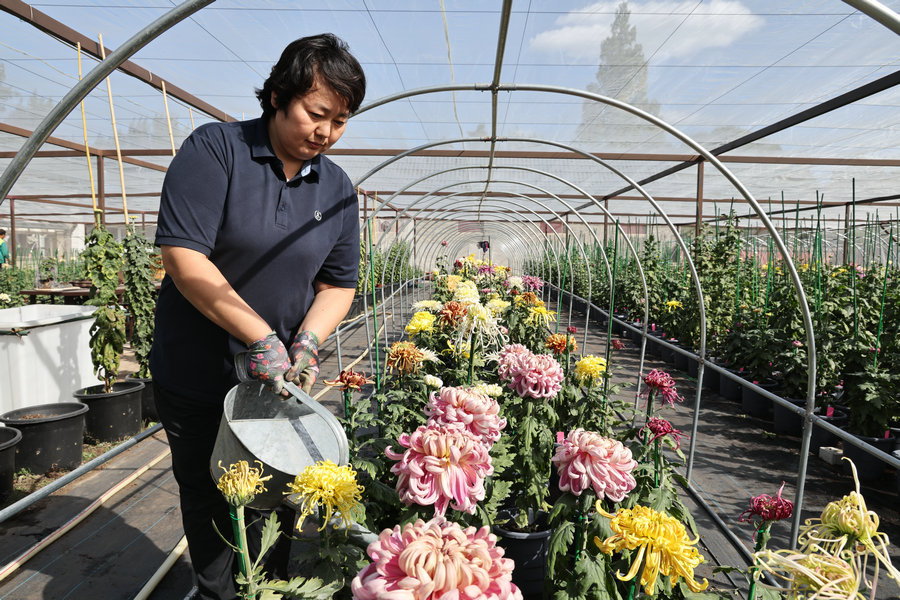
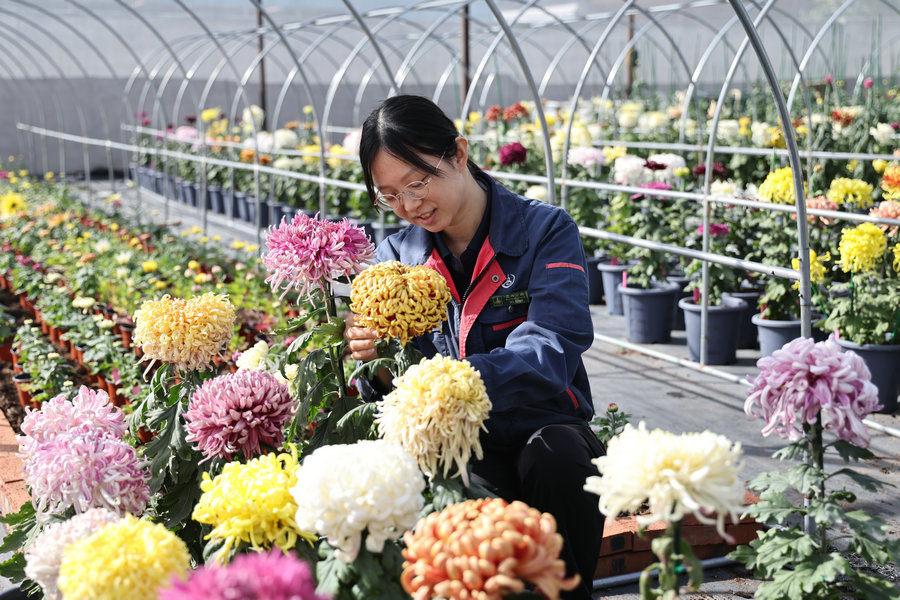
Taiye Chihe is a pink chrysanthemum whose petals resemble those of a lotus. Its name recalls Beihai's Taiye Lake, and it invites viewers to imagine a lotus rising from its waters.
Liu is particularly fond of the tiny golden-yellow hooks at the tips of its petals. "They look as though they were carefully drawn with a fine brush in a traditional Chinese painting. To me, they're the finishing touch," she said.
Such appreciation has deep roots in Beijing. According to historical information published by the Beijing Municipal Forestry and Parks Bureau, chrysanthemums have been cultivated and admired in the city's imperial gardens since the Ming Dynasty (1368-1644).
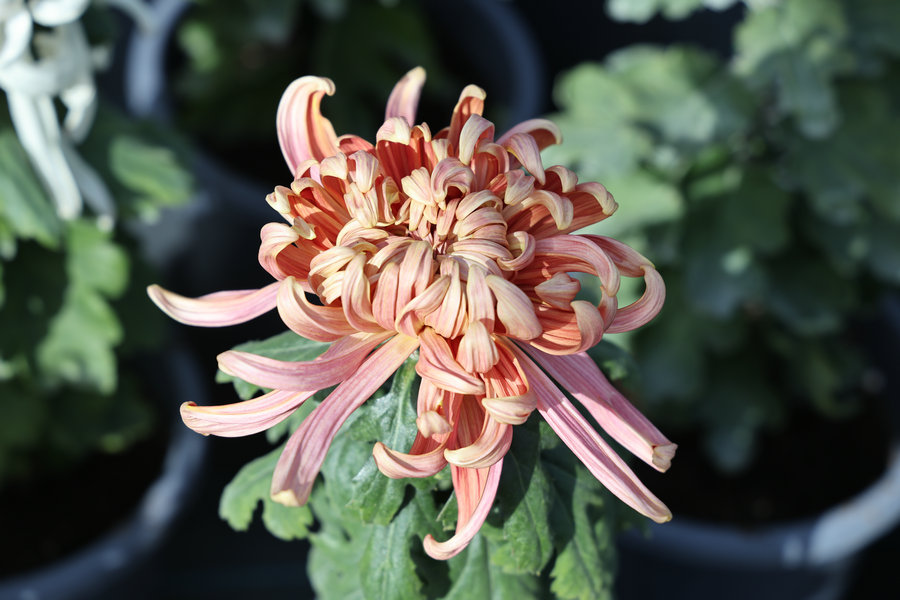
Beihai Park continues that tradition through its annual autumn chrysanthemum exhibition, which opened on Saturday.
Yet the Chinese love of chrysanthemums has never been confined to quiet contemplation. There is also the chrysanthemum competition, in which growers pit their prized blooms against one another.
An article published by the bureau said that such gatherings were popular during the Qing Dynasty (1644-1911). Today, the tradition lives on. But how does one decide which chrysanthemum deserves a crown?
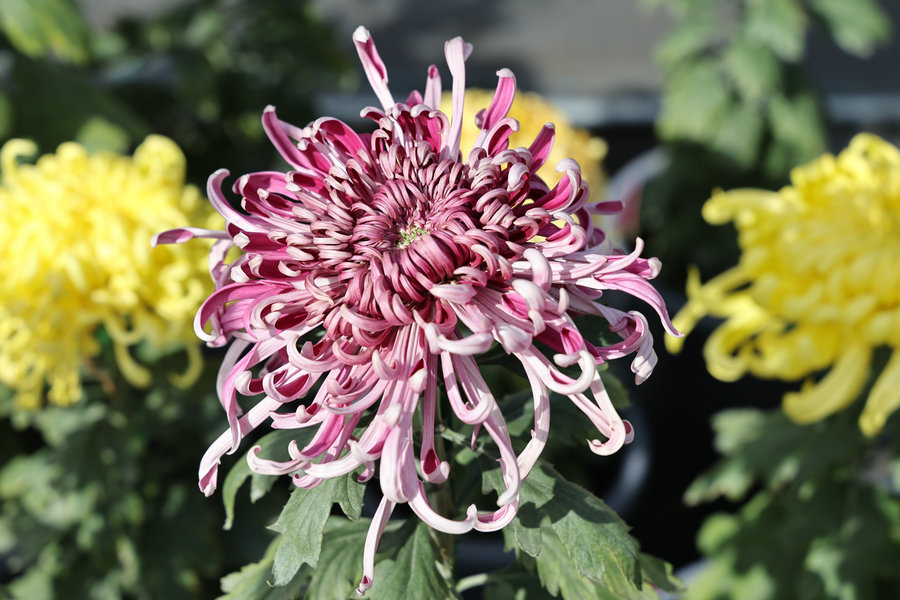
Liu, a fifth-generation inheritor of Beihai Park's traditional chrysanthemum cultivation techniques, said that the largest or brightest flower is not necessarily the best. Judges examine the health of the entire plant, its leaves and the extent to which a flower displays the distinctive color, shape and character of its variety.
Some competitions pit specimens of the same variety against one another, while others bring different varieties together, demanding a discerning eye from judges familiar with how each should look at its finest.
ALSO READ: Interest in China's orchids set to bloom
"Only when you have seen a variety at its very best do you know what a truly fine chrysanthemum looks like," Liu said.
Since 2014, Beihai Park's horticulturists have brought their expertise to neighborhoods and schools, offering classes and distributing young plants. Liu hopes that these efforts will help people look beyond the flowers' beauty to discover the skill and centuries-old culture behind them.
Xu Zhu and Tao Jiayi contributed to this story.
Contact the writers at zhengjinran@chinadaily.com.cn
