

Through communication and exchange, civilizations find common ground and create tangible development strategies together, Yang Yang reports.
When Rehab Mahmoud Ahmed Sobh chose Chinese as her major nearly 40 years ago, the Egyptian scholar did not think the decision would be a turning point in her life.
In an interview with Guancha Syndicate, Sobh, who is now the dean of the Department of Chinese Language and Literature at Cairo University, said that her decision in 1988 led her to a world of language study, travel, teaching, research, and cultural exchanges, "allowing me to build a bridge for Egypt and China to communicate and understand each other".
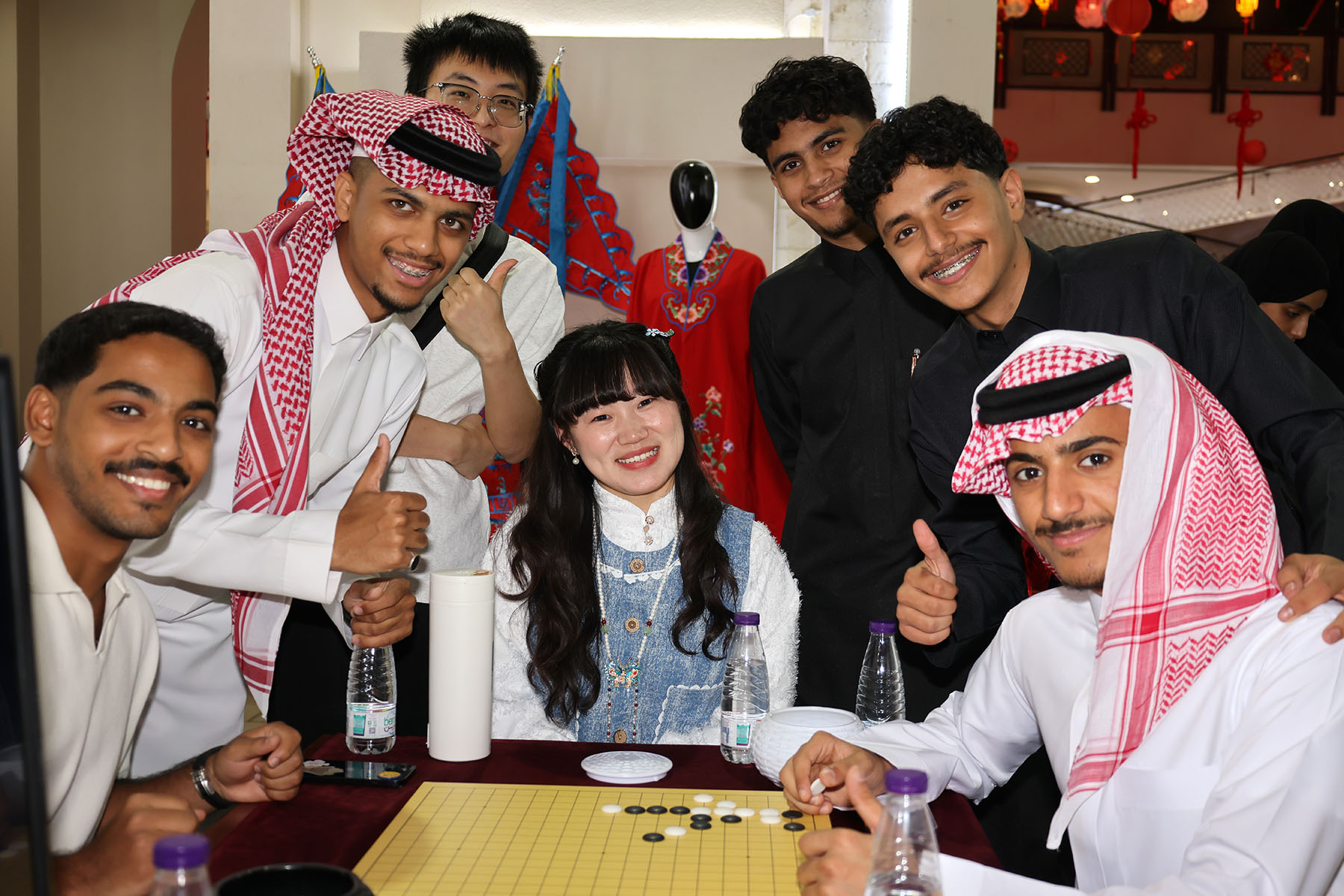
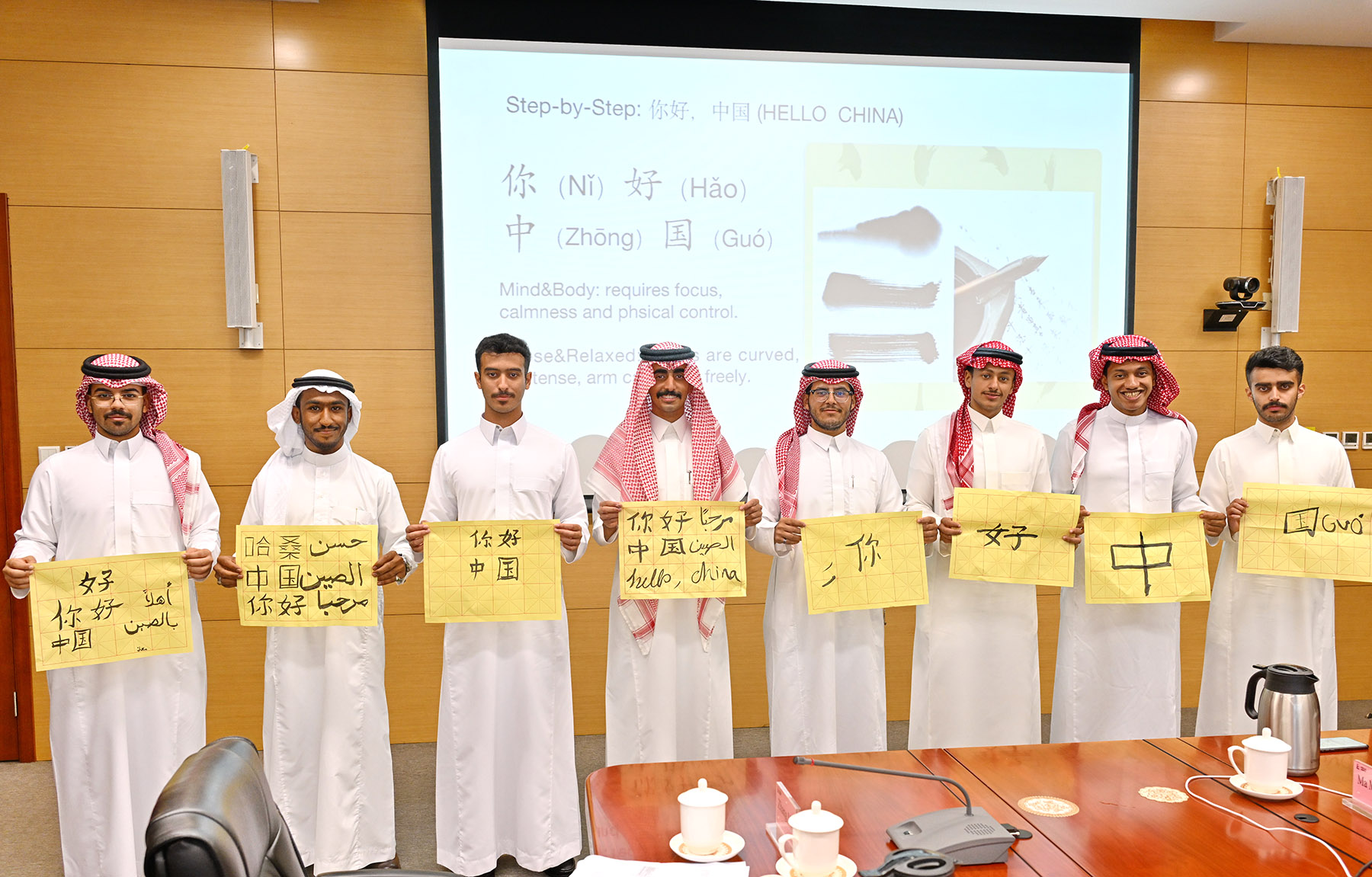
Compared with nearly four decades ago, when few people in Egypt knew about China and even fewer about its language, today not only university students but also a large number of young people from diverse backgrounds are increasingly expressing interest in China, especially after the Egyptian government included Chinese as an elective course in primary and secondary schools.
Meanwhile, China has grown tremendously into a global manufacturing giant. It has eliminated poverty, made impressive advances in science and technology, and plays an increasingly important role on the international stage.
Arab nations, determined to upgrade their development models, are looking East to better understand China. They are interested not only in China's governance and economic development models but also in the profound philosophy that sustains the 5,000-year-old Chinese civilization, which is still thriving.
This thirst for knowledge about China, or China studies, has been gaining traction across Arab nations.
According to experts, as a connecting link between Asia and Africa, Arab nations are uniquely positioned to serve as a pivot, offering experience and inspiration for more Global South countries to gain a deeper understanding of China and study it more effectively to solve problems related to their own development.
Apart from Egypt, Saudi Arabia has also introduced Chinese language classes in over 100 public middle schools. Universities in the United Arab Emirates, Tunisia and Morocco, among others, have set up Chinese language departments.
"This shift shows that the interest in understanding China is spreading from just the elite to a wider range of people in society," said Chen Di, a researcher at the Shanghai Academy of Social Sciences' Institute of China Studies.
She added that the interest in China has also evolved.
Initially, the focus was on specific experiences, such as free trade zones or industrial parks. Now, it is a deeper examination of China's development path and values. Chinese-style modernization is seen as a viable development model.
"The shift signifies a move from focusing on practical techniques to proactively exploring broader philosophical ideas," Chen said.
Thanks to efforts to translate and publish Chinese and Arabic classics, more classical and contemporary Chinese literature is entering Arab markets.
In the preface to the translation of Strategies of the Warring States, Egyptian Sinologist Mohsen Fergani from Ain Shams University in Cairo wrote, "Through the translation of ancient Chinese texts, we can grasp some fundamental characteristics of Chinese culture and understand its developmental trajectory. Perhaps translation can explore the secrets behind these texts, with the hope that this can unleash our ability to learn from others, continuously enhancing this awareness and extending the path of human reason. In my view, the value of any ancient heritage lies in its ability to illuminate the present."
Another source of information about China for people in the Arab world is popular contemporary Chinese films like the recent Once Upon a Time in the Middle East, TV series such as Empresses in the Palace, and older kung fu movies.
Additionally, more people from China and the Arab world are getting to know and understand each other better through travel facilitated by visa-free policies, Chen said.
She noted that interest among Arab countries in participating in frameworks such as the Shanghai Cooperation Organization is growing. For example, the inaugural China-Arab Summit and frequent visits by multiple heads of state to China for the China-Arab Cooperation Forum indicate that this trend has become a strategic national choice.
Analyzing the reasons behind the trend, Wang Guangda, secretary-general of the China-Arab Research Center on Reform and Development and a professor at Shanghai International Studies University, said the Arab world's interest in China is driven not solely by economic factors but by a combination of strategic goals, a development paradigm and a civilizational narrative.
The Middle East has long been at the center of geopolitical struggles involving major powers, with external interventions being at the root of instability. China's principle of non-interference in internal affairs and respect for Arab nations' sovereignty and independent development paths aligns with their collective aspiration to break free from dependency-based international relations and pursue strategic autonomy, Wang said. "This forms a fundamental political attraction."
Many Arab nations also face challenges in transforming their economies, including over-reliance on natural resources, the need for industrial diversification, youth unemployment, and inadequate infrastructure. China's progress from a poverty-ridden country to a modernized nation presents a different model from the Western approach to modernization. Through the Belt and Road Initiative, collaboration in areas such as infrastructure, energy and the digital economy offers Arab nations tangible development possibilities. "This is an essential motivation at the economic level," Wang added.
He also said Chinese and Arab civilizations share a narrative of equality. The two ancient civilizations advocate exchange and mutual learning among civilizations and reject the Western-centric view that ranks civilizations as higher or lower.
"This fits the Arab world's need to reclaim its own civilizational subjectivity," he noted.
Wang said the shifting global landscape has encouraged Arab nations to diversify their international partnerships.
Chen from the Shanghai Academy of Social Sciences said China respects the Arab world's aspirations for autonomy and independent development. This approach contrasts sharply with the externally imposed influences that the Arab world has endured for a long time.
"This contrast is what is transforming the eastward focus from a mere rhetorical stance into substantive actions supported by institutional frameworks," she added.
At the government level, countries such as Saudi Arabia, the UAE and Egypt are prioritizing cooperation with China in their development plans, leading to government support for Chinese research centers and language programs.
In academic circles, Arab scholars are seeking alternatives to Western theories by exploring China's development experience and fostering increasing interest in China studies. Furthermore, Chinese language skills have proved to be stepping stones to employment and economic opportunities, especially in trade and digital sectors, Wang of the China-Arab Research Center on Reform and Development said.
Since China and Egypt established diplomatic relations in 1956, China studies in Arab countries has gone through three phases, Wang noted.
From the 1950s to the end of the Cold War, studies were heavily influenced by Cold War perspectives and relied on Western sources and limited original research.
From the end of the Cold War to 2013, economic and trade growth led universities to introduce Chinese language programs. The studies expanded to include China's economic reforms but remained focused on language teaching.
From 2013 onward, the Belt and Road Initiative spurred the establishment of Chinese research centers. Now, scholars are exploring more topics, including governance, the digital economy, poverty alleviation, ecological civilization, China-Arab relations, and Global South theories. They are also increasingly using Chinese sources and fostering a local perspective.
The most popular research area is the study of Chinese-style modernization and governance experience, followed by comparative studies of Chinese and Arab civilizations and the construction of an independent knowledge system, Chen said.
Chen and Wang both agreed that the key to promoting the development of China studies in the Arab world through China-Arab cooperation is "joint China-Arab production of knowledge about China", and coordinated efforts in the joint cultivation of academic disciplines and talent, translation of literary resources, topic setting based on equal dialogue, and mechanisms for academic exchange and support.
Chen said that what's most special about China-Arab relations is that the two civilizations already have a long history of communication and exchange. China-Arab relations are currently in their best period in history. By the end of 2024, China had formed strategic or comprehensive strategic partnerships with over 20 Arab countries and the Arab League.
The cooperation between China and Arab nations can provide a paradigm reference for Global South cooperation, Chen said, and Arab nations can serve as a relay point in a network to further spread knowledge about China among Global South countries.
A good way is to promote joint knowledge production involving three or more parties, she said.
Wang agreed that the development of China studies in the Arab world provides valuable insights for sharing Chinese knowledge with the Global South. The key shift, as Wang pointed out, is moving from "broadcasting knowledge outward" to "building knowledge together as equals".
He said Global South scholars offer the best interpretation of China, drawing on their own experiences and contexts. As a result, China's role should be to provide resources and encourage dialogue while respecting each country's right to interpret information independently.
Given that topics such as poverty reduction, infrastructure development and digital transformation are particularly relevant to the Global South, future collaborations should focus on sharing experiences and solutions to these shared challenges, he said.
According to him, knowledge exchange relies heavily on language and academic structures. Translation, library resources and training are essential, though they require long-term commitment.
"We should try to create an academic network among Global South scholars that crosses national and regional boundaries, so that by sharing their perspectives on China and modernization, the scholars can foster a diverse and collaborative knowledge ecosystem that challenges the dominance of Western-centric narratives," Wang said.
Meanwhile, China is also working toward better communication and exchanges with Arab countries.
Last year, Shanghai University established the Center for Egyptology. Professor Guo Dantong, the university's leading Egyptologist, said that China's Egyptology's strength lies in its unique comparative perspective. Chinese researchers can place Egypt within broader regional networks, exploring its interactions with West Asia, the Mediterranean and Africa, while also comparing Egyptian civilization with those of ancient China, Greece and Mesopotamia.
So far, the center has released two translated volumes of economic and legal documents from Egypt's New Kingdom period, with a third volume currently in production. In December 2025, it introduced Egyptology Studies, the first Chinese anthology of academic papers devoted solely to this field.
Contact the writer at yangyangs@chinadaily.com.cn
