

Drone photographer accelerates his efforts to take photos of relics, showcasing China's rich cultural heritage from above
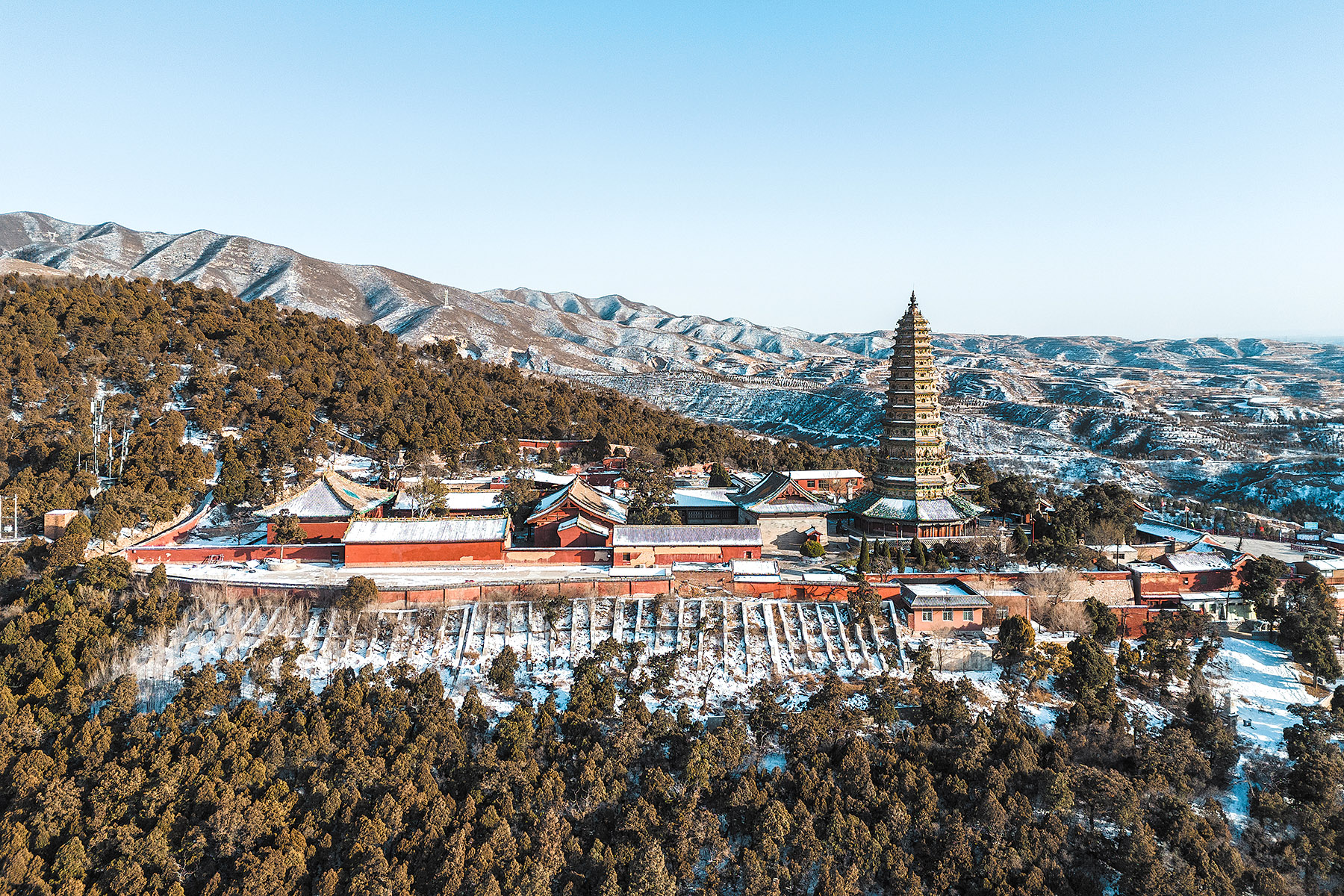
Drone photographer Rong Kaiyuan has spent two decades building a photographic record of historical sites.
Over the past 20 years, he has traveled across 30 provincial-level regions and 196 prefecture-level administrative areas. He has systematically surveyed and photographed more than 1,700 nationally protected cultural relic sites, accumulating hundreds of thousands of aerial images.
"I am first and foremost an antiquities explorer," he said. "In our circle, we have a consensus — visit antiquities early. Fortunately, I have always had that sense of urgency."
That urgency comes from what he has seen. Some sites open to visitors one year and close the next. Some stand one year and collapse the next. Some allow drone photography one year and forbid it the next.
ALSO READ: Drone operator spells out unique perspective
"So I can only seize every moment and accumulate as much visual material as possible," Rong said.
His photographs have helped him co-publish two books on Chinese antiquities — Bird's-Eye Views of the Most Beautiful Key Cultural Relics Sites under National Protection and Bird's-Eye Views of Shanxi's Key Cultural Relics Sites under National Protection.
More are planned. The next volume may focus on nationally protected sites in Hebei or those scattered across the Yellow River basin, he said. He, his co-authors and publishers are still discussing it.
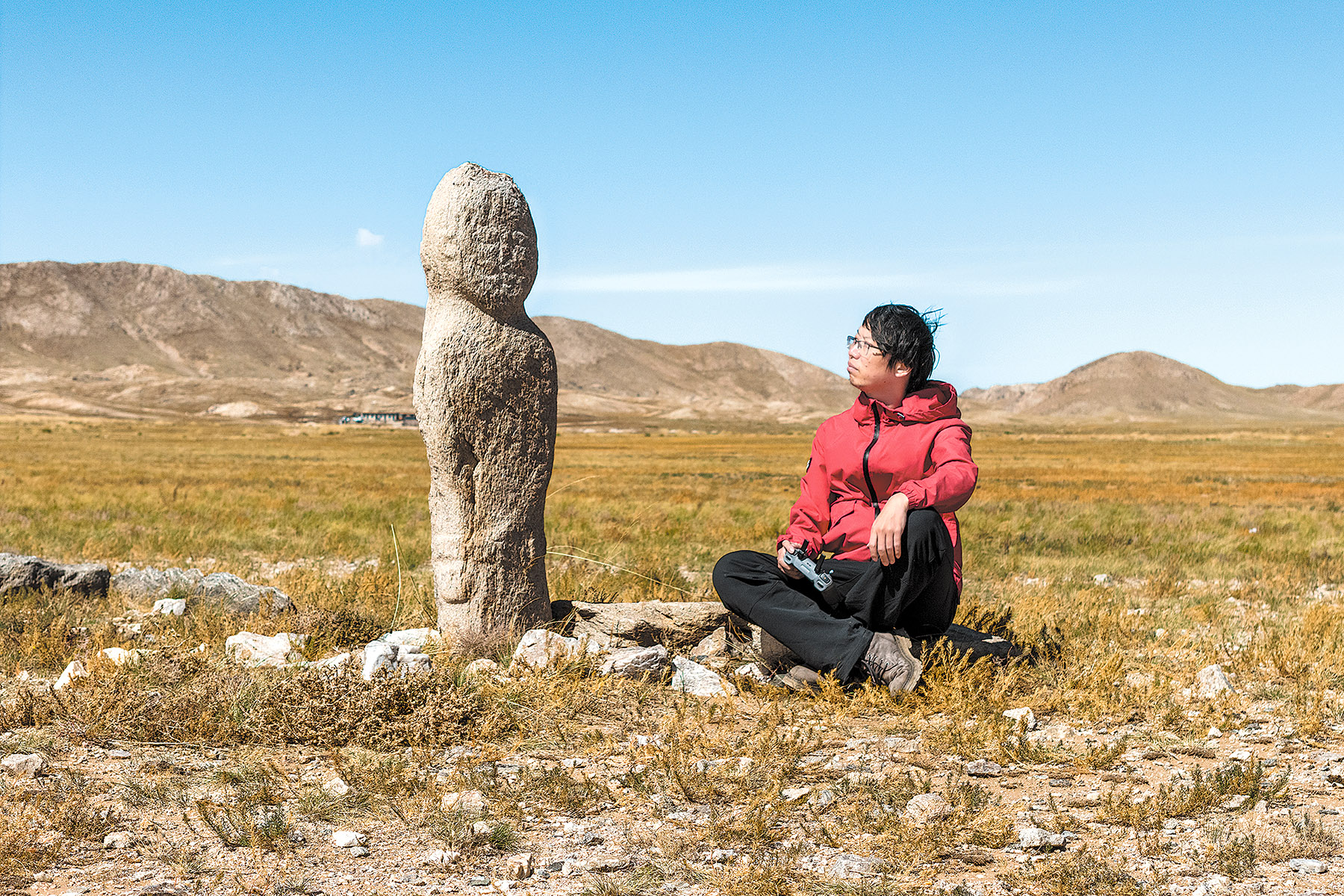
Parental influence
Rong, 40, is a Beijing native from an academic family. His father is a retired professor at Beijing Jiaotong University. His mother, Zhong Jia, was a senior reporter and editor at a major media outlet.
Both parents loved geography and took him to many places as a child. His mother, one of the country's pioneering bird-watchers, has long sought to visit as many nature reserves as possible to observe birds. Although she did not turn her son into a bird-watcher, she instilled in him a deep love of geography and the wilderness.
"They took me to visit some remote sections of the Great Wall in Beijing, and my mother took me to many of the country's nature reserves," Rong said. "Since childhood, my biggest hobby has been reading maps."
That hobby never faded. He moved from paper maps to mapping software and 3D terrain maps. Before visiting a site, he usually has a rough idea of whether it sits near mountains, forests or villages. When taking road trips to unfamiliar places, he almost never asks for directions, yet he always manages to reach his destination accurately.
He also credits his passion for drone photography to his love of maps. "Drone photography offers me a unique perspective on the world, much like the experience I have when studying maps," he said.
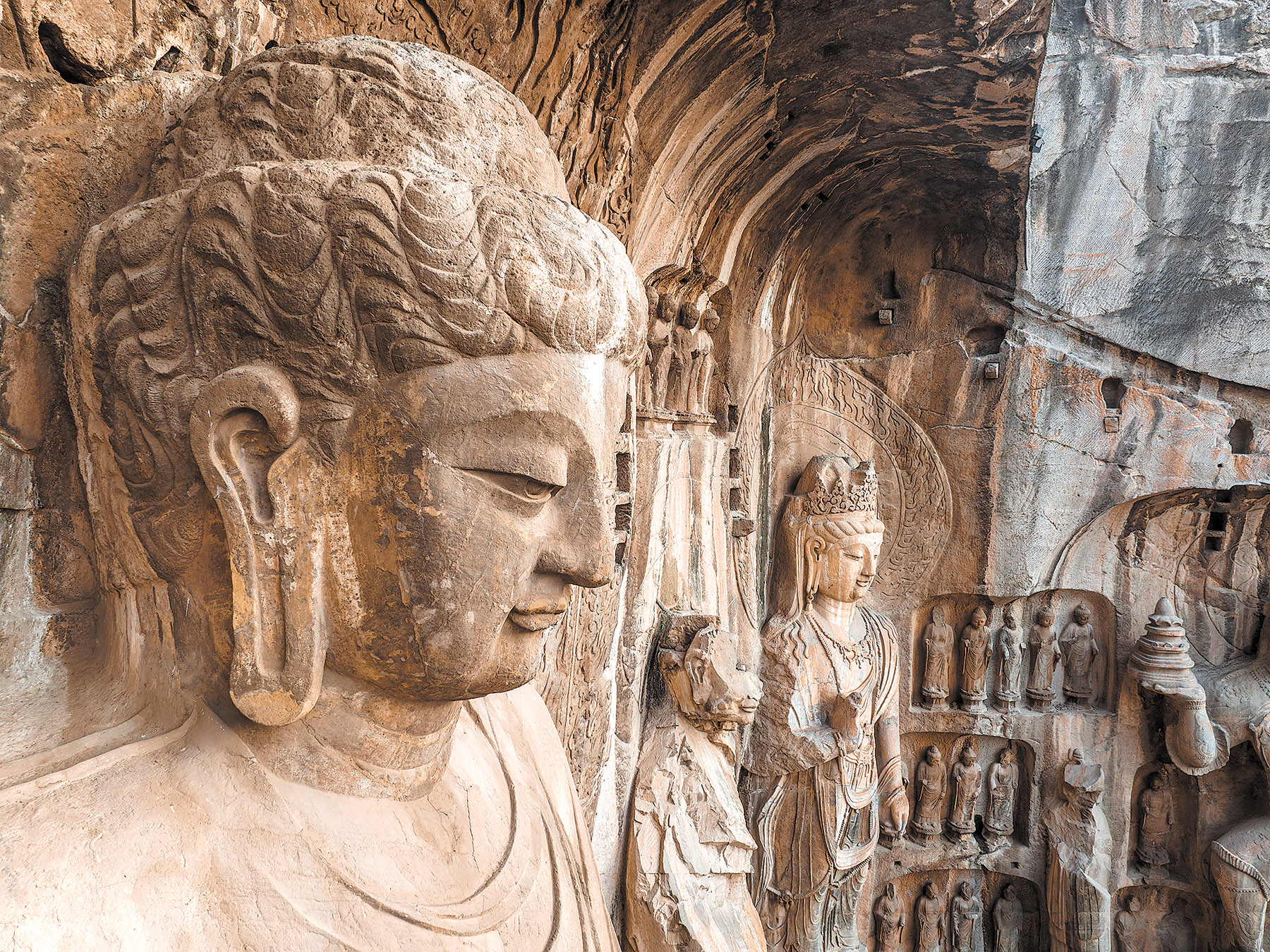
He studied history at Nanjing University and began visiting historical sites in his spare time. Early trips with college classmates took him to Shanxi, where he initially had little interest in wooden architecture. Gradually, he wanted to see all kinds of relics.
"Anything with a sense of age, history and the passage of time, I will go to have a look," he said.
After university, he worked for Huaxia Geography, the Chinese-language edition of National Geographic. The magazine had a profound influence on him. Immersed in National Geographic photos, he gained a deeper understanding of the importance of photographic documentation.
In 2017, encouraged by a former colleague, he bought his first drone. After leaving the magazine, he worked for a European cruise company until the outbreak of the COVID-19 pandemic. Since resigning, he has worked as a freelancer.
At the end of 2020, he began posting his drone photographs on social media. He has attracted about 264,000 followers on Sina Weibo, 9,200 on Xiaohongshu and more than 2,000 on Douyin.
He has made no special effort to gain followers, he said, nor does he earn much from social media. He occasionally supplies photographs to magazines, but that does not bring in much income.
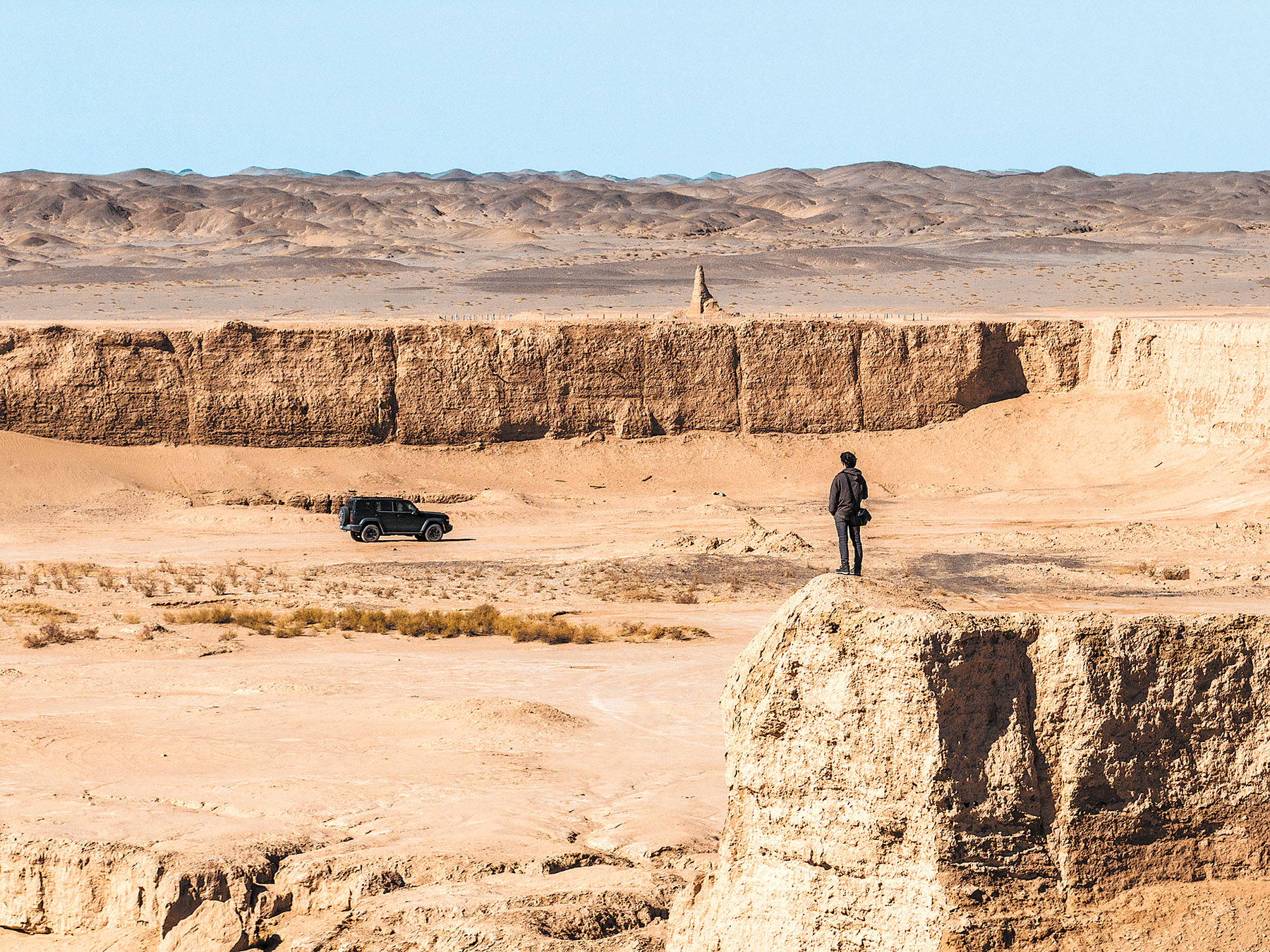
Family support
Rong said he is grateful for his family's understanding and support. At this stage, he does not have to worry too much about earning money. He can focus on finding more historical sites and taking more photographs.
His mother Zhong, 73, has become not only one of his fans but also one of his travel companions.
On his recent trip to eastern Inner Mongolia and Northeast China, she accompanied him throughout the journey and enlisted two friends to join them for different legs of the trip. "My mother has many birding friends," Rong said. "She and her friends are very experienced in the field. Her friends can help me drive."
The group started in Beijing and traveled through eastern Inner Mongolia to Hulunbuir, then into the northernmost part of Heilongjiang province. They continued through Jilin and Liaoning provinces, returned to Inner Mongolia and finally headed home to Beijing.
The route covered more than 12,000 kilometers. They looked for historical sites from the Liao (916-1125), Jin (1115-1234) and Yuan (1271-1368) dynasties, sites associated with Hongshan culture, prehistoric rock paintings and historical remains left by Russians and Japanese, including some relics from World War II. On average, they visited five or six sites a day; on their busiest days, they visited 10 to 13.
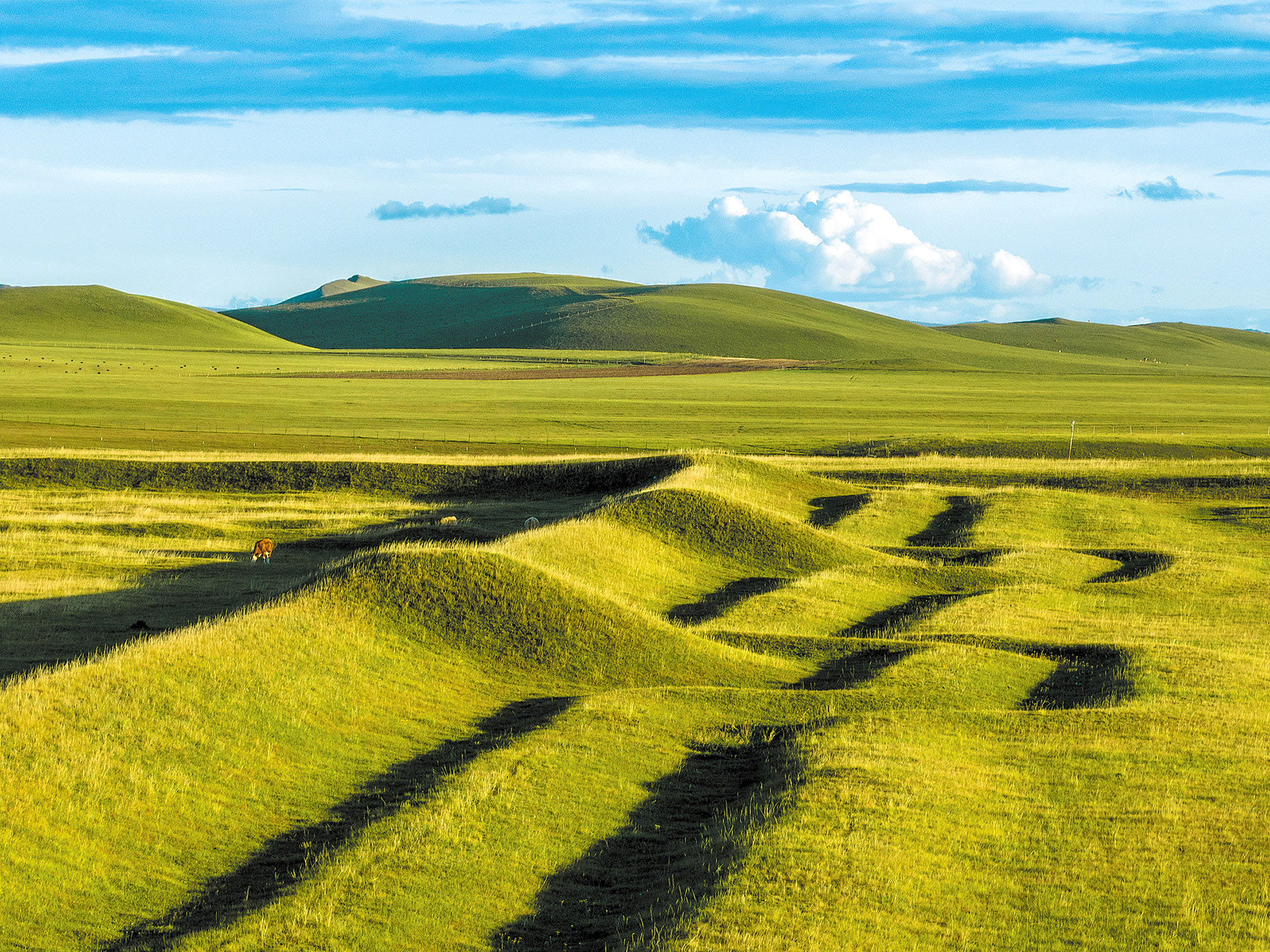
Zhong published a travelogue on her WeChat public account, introducing unusual sites they had visited. These included the site of the Bayanhan Japanese toxic gas experiment field, anti-tank obstacles built on the grassland in the 1960s and '70s and the dilapidated Oroqen Altar of Divine Spring deep in the forests of the Lesser Hinggan Mountains.
While Rong photographed the sites, Zhong and her birding friends watched birds. The arrangement allowed them to pursue their interests while sharing the journey.
"No matter who comes along, I plan the itinerary," Rong said.
Whenever he is permitted to fly a drone, he uses it. Aerial photography, he said, shows a site's surroundings clearly and captures more context.
"For immovable cultural relics, their geographical location and relationship with the surrounding environment are very important, so aerial photography is the best way to present them," he said.
Exploring antiquities
China has 5,058 nationally protected cultural relic sites. Rong has photographed 1,717 of them. But he said he does not treat 5,058 as a target. Beijing's antiquities, for example, change little and are well protected, so he does not make them a priority.
Many sites protected at the provincial and county levels elsewhere in the country deserve more of his attention. Although he has photographed many of them, he has not kept detailed statistics.
"Most of them are in North China," he said. "I feel sites in the north are more suitable for aerial photography. Also, I like the vast, open landscape of the north."
He also acknowledges that drone photography needs regulation.
"Too many people used to fly recklessly," he said. "When I was shooting, I often saw drones stuck on top of ancient pagodas. They must have crashed there, which could have damaged the relics."
ALSO READ: Photos on a star trek
The bigger challenge in exploring China's antiquities, he said, is finding them. Many sites exist only in written descriptions, with no photographs or precise location. To protect them, some cultural relic authorities do not disclose their addresses. He searches satellite maps and media reports for clues. He reads archaeological reports carefully and has taught himself a great deal of history since university.
"When displaying my work on social media, I also include my annotations," Rong said. "I mark the highlights of a relic site. I mark the locations of different buildings. Many cultural relics are backfilled after archaeological excavation. I have to compare the archaeological reports and mark that information on my aerial photographs."
He has put considerable effort into presenting information visually. "I'm not good at writing long essays, but I'm very good at annotating information on images," he said.
For now, however, he has no time to do that at home. He is planning more field visits to "visit antiquities early".
Contact the writers at chenliang@chinadaily.com.cn
